Every problem in the chapter beside the book’s answer, a chapter at a time as you scroll.
Chapter 7: Systems of Equations and Inequalities
347 problems · 12 figuresTry It #2 §7.1 source ↗
Determine whether the ordered pair is a solution to the following system.
Answer
Try It #3 §7.1 source ↗
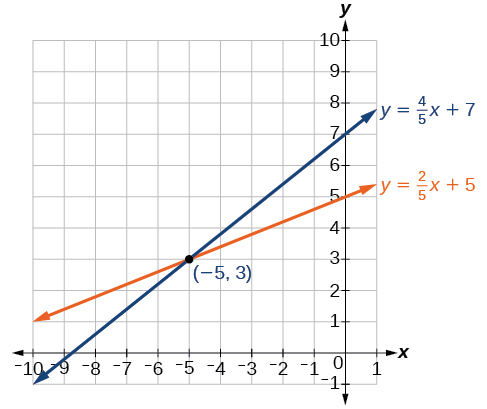
Solve the following system of equations by graphing.
Answer
The solution to the system is the ordered pair
Try It #4 §7.1 source ↗
Solve the following system of equations by substitution.
Answer
Try It #5 §7.1 source ↗
Solve the system of equations by addition.
Answer
Try It #6 §7.1 source ↗
Solve the system of equations by addition.
Answer
Try It #7 §7.1 source ↗
Solve the following system of equations in two variables.
Answer
Try It #8 §7.1 source ↗
Solve the following system of equations in two variables.
Answer
Try It #9 §7.1 source ↗
Answer
7.1-1 §7.1 source ↗
Answer
7.1-3 §7.1 source ↗
Answer
7.1-5 §7.1 source ↗
Answer
7.1-7 §7.1 source ↗
For the following exercises, determine whether the given ordered pair is a solution to the system of equations.
and
Answer
7.1-9 §7.1 source ↗
For the following exercises, determine whether the given ordered pair is a solution to the system of equations.
and
Answer
7.1-11 §7.1 source ↗
For the following exercises, solve each system by substitution.
Answer
7.1-13 §7.1 source ↗
For the following exercises, solve each system by substitution.
Answer
7.1-15 §7.1 source ↗
For the following exercises, solve each system by substitution.
Answer
7.1-17 §7.1 source ↗
For the following exercises, solve each system by substitution.
Answer
7.1-19 §7.1 source ↗
For the following exercises, solve each system by substitution.
Answer
7.1-21 §7.1 source ↗
For the following exercises, solve each system by addition.
Answer
7.1-23 §7.1 source ↗
For the following exercises, solve each system by addition.
Answer
7.1-25 §7.1 source ↗
For the following exercises, solve each system by addition.
Answer
7.1-27 §7.1 source ↗
For the following exercises, solve each system by addition.
Answer
7.1-29 §7.1 source ↗
For the following exercises, solve each system by addition.
Answer
7.1-31 §7.1 source ↗
For the following exercises, solve each system by any method.
Answer
7.1-33 §7.1 source ↗
For the following exercises, solve each system by any method.
Answer
7.1-35 §7.1 source ↗
For the following exercises, solve each system by any method.
Answer
7.1-37 §7.1 source ↗
For the following exercises, solve each system by any method.
Answer
7.1-39 §7.1 source ↗
For the following exercises, solve each system by any method.
Answer
7.1-41 §7.1 source ↗
For the following exercises, graph the system of equations and state whether the system is consistent, inconsistent, or dependent and whether the system has one solution, no solution, or infinite solutions.
Answer
7.1-43 §7.1 source ↗
For the following exercises, graph the system of equations and state whether the system is consistent, inconsistent, or dependent and whether the system has one solution, no solution, or infinite solutions.
Answer
7.1-45 §7.1 source ↗
For the following exercises, graph the system of equations and state whether the system is consistent, inconsistent, or dependent and whether the system has one solution, no solution, or infinite solutions.
Answer
7.1-47 §7.1 source ↗
For the following exercises, use the intersect function on a graphing device to solve each system. Round all answers to the nearest hundredth.
Answer
7.1-49 §7.1 source ↗
For the following exercises, use the intersect function on a graphing device to solve each system. Round all answers to the nearest hundredth.
Answer
7.1-51 §7.1 source ↗
For the following exercises, solve each system in terms of and where are nonzero numbers. Note that and
Answer
7.1-53 §7.1 source ↗
For the following exercises, solve each system in terms of and where are nonzero numbers. Note that and
Answer
7.1-55 §7.1 source ↗
For the following exercises, solve each system in terms of and where are nonzero numbers. Note that and
Answer
7.1-57 §7.1 source ↗
For the following exercises, solve for the desired quantity.
An Ethiopian restaurant has a cost of production and a revenue function When does the company start to turn a profit?
Answer
7.1-59 §7.1 source ↗
For the following exercises, solve for the desired quantity.
A musician charges where is the total number of attendees at the concert. The venue charges $80 per ticket. After how many people buy tickets does the venue break even, and what is the value of the total tickets sold at that point?
Answer
7.1-61 §7.1 source ↗
For the following exercises, use a system of linear equations with two variables and two equations to solve.
Find two numbers whose sum is 28 and difference is 13.
Answer
7.1-63 §7.1 source ↗
For the following exercises, use a system of linear equations with two variables and two equations to solve.
The startup cost for a restaurant is $120,000, and each meal costs $10 for the restaurant to make. If each meal is then sold for $15, after how many meals does the restaurant break even?
Answer
7.1-65 §7.1 source ↗
For the following exercises, use a system of linear equations with two variables and two equations to solve.
A total of 1,595 first- and second-year college students gathered at a pep rally. The number of first-years exceeded the number of second-years by 15. How many students from each year group were in attendance?
Answer
7.1-67 §7.1 source ↗
For the following exercises, use a system of linear equations with two variables and two equations to solve.
There were 130 faculty at a conference. If there were 18 more women than men attending, how many of each gender attended the conference?
Answer
7.1-69 §7.1 source ↗
For the following exercises, use a system of linear equations with two variables and two equations to solve.
If a scientist mixed 10% saline solution with 60% saline solution to get 25 gallons of 40% saline solution, how many gallons of 10% and 60% solutions were mixed?
Answer
7.1-71 §7.1 source ↗
For the following exercises, use a system of linear equations with two variables and two equations to solve.
An investor invested 1.1 million dollars into two land investments. On the first investment, Swan Peak, her return was a 110% increase on the money she invested. On the second investment, Riverside Community, she earned 50% over what she invested. If she earned $1 million in profits, how much did she invest in each of the land deals?
Answer
7.1-73 §7.1 source ↗
For the following exercises, use a system of linear equations with two variables and two equations to solve.
If an investor invests $23,000 into two bonds, one that pays 4% in simple interest, and the other paying 2% simple interest, and the investor earns $710.00 annual interest, how much was invested in each account?
Answer
7.1-75 §7.1 source ↗
For the following exercises, use a system of linear equations with two variables and two equations to solve.
A store clerk sold 60 pairs of sneakers. The high-tops sold for $98.99 and the low-tops sold for $129.99. If the receipts for the two types of sales totaled $6,404.40, how many of each type of sneaker were sold?
Answer
7.1-77 §7.1 source ↗
For the following exercises, use a system of linear equations with two variables and two equations to solve.
Admission into an amusement park for 4 children and 2 adults is $116.90. For 6 children and 3 adults, the admission is $175.35. Assuming a different price for children and adults, what is the price of the child’s ticket and the price of the adult ticket?
Answer
Try It #2 §7.2 source ↗
Solve the system of equations in three variables.
Answer
Try It #3 §7.2 source ↗
Solve the system of three equations in three variables.
Answer
Try It #4 §7.2 source ↗
Solve the following system.
Answer
7.2-1 §7.2 source ↗
Answer
7.2-3 §7.2 source ↗
Answer
Not necessarily. There could be zero, one, or infinitely many solutions. For example, is not a solution to the system below, but that does not mean that it has no solution.
7.2-5 §7.2 source ↗
Answer
7.2-7 §7.2 source ↗
For the following exercises, determine whether the ordered triple given is the solution to the system of equations.
and
Answer
7.2-9 §7.2 source ↗
For the following exercises, determine whether the ordered triple given is the solution to the system of equations.
and
Answer
7.2-11 §7.2 source ↗
For the following exercises, solve each system by elimination.
Answer
7.2-13 §7.2 source ↗
For the following exercises, solve each system by elimination.
Answer
7.2-15 §7.2 source ↗
For the following exercises, solve each system by elimination.
Answer
7.2-17 §7.2 source ↗
For the following exercises, solve each system by Gaussian elimination.
Answer
7.2-19 §7.2 source ↗
For the following exercises, solve each system by Gaussian elimination.
Answer
7.2-21 §7.2 source ↗
For the following exercises, solve each system by Gaussian elimination.
Answer
7.2-23 §7.2 source ↗
For the following exercises, solve each system by Gaussian elimination.
Answer
7.2-25 §7.2 source ↗
For the following exercises, solve each system by Gaussian elimination.
Answer
7.2-27 §7.2 source ↗
For the following exercises, solve each system by Gaussian elimination.
Answer
7.2-29 §7.2 source ↗
For the following exercises, solve each system by Gaussian elimination.
Answer
7.2-31 §7.2 source ↗
For the following exercises, solve each system by Gaussian elimination.
Answer
7.2-33 §7.2 source ↗
For the following exercises, solve each system by Gaussian elimination.
Answer
7.2-35 §7.2 source ↗
For the following exercises, solve each system by Gaussian elimination.
Answer
7.2-37 §7.2 source ↗
For the following exercises, solve each system by Gaussian elimination.
Answer
7.2-39 §7.2 source ↗
For the following exercises, solve each system by Gaussian elimination.
Answer
7.2-41 §7.2 source ↗
For the following exercises, solve each system by Gaussian elimination.
Answer
7.2-43 §7.2 source ↗
For the following exercises, solve each system by Gaussian elimination.
Answer
7.2-45 §7.2 source ↗
For the following exercises, solve each system by Gaussian elimination.
Answer
7.2-47 §7.2 source ↗
For the following exercises, solve the system for and
Answer
7.2-49 §7.2 source ↗
For the following exercises, solve the system for and
Answer
7.2-51 §7.2 source ↗
For the following exercises, solve the system for and
Three even numbers sum up to 108. The smaller is half the larger and the middle number is the larger. What are the three numbers?
Answer
7.2-53 §7.2 source ↗
For the following exercises, solve the system for and
At a family reunion, there were only blood relatives, consisting of children, parents, and grandparents, in attendance. There were 400 people total. There were twice as many parents as grandparents, and 50 more children than parents. How many children, parents, and grandparents were in attendance?
Answer
7.2-55 §7.2 source ↗
For the following exercises, solve the system for and
Your roommate, Shani, offered to buy groceries for you and your other roommate. The total bill was $82. She forgot to save the individual receipts but remembered that your groceries were $0.05 cheaper than half of her groceries, and that your other roommate’s groceries were $2.10 more than your groceries. How much was each of your share of the groceries?
Answer
7.2-57 §7.2 source ↗
For the following exercises, solve the system for and
Three coworkers work for the same employer. Their jobs are warehouse manager, office manager, and truck driver. The sum of the annual salaries of the warehouse manager and office manager is $82,000. The office manager makes $4,000 more than the truck driver annually. The annual salaries of the warehouse manager and the truck driver total $78,000. What is the annual salary of each of the co-workers?
Answer
7.2-59 §7.2 source ↗
For the following exercises, solve the system for and
A local band sells out for their concert. They sell all 1,175 tickets for a total purse of $28,112.50. The tickets were priced at $20 for student tickets, $22.50 for children, and $29 for adult tickets. If the band sold twice as many adult as children tickets, how many of each type was sold?
Answer
7.2-61 §7.2 source ↗
For the following exercises, solve the system for and
Last year, at Haven’s Pond Car Dealership, for a particular model of BMW, Jeep, and Toyota, one could purchase all three cars for a total of $140,000. This year, due to inflation, the same cars would cost $151,830. The cost of the BMW increased by 8%, the Jeep by 5%, and the Toyota by 12%. If the price of last year’s Jeep was $7,000 less than the price of last year’s BMW, what was the price of each of the three cars last year?
Answer
7.2-63 §7.2 source ↗
For the following exercises, solve the system for and
You inherit one million dollars. You invest it all in three accounts for one year. The first account pays 3% compounded annually, the second account pays 4% compounded annually, and the third account pays 2% compounded annually. After one year, you earn $34,000 in interest. If you invest four times the money into the account that pays 3% compared to 2%, how much did you invest in each account?
Answer
7.2-65 §7.2 source ↗
For the following exercises, solve the system for and
The top three countries in oil consumption in a certain year are as follows: the United States, Japan, and China. In millions of barrels per day, the three top countries consumed 39.8% of the world’s consumed oil. The United States consumed 0.7% more than four times China’s consumption. The United States consumed 5% more than triple Japan’s consumption. What percent of the world oil consumption did the United States, Japan, and China consume?1
Answer
7.2-67 §7.2 source ↗
For the following exercises, solve the system for and
The top three sources of oil imports for the United States in the same year were Saudi Arabia, Mexico, and Canada. The three top countries accounted for 47% of oil imports. The United States imported 1.8% more from Saudi Arabia than they did from Mexico, and 1.7% more from Saudi Arabia than they did from Canada. What percent of the United States oil imports were from these three countries?3
Answer
7.2-69 §7.2 source ↗
For the following exercises, solve the system for and
At one time, in the United States, 398 species of animals were on the endangered species list. The top groups were mammals, birds, and fish, which comprised 55% of the endangered species. Birds accounted for 0.7% more than fish, and fish accounted for 1.5% more than mammals. What percent of the endangered species came from mammals, birds, and fish?
Answer
Try It #1 §7.3 source ↗
Solve the given system of equations by substitution.
Answer
Try It #2 §7.3 source ↗
Solve the system of nonlinear equations.
Answer
Try It #3 §7.3 source ↗
Find the solution set for the given system of nonlinear equations.
Answer
Try It #4 §7.3 source ↗
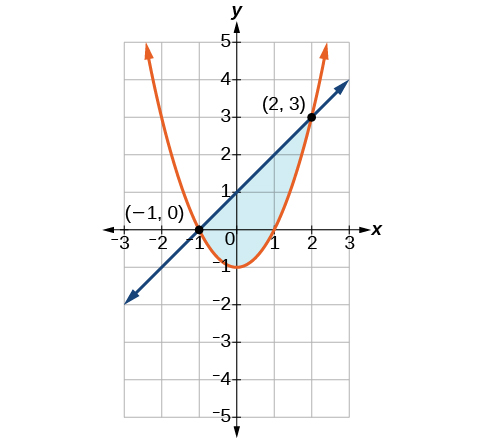
Graph the given system of inequalities.
Answer
7.3-1 §7.3 source ↗
Answer
7.3-3 §7.3 source ↗
Answer
7.3-5 §7.3 source ↗
Answer
7.3-7 §7.3 source ↗
For the following exercises, solve the system of nonlinear equations using substitution.
Answer
7.3-9 §7.3 source ↗
For the following exercises, solve the system of nonlinear equations using substitution.
Answer
7.3-11 §7.3 source ↗
For the following exercises, solve the system of nonlinear equations using elimination.
Answer
7.3-13 §7.3 source ↗
For the following exercises, solve the system of nonlinear equations using elimination.
Answer
7.3-15 §7.3 source ↗
For the following exercises, solve the system of nonlinear equations using elimination.
Answer
7.3-17 §7.3 source ↗
For the following exercises, use any method to solve the system of nonlinear equations.
Answer
7.3-19 §7.3 source ↗
For the following exercises, use any method to solve the system of nonlinear equations.
Answer
7.3-21 §7.3 source ↗
For the following exercises, use any method to solve the system of nonlinear equations.
Answer
7.3-23 §7.3 source ↗
For the following exercises, use any method to solve the system of nonlinear equations.
Answer
7.3-25 §7.3 source ↗
For the following exercises, use any method to solve the nonlinear system.
Answer
7.3-27 §7.3 source ↗
For the following exercises, use any method to solve the nonlinear system.
Answer
7.3-29 §7.3 source ↗
For the following exercises, use any method to solve the nonlinear system.
Answer
7.3-31 §7.3 source ↗
For the following exercises, use any method to solve the nonlinear system.
Answer
7.3-33 §7.3 source ↗
For the following exercises, use any method to solve the nonlinear system.
Answer
7.3-35 §7.3 source ↗
For the following exercises, use any method to solve the nonlinear system.
Answer
7.3-37 §7.3 source ↗
For the following exercises, use any method to solve the nonlinear system.
Answer
7.3-39 §7.3 source ↗
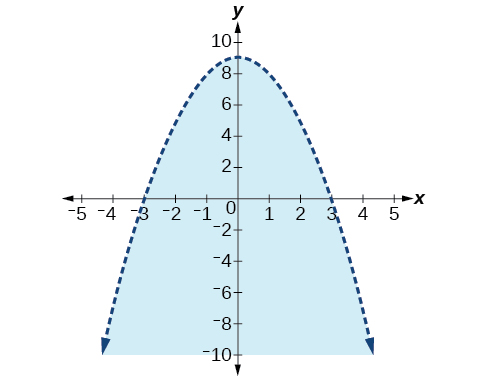
For the following exercises, graph the inequality.
Answer
7.3-41 §7.3 source ↗
For the following exercises, graph the system of inequalities. Label all points of intersection.
Answer
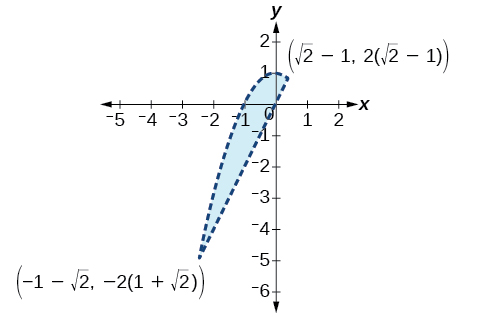
7.3-43 §7.3 source ↗
For the following exercises, graph the system of inequalities. Label all points of intersection.
Answer
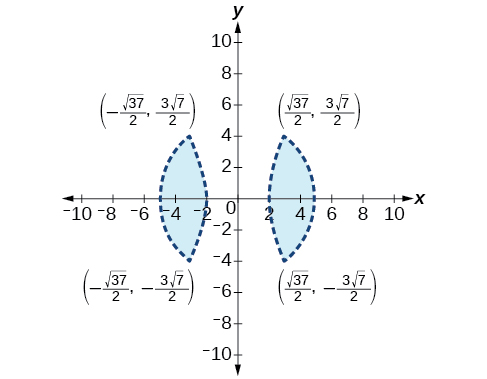
7.3-45 §7.3 source ↗
For the following exercises, graph the system of inequalities. Label all points of intersection.
Answer
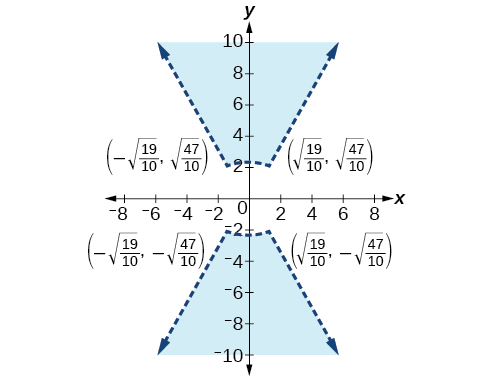
7.3-47 §7.3 source ↗
For the following exercises, graph the inequality.
Answer
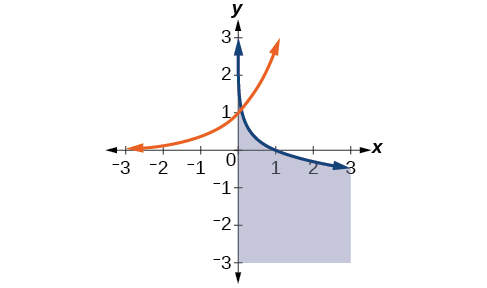
7.3-49 §7.3 source ↗
For the following exercises, find the solutions to the nonlinear equations with two variables.
Answer
7.3-51 §7.3 source ↗
For the following exercises, find the solutions to the nonlinear equations with two variables.
Answer
7.3-53 §7.3 source ↗
For the following exercises, solve the system of inequalities. Use a calculator to graph the system to confirm the answer.
Answer
7.3-55 §7.3 source ↗
For the following exercises, construct a system of nonlinear equations to describe the given behavior, then solve for the requested solutions.
Two numbers add up to 300. One number is twice the square of the other number. What are the numbers?
Answer
7.3-57 §7.3 source ↗
For the following exercises, construct a system of nonlinear equations to describe the given behavior, then solve for the requested solutions.
A laptop company has discovered their cost and revenue functions for each day: and If they want to make a profit, what is the range of laptops per day that they should produce? Round to the nearest number which would generate profit.
Answer
Try It #4 §7.4 source ↗
Find the partial fraction decomposition of the following expression.
Answer
Try It #5 §7.4 source ↗
Find the partial fraction decomposition of the expression with repeated linear factors.
Answer
Try It #6 §7.4 source ↗
Find the partial fraction decomposition of the expression with a nonrepeating irreducible quadratic factor.
Answer
Try It #7 §7.4 source ↗
Find the partial fraction decomposition of the expression with a repeated irreducible quadratic factor.
Answer
7.4-1 §7.4 source ↗
Answer
7.4-3 §7.4 source ↗
Answer
7.4-5 §7.4 source ↗
Answer
7.4-7 §7.4 source ↗
For the following exercises, find the decomposition of the partial fraction for the nonrepeating linear factors.
Answer
7.4-9 §7.4 source ↗
For the following exercises, find the decomposition of the partial fraction for the nonrepeating linear factors.
Answer
7.4-11 §7.4 source ↗
For the following exercises, find the decomposition of the partial fraction for the nonrepeating linear factors.
Answer
7.4-13 §7.4 source ↗
For the following exercises, find the decomposition of the partial fraction for the nonrepeating linear factors.
Answer
7.4-15 §7.4 source ↗
For the following exercises, find the decomposition of the partial fraction for the nonrepeating linear factors.
Answer
7.4-17 §7.4 source ↗
For the following exercises, find the decomposition of the partial fraction for the nonrepeating linear factors.
Answer
7.4-19 §7.4 source ↗
For the following exercises, find the decomposition of the partial fraction for the nonrepeating linear factors.
Answer
7.4-21 §7.4 source ↗
For the following exercises, find the decomposition of the partial fraction for the repeating linear factors.
Answer
7.4-23 §7.4 source ↗
For the following exercises, find the decomposition of the partial fraction for the repeating linear factors.
Answer
7.4-25 §7.4 source ↗
For the following exercises, find the decomposition of the partial fraction for the repeating linear factors.
Answer
7.4-27 §7.4 source ↗
For the following exercises, find the decomposition of the partial fraction for the repeating linear factors.
Answer
7.4-29 §7.4 source ↗
For the following exercises, find the decomposition of the partial fraction for the repeating linear factors.
Answer
7.4-31 §7.4 source ↗
For the following exercises, find the decomposition of the partial fraction for the irreducible nonrepeating quadratic factor.
Answer
7.4-33 §7.4 source ↗
For the following exercises, find the decomposition of the partial fraction for the irreducible nonrepeating quadratic factor.
Answer
7.4-35 §7.4 source ↗
For the following exercises, find the decomposition of the partial fraction for the irreducible nonrepeating quadratic factor.
Answer
7.4-37 §7.4 source ↗
For the following exercises, find the decomposition of the partial fraction for the irreducible nonrepeating quadratic factor.
Answer
7.4-39 §7.4 source ↗
For the following exercises, find the decomposition of the partial fraction for the irreducible nonrepeating quadratic factor.
Answer
7.4-41 §7.4 source ↗
For the following exercises, find the decomposition of the partial fraction for the irreducible nonrepeating quadratic factor.
Answer
7.4-43 §7.4 source ↗
For the following exercises, find the decomposition of the partial fraction for the irreducible nonrepeating quadratic factor.
Answer
7.4-45 §7.4 source ↗
For the following exercises, find the decomposition of the partial fraction for the irreducible repeating quadratic factor.
Answer
7.4-47 §7.4 source ↗
For the following exercises, find the decomposition of the partial fraction for the irreducible repeating quadratic factor.
Answer
7.4-49 §7.4 source ↗
For the following exercises, find the decomposition of the partial fraction for the irreducible repeating quadratic factor.
Answer
7.4-51 §7.4 source ↗
For the following exercises, find the decomposition of the partial fraction for the irreducible repeating quadratic factor.
Answer
7.4-53 §7.4 source ↗
For the following exercises, find the decomposition of the partial fraction for the irreducible repeating quadratic factor.
Answer
7.4-55 §7.4 source ↗
For the following exercises, find the partial fraction expansion.
Answer
7.4-57 §7.4 source ↗
For the following exercises, perform the operation and then find the partial fraction decomposition.
Answer
7.4-59 §7.4 source ↗
For the following exercises, perform the operation and then find the partial fraction decomposition.
Answer
Try It #1 §7.5 source ↗
Add matrix and matrix
Answer
Try It #2 §7.5 source ↗
Given matrix find where
Answer
7.5-1 §7.5 source ↗
Answer
7.5-3 §7.5 source ↗
Answer
7.5-5 §7.5 source ↗
Answer
7.5-7 §7.5 source ↗
For the following exercises, use the matrices below and perform the matrix addition or subtraction. Indicate if the operation is undefined.
Answer
7.5-9 §7.5 source ↗
For the following exercises, use the matrices below and perform the matrix addition or subtraction. Indicate if the operation is undefined.
Answer
7.5-11 §7.5 source ↗
For the following exercises, use the matrices below and perform the matrix addition or subtraction. Indicate if the operation is undefined.
Answer
7.5-13 §7.5 source ↗
For the following exercises, use the matrices below to perform scalar multiplication.
Answer
7.5-15 §7.5 source ↗
For the following exercises, use the matrices below to perform scalar multiplication.
Answer
7.5-17 §7.5 source ↗
For the following exercises, use the matrices below to perform scalar multiplication.
Answer
7.5-19 §7.5 source ↗
For the following exercises, use the matrices below to perform matrix multiplication.
Answer
7.5-21 §7.5 source ↗
For the following exercises, use the matrices below to perform matrix multiplication.
Answer
7.5-23 §7.5 source ↗
For the following exercises, use the matrices below to perform matrix multiplication.
Answer
7.5-25 §7.5 source ↗
For the following exercises, use the matrices below to perform the indicated operation if possible. If not possible, explain why the operation cannot be performed.
Answer
7.5-27 §7.5 source ↗
For the following exercises, use the matrices below to perform the indicated operation if possible. If not possible, explain why the operation cannot be performed.
Answer
7.5-29 §7.5 source ↗
For the following exercises, use the matrices below to perform the indicated operation if possible. If not possible, explain why the operation cannot be performed.
Answer
7.5-31 §7.5 source ↗
For the following exercises, use the matrices below to perform the indicated operation if possible. If not possible, explain why the operation cannot be performed. (Hint: )
Answer
7.5-33 §7.5 source ↗
For the following exercises, use the matrices below to perform the indicated operation if possible. If not possible, explain why the operation cannot be performed. (Hint: )
Answer
7.5-35 §7.5 source ↗
For the following exercises, use the matrices below to perform the indicated operation if possible. If not possible, explain why the operation cannot be performed. (Hint: )
Answer
7.5-37 §7.5 source ↗
For the following exercises, use the matrices below to perform the indicated operation if possible. If not possible, explain why the operation cannot be performed. (Hint: )
Answer
7.5-39 §7.5 source ↗
For the following exercises, use the matrices below to perform the indicated operation if possible. If not possible, explain why the operation cannot be performed. (Hint: )
Answer
7.5-41 §7.5 source ↗
For the following exercises, use the matrices below to perform the indicated operation if possible. If not possible, explain why the operation cannot be performed. (Hint: )
Answer
7.5-43 §7.5 source ↗
For the following exercises, use the matrices below to perform the indicated operation if possible. If not possible, explain why the operation cannot be performed. (Hint: )
Answer
7.5-45 §7.5 source ↗
For the following exercises, use the matrices below to perform the indicated operation if possible. If not possible, explain why the operation cannot be performed. (Hint: )
Answer
7.5-47 §7.5 source ↗
For the following exercises, use the matrices below to perform the indicated operation if possible. If not possible, explain why the operation cannot be performed. (Hint: )
Answer
7.5-49 §7.5 source ↗
For the following exercises, use the matrices below to perform the indicated operation if possible. If not possible, explain why the operation cannot be performed. (Hint: )
Answer
7.5-51 §7.5 source ↗
For the following exercises, use the matrices below to perform the indicated operation if possible. If not possible, explain why the operation cannot be performed. Use a calculator to verify your solution.
Answer
7.5-53 §7.5 source ↗
For the following exercises, use the matrices below to perform the indicated operation if possible. If not possible, explain why the operation cannot be performed. Use a calculator to verify your solution.
Answer
7.5-55 §7.5 source ↗
For the following exercises, use the matrix below to perform the indicated operation on the given matrix.
Answer
7.5-57 §7.5 source ↗
For the following exercises, use the matrix below to perform the indicated operation on the given matrix.
Answer
7.5-59 §7.5 source ↗
For the following exercises, use the matrix below to perform the indicated operation on the given matrix.
Using the above questions, find a formula for Test the formula for and using a calculator.
Answer
Try It #2 §7.6 source ↗
Write the augmented matrix of the given system of equations.
Answer
Try It #3 §7.6 source ↗
Write the system of equations from the augmented matrix.
Answer
Try It #4 §7.6 source ↗
Solve the given system by Gaussian elimination.
Answer
Try It #5 §7.6 source ↗
Write the system of equations in row-echelon form.
Answer
Try It #6 §7.6 source ↗
Solve the system using matrices.
Answer
Try It #7 §7.6 source ↗
Answer
7.6-1 §7.6 source ↗
Answer
7.6-3 §7.6 source ↗
Answer
7.6-5 §7.6 source ↗
Answer
7.6-7 §7.6 source ↗
For the following exercises, write the augmented matrix for the linear system.
Answer
7.6-9 §7.6 source ↗
For the following exercises, write the augmented matrix for the linear system.
Answer
7.6-11 §7.6 source ↗
For the following exercises, write the linear system from the augmented matrix.
Answer
7.6-13 §7.6 source ↗
For the following exercises, write the linear system from the augmented matrix.
Answer
7.6-15 §7.6 source ↗
For the following exercises, write the linear system from the augmented matrix.
Answer
7.6-17 §7.6 source ↗
For the following exercises, solve the system by Gaussian elimination.
Answer
7.6-19 §7.6 source ↗
For the following exercises, solve the system by Gaussian elimination.
Answer
7.6-21 §7.6 source ↗
For the following exercises, solve the system by Gaussian elimination.
Answer
7.6-23 §7.6 source ↗
For the following exercises, solve the system by Gaussian elimination.
Answer
7.6-25 §7.6 source ↗
For the following exercises, solve the system by Gaussian elimination.
Answer
7.6-27 §7.6 source ↗
For the following exercises, solve the system by Gaussian elimination.
Answer
7.6-29 §7.6 source ↗
For the following exercises, solve the system by Gaussian elimination.
Answer
7.6-31 §7.6 source ↗
For the following exercises, solve the system by Gaussian elimination.
Answer
7.6-33 §7.6 source ↗
For the following exercises, solve the system by Gaussian elimination.
Answer
7.6-35 §7.6 source ↗
For the following exercises, solve the system by Gaussian elimination.
Answer
7.6-37 §7.6 source ↗
For the following exercises, solve the system by Gaussian elimination.
Answer
7.6-39 §7.6 source ↗
For the following exercises, solve the system by Gaussian elimination.
Answer
7.6-41 §7.6 source ↗
For the following exercises, solve the system by Gaussian elimination.
Answer
7.6-43 §7.6 source ↗
For the following exercises, solve the system by Gaussian elimination.
Answer
7.6-45 §7.6 source ↗
For the following exercises, solve the system by Gaussian elimination.
Answer
7.6-47 §7.6 source ↗
For the following exercises, use Gaussian elimination to solve the system.
Answer
7.6-49 §7.6 source ↗
For the following exercises, use Gaussian elimination to solve the system.
Answer
7.6-51 §7.6 source ↗
For the following exercises, use Gaussian elimination to solve the system.
Answer
7.6-53 §7.6 source ↗
For the following exercises, set up the augmented matrix that describes the situation, and solve for the desired solution.
At Bakari's competing cupcake store, $4,520 worth of cupcakes are sold daily. The chocolate cupcakes cost $2.25 and the red velvet cupcakes cost $1.75. If the total number of cupcakes sold per day is 2,200, how many of each flavor are sold each day?
Answer
7.6-55 §7.6 source ↗
For the following exercises, set up the augmented matrix that describes the situation, and solve for the desired solution.
You invested $2,300 into account 1, and $2,700 into account 2. If the total amount of interest after one year is $254, and account 2 has 1.5 times the interest rate of account 1, what are the interest rates? Assume simple interest rates.
Answer
7.6-57 §7.6 source ↗
For the following exercises, set up the augmented matrix that describes the situation, and solve for the desired solution.
A major appliance store has agreed to order vacuums from a startup founded by college engineering students. The store would be able to purchase the vacuums for $86 each, with a delivery fee of $9,200, regardless of how many vacuums are sold. If the store needs to start seeing a profit after 230 units are sold, how much should they charge for the vacuums?
Answer
7.6-59 §7.6 source ↗
For the following exercises, set up the augmented matrix that describes the situation, and solve for the desired solution.
At an ice cream shop, three flavors are increasing in demand. Last year, banana, pumpkin, and rocky road ice cream made up 12% of total ice cream sales. This year, the same three ice creams made up 16.9% of ice cream sales. The rocky road sales doubled, the banana sales increased by 50%, and the pumpkin sales increased by 20%. If the rocky road ice cream had one less percent of sales than the banana ice cream, find out the percentage of ice cream sales each individual ice cream made last year.
Answer
7.6-61 §7.6 source ↗
For the following exercises, set up the augmented matrix that describes the situation, and solve for the desired solution.
A bag of mixed nuts contains cashews, pistachios, and almonds. Originally there were 900 nuts in the bag. 30% of the almonds, 20% of the cashews, and 10% of the pistachios were eaten, and now there are 770 nuts left in the bag. Originally, there were 100 more cashews than almonds. Figure out how many of each type of nut was in the bag to begin with.
Answer
Try It #2 §7.7 source ↗
Show that the following two matrices are inverses of each other.
Answer
Try It #3 §7.7 source ↗
Use the formula to find the inverse of matrix Verify your answer by augmenting with the identity matrix.
Answer
Try It #4 §7.7 source ↗
Find the inverse of the matrix.
Answer
Try It #5 §7.7 source ↗
Solve the system using the inverse of the coefficient matrix.
Answer
7.7-1 §7.7 source ↗
Answer
7.7-3 §7.7 source ↗
Answer
7.7-5 §7.7 source ↗
Answer
7.7-7 §7.7 source ↗
In the following exercises, show that matrix is the inverse of matrix
Answer
7.7-9 §7.7 source ↗
In the following exercises, show that matrix is the inverse of matrix
Answer
7.7-11 §7.7 source ↗
In the following exercises, show that matrix is the inverse of matrix
Answer
7.7-13 §7.7 source ↗
For the following exercises, find the multiplicative inverse of each matrix, if it exists.
Answer
7.7-15 §7.7 source ↗
For the following exercises, find the multiplicative inverse of each matrix, if it exists.
Answer
7.7-17 §7.7 source ↗
For the following exercises, find the multiplicative inverse of each matrix, if it exists.
Answer
7.7-19 §7.7 source ↗
For the following exercises, find the multiplicative inverse of each matrix, if it exists.
Answer
7.7-21 §7.7 source ↗
For the following exercises, find the multiplicative inverse of each matrix, if it exists.
Answer
7.7-23 §7.7 source ↗
For the following exercises, find the multiplicative inverse of each matrix, if it exists.
Answer
7.7-25 §7.7 source ↗
For the following exercises, find the multiplicative inverse of each matrix, if it exists.
Answer
7.7-27 §7.7 source ↗
For the following exercises, solve the system using the inverse of a matrix.
Answer
7.7-29 §7.7 source ↗
For the following exercises, solve the system using the inverse of a matrix.
Answer
7.7-31 §7.7 source ↗
For the following exercises, solve the system using the inverse of a matrix.
Answer
7.7-33 §7.7 source ↗
For the following exercises, solve the system using the inverse of a matrix.
Answer
7.7-35 §7.7 source ↗
For the following exercises, solve a system using the inverse of a matrix.
Answer
7.7-37 §7.7 source ↗
For the following exercises, solve a system using the inverse of a matrix.
Answer
7.7-39 §7.7 source ↗
For the following exercises, solve a system using the inverse of a matrix.
Answer
7.7-41 §7.7 source ↗
For the following exercises, solve a system using the inverse of a matrix.
Answer
7.7-43 §7.7 source ↗
For the following exercises, use a calculator to solve the system of equations with matrix inverses.
Answer
7.7-45 §7.7 source ↗
For the following exercises, use a calculator to solve the system of equations with matrix inverses.
Answer
7.7-47 §7.7 source ↗
For the following exercises, find the inverse of the given matrix.
Answer
7.7-49 §7.7 source ↗
For the following exercises, find the inverse of the given matrix.
Answer
7.7-51 §7.7 source ↗
For the following exercises, find the inverse of the given matrix.
Answer
7.7-53 §7.7 source ↗
For the following exercises, write a system of equations that represents the situation. Then, solve the system using the inverse of a matrix.
In the previous exercise, if you were told there were 400 more tickets sold for floor 2 than floor 1, how much was the price of each ticket?
Answer
7.7-55 §7.7 source ↗
For the following exercises, write a system of equations that represents the situation. Then, solve the system using the inverse of a matrix.
Students were asked to bring their favorite fruit to class. 95% of the fruits consisted of banana, apple, and oranges. If oranges were twice as popular as bananas, and apples were 5% less popular than bananas, what are the percentages of each individual fruit?
Answer
7.7-57 §7.7 source ↗
For the following exercises, write a system of equations that represents the situation. Then, solve the system using the inverse of a matrix.
A clothing store needs to order new inventory. It has three different types of hats for sale: straw hats, beanies, and cowboy hats. The straw hat is priced at $13.99, the beanie at $7.99, and the cowboy hat at $14.49. If 100 hats were sold this past quarter, $1,119 was taken in by sales, and the amount of beanies sold was 10 more than cowboy hats, how many of each should the clothing store order to replace those already sold?
Answer
7.7-59 §7.7 source ↗
For the following exercises, write a system of equations that represents the situation. Then, solve the system using the inverse of a matrix.
Three roommates shared a package of 12 ice cream bars, but no one remembers who ate how many. If Micah ate twice as many ice cream bars as Joe, and Albert ate three less than Micah, how many ice cream bars did each roommate eat?
Answer
7.7-61 §7.7 source ↗
For the following exercises, write a system of equations that represents the situation. Then, solve the system using the inverse of a matrix.
Jay has lemon, orange, and pomegranate trees in his backyard. An orange weighs 8 oz, a lemon 5 oz, and a pomegranate 11 oz. Jay picked 142 pieces of fruit weighing a total of 70 lb, 10 oz. He picked 15.5 times more oranges than pomegranates. How many of each fruit did Jay pick?
Answer
Try It #1 §7.8 source ↗
Use Cramer’s Rule to solve the 2 × 2 system of equations.
Answer
Try It #2 §7.8 source ↗
Find the determinant of the 3 × 3 matrix.
Answer
Try It #3 §7.8 source ↗
Use Cramer’s Rule to solve the 3 × 3 matrix.
Answer
7.8-1 §7.8 source ↗
Answer
7.8-3 §7.8 source ↗
Answer
7.8-5 §7.8 source ↗
For the following exercises, find the determinant.
Answer
7.8-7 §7.8 source ↗
For the following exercises, find the determinant.
Answer
7.8-9 §7.8 source ↗
For the following exercises, find the determinant.
Answer
7.8-11 §7.8 source ↗
For the following exercises, find the determinant.
Answer
7.8-13 §7.8 source ↗
For the following exercises, find the determinant.
Answer
7.8-15 §7.8 source ↗
For the following exercises, find the determinant.
Answer
7.8-17 §7.8 source ↗
For the following exercises, find the determinant.
Answer
7.8-19 §7.8 source ↗
For the following exercises, find the determinant.
Answer
7.8-21 §7.8 source ↗
For the following exercises, find the determinant.
Answer
7.8-23 §7.8 source ↗
For the following exercises, find the determinant.
Answer
7.8-25 §7.8 source ↗
For the following exercises, solve the system of linear equations using Cramer’s Rule.
Answer
7.8-27 §7.8 source ↗
For the following exercises, solve the system of linear equations using Cramer’s Rule.
Answer
7.8-29 §7.8 source ↗
For the following exercises, solve the system of linear equations using Cramer’s Rule.
Answer
7.8-31 §7.8 source ↗
For the following exercises, solve the system of linear equations using Cramer’s Rule.
Answer
7.8-33 §7.8 source ↗
For the following exercises, solve the system of linear equations using Cramer’s Rule.
Answer
7.8-35 §7.8 source ↗
For the following exercises, solve the system of linear equations using Cramer’s Rule.
Answer
7.8-37 §7.8 source ↗
For the following exercises, solve the system of linear equations using Cramer’s Rule.
Answer
7.8-39 §7.8 source ↗
For the following exercises, solve the system of linear equations using Cramer’s Rule.
Answer
7.8-41 §7.8 source ↗
For the following exercises, solve the system of linear equations using Cramer’s Rule.
Answer
7.8-43 §7.8 source ↗
For the following exercises, solve the system of linear equations using Cramer’s Rule.
Answer
7.8-45 §7.8 source ↗
For the following exercises, use the determinant function on a graphing utility.
Answer
7.8-47 §7.8 source ↗
For the following exercises, use the determinant function on a graphing utility.
Answer
7.8-49 §7.8 source ↗
For the following exercises, create a system of linear equations to describe the behavior. Then, calculate the determinant. Will there be a unique solution? If so, find the unique solution.
Two numbers add up to 56. One number is 20 less than the other.
Answer
7.8-51 §7.8 source ↗
For the following exercises, create a system of linear equations to describe the behavior. Then, calculate the determinant. Will there be a unique solution? If so, find the unique solution.
Three numbers add up to 106. The first number is 3 less than the second number. The third number is 4 more than the first number.
Answer
7.8-53 §7.8 source ↗
For the following exercises, create a system of linear equations to describe the behavior. Then, solve the system for all solutions using Cramer’s Rule.
You invest $10,000 into two accounts, which receive 8% interest and 5% interest. At the end of a year, you had $10,710 in your combined accounts. How much was invested in each account?
Answer
7.8-55 §7.8 source ↗
For the following exercises, create a system of linear equations to describe the behavior. Then, solve the system for all solutions using Cramer’s Rule.
A theater needs to know how many adult tickets and children tickets were sold out of the 1,200 total tickets. If children’s tickets are $5.95, adult tickets are $11.15, and the total amount of revenue was $12,756, how many children’s tickets and adult tickets were sold?
Answer
7.8-57 §7.8 source ↗
For the following exercises, create a system of linear equations to describe the behavior. Then, solve the system for all solutions using Cramer’s Rule.
You decide to paint your kitchen green. You create the color of paint by mixing yellow and blue paints. You cannot remember how many gallons of each color went into your mix, but you know there were 10 gal total. Additionally, you kept your receipt, and know the total amount spent was $29.50. If each gallon of yellow costs $2.59, and each gallon of blue costs $3.19, how many gallons of each color go into your green mix?
Answer
7.8-59 §7.8 source ↗
For the following exercises, create a system of linear equations to describe the behavior. Then, solve the system for all solutions using Cramer’s Rule.
Your garden produced two types of tomatoes, one green and one red. The red weigh 10 oz, and the green weigh 4 oz. You have 30 tomatoes, and a total weight of 13 lb, 14 oz. How many of each type of tomato do you have?
Answer
7.8-61 §7.8 source ↗
For the following exercises, create a system of linear equations to describe the behavior. Then, solve the system for all solutions using Cramer’s Rule.
At the same market, the three most popular fruits make up 37% of the total fruit sold. Strawberries sell twice as much as oranges, and kiwis sell one more percentage point than oranges. For each fruit, find the percentage of total fruit sold.
Answer
7.8-63 §7.8 source ↗
For the following exercises, create a system of linear equations to describe the behavior. Then, solve the system for all solutions using Cramer’s Rule.
A movie theatre sold tickets to three movies. The tickets to the first movie were $5, the tickets to the second movie were $11, and the third movie was $12. 100 tickets were sold to the first movie. The total number of tickets sold was 642, for a total revenue of $6,774. How many tickets for each movie were sold?
Answer
7.8-65 §7.8 source ↗
For the following exercises, use this scenario: A health-conscious company decides to make a trail mix out of almonds, dried cranberries, and chocolate-covered cashews. The nutritional information for these items is shown in Table 1.
| Fat (g) | Protein (g) | Carbohydrates (g) | |
|---|---|---|---|
| Almonds (10) | 6 | 2 | 3 |
| Cranberries (10) | 0.02 | 0 | 8 |
| Cashews (10) | 7 | 3.5 | 5.5 |
For the “hiking” mix, there are 1,000 pieces in the mix, containing 390.8 g of fat, and 165 g of protein. If there is the same amount of almonds as cashews, how many of each item is in the trail mix?
Answer
7.R-1 §7.R source ↗
For the following exercises, determine whether the ordered pair is a solution to the system of equations.
and
Answer
7.R-3 §7.R source ↗
For the following exercises, use substitution to solve the system of equations.
Answer
7.R-5 §7.R source ↗
For the following exercises, use substitution to solve the system of equations.
Answer
7.R-7 §7.R source ↗
For the following exercises, use addition to solve the system of equations.
Answer
7.R-9 §7.R source ↗
For the following exercises, write a system of equations to solve each problem. Solve the system of equations.
A factory has a cost of production and a revenue function What is the break-even point?
Answer
7.R-11 §7.R source ↗
For the following exercises, solve the system of three equations using substitution or addition.
Answer
7.R-13 §7.R source ↗
For the following exercises, solve the system of three equations using substitution or addition.
Answer
7.R-15 §7.R source ↗
For the following exercises, solve the system of three equations using substitution or addition.
Answer
7.R-17 §7.R source ↗
For the following exercises, solve the system of three equations using substitution or addition.
Answer
7.R-19 §7.R source ↗
For the following exercises, write a system of equations to solve each problem. Solve the system of equations.
Three odd numbers sum up to 61. The smaller is one-third the larger and the middle number is 16 less than the larger. What are the three numbers?
Answer
7.R-21 §7.R source ↗
For the following exercises, solve the system of nonlinear equations.
Answer
7.R-23 §7.R source ↗
For the following exercises, solve the system of nonlinear equations.
Answer
7.R-25 §7.R source ↗
For the following exercises, solve the system of nonlinear equations.
Answer
7.R-27 §7.R source ↗
For the following exercises, graph the inequality.
Answer
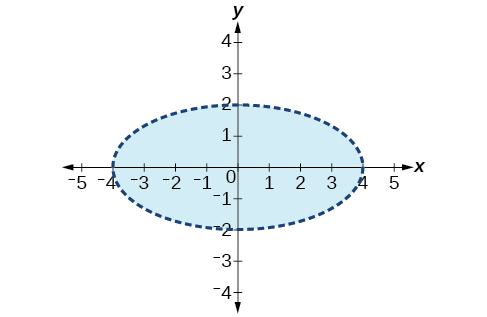
7.R-29 §7.R source ↗
For the following exercises, graph the system of inequalities.
Answer
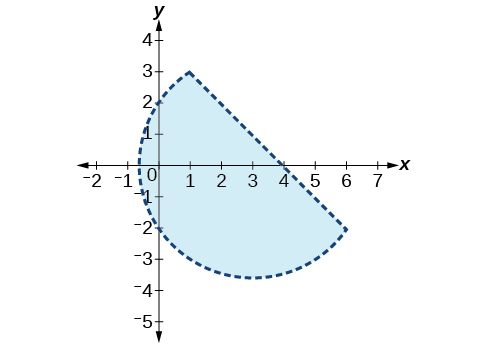
7.R-31 §7.R source ↗
For the following exercises, decompose into partial fractions.
Answer
7.R-33 §7.R source ↗
For the following exercises, decompose into partial fractions.
Answer
7.R-35 §7.R source ↗
For the following exercises, decompose into partial fractions.
Answer
7.R-37 §7.R source ↗
For the following exercises, decompose into partial fractions.
Answer
7.R-39 §7.R source ↗
For the following exercises, perform the requested operations on the given matrices.
Answer
7.R-41 §7.R source ↗
For the following exercises, perform the requested operations on the given matrices.
Answer
7.R-43 §7.R source ↗
For the following exercises, perform the requested operations on the given matrices.
Answer
7.R-45 §7.R source ↗
For the following exercises, perform the requested operations on the given matrices.
Answer
7.R-47 §7.R source ↗
For the following exercises, perform the requested operations on the given matrices.
Answer
7.R-49 §7.R source ↗
For the following exercises, perform the requested operations on the given matrices.
Answer
7.R-51 §7.R source ↗
For the following exercises, write the system of linear equations from the augmented matrix. Indicate whether there will be a unique solution.
Answer
7.R-53 §7.R source ↗
For the following exercises, write the augmented matrix from the system of linear equations.
Answer
7.R-55 §7.R source ↗
For the following exercises, write the augmented matrix from the system of linear equations.
Answer
7.R-57 §7.R source ↗
For the following exercises, solve the system of linear equations using Gaussian elimination.
Answer
7.R-59 §7.R source ↗
For the following exercises, solve the system of linear equations using Gaussian elimination.
Answer
7.R-61 §7.R source ↗
For the following exercises, find the inverse of the matrix.
Answer
7.R-63 §7.R source ↗
For the following exercises, find the inverse of the matrix.
Answer
7.R-65 §7.R source ↗
For the following exercises, find the solutions by computing the inverse of the matrix.
Answer
7.R-67 §7.R source ↗
For the following exercises, find the solutions by computing the inverse of the matrix.
Answer
7.R-69 §7.R source ↗
For the following exercises, write a system of equations to solve each problem. Solve the system of equations.
Students were asked to bring their favorite fruit to class. 90% of the fruits consisted of banana, apple, and oranges. If oranges were half as popular as bananas and apples were 5% more popular than bananas, what are the percentages of each individual fruit?
Answer
7.R-71 §7.R source ↗
For the following exercises, find the determinant.
Answer
7.R-73 §7.R source ↗
For the following exercises, find the determinant.
Answer
7.R-75 §7.R source ↗
For the following exercises, use Cramer’s Rule to solve the linear systems of equations.
Answer
7.R-77 §7.R source ↗
For the following exercises, use Cramer’s Rule to solve the linear systems of equations.
Answer
7.R-79 §7.R source ↗
For the following exercises, use Cramer’s Rule to solve the linear systems of equations.
Answer
7.T-1 §7.T source ↗
Is the following ordered pair a solution to the system of equations?
with
Answer
7.T-3 §7.T source ↗
For the following exercises, solve the systems of linear and nonlinear equations using substitution or elimination. Indicate if no solution exists.
Answer
7.T-5 §7.T source ↗
For the following exercises, solve the systems of linear and nonlinear equations using substitution or elimination. Indicate if no solution exists.
Answer
7.T-7 §7.T source ↗
For the following exercises, solve the systems of linear and nonlinear equations using substitution or elimination. Indicate if no solution exists.
Answer
7.T-9 §7.T source ↗
For the following exercises, solve the systems of linear and nonlinear equations using substitution or elimination. Indicate if no solution exists.
Answer
7.T-11 §7.T source ↗
For the following exercises, graph the following inequalities.
Answer
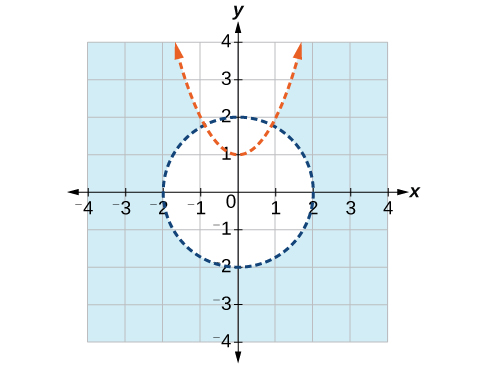
7.T-13 §7.T source ↗
For the following exercises, write the partial fraction decomposition.
Answer
7.T-15 §7.T source ↗
For the following exercises, perform the given matrix operations.
Answer
7.T-17 §7.T source ↗
For the following exercises, perform the given matrix operations.
Answer
7.T-19 §7.T source ↗
For the following exercises, perform the given matrix operations.
Answer
7.T-21 §7.T source ↗
For the following exercises, perform the given matrix operations.
Rewrite the system of linear equations as an augmented matrix.
Answer
7.T-23 §7.T source ↗
For the following exercises, use Gaussian elimination to solve the systems of equations.
Answer
7.T-25 §7.T source ↗
For the following exercises, use the inverse of a matrix to solve the systems of equations.
Answer
7.T-27 §7.T source ↗
For the following exercises, use Cramer’s Rule to solve the systems of equations.
Answer
7.T-29 §7.T source ↗
For the following exercises, solve using a system of linear equations.
A factory producing cell phones has the following cost and revenue functions: and What is the range of cell phones they should produce each day so there is profit? Round to the nearest number that generates profit.
Answer
Loading chapter 8…
Problems and answers are adapted from College Algebra with Corequisite Support 2e by Jay Abramson and Sharon North, OpenStax, and are used under the CC BY-NC-SA 4.0 licence. Access for free at https://openstax.org/books/college-algebra-corequisite-support-2e/pages/1-introduction-to-prerequisites. Illustrations: Copyright Rice University, OpenStax, under CC BY-NC-SA 4.0 license. This adaptation is released under the same licence, is non-commercial, and is neither affiliated with nor endorsed by OpenStax or Rice University.