Every problem in the chapter beside the book’s answer, a chapter at a time as you scroll.
Chapter 10: Quadratic Equations
294 problems · 32 figuresBe Prepared 10.1 §10.1 source ↗
If you missed this problem, review Example 9.12.
Answer
Be Prepared 10.2 §10.1 source ↗
If you missed this problem, review Example 9.67.
Answer
Be Prepared 10.3 §10.1 source ↗
If you missed this problem, review Example 7.43.
Answer
Try It 10.1 §10.1 source ↗
Answer
Try It 10.2 §10.1 source ↗
Answer
Try It 10.3 §10.1 source ↗
Answer
Try It 10.4 §10.1 source ↗
Answer
Try It 10.5 §10.1 source ↗
Answer
Try It 10.6 §10.1 source ↗
Answer
Try It 10.7 §10.1 source ↗
Answer
Try It 10.8 §10.1 source ↗
Answer
Try It 10.9 §10.1 source ↗
Answer
Try It 10.10 §10.1 source ↗
Answer
Try It 10.11 §10.1 source ↗
Answer
Try It 10.12 §10.1 source ↗
Answer
Try It 10.13 §10.1 source ↗
Answer
Try It 10.14 §10.1 source ↗
Answer
Try It 10.15 §10.1 source ↗
Answer
Try It 10.16 §10.1 source ↗
Answer
Try It 10.17 §10.1 source ↗
Answer
Try It 10.18 §10.1 source ↗
Answer
Try It 10.19 §10.1 source ↗
Answer
Try It 10.20 §10.1 source ↗
Answer
Try It 10.21 §10.1 source ↗
Answer
Try It 10.22 §10.1 source ↗
Answer
Try It 10.23 §10.1 source ↗
Answer
Try It 10.24 §10.1 source ↗
Answer
Try It 10.25 §10.1 source ↗
Answer
Try It 10.26 §10.1 source ↗
Answer
10.1-1 §10.1 source ↗
Solve Quadratic Equations of the form Using the Square Root Property
In the following exercises, solve the following quadratic equations.
Answer
10.1-3 §10.1 source ↗
Solve Quadratic Equations of the form Using the Square Root Property
In the following exercises, solve the following quadratic equations.
Answer
10.1-5 §10.1 source ↗
Solve Quadratic Equations of the form Using the Square Root Property
In the following exercises, solve the following quadratic equations.
Answer
10.1-7 §10.1 source ↗
Solve Quadratic Equations of the form Using the Square Root Property
In the following exercises, solve the following quadratic equations.
Answer
10.1-9 §10.1 source ↗
Solve Quadratic Equations of the form Using the Square Root Property
In the following exercises, solve the following quadratic equations.
Answer
10.1-11 §10.1 source ↗
Solve Quadratic Equations of the form Using the Square Root Property
In the following exercises, solve the following quadratic equations.
Answer
10.1-13 §10.1 source ↗
Solve Quadratic Equations of the form Using the Square Root Property
In the following exercises, solve the following quadratic equations.
Answer
10.1-15 §10.1 source ↗
Solve Quadratic Equations of the Form Using the Square Root Property
In the following exercises, solve the following quadratic equations.
Answer
10.1-17 §10.1 source ↗
Solve Quadratic Equations of the Form Using the Square Root Property
In the following exercises, solve the following quadratic equations.
Answer
10.1-19 §10.1 source ↗
Solve Quadratic Equations of the Form Using the Square Root Property
In the following exercises, solve the following quadratic equations.
Answer
10.1-21 §10.1 source ↗
Solve Quadratic Equations of the Form Using the Square Root Property
In the following exercises, solve the following quadratic equations.
Answer
10.1-23 §10.1 source ↗
Solve Quadratic Equations of the Form Using the Square Root Property
In the following exercises, solve the following quadratic equations.
Answer
10.1-25 §10.1 source ↗
Solve Quadratic Equations of the Form Using the Square Root Property
In the following exercises, solve the following quadratic equations.
Answer
10.1-27 §10.1 source ↗
Solve Quadratic Equations of the Form Using the Square Root Property
In the following exercises, solve the following quadratic equations.
Answer
10.1-29 §10.1 source ↗
Solve Quadratic Equations of the Form Using the Square Root Property
In the following exercises, solve the following quadratic equations.
Answer
10.1-31 §10.1 source ↗
Mixed Practice
In the following exercises, solve using the Square Root Property.
Answer
10.1-33 §10.1 source ↗
Mixed Practice
In the following exercises, solve using the Square Root Property.
Answer
10.1-35 §10.1 source ↗
Mixed Practice
In the following exercises, solve using the Square Root Property.
Answer
10.1-37 §10.1 source ↗
Mixed Practice
In the following exercises, solve using the Square Root Property.
Answer
10.1-39 §10.1 source ↗
Mixed Practice
In the following exercises, solve using the Square Root Property.
Answer
10.1-41 §10.1 source ↗
Mixed Practice
In the following exercises, solve using the Square Root Property.
Answer
10.1-43 §10.1 source ↗
Mixed Practice
In the following exercises, solve using the Square Root Property.
Answer
10.1-45 §10.1 source ↗
Mixed Practice
In the following exercises, solve using the Square Root Property.
Answer
10.1-47 §10.1 source ↗
Mixed Practice
In the following exercises, solve using the Square Root Property.
Answer
10.1-49 §10.1 source ↗
Mixed Practice
In the following exercises, solve using the Square Root Property.
Answer
10.1-51 §10.1 source ↗
Mixed Practice
In the following exercises, solve using the Square Root Property.
Answer
10.1-53 §10.1 source ↗
Mixed Practice
In the following exercises, solve using the Square Root Property.
Paola has enough mulch to cover 48 square feet. She wants to use it to make three square vegetable gardens of equal sizes. Solve the equation to find , the length of each garden side.
Answer
10.1-55 §10.1 source ↗
Mixed Practice
In the following exercises, solve using the Square Root Property.
Explain why the equation has no solution.
Answer
Be Prepared 10.4 §10.2 source ↗
If you missed this problem, review Example 6.47.
Answer
Be Prepared 10.5 §10.2 source ↗
If you missed this problem, review Example 7.42.
Answer
Be Prepared 10.6 §10.2 source ↗
If you missed this problem, review Example 7.46.
Answer
Try It 10.27 §10.2 source ↗
Complete the square to make a perfect square trinomial. Write the result as a binomial square.
Answer
Try It 10.28 §10.2 source ↗
Complete the square to make a perfect square trinomial. Write the result as a binomial square.
Answer
Try It 10.29 §10.2 source ↗
Complete the square to make a perfect square trinomial. Write the result as a binomial square.
Answer
Try It 10.30 §10.2 source ↗
Complete the square to make a perfect square trinomial. Write the result as a binomial square.
Answer
Try It 10.31 §10.2 source ↗
Complete the square to make a perfect square trinomial. Write the result as a binomial square.
Answer
Try It 10.32 §10.2 source ↗
Complete the square to make a perfect square trinomial. Write the result as a binomial square.
Answer
Try It 10.33 §10.2 source ↗
Complete the square to make a perfect square trinomial. Write the result as a binomial square.
Answer
Try It 10.34 §10.2 source ↗
Complete the square to make a perfect square trinomial. Write the result as a binomial square.
Answer
Try It 10.35 §10.2 source ↗
Answer
Try It 10.36 §10.2 source ↗
Answer
Try It 10.37 §10.2 source ↗
Answer
Try It 10.38 §10.2 source ↗
Answer
Try It 10.39 §10.2 source ↗
Answer
Try It 10.40 §10.2 source ↗
Answer
Try It 10.41 §10.2 source ↗
Answer
Try It 10.42 §10.2 source ↗
Answer
Try It 10.43 §10.2 source ↗
Answer
Try It 10.44 §10.2 source ↗
Answer
Try It 10.45 §10.2 source ↗
Answer
Try It 10.46 §10.2 source ↗
Answer
Try It 10.47 §10.2 source ↗
Answer
Try It 10.48 §10.2 source ↗
Answer
Try It 10.49 §10.2 source ↗
Answer
Try It 10.50 §10.2 source ↗
Answer
Try It 10.51 §10.2 source ↗
Answer
Try It 10.52 §10.2 source ↗
Answer
Try It 10.53 §10.2 source ↗
Answer
Try It 10.54 §10.2 source ↗
Answer
10.2-57 §10.2 source ↗
Complete the Square of a Binomial Expression
In the following exercises, complete the square to make a perfect square trinomial. Then, write the result as a binomial squared.
Answer
10.2-59 §10.2 source ↗
Complete the Square of a Binomial Expression
In the following exercises, complete the square to make a perfect square trinomial. Then, write the result as a binomial squared.
Answer
10.2-61 §10.2 source ↗
Complete the Square of a Binomial Expression
In the following exercises, complete the square to make a perfect square trinomial. Then, write the result as a binomial squared.
Answer
10.2-63 §10.2 source ↗
Complete the Square of a Binomial Expression
In the following exercises, complete the square to make a perfect square trinomial. Then, write the result as a binomial squared.
Answer
10.2-65 §10.2 source ↗
Complete the Square of a Binomial Expression
In the following exercises, complete the square to make a perfect square trinomial. Then, write the result as a binomial squared.
Answer
10.2-67 §10.2 source ↗
Complete the Square of a Binomial Expression
In the following exercises, complete the square to make a perfect square trinomial. Then, write the result as a binomial squared.
Answer
10.2-69 §10.2 source ↗
Solve Quadratic Equations of the Form by Completing the Square
In the following exercises, solve by completing the square.
Answer
10.2-71 §10.2 source ↗
Solve Quadratic Equations of the Form by Completing the Square
In the following exercises, solve by completing the square.
Answer
10.2-73 §10.2 source ↗
Solve Quadratic Equations of the Form by Completing the Square
In the following exercises, solve by completing the square.
Answer
10.2-75 §10.2 source ↗
Solve Quadratic Equations of the Form by Completing the Square
In the following exercises, solve by completing the square.
Answer
10.2-77 §10.2 source ↗
Solve Quadratic Equations of the Form by Completing the Square
In the following exercises, solve by completing the square.
Answer
10.2-79 §10.2 source ↗
Solve Quadratic Equations of the Form by Completing the Square
In the following exercises, solve by completing the square.
Answer
10.2-81 §10.2 source ↗
Solve Quadratic Equations of the Form by Completing the Square
In the following exercises, solve by completing the square.
Answer
10.2-83 §10.2 source ↗
Solve Quadratic Equations of the Form by Completing the Square
In the following exercises, solve by completing the square.
Answer
10.2-85 §10.2 source ↗
Solve Quadratic Equations of the Form by Completing the Square
In the following exercises, solve by completing the square.
Answer
10.2-87 §10.2 source ↗
Solve Quadratic Equations of the Form by Completing the Square
In the following exercises, solve by completing the square.
Answer
10.2-89 §10.2 source ↗
Solve Quadratic Equations of the Form by Completing the Square
In the following exercises, solve by completing the square.
Answer
10.2-91 §10.2 source ↗
Solve Quadratic Equations of the Form by Completing the Square
In the following exercises, solve by completing the square.
Answer
10.2-93 §10.2 source ↗
Solve Quadratic Equations of the Form by Completing the Square
In the following exercises, solve by completing the square.
Answer
10.2-95 §10.2 source ↗
Solve Quadratic Equations of the Form by Completing the Square
In the following exercises, solve by completing the square.
Rafi is designing a rectangular playground to have an area of 320 square feet. He wants one side of the playground to be four feet longer than the other side. Solve the equation for , the length of one side of the playground. What is the length of the other side?
Answer
10.2-97 §10.2 source ↗
Solve Quadratic Equations of the Form by Completing the Square
In the following exercises, solve by completing the square.
Solve the equation ⓐ by using the Square Root Property and ⓑ by completing the square. ⓒ Which method do you prefer? Why?
Answer
Be Prepared 10.7 §10.3 source ↗
If you missed this problem, review Example 1.74.
Answer
Be Prepared 10.8 §10.3 source ↗
If you missed this problem, review Example 9.29.
Answer
Be Prepared 10.9 §10.3 source ↗
If you missed this problem, review Example 9.12.
Answer
Try It 10.55 §10.3 source ↗
Answer
Try It 10.56 §10.3 source ↗
Answer
Try It 10.57 §10.3 source ↗
Answer
Try It 10.58 §10.3 source ↗
Answer
Try It 10.59 §10.3 source ↗
Answer
Try It 10.60 §10.3 source ↗
Answer
Try It 10.61 §10.3 source ↗
Answer
Try It 10.62 §10.3 source ↗
Answer
Try It 10.63 §10.3 source ↗
Answer
Try It 10.64 §10.3 source ↗
Answer
Try It 10.65 §10.3 source ↗
Answer
Try It 10.66 §10.3 source ↗
Answer
Try It 10.67 §10.3 source ↗
Answer
Try It 10.68 §10.3 source ↗
Answer
Try It 10.69 §10.3 source ↗
Answer
Try It 10.70 §10.3 source ↗
Answer
Try It 10.71 §10.3 source ↗
Determine the number of solutions to each quadratic equation:
ⓐ ⓑ ⓒ ⓓ
Answer
Try It 10.72 §10.3 source ↗
Determine the number of solutions to each quadratic equation:
ⓐ ⓑ ⓒ ⓓ
Answer
Try It 10.73 §10.3 source ↗
Identify the most appropriate method to use to solve each quadratic equation:
ⓐ ⓑ ⓒ
Answer
Try It 10.74 §10.3 source ↗
Identify the most appropriate method to use to solve each quadratic equation:
ⓐ ⓑ ⓒ
Answer
10.3-99 §10.3 source ↗
Solve Quadratic Equations Using the Quadratic Formula
In the following exercises, solve by using the Quadratic Formula.
Answer
10.3-101 §10.3 source ↗
Solve Quadratic Equations Using the Quadratic Formula
In the following exercises, solve by using the Quadratic Formula.
Answer
10.3-103 §10.3 source ↗
Solve Quadratic Equations Using the Quadratic Formula
In the following exercises, solve by using the Quadratic Formula.
Answer
10.3-105 §10.3 source ↗
Solve Quadratic Equations Using the Quadratic Formula
In the following exercises, solve by using the Quadratic Formula.
Answer
10.3-107 §10.3 source ↗
Solve Quadratic Equations Using the Quadratic Formula
In the following exercises, solve by using the Quadratic Formula.
Answer
10.3-109 §10.3 source ↗
Solve Quadratic Equations Using the Quadratic Formula
In the following exercises, solve by using the Quadratic Formula.
Answer
10.3-111 §10.3 source ↗
Solve Quadratic Equations Using the Quadratic Formula
In the following exercises, solve by using the Quadratic Formula.
Answer
10.3-113 §10.3 source ↗
Solve Quadratic Equations Using the Quadratic Formula
In the following exercises, solve by using the Quadratic Formula.
Answer
10.3-115 §10.3 source ↗
Solve Quadratic Equations Using the Quadratic Formula
In the following exercises, solve by using the Quadratic Formula.
Answer
10.3-117 §10.3 source ↗
Solve Quadratic Equations Using the Quadratic Formula
In the following exercises, solve by using the Quadratic Formula.
Answer
10.3-119 §10.3 source ↗
Solve Quadratic Equations Using the Quadratic Formula
In the following exercises, solve by using the Quadratic Formula.
Answer
10.3-121 §10.3 source ↗
Solve Quadratic Equations Using the Quadratic Formula
In the following exercises, solve by using the Quadratic Formula.
Answer
10.3-123 §10.3 source ↗
Solve Quadratic Equations Using the Quadratic Formula
In the following exercises, solve by using the Quadratic Formula.
Answer
10.3-125 §10.3 source ↗
Solve Quadratic Equations Using the Quadratic Formula
In the following exercises, solve by using the Quadratic Formula.
Answer
10.3-127 §10.3 source ↗
Solve Quadratic Equations Using the Quadratic Formula
In the following exercises, solve by using the Quadratic Formula.
Answer
10.3-129 §10.3 source ↗
Solve Quadratic Equations Using the Quadratic Formula
In the following exercises, solve by using the Quadratic Formula.
Answer
10.3-131 §10.3 source ↗
Use the Discriminant to Predict the Number of Solutions of a Quadratic Equation
In the following exercises, determine the number of solutions to each quadratic equation.
ⓐ
ⓑ
ⓒ
ⓓ
Answer
ⓒ 2 ⓓ no real solutions
10.3-133 §10.3 source ↗
Use the Discriminant to Predict the Number of Solutions of a Quadratic Equation
In the following exercises, determine the number of solutions to each quadratic equation.
ⓐ
ⓑ
ⓒ
ⓓ
Answer
ⓒ 1 ⓓ 2
10.3-135 §10.3 source ↗
Identify the Most Appropriate Method to Use to Solve a Quadratic Equation
In the following exercises, identify the most appropriate method (Factoring, Square Root, or Quadratic Formula) to use to solve each quadratic equation. Do not solve.
ⓐ ⓑ ⓒ
Answer
ⓒ Quadratic Formula
10.3-137 §10.3 source ↗
Identify the Most Appropriate Method to Use to Solve a Quadratic Equation
In the following exercises, identify the most appropriate method (Factoring, Square Root, or Quadratic Formula) to use to solve each quadratic equation. Do not solve.
ⓐ ⓑ ⓒ
Answer
ⓒ factor
10.3-139 §10.3 source ↗
Identify the Most Appropriate Method to Use to Solve a Quadratic Equation
In the following exercises, identify the most appropriate method (Factoring, Square Root, or Quadratic Formula) to use to solve each quadratic equation. Do not solve.
A flare is fired straight up from a ship at sea. Solve the equation for , the number of seconds it will take for the flare to be at an altitude of 640 feet.
Answer
10.3-141 §10.3 source ↗
Identify the Most Appropriate Method to Use to Solve a Quadratic Equation
In the following exercises, identify the most appropriate method (Factoring, Square Root, or Quadratic Formula) to use to solve each quadratic equation. Do not solve.
Solve the equation
ⓐ by completing the square
ⓑ using the Quadratic Formula
ⓒ Which method do you prefer? Why?
Answer
ⓒ answers will vary
Be Prepared 10.10 §10.4 source ↗
If you missed this problem, review Example 3.10.
Answer
Be Prepared 10.11 §10.4 source ↗
If you missed this problem, review Example 3.36.
Answer
Be Prepared 10.12 §10.4 source ↗
If you missed this problem, review Example 3.39.
Answer
Try It 10.75 §10.4 source ↗
Answer
Try It 10.76 §10.4 source ↗
Answer
Try It 10.77 §10.4 source ↗
Answer
Try It 10.78 §10.4 source ↗
Answer
Try It 10.79 §10.4 source ↗
Answer
Try It 10.80 §10.4 source ↗
Answer
Try It 10.81 §10.4 source ↗
Answer
Try It 10.82 §10.4 source ↗
Answer
Try It 10.83 §10.4 source ↗
Answer
Try It 10.84 §10.4 source ↗
Answer
10.4-143 §10.4 source ↗
Solve Applications of the Quadratic Formula
In the following exercises, solve by using methods of factoring, the square root principle, or the Quadratic Formula. Round your answers to the nearest tenth.
The product of two consecutive odd numbers is 255. Find the numbers.
Answer
10.4-145 §10.4 source ↗
Solve Applications of the Quadratic Formula
In the following exercises, solve by using methods of factoring, the square root principle, or the Quadratic Formula. Round your answers to the nearest tenth.
The product of two consecutive even numbers is 624. Find the numbers.
Answer
10.4-147 §10.4 source ↗
Solve Applications of the Quadratic Formula
In the following exercises, solve by using methods of factoring, the square root principle, or the Quadratic Formula. Round your answers to the nearest tenth.
The product of two consecutive odd numbers is 483. Find the numbers.
Answer
10.4-149 §10.4 source ↗
Solve Applications of the Quadratic Formula
In the following exercises, solve by using methods of factoring, the square root principle, or the Quadratic Formula. Round your answers to the nearest tenth.
A triangle with area 45 square inches has a height that is two less than four times the width. Find the height and width of the triangle.
Answer
10.4-151 §10.4 source ↗
Solve Applications of the Quadratic Formula
In the following exercises, solve by using methods of factoring, the square root principle, or the Quadratic Formula. Round your answers to the nearest tenth.
The hypotenuse of a right triangle is twice the length of one of its legs. The length of the other leg is three feet. Find the lengths of the three sides of the triangle. Round to the nearest tenth.
Answer
10.4-153 §10.4 source ↗
Solve Applications of the Quadratic Formula
In the following exercises, solve by using methods of factoring, the square root principle, or the Quadratic Formula. Round your answers to the nearest tenth.
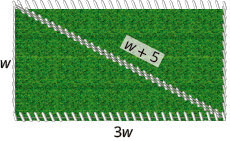
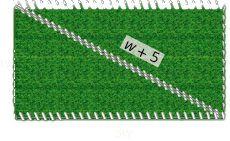
A farmer plans to fence off sections of a rectangular corral. The diagonal distance from one corner of the corral to the opposite corner is five yards longer than the width of the corral. The length of the corral is three times the width. Find the length of the diagonal of the corral. Round to the nearest tenth.
Answer
10.4-155 §10.4 source ↗
Solve Applications of the Quadratic Formula
In the following exercises, solve by using methods of factoring, the square root principle, or the Quadratic Formula. Round your answers to the nearest tenth.
The length of a rectangular driveway is five feet more than three times the width. The area is 350 square feet. Find the length and width of the driveway.
Answer
10.4-157 §10.4 source ↗
Solve Applications of the Quadratic Formula
In the following exercises, solve by using methods of factoring, the square root principle, or the Quadratic Formula. Round your answers to the nearest tenth.
A firework rocket is shot upward at a rate of 640 ft/sec. Use the projectile formula to determine when the height of the firework rocket will be 1200 feet.
Answer
10.4-159 §10.4 source ↗
Solve Applications of the Quadratic Formula
In the following exercises, solve by using methods of factoring, the square root principle, or the Quadratic Formula. Round your answers to the nearest tenth.
A bullet is fired straight up from a BB gun with initial velocity 1120 feet per second at an initial height of 8 feet. Use the formula to determine how many seconds it will take for the bullet to hit the ground. (That is, when will ?)
Answer
10.4-161 §10.4 source ↗
Solve Applications of the Quadratic Formula
In the following exercises, solve by using methods of factoring, the square root principle, or the Quadratic Formula. Round your answers to the nearest tenth.
Make up a problem involving the product of two consecutive odd integers. Start by choosing two consecutive odd integers. ⓐ What are your integers? ⓑ What is the product of your integers? ⓒ Solve the equation , where is the product you found in part (b). ⓓ Did you get the numbers you started with?
Answer
ⓑ answers will vary ⓒ answers will vary ⓓ answers will vary
Be Prepared 10.13 §10.5 source ↗
If you missed this problem, review Example 4.11.
Answer
Be Prepared 10.14 §10.5 source ↗
If you missed this problem, review Example 1.57.
Answer
Be Prepared 10.15 §10.5 source ↗
If you missed this problem, review Example 1.89.
Answer
Try It 10.85 §10.5 source ↗
Answer
Try It 10.86 §10.5 source ↗
Answer
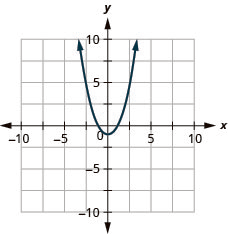
Try It 10.87 §10.5 source ↗
Determine whether each parabola opens upward or downward:
ⓐ ⓑ
Answer
Try It 10.88 §10.5 source ↗
Determine whether each parabola opens upward or downward:
ⓐ ⓑ
Answer
Try It 10.89 §10.5 source ↗
Answer
Try It 10.90 §10.5 source ↗
Answer
Try It 10.91 §10.5 source ↗
Answer
Try It 10.92 §10.5 source ↗
Answer
Try It 10.93 §10.5 source ↗
Answer
Try It 10.94 §10.5 source ↗
Answer
Try It 10.95 §10.5 source ↗
Answer
Try It 10.96 §10.5 source ↗
Answer
Try It 10.97 §10.5 source ↗
Answer
; ;
axis: ; vertex: ;
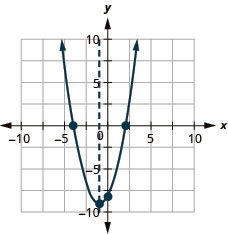
Try It 10.98 §10.5 source ↗
Answer
axis: ;
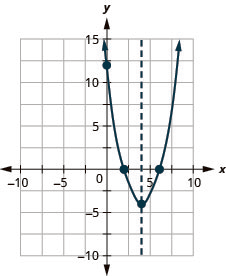
Try It 10.99 §10.5 source ↗
Answer
axis: ;
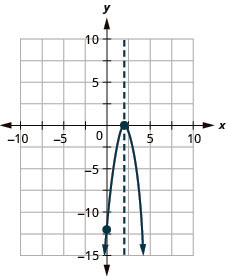
Try It 10.100 §10.5 source ↗
Answer
axis: ;
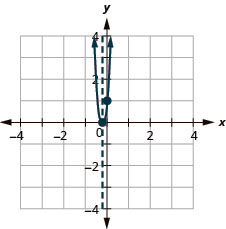
Try It 10.101 §10.5 source ↗
Answer
axis: ;
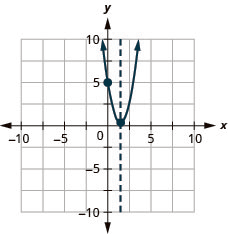
Try It 10.102 §10.5 source ↗
Answer
axis: ;
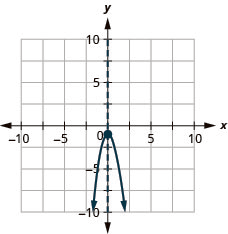
Try It 10.103 §10.5 source ↗
Answer
axis: ;
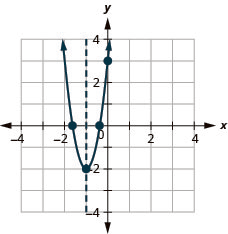
Try It 10.104 §10.5 source ↗
Answer
axis: ;
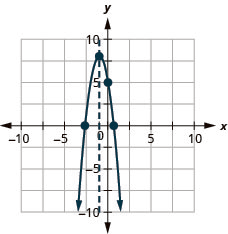
Try It 10.105 §10.5 source ↗
Answer
Try It 10.106 §10.5 source ↗
Answer
Try It 10.107 §10.5 source ↗
Answer
Try It 10.108 §10.5 source ↗
Answer
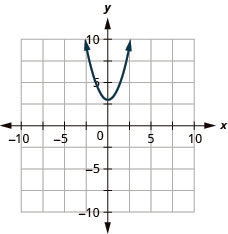
10.5-163 §10.5 source ↗
Recognize the Graph of a Quadratic Equation in Two Variables
In the following exercises, graph:
Answer
10.5-165 §10.5 source ↗
In the following exercises, determine if the parabola opens up or down.
Answer
10.5-167 §10.5 source ↗
In the following exercises, determine if the parabola opens up or down.
Answer
10.5-169 §10.5 source ↗
Find the Axis of Symmetry and Vertex of a Parabola
In the following exercises, find ⓐ the axis of symmetry and ⓑ the vertex.
Answer
10.5-171 §10.5 source ↗
Find the Axis of Symmetry and Vertex of a Parabola
In the following exercises, find ⓐ the axis of symmetry and ⓑ the vertex.
Answer
10.5-173 §10.5 source ↗
Find the Intercepts of a Parabola
In the following exercises, find the x- and y-intercepts.
Answer
10.5-175 §10.5 source ↗
Find the Intercepts of a Parabola
In the following exercises, find the x- and y-intercepts.
Answer
10.5-177 §10.5 source ↗
Find the Intercepts of a Parabola
In the following exercises, find the x- and y-intercepts.
Answer
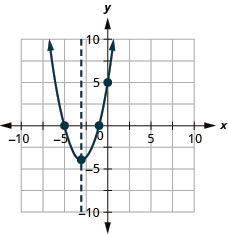
10.5-179 §10.5 source ↗
Graph Quadratic Equations in Two Variables
In the following exercises, graph by using intercepts, the vertex, and the axis of symmetry.
Answer
axis:
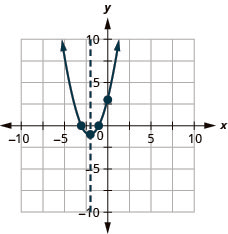
10.5-181 §10.5 source ↗
Graph Quadratic Equations in Two Variables
In the following exercises, graph by using intercepts, the vertex, and the axis of symmetry.
Answer
axis:
10.5-183 §10.5 source ↗
Graph Quadratic Equations in Two Variables
In the following exercises, graph by using intercepts, the vertex, and the axis of symmetry.
Answer
axis:
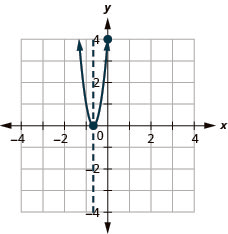
10.5-185 §10.5 source ↗
Graph Quadratic Equations in Two Variables
In the following exercises, graph by using intercepts, the vertex, and the axis of symmetry.
Answer
axis:
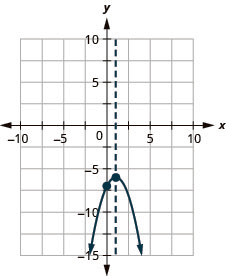
10.5-187 §10.5 source ↗
Graph Quadratic Equations in Two Variables
In the following exercises, graph by using intercepts, the vertex, and the axis of symmetry.
Answer
axis:
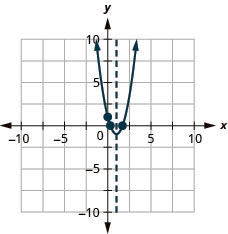
10.5-189 §10.5 source ↗
Graph Quadratic Equations in Two Variables
In the following exercises, graph by using intercepts, the vertex, and the axis of symmetry.
Answer
axis:
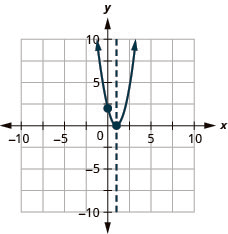
10.5-191 §10.5 source ↗
Graph Quadratic Equations in Two Variables
In the following exercises, graph by using intercepts, the vertex, and the axis of symmetry.
Answer
axis:
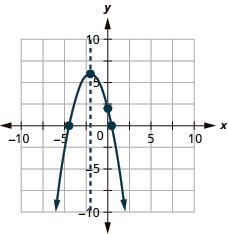
10.5-193 §10.5 source ↗
Graph Quadratic Equations in Two Variables
In the following exercises, graph by using intercepts, the vertex, and the axis of symmetry.
Answer
axis:
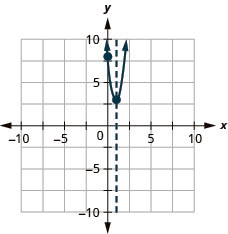
10.5-195 §10.5 source ↗
Graph Quadratic Equations in Two Variables
In the following exercises, graph by using intercepts, the vertex, and the axis of symmetry.
Answer
axis:
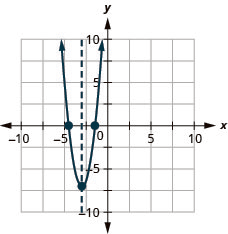
10.5-197 §10.5 source ↗
Solve Maximum and Minimum Applications
In the following exercises, find the maximum or minimum value.
Answer
10.5-199 §10.5 source ↗
Solve Maximum and Minimum Applications
In the following exercises, find the maximum or minimum value.
Answer
10.5-201 §10.5 source ↗
Solve Maximum and Minimum Applications
In the following exercises, find the maximum or minimum value.
Answer
10.5-203 §10.5 source ↗
In the following exercises, solve. Round answers to the nearest tenth.
An arrow is shot vertically upward from a platform 45 feet high at a rate of 168 ft/sec. Use the quadratic equation to find how long it will take the arrow to reach its maximum height, and then find the maximum height.
Answer
10.5-205 §10.5 source ↗
In the following exercises, solve. Round answers to the nearest tenth.
A computer store owner estimates that by charging dollars each for a certain computer, he can sell computers each week. The quadratic equation is used to find the revenue, , received when the selling price of a computer is . Find the selling price that will give him the maximum revenue, and then find the amount of the maximum revenue.
Answer
10.5-207 §10.5 source ↗
In the following exercises, solve. Round answers to the nearest tenth.
A rancher is going to fence three sides of a corral next to a river. He needs to maximize the corral area using 240 feet of fencing. The quadratic equation gives the area of the corral, , for the length, of the corral along the river. Find the length of the corral along the river that will give the maximum area, and then find the maximum area of the corral.
Answer
10.5-209 §10.5 source ↗
In the following exercises, solve. Round answers to the nearest tenth.
In the previous set of exercises, you worked with the quadratic equation that modeled the revenue received from selling computers at a price of dollars. You found the selling price that would give the maximum revenue and calculated the maximum revenue. Now you will look at more characteristics of this model.
ⓐ Graph the equation . ⓑ Find the values of the x-intercepts.
Answer
ⓐ
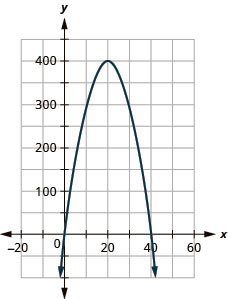
ⓑ
10.5-211 §10.5 source ↗
In the following exercises, solve. Round answers to the nearest tenth.
For the revenue model in Exercise 10.205 and Exercise 10.209, explain what the x-intercepts mean to the computer store owner.
Answer
10.R-213 §10.R source ↗
In the following exercises, solve using the Square Root Property.
Answer
10.R-215 §10.R source ↗
In the following exercises, solve using the Square Root Property.
Answer
10.R-217 §10.R source ↗
In the following exercises, solve using the Square Root Property.
Answer
10.R-219 §10.R source ↗
In the following exercises, solve using the Square Root Property.
Answer
10.R-221 §10.R source ↗
In the following exercises, solve using the Square Root Property.
Answer
10.R-223 §10.R source ↗
In the following exercises, solve using the Square Root Property.
Answer
10.R-225 §10.R source ↗
In the following exercises, solve using the Square Root Property.
Answer
10.R-227 §10.R source ↗
In the following exercises, solve using the Square Root Property.
Answer
10.R-229 §10.R source ↗
In the following exercises, solve using the Square Root Property.
Answer
10.R-231 §10.R source ↗
In the following exercises, solve using the Square Root Property.
Answer
10.R-233 §10.R source ↗
In the following exercises, solve using the Square Root Property.
Answer
10.R-235 §10.R source ↗
In the following exercises, solve using the Square Root Property.
Answer
10.R-237 §10.R source ↗
In the following exercises, solve using the Square Root Property.
Answer
10.R-239 §10.R source ↗
In the following exercises, complete the square to make a perfect square trinomial. Then write the result as a binomial squared.
Answer
10.R-241 §10.R source ↗
In the following exercises, complete the square to make a perfect square trinomial. Then write the result as a binomial squared.
Answer
10.R-243 §10.R source ↗
In the following exercises, complete the square to make a perfect square trinomial. Then write the result as a binomial squared.
Answer
10.R-245 §10.R source ↗
In the following exercises, complete the square to make a perfect square trinomial. Then write the result as a binomial squared.
Answer
10.R-247 §10.R source ↗
In the following exercises, solve by completing the square.
Answer
10.R-249 §10.R source ↗
In the following exercises, solve by completing the square.
Answer
10.R-251 §10.R source ↗
In the following exercises, solve by completing the square.
Answer
10.R-253 §10.R source ↗
In the following exercises, solve by completing the square.
Answer
10.R-255 §10.R source ↗
In the following exercises, solve by completing the square.
Answer
10.R-257 §10.R source ↗
In the following exercises, solve by completing the square.
Answer
10.R-259 §10.R source ↗
In the following exercises, solve by completing the square.
Answer
10.R-261 §10.R source ↗
In the following exercises, solve by completing the square.
Answer
10.R-263 §10.R source ↗
In the following exercises, solve by completing the square.
Answer
10.R-265 §10.R source ↗
In the following exercises, solve by completing the square.
Answer
10.R-267 §10.R source ↗
In the following exercises, solve by using the Quadratic Formula.
Answer
10.R-269 §10.R source ↗
In the following exercises, solve by using the Quadratic Formula.
Answer
10.R-271 §10.R source ↗
In the following exercises, solve by using the Quadratic Formula.
Answer
10.R-273 §10.R source ↗
In the following exercises, solve by using the Quadratic Formula.
Answer
10.R-275 §10.R source ↗
In the following exercises, solve by using the Quadratic Formula.
Answer
10.R-277 §10.R source ↗
In the following exercises, solve by using the Quadratic Formula.
Answer
10.R-279 §10.R source ↗
In the following exercises, solve by using the Quadratic Formula.
Answer
10.R-281 §10.R source ↗
In the following exercises, solve by using the Quadratic Formula.
Answer
10.R-283 §10.R source ↗
In the following exercises, determine the number of solutions to each quadratic equation.
ⓐ
ⓑ
ⓒ
ⓓ
Answer
10.R-285 §10.R source ↗
In the following exercises, identify the most appropriate method (Factoring, Square Root, or Quadratic Formula) to use to solve each quadratic equation.
ⓐ
ⓑ
ⓒ
Answer
10.R-287 §10.R source ↗
In the following exercises, solve by using methods of factoring, the square root principle, or the quadratic formula.
Find two consecutive odd numbers whose product is 323.
Answer
10.R-289 §10.R source ↗
In the following exercises, solve by using methods of factoring, the square root principle, or the quadratic formula.
A triangular banner has an area of 351 square centimeters. The length of the base is two centimeters longer than four times the height. Find the height and length of the base.
Answer
10.R-291 §10.R source ↗
In the following exercises, solve by using methods of factoring, the square root principle, or the quadratic formula.
A tile mosaic in the shape of a right triangle is used as the corner of a rectangular pathway. The hypotenuse of the mosaic is 5 feet. One side of the mosaic is twice as long as the other side. What are the lengths of the sides? Round to the nearest tenth.
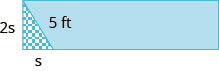
Answer
10.R-293 §10.R source ↗
In the following exercises, solve by using methods of factoring, the square root principle, or the quadratic formula.
The front walk from the street to Pam’s house has an area of 250 square feet. Its length is two less than four times its width. Find the length and width of the sidewalk. Round to the nearest tenth.
Answer
10.R-295 §10.R source ↗
In the following exercises, solve by using methods of factoring, the square root principle, or the quadratic formula.
A ball is thrown vertically in the air with a velocity of 160 ft/sec. Use the formula to determine when the ball will be 384 feet from the ground. Round to the nearest tenth.
Answer
10.R-297 §10.R source ↗
In the following exercises, graph by plotting point.
Graph
Answer
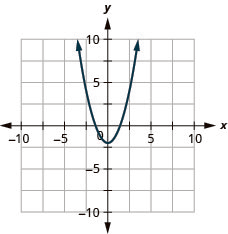
10.R-299 §10.R source ↗
In the following exercises, determine if the following parabolas open up or down.
Answer
10.R-301 §10.R source ↗
In the following exercises, determine if the following parabolas open up or down.
Answer
10.R-303 §10.R source ↗
In the following exercises, find ⓐ the axis of symmetry and ⓑ the vertex.
Answer
10.R-305 §10.R source ↗
In the following exercises, find the x- and y-intercepts.
Answer
10.R-307 §10.R source ↗
In the following exercises, find the x- and y-intercepts.
Answer
10.R-309 §10.R source ↗
In the following exercises, find the x- and y-intercepts.
Answer
10.R-311 §10.R source ↗
In the following exercises, graph by using intercepts, the vertex, and the axis of symmetry.
Answer
axis:
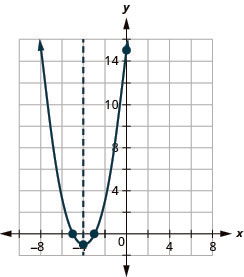
10.R-313 §10.R source ↗
In the following exercises, graph by using intercepts, the vertex, and the axis of symmetry.
Answer
axis:
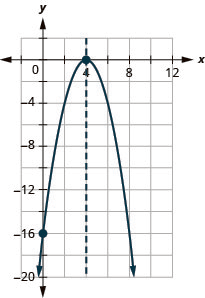
10.R-315 §10.R source ↗
In the following exercises, graph by using intercepts, the vertex, and the axis of symmetry.
Answer
axis:
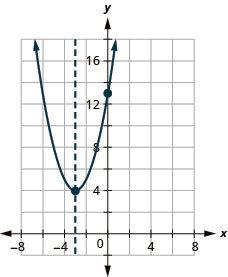
10.R-317 §10.R source ↗
In the following exercises, graph by using intercepts, the vertex, and the axis of symmetry.
Answer
axis:
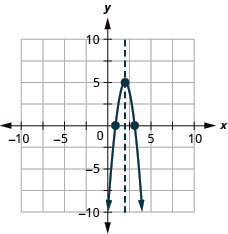
10.R-319 §10.R source ↗
In the following exercises, find the minimum or maximum value.
Answer
10.R-321 §10.R source ↗
In the following exercises, solve. Rounding answers to the nearest tenth.
A ball is thrown upward from the ground with an initial velocity of 112 ft/sec. Use the quadratic equation to find how long it will take the ball to reach maximum height, and then find the maximum height.
Answer
10.T-323 §10.T source ↗
Answer
10.T-325 §10.T source ↗
Answer
10.T-327 §10.T source ↗
Solve the following quadratic equations. Use any method.
Answer
10.T-329 §10.T source ↗
Solve the following quadratic equations. Use any method.
Answer
10.T-331 §10.T source ↗
Use the discriminant to determine the number of solutions of each quadratic equation.
Answer
10.T-333 §10.T source ↗
Solve by factoring, the Square Root Property, or the Quadratic Formula.
Find two consecutive even numbers whose product is 360.
Answer
10.T-335 §10.T source ↗
For each parabola, find ⓐ which ways it opens, ⓑ the axis of symmetry, ⓒ the vertex, ⓓ the x- and y-intercepts, and ⓔ the maximum or minimum value.
Answer
10.T-337 §10.T source ↗
For each parabola, find ⓐ which ways it opens, ⓑ the axis of symmetry, ⓒ the vertex, ⓓ the x- and y-intercepts, and ⓔ the maximum or minimum value.
Answer
10.T-339 §10.T source ↗
For each parabola, find ⓐ which ways it opens, ⓑ the axis of symmetry, ⓒ the vertex, ⓓ the x- and y-intercepts, and ⓔ the maximum or minimum value.
Answer
ⓒ ⓓ
ⓔ maximum value of when
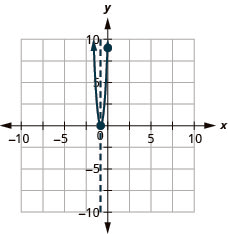
10.T-341 §10.T source ↗
Graph the following parabolas by using intercepts, the vertex, and the axis of symmetry.
Answer
axis:
End of the book.
Problems and answers are adapted from Elementary Algebra 2e by Lynn Marecek and MaryAnne Anthony-Smith, OpenStax, and are used under the CC BY-NC-SA 4.0 licence. Access for free at https://openstax.org/books/elementary-algebra-2e/pages/1-introduction. Illustrations: Copyright Rice University, OpenStax, under CC BY-NC-SA 4.0 license. This adaptation is released under the same licence, is non-commercial, and is neither affiliated with nor endorsed by OpenStax or Rice University.