Every problem in the chapter beside the book’s answer, a chapter at a time as you scroll.
Chapter 2: Solving Linear Equations and Inequalities
507 problems · 95 figuresBe Prepared 2.1 §2.1 source ↗
If you missed this problem, review Example 1.54.
Answer
Be Prepared 2.2 §2.1 source ↗
If you missed this problem, review Example 1.56.
Answer
Be Prepared 2.3 §2.1 source ↗
If you missed this problem, review Example 1.138.
Answer
Be Prepared 2.4 §2.1 source ↗
If you missed this problem, review Example 1.26.
Answer
Try It 2.1 §2.1 source ↗
Answer
Try It 2.2 §2.1 source ↗
Answer
Try It 2.3 §2.1 source ↗
Answer
Try It 2.4 §2.1 source ↗
Answer
Try It 2.5 §2.1 source ↗
Answer
Try It 2.6 §2.1 source ↗
Answer
Try It 2.7 §2.1 source ↗
Answer
Try It 2.8 §2.1 source ↗
Answer
Try It 2.9 §2.1 source ↗
Answer
Try It 2.10 §2.1 source ↗
Answer
Try It 2.11 §2.1 source ↗
Answer
Try It 2.12 §2.1 source ↗
Answer
Try It 2.13 §2.1 source ↗
Answer
Try It 2.14 §2.1 source ↗
Answer
Try It 2.15 §2.1 source ↗
Answer
Try It 2.16 §2.1 source ↗
Answer
Try It 2.17 §2.1 source ↗
Answer
Try It 2.18 §2.1 source ↗
Answer
Try It 2.19 §2.1 source ↗
Answer
Try It 2.20 §2.1 source ↗
Answer
Try It 2.21 §2.1 source ↗
Translate into an algebraic equation and solve:
The Pappas family has two cats, Zeus and Athena. Together, they weigh 23 pounds. Zeus weighs 16 pounds. How much does Athena weigh?
Answer
Try It 2.22 §2.1 source ↗
Translate into an algebraic equation and solve:
Sam and Henry are roommates. Together, they have 68 books. Sam has 26 books. How many books does Henry have?
Answer
Try It 2.23 §2.1 source ↗
Translate into an algebraic equation and solve:
Eddie paid $19,875 for his new car. This was $1,025 less than the sticker price. What was the sticker price of the car?
Answer
Try It 2.24 §2.1 source ↗
Translate into an algebraic equation and solve:
The admission price for the movies during the day is $7.75. This is $3.25 less the price at night. How much does the movie cost at night?
Answer
2.1-1 §2.1 source ↗
Verify a Solution of an Equation
In the following exercises, determine whether the given value is a solution to the equation.
Is a solution of
?
Answer
2.1-3 §2.1 source ↗
Verify a Solution of an Equation
In the following exercises, determine whether the given value is a solution to the equation.
Is a solution of
?
Answer
2.1-5 §2.1 source ↗
Solve Equations using the Subtraction and Addition Properties of Equality
In the following exercises, solve each equation using the Subtraction and Addition Properties of Equality.
Answer
2.1-7 §2.1 source ↗
Solve Equations using the Subtraction and Addition Properties of Equality
In the following exercises, solve each equation using the Subtraction and Addition Properties of Equality.
Answer
2.1-9 §2.1 source ↗
Solve Equations using the Subtraction and Addition Properties of Equality
In the following exercises, solve each equation using the Subtraction and Addition Properties of Equality.
Answer
2.1-11 §2.1 source ↗
Solve Equations using the Subtraction and Addition Properties of Equality
In the following exercises, solve each equation using the Subtraction and Addition Properties of Equality.
Answer
2.1-13 §2.1 source ↗
Solve Equations using the Subtraction and Addition Properties of Equality
In the following exercises, solve each equation using the Subtraction and Addition Properties of Equality.
Answer
2.1-15 §2.1 source ↗
Solve Equations using the Subtraction and Addition Properties of Equality
In the following exercises, solve each equation using the Subtraction and Addition Properties of Equality.
Answer
2.1-17 §2.1 source ↗
Solve Equations using the Subtraction and Addition Properties of Equality
In the following exercises, solve each equation using the Subtraction and Addition Properties of Equality.
Answer
2.1-19 §2.1 source ↗
Solve Equations using the Subtraction and Addition Properties of Equality
In the following exercises, solve each equation using the Subtraction and Addition Properties of Equality.
Answer
2.1-21 §2.1 source ↗
Solve Equations using the Subtraction and Addition Properties of Equality
In the following exercises, solve each equation using the Subtraction and Addition Properties of Equality.
Answer
2.1-23 §2.1 source ↗
Solve Equations using the Subtraction and Addition Properties of Equality
In the following exercises, solve each equation using the Subtraction and Addition Properties of Equality.
Answer
2.1-25 §2.1 source ↗
Solve Equations using the Subtraction and Addition Properties of Equality
In the following exercises, solve each equation using the Subtraction and Addition Properties of Equality.
Answer
2.1-27 §2.1 source ↗
Solve Equations using the Subtraction and Addition Properties of Equality
In the following exercises, solve each equation using the Subtraction and Addition Properties of Equality.
Answer
2.1-29 §2.1 source ↗
Solve Equations that Require Simplification
In the following exercises, solve each equation.
Answer
2.1-31 §2.1 source ↗
Solve Equations that Require Simplification
In the following exercises, solve each equation.
Answer
2.1-33 §2.1 source ↗
Solve Equations that Require Simplification
In the following exercises, solve each equation.
Answer
2.1-35 §2.1 source ↗
Solve Equations that Require Simplification
In the following exercises, solve each equation.
Answer
2.1-37 §2.1 source ↗
Solve Equations that Require Simplification
In the following exercises, solve each equation.
Answer
2.1-39 §2.1 source ↗
Solve Equations that Require Simplification
In the following exercises, solve each equation.
Answer
2.1-41 §2.1 source ↗
Solve Equations that Require Simplification
In the following exercises, solve each equation.
Answer
2.1-43 §2.1 source ↗
Solve Equations that Require Simplification
In the following exercises, solve each equation.
Answer
2.1-45 §2.1 source ↗
Solve Equations that Require Simplification
In the following exercises, solve each equation.
Answer
2.1-47 §2.1 source ↗
Solve Equations that Require Simplification
In the following exercises, solve each equation.
Answer
2.1-49 §2.1 source ↗
Solve Equations that Require Simplification
In the following exercises, solve each equation.
Answer
2.1-51 §2.1 source ↗
Translate to an Equation and Solve
In the following exercises, translate to an equation and then solve it.
Nine more than is equal to 52.
Answer
2.1-53 §2.1 source ↗
Translate to an Equation and Solve
In the following exercises, translate to an equation and then solve it.
Ten less than m is .
Answer
2.1-55 §2.1 source ↗
Translate to an Equation and Solve
In the following exercises, translate to an equation and then solve it.
The sum of y and is 40.
Answer
2.1-57 §2.1 source ↗
Translate to an Equation and Solve
In the following exercises, translate to an equation and then solve it.
The difference of is 107.
Answer
2.1-59 §2.1 source ↗
Translate to an Equation and Solve
In the following exercises, translate to an equation and then solve it.
The difference of and is .
Answer
2.1-61 §2.1 source ↗
Translate to an Equation and Solve
In the following exercises, translate to an equation and then solve it.
The sum of and is .
Answer
2.1-63 §2.1 source ↗
Translate and Solve Applications
In the following exercises, translate into an equation and solve.
Distance Avril rode her bike a total of 18 miles, from home to the library and then to the beach. The distance from Avril’s house to the library is 7 miles. What is the distance from the library to the beach?
Answer
2.1-65 §2.1 source ↗
Translate and Solve Applications
In the following exercises, translate into an equation and solve.
Age Eva’s daughter is 15 years younger than her son. Eva’s son is 22 years old. How old is her daughter?
Answer
2.1-67 §2.1 source ↗
Translate and Solve Applications
In the following exercises, translate into an equation and solve.
Groceries For a family birthday dinner, Celeste bought a turkey that weighed 5 pounds less than the one she bought for Thanksgiving. The birthday turkey weighed 16 pounds. How much did the Thanksgiving turkey weigh?
Answer
2.1-69 §2.1 source ↗
Translate and Solve Applications
In the following exercises, translate into an equation and solve.
Health Connor’s temperature was 0.7 degrees higher this morning than it had been last night. His temperature this morning was 101.2 degrees. What was his temperature last night?
Answer
2.1-71 §2.1 source ↗
Translate and Solve Applications
In the following exercises, translate into an equation and solve.
Salary Ron’s paycheck this week was $17.43 less than his paycheck last week. His paycheck this week was $103.76. How much was Ron’s paycheck last week?
Answer
2.1-73 §2.1 source ↗
Translate and Solve Applications
In the following exercises, translate into an equation and solve.
Construction Miguel wants to drill a hole for a inch screw. The hole should be inch smaller than the screw. Let equal the size of the hole he should drill. Solve the equation to see what size the hole should be.
Answer
2.1-75 §2.1 source ↗
Translate and Solve Applications
In the following exercises, translate into an equation and solve.
Is a solution to the equation ? How do you know?
Answer
Be Prepared 2.5 §2.2 source ↗
If you missed this problem, review Example 1.68.
Answer
Be Prepared 2.6 §2.2 source ↗
If you missed this problem, review Example 1.57.
Answer
Try It 2.25 §2.2 source ↗
Answer
Try It 2.26 §2.2 source ↗
Answer
Try It 2.27 §2.2 source ↗
Answer
Try It 2.28 §2.2 source ↗
Answer
Try It 2.29 §2.2 source ↗
Answer
Try It 2.30 §2.2 source ↗
Answer
Try It 2.31 §2.2 source ↗
Answer
Try It 2.32 §2.2 source ↗
Answer
Try It 2.33 §2.2 source ↗
Answer
Try It 2.34 §2.2 source ↗
Answer
Try It 2.35 §2.2 source ↗
Answer
Try It 2.36 §2.2 source ↗
Answer
Try It 2.37 §2.2 source ↗
Answer
Try It 2.38 §2.2 source ↗
Answer
Try It 2.39 §2.2 source ↗
Answer
Try It 2.40 §2.2 source ↗
Answer
Try It 2.41 §2.2 source ↗
Answer
Try It 2.42 §2.2 source ↗
Answer
Try It 2.43 §2.2 source ↗
Answer
Try It 2.44 §2.2 source ↗
Answer
Try It 2.45 §2.2 source ↗
Answer
Try It 2.46 §2.2 source ↗
Answer
Try It 2.47 §2.2 source ↗
Answer
Try It 2.48 §2.2 source ↗
Answer
Try It 2.49 §2.2 source ↗
Translate and solve:
Arianna bought a 24-pack of water bottles for $9.36. What was the cost of one water bottle?
Answer
Try It 2.50 §2.2 source ↗
Translate and solve:
At JB’s Bowling Alley, 6 people can play on one lane for $34.98. What is the cost for each person?
Answer
Try It 2.51 §2.2 source ↗
Translate and solve:
The annual property tax on the Mehta’s house is $1,800, calculated as of the assessed value of the house. What is the assessed value of the Mehta’s house?
Answer
Try It 2.52 §2.2 source ↗
Translate and solve:
Stella planted 14 flats of flowers in of her garden. How many flats of flowers would she need to fill the whole garden?
Answer
2.2-77 §2.2 source ↗
Solve Equations Using the Division and Multiplication Properties of Equality
In the following exercises, solve each equation using the Division and Multiplication Properties of Equality and check the solution.
Answer
2.2-79 §2.2 source ↗
Solve Equations Using the Division and Multiplication Properties of Equality
In the following exercises, solve each equation using the Division and Multiplication Properties of Equality and check the solution.
Answer
2.2-81 §2.2 source ↗
Solve Equations Using the Division and Multiplication Properties of Equality
In the following exercises, solve each equation using the Division and Multiplication Properties of Equality and check the solution.
Answer
2.2-83 §2.2 source ↗
Solve Equations Using the Division and Multiplication Properties of Equality
In the following exercises, solve each equation using the Division and Multiplication Properties of Equality and check the solution.
Answer
2.2-85 §2.2 source ↗
Solve Equations Using the Division and Multiplication Properties of Equality
In the following exercises, solve each equation using the Division and Multiplication Properties of Equality and check the solution.
Answer
2.2-87 §2.2 source ↗
Solve Equations Using the Division and Multiplication Properties of Equality
In the following exercises, solve each equation using the Division and Multiplication Properties of Equality and check the solution.
Answer
2.2-89 §2.2 source ↗
Solve Equations Using the Division and Multiplication Properties of Equality
In the following exercises, solve each equation using the Division and Multiplication Properties of Equality and check the solution.
Answer
2.2-91 §2.2 source ↗
Solve Equations Using the Division and Multiplication Properties of Equality
In the following exercises, solve each equation using the Division and Multiplication Properties of Equality and check the solution.
Answer
2.2-93 §2.2 source ↗
Solve Equations Using the Division and Multiplication Properties of Equality
In the following exercises, solve each equation using the Division and Multiplication Properties of Equality and check the solution.
Answer
2.2-95 §2.2 source ↗
Solve Equations Using the Division and Multiplication Properties of Equality
In the following exercises, solve each equation using the Division and Multiplication Properties of Equality and check the solution.
Answer
2.2-97 §2.2 source ↗
Solve Equations Using the Division and Multiplication Properties of Equality
In the following exercises, solve each equation using the Division and Multiplication Properties of Equality and check the solution.
Answer
2.2-99 §2.2 source ↗
Solve Equations Using the Division and Multiplication Properties of Equality
In the following exercises, solve each equation using the Division and Multiplication Properties of Equality and check the solution.
Answer
2.2-101 §2.2 source ↗
Solve Equations Using the Division and Multiplication Properties of Equality
In the following exercises, solve each equation using the Division and Multiplication Properties of Equality and check the solution.
Answer
2.2-103 §2.2 source ↗
Solve Equations Using the Division and Multiplication Properties of Equality
In the following exercises, solve each equation using the Division and Multiplication Properties of Equality and check the solution.
Answer
2.2-105 §2.2 source ↗
Solve Equations Using the Division and Multiplication Properties of Equality
In the following exercises, solve each equation using the Division and Multiplication Properties of Equality and check the solution.
Answer
2.2-107 §2.2 source ↗
Solve Equations Using the Division and Multiplication Properties of Equality
In the following exercises, solve each equation using the Division and Multiplication Properties of Equality and check the solution.
Answer
2.2-109 §2.2 source ↗
Solve Equations Using the Division and Multiplication Properties of Equality
In the following exercises, solve each equation using the Division and Multiplication Properties of Equality and check the solution.
Answer
2.2-111 §2.2 source ↗
Solve Equations Using the Division and Multiplication Properties of Equality
In the following exercises, solve each equation using the Division and Multiplication Properties of Equality and check the solution.
Answer
2.2-113 §2.2 source ↗
Solve Equations That Require Simplification
In the following exercises, solve each equation requiring simplification.
Answer
2.2-115 §2.2 source ↗
Solve Equations That Require Simplification
In the following exercises, solve each equation requiring simplification.
Answer
2.2-117 §2.2 source ↗
Solve Equations That Require Simplification
In the following exercises, solve each equation requiring simplification.
Answer
2.2-119 §2.2 source ↗
Solve Equations That Require Simplification
In the following exercises, solve each equation requiring simplification.
Answer
2.2-121 §2.2 source ↗
Solve Equations That Require Simplification
In the following exercises, solve each equation requiring simplification.
Answer
2.2-123 §2.2 source ↗
Mixed Practice
In the following exercises, solve each equation.
Answer
2.2-125 §2.2 source ↗
Mixed Practice
In the following exercises, solve each equation.
Answer
2.2-127 §2.2 source ↗
Mixed Practice
In the following exercises, solve each equation.
Answer
2.2-129 §2.2 source ↗
Mixed Practice
In the following exercises, solve each equation.
Answer
2.2-131 §2.2 source ↗
Mixed Practice
In the following exercises, solve each equation.
Answer
2.2-133 §2.2 source ↗
Mixed Practice
In the following exercises, solve each equation.
Answer
2.2-135 §2.2 source ↗
Mixed Practice
In the following exercises, solve each equation.
Answer
2.2-137 §2.2 source ↗
Mixed Practice
In the following exercises, solve each equation.
Answer
2.2-139 §2.2 source ↗
Mixed Practice
In the following exercises, solve each equation.
Answer
2.2-141 §2.2 source ↗
Mixed Practice
In the following exercises, solve each equation.
Answer
2.2-143 §2.2 source ↗
Translate to an Equation and Solve
In the following exercises, translate to an equation and then solve.
133 is the product of and n.
Answer
2.2-145 §2.2 source ↗
Translate to an Equation and Solve
In the following exercises, translate to an equation and then solve.
is the product of 8 and q.
Answer
2.2-147 §2.2 source ↗
Translate to an Equation and Solve
In the following exercises, translate to an equation and then solve.
r divided by 12 is equal to .
Answer
2.2-149 §2.2 source ↗
Translate to an Equation and Solve
In the following exercises, translate to an equation and then solve.
j divided by is equal to .
Answer
2.2-151 §2.2 source ↗
Translate to an Equation and Solve
In the following exercises, translate to an equation and then solve.
The quotient of and is 18.
Answer
2.2-153 §2.2 source ↗
Translate to an Equation and Solve
In the following exercises, translate to an equation and then solve.
The quotient and 22 is .
Answer
2.2-155 §2.2 source ↗
Translate to an Equation and Solve
In the following exercises, translate to an equation and then solve.
Three-tenths of x is 15.
Answer
2.2-157 §2.2 source ↗
Translate to an Equation and Solve
In the following exercises, translate to an equation and then solve.
Five-halves of v is 50.
Answer
2.2-159 §2.2 source ↗
Translate to an Equation and Solve
In the following exercises, translate to an equation and then solve.
The sum of two-fifths and f is one-half.
Answer
2.2-161 §2.2 source ↗
Translate to an Equation and Solve
In the following exercises, translate to an equation and then solve.
The difference of q and one-eighth is three-fourths.
Answer
2.2-163 §2.2 source ↗
Translate and Solve Applications
In the following exercises, translate into an equation and solve.
Balloons Ramona bought 18 balloons for a party. She wants to make 3 equal bunches. How many balloons did she use in each bunch?
Answer
2.2-165 §2.2 source ↗
Translate and Solve Applications
In the following exercises, translate into an equation and solve.
Shopping Serena paid $12.96 for a pack of 12 pairs of sport socks. What was the price of pair of sport socks?
Answer
2.2-167 §2.2 source ↗
Translate and Solve Applications
In the following exercises, translate into an equation and solve.
MPG John’s SUV gets 18 miles per gallon (mpg). This is half as many mpg as his wife’s hybrid car. How many miles per gallon does the hybrid car get?
Answer
2.2-169 §2.2 source ↗
Translate and Solve Applications
In the following exercises, translate into an equation and solve.
Real estate Bea earned $11,700 commission for selling a house, calculated as of the selling price. What was the selling price of the house?
Answer
2.2-171 §2.2 source ↗
Translate and Solve Applications
In the following exercises, translate into an equation and solve.
Stamps Travis bought $9.45 worth of 49-cent stamps and 21-cent stamps. The number of 21-cent stamps was 5 less than the number of 49-cent stamps. Solve the equation for s, to find the number of 49-cent stamps Travis bought.
Answer
2.2-173 §2.2 source ↗
Translate and Solve Applications
In the following exercises, translate into an equation and solve.
Emiliano thinks is the solution to the equation . Explain why he is wrong.
Answer
Be Prepared 2.7 §2.3 source ↗
If you missed this problem, review Example 1.129.
Answer
Try It 2.53 §2.3 source ↗
Answer
Try It 2.54 §2.3 source ↗
Answer
Try It 2.55 §2.3 source ↗
Answer
Try It 2.56 §2.3 source ↗
Answer
Try It 2.57 §2.3 source ↗
Answer
Try It 2.58 §2.3 source ↗
Answer
Try It 2.59 §2.3 source ↗
Answer
Try It 2.60 §2.3 source ↗
Answer
Try It 2.61 §2.3 source ↗
Answer
Try It 2.62 §2.3 source ↗
Answer
Try It 2.63 §2.3 source ↗
Answer
Try It 2.64 §2.3 source ↗
Answer
Try It 2.65 §2.3 source ↗
Answer
Try It 2.66 §2.3 source ↗
Answer
Try It 2.67 §2.3 source ↗
Answer
Try It 2.68 §2.3 source ↗
Answer
Try It 2.69 §2.3 source ↗
Answer
Try It 2.70 §2.3 source ↗
Answer
Try It 2.71 §2.3 source ↗
Answer
Try It 2.72 §2.3 source ↗
Answer
2.3-175 §2.3 source ↗
Solve Equations with Constants on Both Sides
In the following exercises, solve the following equations with constants on both sides.
Answer
2.3-177 §2.3 source ↗
Solve Equations with Constants on Both Sides
In the following exercises, solve the following equations with constants on both sides.
Answer
2.3-179 §2.3 source ↗
Solve Equations with Constants on Both Sides
In the following exercises, solve the following equations with constants on both sides.
Answer
2.3-181 §2.3 source ↗
Solve Equations with Constants on Both Sides
In the following exercises, solve the following equations with constants on both sides.
Answer
2.3-183 §2.3 source ↗
Solve Equations with Constants on Both Sides
In the following exercises, solve the following equations with constants on both sides.
Answer
2.3-185 §2.3 source ↗
Solve Equations with Constants on Both Sides
In the following exercises, solve the following equations with constants on both sides.
Answer
2.3-187 §2.3 source ↗
Solve Equations with Variables on Both Sides
In the following exercises, solve the following equations with variables on both sides.
Answer
2.3-189 §2.3 source ↗
Solve Equations with Variables on Both Sides
In the following exercises, solve the following equations with variables on both sides.
Answer
2.3-191 §2.3 source ↗
Solve Equations with Variables on Both Sides
In the following exercises, solve the following equations with variables on both sides.
Answer
2.3-193 §2.3 source ↗
Solve Equations with Variables on Both Sides
In the following exercises, solve the following equations with variables on both sides.
Answer
2.3-195 §2.3 source ↗
Solve Equations with Variables on Both Sides
In the following exercises, solve the following equations with variables on both sides.
Answer
2.3-197 §2.3 source ↗
Solve Equations with Variables on Both Sides
In the following exercises, solve the following equations with variables on both sides.
Answer
2.3-199 §2.3 source ↗
Solve Equations with Variables and Constants on Both Sides
In the following exercises, solve the following equations with variables and constants on both sides.
Answer
2.3-201 §2.3 source ↗
Solve Equations with Variables and Constants on Both Sides
In the following exercises, solve the following equations with variables and constants on both sides.
Answer
2.3-203 §2.3 source ↗
Solve Equations with Variables and Constants on Both Sides
In the following exercises, solve the following equations with variables and constants on both sides.
Answer
2.3-205 §2.3 source ↗
Solve Equations with Variables and Constants on Both Sides
In the following exercises, solve the following equations with variables and constants on both sides.
Answer
2.3-207 §2.3 source ↗
Solve Equations with Variables and Constants on Both Sides
In the following exercises, solve the following equations with variables and constants on both sides.
Answer
2.3-209 §2.3 source ↗
Solve Equations with Variables and Constants on Both Sides
In the following exercises, solve the following equations with variables and constants on both sides.
Answer
2.3-211 §2.3 source ↗
Solve Equations with Variables and Constants on Both Sides
In the following exercises, solve the following equations with variables and constants on both sides.
Answer
2.3-213 §2.3 source ↗
Solve Equations with Variables and Constants on Both Sides
In the following exercises, solve the following equations with variables and constants on both sides.
Answer
2.3-215 §2.3 source ↗
Solve Equations with Variables and Constants on Both Sides
In the following exercises, solve the following equations with variables and constants on both sides.
Answer
2.3-217 §2.3 source ↗
Solve Equations with Variables and Constants on Both Sides
In the following exercises, solve the following equations with variables and constants on both sides.
Answer
2.3-219 §2.3 source ↗
Solve Equations with Variables and Constants on Both Sides
In the following exercises, solve the following equations with variables and constants on both sides.
Answer
2.3-221 §2.3 source ↗
Solve Equations with Variables and Constants on Both Sides
In the following exercises, solve the following equations with variables and constants on both sides.
Answer
2.3-223 §2.3 source ↗
Solve Equations with Variables and Constants on Both Sides
In the following exercises, solve the following equations with variables and constants on both sides.
Answer
2.3-225 §2.3 source ↗
Solve Equations with Variables and Constants on Both Sides
In the following exercises, solve the following equations with variables and constants on both sides.
Answer
2.3-227 §2.3 source ↗
Solve Equations with Variables and Constants on Both Sides
In the following exercises, solve the following equations with variables and constants on both sides.
Making a fence Jovani has 150 feet of fencing to make a rectangular garden in his backyard. He wants the length to be 15 feet more than the width. Find the width, w, by solving the equation .
Answer
2.3-229 §2.3 source ↗
Solve Equations with Variables and Constants on Both Sides
In the following exercises, solve the following equations with variables and constants on both sides.
Solve the equation explaining all the steps of your solution as in the examples in this section.
Answer
2.3-231 §2.3 source ↗
Solve Equations with Variables and Constants on Both Sides
In the following exercises, solve the following equations with variables and constants on both sides.
Is a solution to the equation ? How do you know?
Answer
Be Prepared 2.8 §2.4 source ↗
If you missed this problem, review Example 1.137.
Answer
Be Prepared 2.9 §2.4 source ↗
If you missed this problem, review Example 1.133.
Answer
Be Prepared 2.10 §2.4 source ↗
If you missed this problem, review Example 1.138.
Answer
Be Prepared 2.11 §2.4 source ↗
If you missed this problem, review Example 1.132.
Answer
Be Prepared 2.12 §2.4 source ↗
If you missed this problem, review Example 1.97.
Answer
Try It 2.73 §2.4 source ↗
Answer
Try It 2.74 §2.4 source ↗
Answer
Try It 2.75 §2.4 source ↗
Answer
Try It 2.76 §2.4 source ↗
Answer
Try It 2.77 §2.4 source ↗
Answer
Try It 2.78 §2.4 source ↗
Answer
Try It 2.79 §2.4 source ↗
Answer
Try It 2.80 §2.4 source ↗
Answer
Try It 2.81 §2.4 source ↗
Answer
Try It 2.82 §2.4 source ↗
Answer
Try It 2.83 §2.4 source ↗
Answer
Try It 2.84 §2.4 source ↗
Answer
Try It 2.85 §2.4 source ↗
Answer
Try It 2.86 §2.4 source ↗
Answer
Try It 2.87 §2.4 source ↗
Answer
Try It 2.88 §2.4 source ↗
Answer
Try It 2.89 §2.4 source ↗
Classify the equation as a conditional equation, an identity, or a contradiction and then state the solution:
Answer
Try It 2.90 §2.4 source ↗
Classify the equation as a conditional equation, an identity, or a contradiction and then state the solution:
Answer
Try It 2.91 §2.4 source ↗
Answer
Try It 2.92 §2.4 source ↗
Answer
Try It 2.93 §2.4 source ↗
Classify the equation as a conditional equation, an identity, or a contradiction and then state the solution:
Answer
Try It 2.94 §2.4 source ↗
Classify the equation as a conditional equation, an identity, or a contradiction and then state the solution:
Answer
2.4-233 §2.4 source ↗
Solve Equations Using the General Strategy for Solving Linear Equations
In the following exercises, solve each linear equation.
Answer
2.4-235 §2.4 source ↗
Solve Equations Using the General Strategy for Solving Linear Equations
In the following exercises, solve each linear equation.
Answer
2.4-237 §2.4 source ↗
Solve Equations Using the General Strategy for Solving Linear Equations
In the following exercises, solve each linear equation.
Answer
2.4-239 §2.4 source ↗
Solve Equations Using the General Strategy for Solving Linear Equations
In the following exercises, solve each linear equation.
Answer
2.4-241 §2.4 source ↗
Solve Equations Using the General Strategy for Solving Linear Equations
In the following exercises, solve each linear equation.
Answer
2.4-243 §2.4 source ↗
Solve Equations Using the General Strategy for Solving Linear Equations
In the following exercises, solve each linear equation.
Answer
2.4-245 §2.4 source ↗
Solve Equations Using the General Strategy for Solving Linear Equations
In the following exercises, solve each linear equation.
Answer
2.4-247 §2.4 source ↗
Solve Equations Using the General Strategy for Solving Linear Equations
In the following exercises, solve each linear equation.
Answer
2.4-249 §2.4 source ↗
Solve Equations Using the General Strategy for Solving Linear Equations
In the following exercises, solve each linear equation.
Answer
2.4-251 §2.4 source ↗
Solve Equations Using the General Strategy for Solving Linear Equations
In the following exercises, solve each linear equation.
Answer
2.4-253 §2.4 source ↗
Solve Equations Using the General Strategy for Solving Linear Equations
In the following exercises, solve each linear equation.
Answer
2.4-255 §2.4 source ↗
Solve Equations Using the General Strategy for Solving Linear Equations
In the following exercises, solve each linear equation.
Answer
2.4-257 §2.4 source ↗
Solve Equations Using the General Strategy for Solving Linear Equations
In the following exercises, solve each linear equation.
Answer
2.4-259 §2.4 source ↗
Solve Equations Using the General Strategy for Solving Linear Equations
In the following exercises, solve each linear equation.
Answer
2.4-261 §2.4 source ↗
Solve Equations Using the General Strategy for Solving Linear Equations
In the following exercises, solve each linear equation.
Answer
2.4-263 §2.4 source ↗
Solve Equations Using the General Strategy for Solving Linear Equations
In the following exercises, solve each linear equation.
Answer
2.4-265 §2.4 source ↗
Solve Equations Using the General Strategy for Solving Linear Equations
In the following exercises, solve each linear equation.
Answer
2.4-267 §2.4 source ↗
Solve Equations Using the General Strategy for Solving Linear Equations
In the following exercises, solve each linear equation.
Answer
2.4-269 §2.4 source ↗
Solve Equations Using the General Strategy for Solving Linear Equations
In the following exercises, solve each linear equation.
Answer
2.4-271 §2.4 source ↗
Solve Equations Using the General Strategy for Solving Linear Equations
In the following exercises, solve each linear equation.
Answer
2.4-273 §2.4 source ↗
Solve Equations Using the General Strategy for Solving Linear Equations
In the following exercises, solve each linear equation.
Answer
2.4-275 §2.4 source ↗
Solve Equations Using the General Strategy for Solving Linear Equations
In the following exercises, solve each linear equation.
Answer
2.4-277 §2.4 source ↗
Solve Equations Using the General Strategy for Solving Linear Equations
In the following exercises, solve each linear equation.
Answer
2.4-279 §2.4 source ↗
Solve Equations Using the General Strategy for Solving Linear Equations
In the following exercises, solve each linear equation.
Answer
2.4-281 §2.4 source ↗
Solve Equations Using the General Strategy for Solving Linear Equations
In the following exercises, solve each linear equation.
Answer
2.4-283 §2.4 source ↗
Solve Equations Using the General Strategy for Solving Linear Equations
In the following exercises, solve each linear equation.
Answer
2.4-285 §2.4 source ↗
Solve Equations Using the General Strategy for Solving Linear Equations
In the following exercises, solve each linear equation.
Answer
2.4-287 §2.4 source ↗
Solve Equations Using the General Strategy for Solving Linear Equations
In the following exercises, solve each linear equation.
Answer
2.4-289 §2.4 source ↗
Solve Equations Using the General Strategy for Solving Linear Equations
In the following exercises, solve each linear equation.
Answer
2.4-291 §2.4 source ↗
Solve Equations Using the General Strategy for Solving Linear Equations
In the following exercises, solve each linear equation.
Answer
2.4-293 §2.4 source ↗
Classify Equations
In the following exercises, classify each equation as a conditional equation, an identity, or a contradiction and then state the solution.
Answer
2.4-295 §2.4 source ↗
Classify Equations
In the following exercises, classify each equation as a conditional equation, an identity, or a contradiction and then state the solution.
Answer
2.4-297 §2.4 source ↗
Classify Equations
In the following exercises, classify each equation as a conditional equation, an identity, or a contradiction and then state the solution.
Answer
2.4-299 §2.4 source ↗
Classify Equations
In the following exercises, classify each equation as a conditional equation, an identity, or a contradiction and then state the solution.
Answer
2.4-301 §2.4 source ↗
Classify Equations
In the following exercises, classify each equation as a conditional equation, an identity, or a contradiction and then state the solution.
Answer
2.4-303 §2.4 source ↗
Classify Equations
In the following exercises, classify each equation as a conditional equation, an identity, or a contradiction and then state the solution.
Answer
2.4-305 §2.4 source ↗
Classify Equations
In the following exercises, classify each equation as a conditional equation, an identity, or a contradiction and then state the solution.
Answer
2.4-307 §2.4 source ↗
Classify Equations
In the following exercises, classify each equation as a conditional equation, an identity, or a contradiction and then state the solution.
Answer
2.4-309 §2.4 source ↗
Classify Equations
In the following exercises, classify each equation as a conditional equation, an identity, or a contradiction and then state the solution.
Answer
2.4-311 §2.4 source ↗
Classify Equations
In the following exercises, classify each equation as a conditional equation, an identity, or a contradiction and then state the solution.
Answer
2.4-313 §2.4 source ↗
Classify Equations
In the following exercises, classify each equation as a conditional equation, an identity, or a contradiction and then state the solution.
Coins Rhonda has $1.90 in nickels and dimes. The number of dimes is one less than twice the number of nickels. Find the number of nickels, n, by solving the equation .
Answer
2.4-315 §2.4 source ↗
Classify Equations
In the following exercises, classify each equation as a conditional equation, an identity, or a contradiction and then state the solution.
Explain why you should simplify both sides of an equation as much as possible before collecting the variable terms to one side and the constant terms to the other side.
Answer
2.4-317 §2.4 source ↗
Classify Equations
In the following exercises, classify each equation as a conditional equation, an identity, or a contradiction and then state the solution.
Solve the equation explaining all the steps of your solution as in the examples in this section.
Answer
Be Prepared 2.13 §2.5 source ↗
If you missed this problem, review Example 1.69.
Answer
Be Prepared 2.14 §2.5 source ↗
If you missed this problem, review Example 1.82.
Answer
Be Prepared 2.15 §2.5 source ↗
If you missed this problem, review Example 1.98.
Answer
Try It 2.95 §2.5 source ↗
Answer
Try It 2.96 §2.5 source ↗
Answer
Try It 2.97 §2.5 source ↗
Answer
Try It 2.98 §2.5 source ↗
Answer
Try It 2.99 §2.5 source ↗
Answer
Try It 2.100 §2.5 source ↗
Answer
Try It 2.101 §2.5 source ↗
Answer
Try It 2.102 §2.5 source ↗
Answer
Try It 2.103 §2.5 source ↗
Answer
Try It 2.104 §2.5 source ↗
Answer
Try It 2.105 §2.5 source ↗
Answer
Try It 2.106 §2.5 source ↗
Answer
Try It 2.107 §2.5 source ↗
Answer
Try It 2.108 §2.5 source ↗
Answer
Try It 2.109 §2.5 source ↗
Answer
Try It 2.110 §2.5 source ↗
Answer
Try It 2.111 §2.5 source ↗
Answer
Try It 2.112 §2.5 source ↗
Answer
Try It 2.113 §2.5 source ↗
Answer
Try It 2.114 §2.5 source ↗
Answer
2.5-319 §2.5 source ↗
Solve Equations with Fraction Coefficients
In the following exercises, solve each equation with fraction coefficients.
Answer
2.5-321 §2.5 source ↗
Solve Equations with Fraction Coefficients
In the following exercises, solve each equation with fraction coefficients.
Answer
2.5-323 §2.5 source ↗
Solve Equations with Fraction Coefficients
In the following exercises, solve each equation with fraction coefficients.
Answer
2.5-325 §2.5 source ↗
Solve Equations with Fraction Coefficients
In the following exercises, solve each equation with fraction coefficients.
Answer
2.5-327 §2.5 source ↗
Solve Equations with Fraction Coefficients
In the following exercises, solve each equation with fraction coefficients.
Answer
2.5-329 §2.5 source ↗
Solve Equations with Fraction Coefficients
In the following exercises, solve each equation with fraction coefficients.
Answer
2.5-331 §2.5 source ↗
Solve Equations with Fraction Coefficients
In the following exercises, solve each equation with fraction coefficients.
Answer
2.5-333 §2.5 source ↗
Solve Equations with Fraction Coefficients
In the following exercises, solve each equation with fraction coefficients.
Answer
2.5-335 §2.5 source ↗
Solve Equations with Fraction Coefficients
In the following exercises, solve each equation with fraction coefficients.
Answer
2.5-337 §2.5 source ↗
Solve Equations with Fraction Coefficients
In the following exercises, solve each equation with fraction coefficients.
Answer
2.5-339 §2.5 source ↗
Solve Equations with Fraction Coefficients
In the following exercises, solve each equation with fraction coefficients.
Answer
2.5-341 §2.5 source ↗
Solve Equations with Fraction Coefficients
In the following exercises, solve each equation with fraction coefficients.
Answer
2.5-343 §2.5 source ↗
Solve Equations with Fraction Coefficients
In the following exercises, solve each equation with fraction coefficients.
Answer
2.5-345 §2.5 source ↗
Solve Equations with Fraction Coefficients
In the following exercises, solve each equation with fraction coefficients.
Answer
2.5-347 §2.5 source ↗
Solve Equations with Fraction Coefficients
In the following exercises, solve each equation with fraction coefficients.
Answer
2.5-349 §2.5 source ↗
Solve Equations with Fraction Coefficients
In the following exercises, solve each equation with fraction coefficients.
Answer
2.5-351 §2.5 source ↗
Solve Equations with Fraction Coefficients
In the following exercises, solve each equation with fraction coefficients.
Answer
2.5-353 §2.5 source ↗
Solve Equations with Fraction Coefficients
In the following exercises, solve each equation with fraction coefficients.
Answer
2.5-355 §2.5 source ↗
Solve Equations with Decimal Coefficients
In the following exercises, solve each equation with decimal coefficients.
Answer
2.5-357 §2.5 source ↗
Solve Equations with Decimal Coefficients
In the following exercises, solve each equation with decimal coefficients.
Answer
2.5-359 §2.5 source ↗
Solve Equations with Decimal Coefficients
In the following exercises, solve each equation with decimal coefficients.
Answer
2.5-361 §2.5 source ↗
Solve Equations with Decimal Coefficients
In the following exercises, solve each equation with decimal coefficients.
Answer
2.5-363 §2.5 source ↗
Solve Equations with Decimal Coefficients
In the following exercises, solve each equation with decimal coefficients.
Answer
2.5-365 §2.5 source ↗
Solve Equations with Decimal Coefficients
In the following exercises, solve each equation with decimal coefficients.
Answer
2.5-367 §2.5 source ↗
Solve Equations with Decimal Coefficients
In the following exercises, solve each equation with decimal coefficients.
Answer
2.5-369 §2.5 source ↗
Solve Equations with Decimal Coefficients
In the following exercises, solve each equation with decimal coefficients.
Answer
2.5-371 §2.5 source ↗
Solve Equations with Decimal Coefficients
In the following exercises, solve each equation with decimal coefficients.
Stamps Paula bought $22.82 worth of 49-cent stamps and 21-cent stamps. The number of 21-cent stamps was 8 less than the number of 49-cent stamps. Solve the equation for s, to find the number of 49-cent stamps Paula bought.
Answer
2.5-373 §2.5 source ↗
Solve Equations with Decimal Coefficients
In the following exercises, solve each equation with decimal coefficients.
If an equation has several fractions, how does multiplying both sides by the LCD make it easier to solve?
Answer
2.5-375 §2.5 source ↗
Solve Equations with Decimal Coefficients
In the following exercises, solve each equation with decimal coefficients.
In the equation what is the LCD? How do you know?
Answer
Be Prepared 2.16 §2.6 source ↗
If you missed this problem, review Example 2.13.
Answer
Be Prepared 2.17 §2.6 source ↗
If you missed this problem, review Example 2.27.
Answer
Try It 2.115 §2.6 source ↗
Answer
Try It 2.116 §2.6 source ↗
Answer
Try It 2.117 §2.6 source ↗
Answer
Try It 2.118 §2.6 source ↗
Answer
Try It 2.119 §2.6 source ↗
Solve the formula for :
ⓐ when ⓑ in general
Answer
Try It 2.120 §2.6 source ↗
Solve the formula for :
ⓐ when ⓑ in general
Answer
Try It 2.121 §2.6 source ↗
Use the formula to solve for :
ⓐ when and ⓑ in general
Answer
Try It 2.122 §2.6 source ↗
Use the formula to solve for :
ⓐ when and ⓑ in general
Answer
Try It 2.123 §2.6 source ↗
Use the formula to find the principal, :
ⓐ when ⓑ in general
Answer
Try It 2.124 §2.6 source ↗
Use the formula to find the principal,:
ⓐ when ⓑ in general
Answer
Try It 2.125 §2.6 source ↗
Solve the formula for y:
ⓐ when ⓑ in general
Answer
Try It 2.126 §2.6 source ↗
Solve the formula for y:
ⓐ when ⓑ in general
Answer
Try It 2.127 §2.6 source ↗
Answer
Try It 2.128 §2.6 source ↗
Answer
Try It 2.129 §2.6 source ↗
Answer
Try It 2.130 §2.6 source ↗
Answer
2.6-377 §2.6 source ↗
Use the Distance, Rate, and Time Formula
In the following exercises, solve.
Socorro drove for hours at 60 miles per hour. How much distance did she travel?
Answer
2.6-379 §2.6 source ↗
Use the Distance, Rate, and Time Formula
In the following exercises, solve.
Francie rode her bike for hours at 12 miles per hour. How far did she ride?
Answer
2.6-381 §2.6 source ↗
Use the Distance, Rate, and Time Formula
In the following exercises, solve.
Megan is taking the bus from New York City to Montreal. The distance is 380 miles and the bus travels at a steady rate of 76 miles per hour. How long will the bus ride be?
Answer
2.6-383 §2.6 source ↗
Use the Distance, Rate, and Time Formula
In the following exercises, solve.
Kareem wants to ride his bike from St. Louis to Champaign, Illinois. The distance is 180 miles. If he rides at a steady rate of 16 miles per hour, how many hours will the trip take?
Answer
2.6-385 §2.6 source ↗
Use the Distance, Rate, and Time Formula
In the following exercises, solve.
Alejandra is driving to Cincinnati, 450 miles away. If she wants to be there in 6 hours, at what rate does she need to drive?
Answer
2.6-387 §2.6 source ↗
Use the Distance, Rate, and Time Formula
In the following exercises, solve.
Philip got a ride with a friend from Denver to Las Vegas, a distance of 750 miles. If the trip took 10 hours, how fast was the friend driving?
Answer
2.6-389 §2.6 source ↗
Solve a Formula for a Specific Variable
In the following exercises, use the formula .
Solve for ⓐ when ⓑ in general
Answer
2.6-391 §2.6 source ↗
Solve a Formula for a Specific Variable
In the following exercises, use the formula .
Solve for
ⓐ when
ⓑ in general
Answer
2.6-393 §2.6 source ↗
Solve a Formula for a Specific Variable
In the following exercises, use the formula .
Solve for ⓐ when ⓑ in general
Answer
2.6-395 §2.6 source ↗
Solve a Formula for a Specific Variable
In the following exercises, use the formula .
Solve for ⓐ when ⓑ in general
Answer
2.6-397 §2.6 source ↗
In the following exercises, use the formula .
Solve for
ⓐ when ⓑ in general
Answer
2.6-399 §2.6 source ↗
In the following exercises, use the formula .
Solve for ⓐ when ⓑ in general
Answer
2.6-401 §2.6 source ↗
In the following exercises, use the formula I = Prt.
Solve for the principal, P for
ⓐ ⓑ in general
Answer
2.6-403 §2.6 source ↗
In the following exercises, use the formula I = Prt.
Solve for the time, t for
ⓐ ⓑ in general
Answer
2.6-405 §2.6 source ↗
In the following exercises, solve.
Solve the formula for yⓐ when ⓑ in general
Answer
2.6-407 §2.6 source ↗
In the following exercises, solve.
Solve the formula for yⓐ when ⓑ in general
Answer
2.6-409 §2.6 source ↗
In the following exercises, solve.
Solve for .
Answer
2.6-411 §2.6 source ↗
In the following exercises, solve.
Solve for .
Answer
2.6-413 §2.6 source ↗
In the following exercises, solve.
Solve the formula for y.
Answer
2.6-415 §2.6 source ↗
In the following exercises, solve.
Solve the formula for y.
Answer
2.6-417 §2.6 source ↗
In the following exercises, solve.
Solve the formula for y.
Answer
2.6-419 §2.6 source ↗
In the following exercises, solve.
Solve the formula for y.
Answer
2.6-421 §2.6 source ↗
In the following exercises, solve.
Solve the formula for .
Answer
2.6-423 §2.6 source ↗
In the following exercises, solve.
Solve the formula for .
Answer
2.6-425 §2.6 source ↗
In the following exercises, solve.
Solve the formula for .
Answer
2.6-427 §2.6 source ↗
In the following exercises, solve.
Converting temperature Yon was visiting the United States and he saw that the temperature in Seattle one day was 50o Fahrenheit. Solve for C in the formula to find the Celsius temperature.
Answer
2.6-429 §2.6 source ↗
In the following exercises, solve.
Solve the equation for ⓐ when ⓑ in general
ⓒ Which solution is easier for you, ⓐ or ⓑ ? Why?
Answer
Be Prepared 2.18 §2.7 source ↗
If you missed this problem, review Example 1.12.
Answer
Be Prepared 2.19 §2.7 source ↗
If you missed this problem, review Example 2.3.
Answer
Be Prepared 2.20 §2.7 source ↗
If you missed this problem, review Example 2.13.
Answer
Be Prepared 2.21 §2.7 source ↗
If you missed this problem, review Example 2.34.
Answer
Try It 2.131 §2.7 source ↗
Answer
ⓐ

ⓑ

ⓒ

Try It 2.132 §2.7 source ↗
Answer
ⓐ

ⓑ

ⓒ

Try It 2.133 §2.7 source ↗
Graph on the number line and write in interval notation:
ⓐ ⓑ ⓒ
Answer
ⓐ
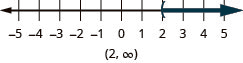
ⓑ
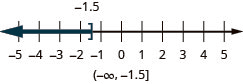
ⓒ
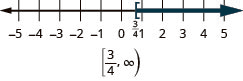
Try It 2.134 §2.7 source ↗
Graph on the number line and write in interval notation:
ⓐ ⓑ ⓒ
Answer
ⓐ
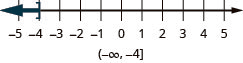
ⓑ
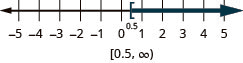
ⓒ
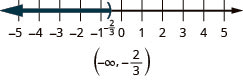
Try It 2.135 §2.7 source ↗
Solve the inequality, graph the solution on the number line, and write the solution in interval notation.
Answer
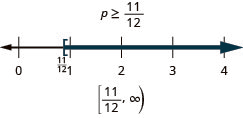
Try It 2.136 §2.7 source ↗
Solve the inequality, graph the solution on the number line, and write the solution in interval notation.
Answer
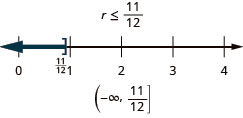
Try It 2.137 §2.7 source ↗
Solve the inequality, graph the solution on the number line, and write the solution in interval notation.
Answer

Try It 2.138 §2.7 source ↗
Solve the inequality, graph the solution on the number line, and write the solution in interval notation.
Answer

Try It 2.139 §2.7 source ↗
Solve each inequality, graph the solution on the number line, and write the solution in interval notation.
Answer
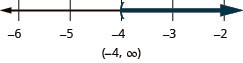
Try It 2.140 §2.7 source ↗
Solve each inequality, graph the solution on the number line, and write the solution in interval notation.
Answer
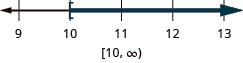
Try It 2.141 §2.7 source ↗
Solve the inequality, graph the solution on the number line, and write the solution in interval notation.
Answer
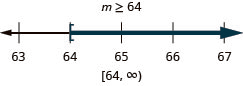
Try It 2.142 §2.7 source ↗
Solve the inequality, graph the solution on the number line, and write the solution in interval notation.
Answer
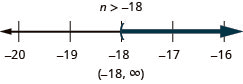
Try It 2.143 §2.7 source ↗
Solve the inequality, graph the solution on the number line, and write the solution in interval notation.
Answer
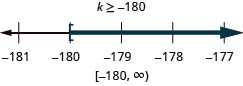
Try It 2.144 §2.7 source ↗
Solve the inequality, graph the solution on the number line, and write the solution in interval notation.
Answer
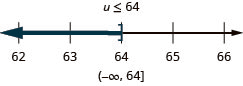
Try It 2.145 §2.7 source ↗
Answer
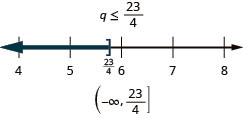
Try It 2.146 §2.7 source ↗
Answer
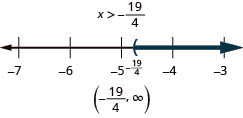
Try It 2.147 §2.7 source ↗
Answer
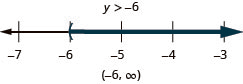
Try It 2.148 §2.7 source ↗
Answer
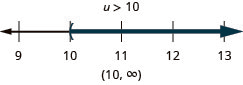
Try It 2.149 §2.7 source ↗
Answer
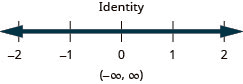
Try It 2.150 §2.7 source ↗
Answer
Try It 2.151 §2.7 source ↗
Answer
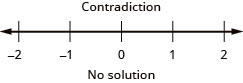
Try It 2.152 §2.7 source ↗
Answer
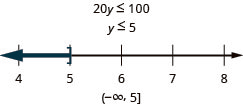
Try It 2.153 §2.7 source ↗
Translate and solve. Then write the solution in interval notation and graph on the number line.
Twenty times y is at most 100
Answer
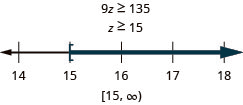
Try It 2.154 §2.7 source ↗
Translate and solve. Then write the solution in interval notation and graph on the number line.
Nine times z is no less than 135
Answer
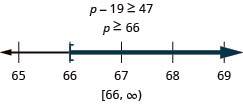
Try It 2.155 §2.7 source ↗
Translate and solve. Then write the solution in interval notation and graph on the number line.
Nineteen less than p is no less than 47
Answer
Try It 2.156 §2.7 source ↗
Translate and solve. Then write the solution in interval notation and graph on the number line.
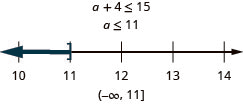
Four more than a is at most 15.
Answer
2.7-431 §2.7 source ↗
Graph Inequalities on the Number Line
In the following exercises, graph each inequality on the number line.
ⓐ ⓑ
ⓒ
Answer
ⓐ

ⓑ

ⓒ

2.7-433 §2.7 source ↗
Graph Inequalities on the Number Line
In the following exercises, graph each inequality on the number line.
ⓐ ⓑ ⓒ
Answer
ⓐ

ⓑ

ⓒ

2.7-435 §2.7 source ↗
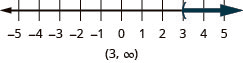
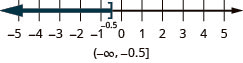
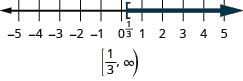
In the following exercises, graph each inequality on the number line and write in interval notation.
ⓐ ⓑ ⓒ
Answer
ⓐ
ⓑ
ⓒ
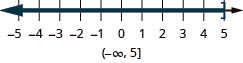
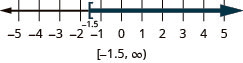
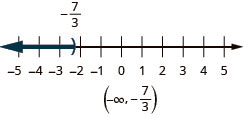
2.7-437 §2.7 source ↗
In the following exercises, graph each inequality on the number line and write in interval notation.
ⓐ ⓑ ⓒ
Answer
ⓐ
ⓑ
ⓒ
2.7-439 §2.7 source ↗
Solve Inequalities using the Subtraction and Addition Properties of Inequality
In the following exercises, solve each inequality, graph the solution on the number line, and write the solution in interval notation.
Answer
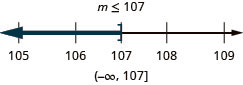
2.7-441 §2.7 source ↗
Solve Inequalities using the Subtraction and Addition Properties of Inequality
In the following exercises, solve each inequality, graph the solution on the number line, and write the solution in interval notation.
Answer
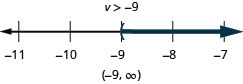
2.7-443 §2.7 source ↗
Solve Inequalities using the Subtraction and Addition Properties of Inequality
In the following exercises, solve each inequality, graph the solution on the number line, and write the solution in interval notation.
Answer
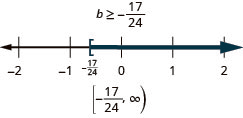
2.7-445 §2.7 source ↗
Solve Inequalities using the Subtraction and Addition Properties of Inequality
In the following exercises, solve each inequality, graph the solution on the number line, and write the solution in interval notation.
Answer
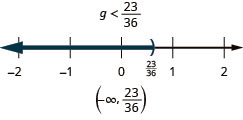
2.7-447 §2.7 source ↗
Solve Inequalities using the Division and Multiplication Properties of Inequality
In the following exercises, solve each inequality, graph the solution on the number line, and write the solution in interval notation.
Answer
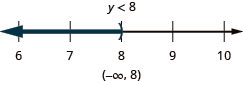
2.7-449 §2.7 source ↗
Solve Inequalities using the Division and Multiplication Properties of Inequality
In the following exercises, solve each inequality, graph the solution on the number line, and write the solution in interval notation.
Answer
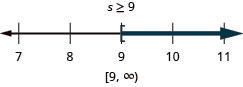
2.7-451 §2.7 source ↗
Solve Inequalities using the Division and Multiplication Properties of Inequality
In the following exercises, solve each inequality, graph the solution on the number line, and write the solution in interval notation.
Answer
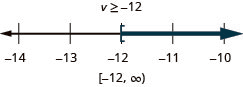
2.7-453 §2.7 source ↗
Solve Inequalities using the Division and Multiplication Properties of Inequality
In the following exercises, solve each inequality, graph the solution on the number line, and write the solution in interval notation.
Answer
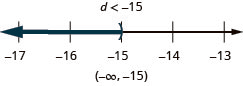
2.7-455 §2.7 source ↗
Solve Inequalities using the Division and Multiplication Properties of Inequality
In the following exercises, solve each inequality, graph the solution on the number line, and write the solution in interval notation.
Answer
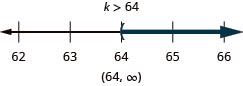
2.7-457 §2.7 source ↗
Solve Inequalities using the Division and Multiplication Properties of Inequality
In the following exercises, solve each inequality, graph the solution on the number line, and write the solution in interval notation.
Answer
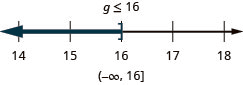
2.7-459 §2.7 source ↗
Solve Inequalities using the Division and Multiplication Properties of Inequality
In the following exercises, solve each inequality, graph the solution on the number line, and write the solution in interval notation.
Answer
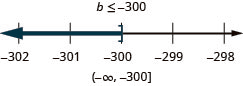
2.7-461 §2.7 source ↗
Solve Inequalities using the Division and Multiplication Properties of Inequality
In the following exercises, solve each inequality, graph the solution on the number line, and write the solution in interval notation.
Answer
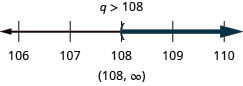
2.7-463 §2.7 source ↗
Solve Inequalities using the Division and Multiplication Properties of Inequality
In the following exercises, solve each inequality, graph the solution on the number line, and write the solution in interval notation.
Answer
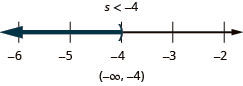
2.7-465 §2.7 source ↗
Solve Inequalities using the Division and Multiplication Properties of Inequality
In the following exercises, solve each inequality, graph the solution on the number line, and write the solution in interval notation.
Answer
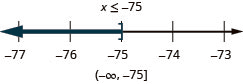
2.7-467 §2.7 source ↗
Solve Inequalities That Require Simplification
In the following exercises, solve each inequality, graph the solution on the number line, and write the solution in interval notation.
Answer
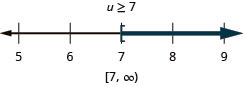
2.7-469 §2.7 source ↗
Solve Inequalities That Require Simplification
In the following exercises, solve each inequality, graph the solution on the number line, and write the solution in interval notation.
Answer
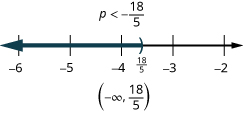
2.7-471 §2.7 source ↗
Solve Inequalities That Require Simplification
In the following exercises, solve each inequality, graph the solution on the number line, and write the solution in interval notation.
Answer
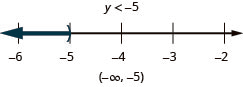
2.7-473 §2.7 source ↗
Solve Inequalities That Require Simplification
In the following exercises, solve each inequality, graph the solution on the number line, and write the solution in interval notation.
Answer
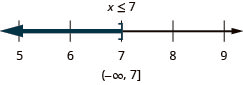
2.7-475 §2.7 source ↗
Solve Inequalities That Require Simplification
In the following exercises, solve each inequality, graph the solution on the number line, and write the solution in interval notation.
Answer
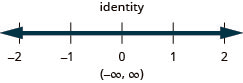
2.7-477 §2.7 source ↗
Solve Inequalities That Require Simplification
In the following exercises, solve each inequality, graph the solution on the number line, and write the solution in interval notation.
Answer
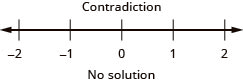
2.7-479 §2.7 source ↗
Solve Inequalities That Require Simplification
In the following exercises, solve each inequality, graph the solution on the number line, and write the solution in interval notation.
Answer
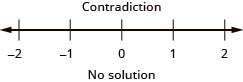
2.7-481 §2.7 source ↗
Solve Inequalities That Require Simplification
In the following exercises, solve each inequality, graph the solution on the number line, and write the solution in interval notation.
Answer
2.7-483 §2.7 source ↗
Mixed practice
In the following exercises, solve each inequality, graph the solution on the number line, and write the solution in interval notation.
Answer
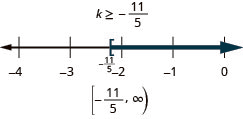
2.7-485 §2.7 source ↗
Mixed practice
In the following exercises, solve each inequality, graph the solution on the number line, and write the solution in interval notation.
Answer
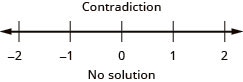
2.7-487 §2.7 source ↗
Mixed practice
In the following exercises, solve each inequality, graph the solution on the number line, and write the solution in interval notation.
Answer
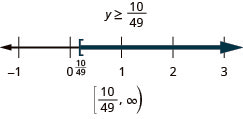
2.7-489 §2.7 source ↗
Mixed practice
In the following exercises, solve each inequality, graph the solution on the number line, and write the solution in interval notation.
Answer
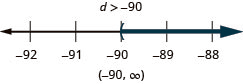
2.7-491 §2.7 source ↗
Mixed practice
In the following exercises, solve each inequality, graph the solution on the number line, and write the solution in interval notation.
Answer
2.7-493 §2.7 source ↗
Translate to an Inequality and Solve
In the following exercises, translate and solve .Then write the solution in interval notation and graph on the number line.
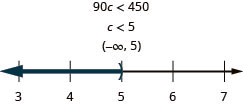
Ninety times c is less than 450.
Answer
2.7-495 §2.7 source ↗
Translate to an Inequality and Solve
In the following exercises, translate and solve .Then write the solution in interval notation and graph on the number line.
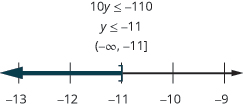
Ten times y is at most .
Answer
2.7-497 §2.7 source ↗
Translate to an Inequality and Solve
In the following exercises, translate and solve .Then write the solution in interval notation and graph on the number line.
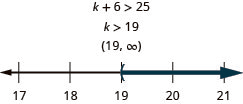
Six more than k exceeds 25.
Answer
2.7-499 §2.7 source ↗
Translate to an Inequality and Solve
In the following exercises, translate and solve .Then write the solution in interval notation and graph on the number line.
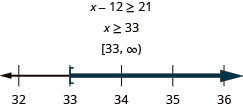
Twelve less than x is no less than 21.
Answer
2.7-501 §2.7 source ↗
Translate to an Inequality and Solve
In the following exercises, translate and solve .Then write the solution in interval notation and graph on the number line.
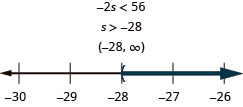
Negative two times s is lower than 56.
Answer
2.7-503 §2.7 source ↗
Translate to an Inequality and Solve
In the following exercises, translate and solve .Then write the solution in interval notation and graph on the number line.
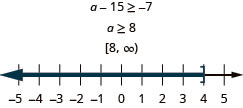
Fifteen less than a is at least .
Answer
2.7-505 §2.7 source ↗
Translate to an Inequality and Solve
In the following exercises, translate and solve .Then write the solution in interval notation and graph on the number line.
Fighter pilots The maximum height, h, of a fighter pilot is 77 inches. Write this as an inequality.
Answer
2.7-507 §2.7 source ↗
Translate to an Inequality and Solve
In the following exercises, translate and solve .Then write the solution in interval notation and graph on the number line.
Shopping The number of items, n, a shopper can have in the express check-out lane is at most 8. Write this as an inequality.
Answer
2.7-509 §2.7 source ↗
Translate to an Inequality and Solve
In the following exercises, translate and solve .Then write the solution in interval notation and graph on the number line.
Give an example from your life using the phrase ‘at most’.
Answer
2.7-511 §2.7 source ↗
Translate to an Inequality and Solve
In the following exercises, translate and solve .Then write the solution in interval notation and graph on the number line.
Explain why it is necessary to reverse the inequality when solving .
Answer
2.R-513 §2.R source ↗
Verify a Solution of an Equation
In the following exercises, determine whether each number is a solution to the equation.
Answer
2.R-515 §2.R source ↗
Verify a Solution of an Equation
In the following exercises, determine whether each number is a solution to the equation.
Answer
2.R-517 §2.R source ↗
Solve Equations using the Subtraction and Addition Properties of Equality
In the following exercises, solve each equation using the Subtraction Property of Equality.
Answer
2.R-519 §2.R source ↗
Solve Equations using the Subtraction and Addition Properties of Equality
In the following exercises, solve each equation using the Subtraction Property of Equality.
Answer
2.R-521 §2.R source ↗
In the following exercises, solve each equation using the Addition Property of Equality.
Answer
2.R-523 §2.R source ↗
In the following exercises, solve each equation using the Addition Property of Equality.
Answer
2.R-525 §2.R source ↗
In the following exercises, solve each equation.
Answer
2.R-527 §2.R source ↗
In the following exercises, solve each equation.
Answer
2.R-529 §2.R source ↗
Solve Equations That Require Simplification
In the following exercises, solve each equation.
Answer
2.R-531 §2.R source ↗
Solve Equations That Require Simplification
In the following exercises, solve each equation.
Answer
2.R-533 §2.R source ↗
Translate to an Equation and Solve
In the following exercises, translate each English sentence into an algebraic equation and then solve it.
Four less than is 13.
Answer
2.R-535 §2.R source ↗
Translate and Solve Applications
In the following exercises, translate into an algebraic equation and solve.
Tan weighs 146 pounds. Minh weighs 15 pounds more than Tan. How much does Minh weigh?
Answer
2.R-537 §2.R source ↗
Translate and Solve Applications
In the following exercises, translate into an algebraic equation and solve.
Elissa earned $152.84 this week, which was $21.65 more than she earned last week. How much did she earn last week?
Answer
2.R-539 §2.R source ↗
Solve Equations Using the Division and Multiplication Properties of Equality
In the following exercises, solve each equation using the division and multiplication properties of equality and check the solution.
Answer
2.R-541 §2.R source ↗
Solve Equations Using the Division and Multiplication Properties of Equality
In the following exercises, solve each equation using the division and multiplication properties of equality and check the solution.
Answer
2.R-543 §2.R source ↗
Solve Equations Using the Division and Multiplication Properties of Equality
In the following exercises, solve each equation using the division and multiplication properties of equality and check the solution.
Answer
2.R-545 §2.R source ↗
Solve Equations Using the Division and Multiplication Properties of Equality
In the following exercises, solve each equation using the division and multiplication properties of equality and check the solution.
Answer
2.R-547 §2.R source ↗
Solve Equations Using the Division and Multiplication Properties of Equality
In the following exercises, solve each equation using the division and multiplication properties of equality and check the solution.
Answer
2.R-549 §2.R source ↗
Solve Equations Using the Division and Multiplication Properties of Equality
In the following exercises, solve each equation using the division and multiplication properties of equality and check the solution.
Answer
2.R-551 §2.R source ↗
Solve Equations That Require Simplification
In the following exercises, solve each equation requiring simplification.
Answer
2.R-553 §2.R source ↗
Solve Equations That Require Simplification
In the following exercises, solve each equation requiring simplification.
Answer
2.R-555 §2.R source ↗
Translate to an Equation and Solve
In the following exercises, translate to an equation and then solve.
The quotient of b and 9 is .
Answer
2.R-557 §2.R source ↗
Translate to an Equation and Solve
In the following exercises, translate to an equation and then solve.
The difference of s and one-twelfth is one fourth.
Answer
2.R-559 §2.R source ↗
Translate and Solve Applications
In the following exercises, translate into an equation and solve.
Janet gets paid $24 per hour. She heard that this is of what Adam is paid. How much is Adam paid per hour?
Answer
2.R-561 §2.R source ↗
Solve an Equation with Constants on Both Sides
In the following exercises, solve the following equations with constants on both sides.
Answer
2.R-563 §2.R source ↗
Solve an Equation with Constants on Both Sides
In the following exercises, solve the following equations with constants on both sides.
Answer
2.R-565 §2.R source ↗
Solve an Equation with Variables on Both Sides
In the following exercises, solve the following equations with variables on both sides.
Answer
2.R-567 §2.R source ↗
Solve an Equation with Variables on Both Sides
In the following exercises, solve the following equations with variables on both sides.
Answer
2.R-569 §2.R source ↗
Solve an Equation with Variables and Constants on Both Sides
In the following exercises, solve the following equations with variables and constants on both sides.
Answer
2.R-571 §2.R source ↗
Solve an Equation with Variables and Constants on Both Sides
In the following exercises, solve the following equations with variables and constants on both sides.
Answer
2.R-573 §2.R source ↗
Solve Equations Using the General Strategy for Solving Linear Equations
In the following exercises, solve each linear equation.
Answer
2.R-575 §2.R source ↗
Solve Equations Using the General Strategy for Solving Linear Equations
In the following exercises, solve each linear equation.
Answer
2.R-577 §2.R source ↗
Solve Equations Using the General Strategy for Solving Linear Equations
In the following exercises, solve each linear equation.
Answer
2.R-579 §2.R source ↗
Solve Equations Using the General Strategy for Solving Linear Equations
In the following exercises, solve each linear equation.
Answer
2.R-581 §2.R source ↗
Solve Equations Using the General Strategy for Solving Linear Equations
In the following exercises, solve each linear equation.
Answer
2.R-583 §2.R source ↗
Solve Equations Using the General Strategy for Solving Linear Equations
In the following exercises, solve each linear equation.
Answer
2.R-585 §2.R source ↗
Classify Equations
In the following exercises, classify each equation as a conditional equation, an identity, or a contradiction and then state the solution.
Answer
2.R-587 §2.R source ↗
Classify Equations
In the following exercises, classify each equation as a conditional equation, an identity, or a contradiction and then state the solution.
Answer
2.R-589 §2.R source ↗
Solve Equations with Fraction Coefficients
In the following exercises, solve each equation with fraction coefficients.
Answer
2.R-591 §2.R source ↗
Solve Equations with Fraction Coefficients
In the following exercises, solve each equation with fraction coefficients.
Answer
2.R-593 §2.R source ↗
Solve Equations with Fraction Coefficients
In the following exercises, solve each equation with fraction coefficients.
Answer
2.R-595 §2.R source ↗
Solve Equations with Decimal Coefficients
In the following exercises, solve each equation with decimal coefficients.
Answer
2.R-597 §2.R source ↗
Solve Equations with Decimal Coefficients
In the following exercises, solve each equation with decimal coefficients.
Answer
2.R-599 §2.R source ↗
Use the Distance, Rate, and Time Formula
In the following exercises, solve.
Mallory is taking the bus from St. Louis to Chicago. The distance is 300 miles and the bus travels at a steady rate of 60 miles per hour. How long will the bus ride be?
Answer
2.R-601 §2.R source ↗
Use the Distance, Rate, and Time Formula
In the following exercises, solve.
Link rode his bike at a steady rate of 15 miles per hour for hours. How much distance did he travel?
Answer
2.R-603 §2.R source ↗
Solve a Formula for a Specific Variable
In the following exercises, solve.
Use the formula. to solve for
ⓐ when when and
ⓑ in general
Answer
2.R-605 §2.R source ↗
Solve a Formula for a Specific Variable
In the following exercises, solve.
Use the formula to solve for
ⓐ when and
ⓑ in general
Answer
2.R-607 §2.R source ↗
Solve a Formula for a Specific Variable
In the following exercises, solve.
Solve the formula for y
ⓐ when
ⓑ in general
Answer
2.R-609 §2.R source ↗
Solve a Formula for a Specific Variable
In the following exercises, solve.
Solve the formula for .
Answer
2.R-611 §2.R source ↗
Graph Inequalities on the Number Line
In the following exercises, graph each inequality on the number line.
ⓐ
ⓑ
ⓒ
Answer
ⓐ

ⓑ

ⓒ

2.R-613 §2.R source ↗
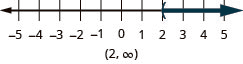
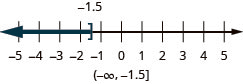
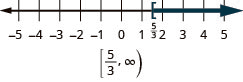
In the following exercises, graph each inequality on the number line and write in interval notation.
ⓐ
ⓑ
ⓒ
Answer
ⓐ
ⓑ
ⓒ
2.R-615 §2.R source ↗
Solve Inequalities using the Subtraction and Addition Properties of Inequality
In the following exercises, solve each inequality, graph the solution on the number line, and write the solution in interval notation.
Answer
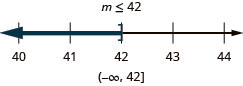
2.R-617 §2.R source ↗
Solve Inequalities using the Subtraction and Addition Properties of Inequality
In the following exercises, solve each inequality, graph the solution on the number line, and write the solution in interval notation.
Answer
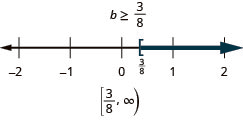
2.R-619 §2.R source ↗
Solve Inequalities using the Division and Multiplication Properties of Inequality
In the following exercises, solve each inequality, graph the solution on the number line, and write the solution in interval notation.
Answer
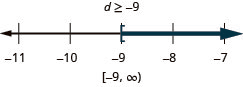
2.R-621 §2.R source ↗
Solve Inequalities using the Division and Multiplication Properties of Inequality
In the following exercises, solve each inequality, graph the solution on the number line, and write the solution in interval notation.
Answer
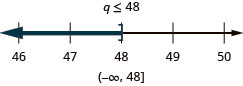
2.R-623 §2.R source ↗
Solve Inequalities That Require Simplification
In the following exercises, solve each inequality, graph the solution on the number line, and write the solution in interval notation.
Answer
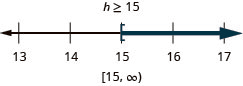
2.R-625 §2.R source ↗
Solve Inequalities That Require Simplification
In the following exercises, solve each inequality, graph the solution on the number line, and write the solution in interval notation.
Answer
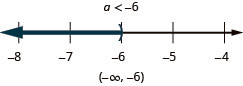
2.R-627 §2.R source ↗
Translate to an Inequality and Solve
In the following exercises, translate and solve. Then write the solution in interval notation and graph on the number line.
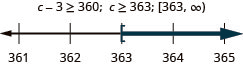
Three less than c is at least 360.
Answer
2.R-629 §2.R source ↗
Translate to an Inequality and Solve
In the following exercises, translate and solve. Then write the solution in interval notation and graph on the number line.
Negative two times a is no more than 8.
Answer
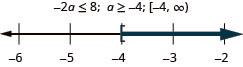
2.T-631 §2.T source ↗
Determine whether each number is a solution to the equation .
ⓐ 5ⓑ
Answer
2.T-633 §2.T source ↗
In the following exercises, solve each equation.
Answer
2.T-635 §2.T source ↗
In the following exercises, solve each equation.
Answer
2.T-637 §2.T source ↗
In the following exercises, solve each equation.
Answer
2.T-639 §2.T source ↗
In the following exercises, solve each equation.
Answer
2.T-641 §2.T source ↗
In the following exercises, solve each equation.
Answer
2.T-643 §2.T source ↗
In the following exercises, solve each equation.
Answer
2.T-645 §2.T source ↗
In the following exercises, solve each equation.
Answer
2.T-647 §2.T source ↗
In the following exercises, solve each equation.
Answer
2.T-649 §2.T source ↗
In the following exercises, solve each equation.
Answer
2.T-651 §2.T source ↗
In the following exercises, solve each equation.
Solve the formula for y
ⓐ when
ⓑ in general
Answer
2.T-653 §2.T source ↗
In the following exercises, graph on the number line and write in interval notation.
Answer
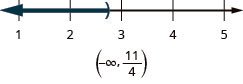
2.T-655 §2.T source ↗
In the following exercises,, solve each inequality, graph the solution on the number line, and write the solution in interval notation.
Answer
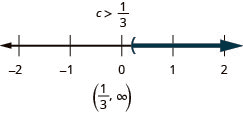
2.T-657 §2.T source ↗
In the following exercises, translate to an equation or inequality and solve.
Fifteen more than n is at least 48.
Answer
2.T-659 §2.T source ↗
In the following exercises, translate to an equation or inequality and solve.
Jenna bought a coat on sale for $120, which was of the original price. What was the original price of the coat?
Answer
Loading chapter 3…
Problems and answers are adapted from Elementary Algebra 2e by Lynn Marecek and MaryAnne Anthony-Smith, OpenStax, and are used under the CC BY-NC-SA 4.0 licence. Access for free at https://openstax.org/books/elementary-algebra-2e/pages/1-introduction. Illustrations: Copyright Rice University, OpenStax, under CC BY-NC-SA 4.0 license. This adaptation is released under the same licence, is non-commercial, and is neither affiliated with nor endorsed by OpenStax or Rice University.