Every problem in the chapter beside the book’s answer, a chapter at a time as you scroll.
Chapter 4: Labor and Financial Markets
12 problems · 5 figures4-1 §4.1 source ↗
Answer
4-2 §4.1 source ↗
Answer
4-3 §4.1 source ↗
Answer
4-4 §4.2 source ↗
Answer
4-5 §4.2 source ↗
Answer
4-6 §4.2 source ↗
Answer
4-7 §4.2 source ↗
Which of the following changes in the financial market will lead to a decline in interest rates:
a. a rise in demand
b. a fall in demand
c. a rise in supply
d. a fall in supply
Answer
4-8 §4.2 source ↗
Which of the following changes in the financial market will lead to an increase in the quantity of loans made and received:
a. a rise in demand
b. a fall in demand
c. a rise in supply
d. a fall in supply
Answer
4-9 §4.3 source ↗
Identify the most accurate statement. A price floor will have the largest effect if it is set:
a. substantially above the equilibrium price
b. slightly above the equilibrium price
c. slightly below the equilibrium price
d. substantially below the equilibrium price
Sketch all four of these possibilities on a demand and supply diagram to illustrate your answer.
Answer
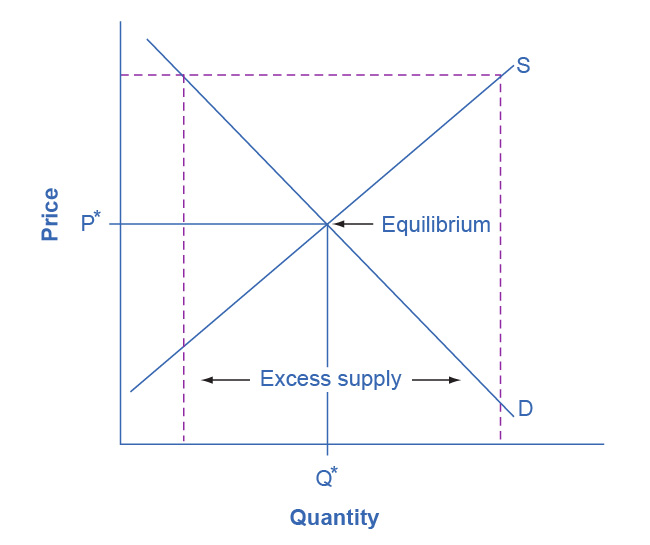
A price floor prevents a price from falling below a certain level, but has no effect on prices above that level. It will have its biggest effect in creating excess supply (as measured by the entire area inside the dotted lines on the graph, from D to S) if it is substantially above the equilibrium price. This is illustrated in the following figure.
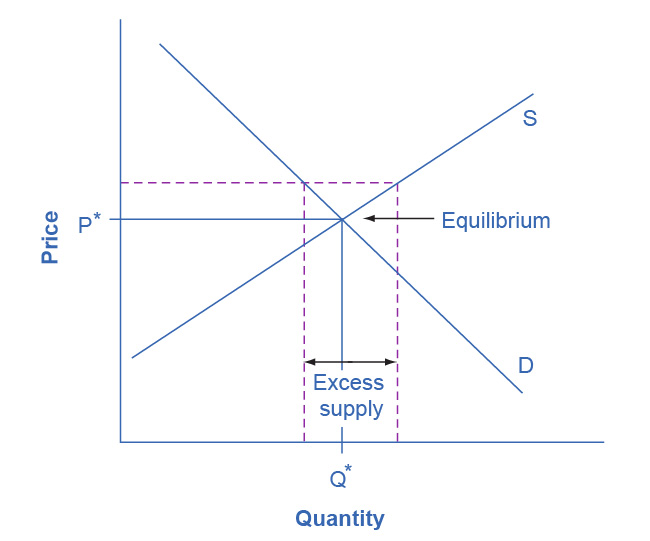
It will have a lesser effect if it is slightly above the equilibrium price. This is illustrated in the next figure.
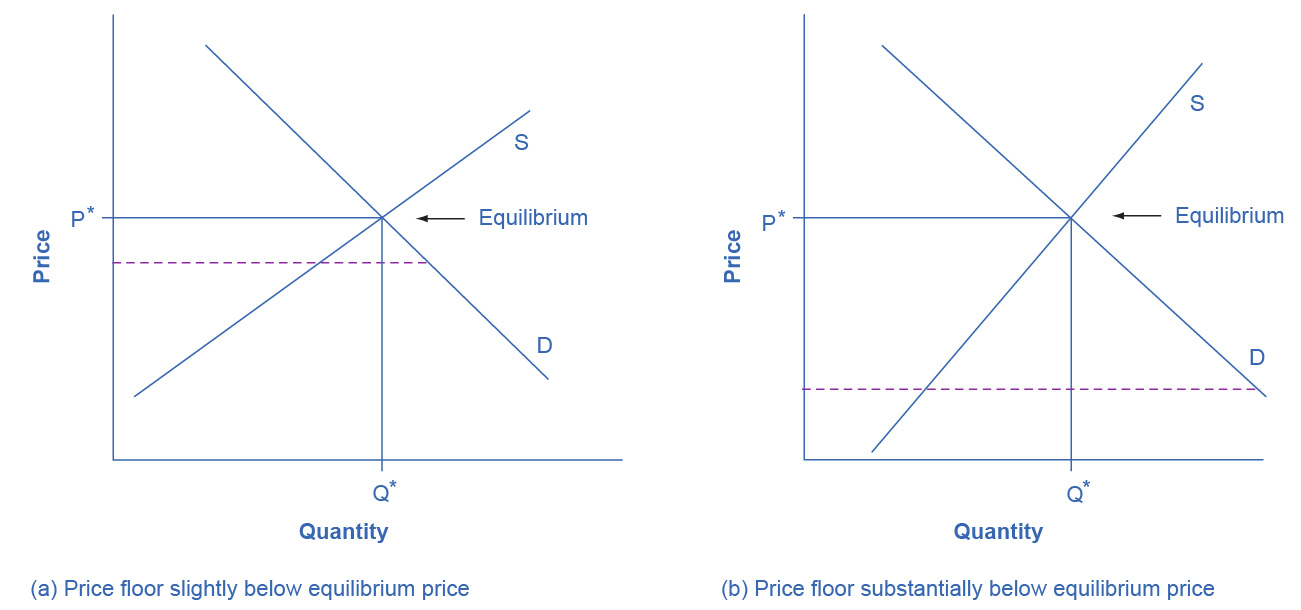
It will have no effect if it is set either slightly or substantially below the equilibrium price, since an equilibrium price above a price floor will not be affected by that price floor. The following figure illustrates these situations.
4-10 §4.3 source ↗
A price ceiling will have the largest effect:
a. substantially below the equilibrium price
b. slightly below the equilibrium price
c. substantially above the equilibrium price
d. slightly above the equilibrium price
Sketch all four of these possibilities on a demand and supply diagram to illustrate your answer.
Answer
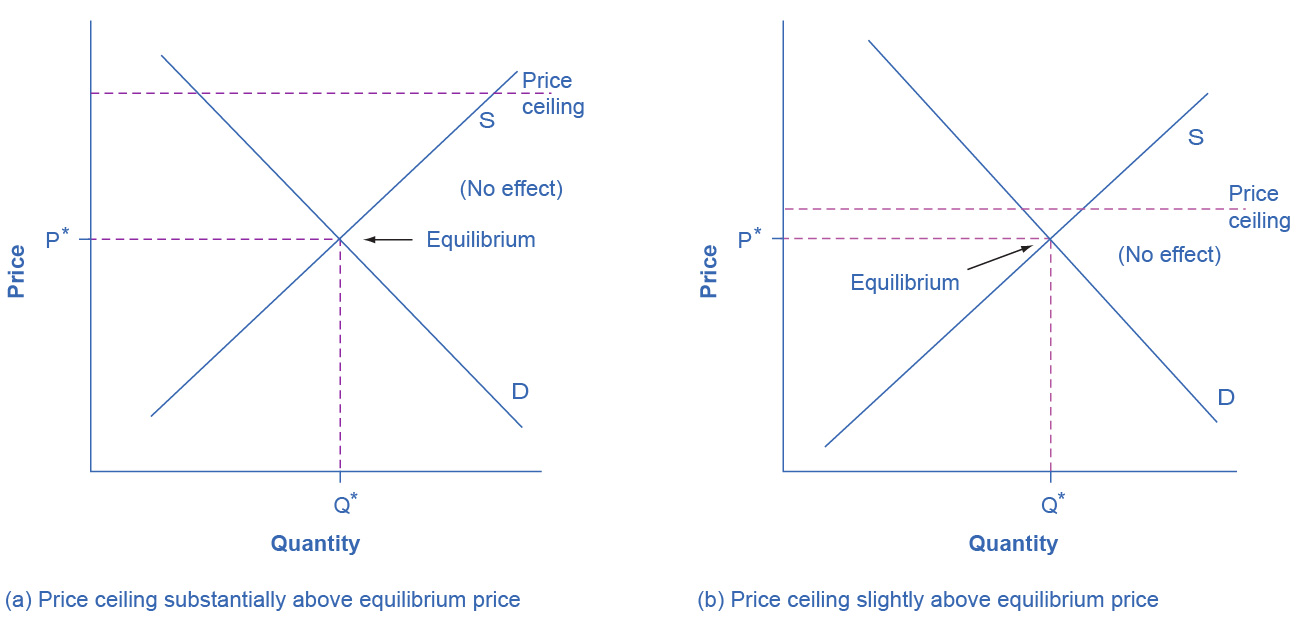
A price ceiling prevents a price from rising above a certain level, but has no effect on prices below that level. It will have its biggest effect in creating excess demand if it is substantially below the equilibrium price. The following figure illustrates these situations.
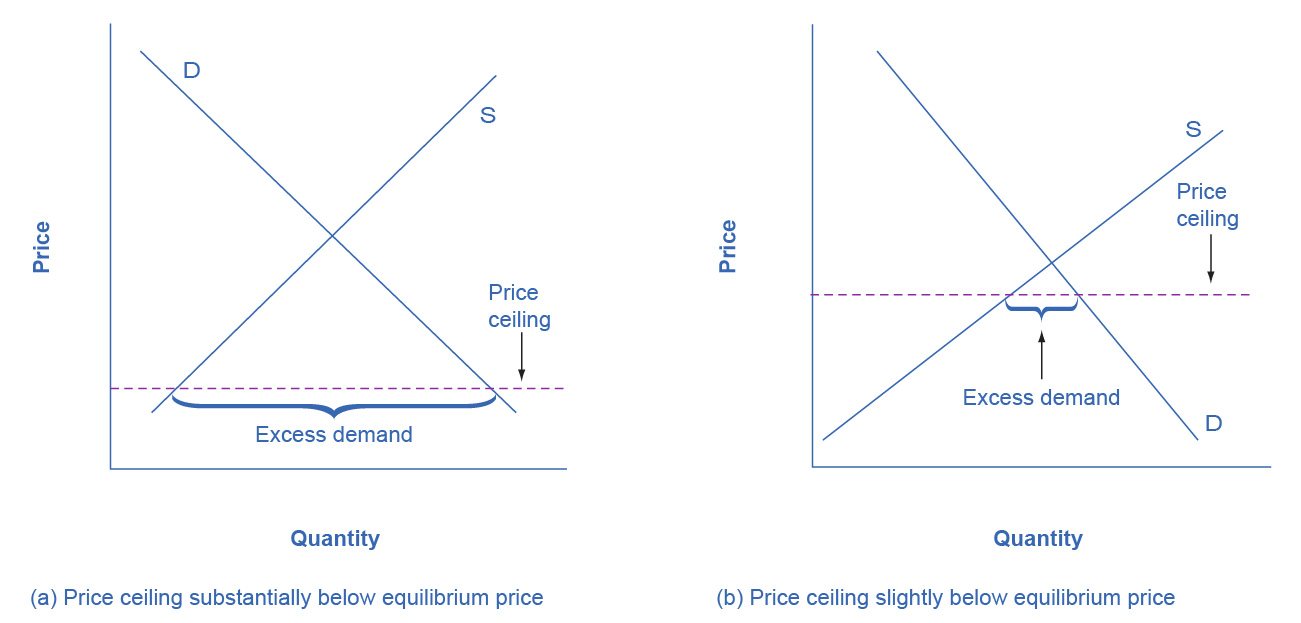
When the price ceiling is set substantially or slightly above the equilibrium price, it will have no effect on creating excess demand. The following figure illustrates these situations.
4-11 §4.3 source ↗
Select the correct answer. A price floor will usually shift:
a. demand
b. supply
c. both
d. neither
Illustrate your answer with a diagram.
Answer
4-12 §4.3 source ↗
Select the correct answer. A price ceiling will usually shift:
a. demand
b. supply
c. both
d. neither
Answer
Loading chapter 5…
Problems and answers are adapted from Principles of Macroeconomics 3e by Steven A. Greenlaw, David Shapiro and Daniel MacDonald, OpenStax, and are used under the CC BY-NC-SA 4.0 licence. Access for free at https://openstax.org/books/principles-macroeconomics-3e/pages/1-introduction. Illustrations: Copyright Rice University, OpenStax, under CC BY-NC-SA 4.0 license. This adaptation is released under the same licence, is non-commercial, and is neither affiliated with nor endorsed by OpenStax or Rice University.