Every problem in the chapter beside the book’s answer, a chapter at a time as you scroll.
Chapter 1: Prerequisites
299 problems · 6 figuresTry It #1 §1.1 source ↗
Write each of the following as a rational number.
ⓐ11
ⓑ3
ⓒ–4
Answer
ⓐ
ⓑ
ⓒ
Try It #2 §1.1 source ↗
Write each of the following rational numbers as either a terminating or repeating decimal.
ⓐ
ⓑ
ⓒ
Answer
ⓐ4 (or 4.0), terminating;
ⓑ repeating;
ⓒ–0.85, terminating
Try It #3 §1.1 source ↗
Determine whether each of the following numbers is rational or irrational. If it is rational, determine whether it is a terminating or repeating decimal.
ⓐ
ⓑ
ⓒ
ⓓ
ⓔ
Answer
ⓐrational and repeating;
ⓑrational and terminating;
ⓒirrational;
ⓓrational and terminating;
ⓔirrational
Try It #4 §1.1 source ↗
Classify each number as either positive or negative and as either rational or irrational. Does the number lie to the left or the right of 0 on the number line?
ⓐ
ⓑ
ⓒ
ⓓ
ⓔ
Answer
ⓐpositive, irrational; right
ⓑnegative, rational; left
ⓒpositive, rational; right
ⓓnegative, irrational; left
ⓔpositive, rational; right
Try It #5 §1.1 source ↗
Classify each number as being a natural number (N), whole number (W), integer (I), rational number (Q), and/or irrational number (Q′).
ⓐ
ⓑ
ⓒ
ⓓ
ⓔ
Answer
| N | W | I | Q | Q' | |
|---|---|---|---|---|---|
| a. | X | X | |||
| b. 0 | X | X | X | ||
| c. | X | X | X | X | |
| d. | X | ||||
| e. 4.763763763... | X |
Try It #6 §1.1 source ↗
Use the order of operations to evaluate each of the following expressions.
ⓐ
ⓑ
ⓒ
ⓓ
ⓔ
Answer
ⓐ10
ⓑ2
ⓒ4.5
ⓓ25
ⓔ26
Try It #7 §1.1 source ↗
Use the properties of real numbers to rewrite and simplify each expression. State which properties apply.
ⓐ
ⓑ
ⓒ
ⓓ
ⓔ
Answer
ⓐ11, commutative property of multiplication, associative property of multiplication, inverse property of multiplication, identity property of multiplication;
ⓑ33, distributive property;
ⓒ26, distributive property;
ⓓ commutative property of addition, associative property of addition, inverse property of addition, identity property of addition;
ⓔ0, distributive property, inverse property of addition
Try It #8 §1.1 source ↗
List the constants and variables for each algebraic expression.
ⓐ
ⓑ2(L + W)
ⓒ
Answer
| Constants | Variables | |
|---|---|---|
| a. | ||
| b. 2(L + W) | 2 | L, W |
| c. | 4 |
Try It #9 §1.1 source ↗
Evaluate the expression for each value for y.
ⓐ
ⓑ
ⓒ
ⓓ
Answer
ⓐ5;
ⓑ11;
ⓒ9;
ⓓ26
Try It #10 §1.1 source ↗
Evaluate each expression for the given values.
ⓐ for
ⓑ for
ⓒ for
ⓓ for
ⓔ for
Answer
ⓐ4;
ⓑ11;
ⓒ ;
ⓓ1728;
ⓔ3
Try It #11 §1.1 source ↗
A photograph with length L and width W is placed in a mat of width 8 centimeters (cm). The area of the mat (in square centimeters, or cm2) is found to be See Figure 4. Find the area of a mat for a photograph with length 32 cm and width 24 cm.
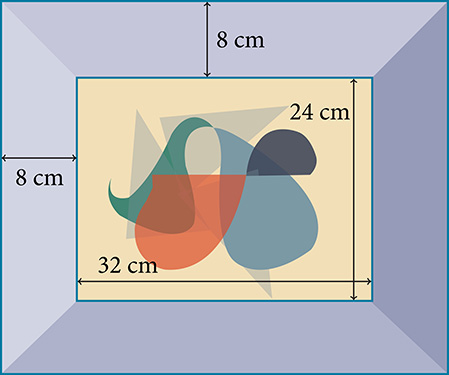 Figure 4
Answer
Try It #12 §1.1 source ↗
Simplify each algebraic expression.
ⓐ
ⓑ
ⓒ
ⓓ
Answer
ⓐ
ⓑ
ⓒ
ⓓ
Try It #13 §1.1 source ↗
Answer
1.1-1 §1.1 source ↗
Answer
1.1-3 §1.1 source ↗
Answer
1.1-5 §1.1 source ↗
For the following exercises, simplify the given expression.
Answer
1.1-7 §1.1 source ↗
For the following exercises, simplify the given expression.
Answer
1.1-9 §1.1 source ↗
For the following exercises, simplify the given expression.
Answer
1.1-11 §1.1 source ↗
For the following exercises, simplify the given expression.
Answer
1.1-13 §1.1 source ↗
For the following exercises, simplify the given expression.
Answer
1.1-15 §1.1 source ↗
For the following exercises, simplify the given expression.
Answer
1.1-17 §1.1 source ↗
For the following exercises, simplify the given expression.
Answer
1.1-19 §1.1 source ↗
For the following exercises, simplify the given expression.
Answer
1.1-21 §1.1 source ↗
For the following exercises, simplify the given expression.
Answer
1.1-23 §1.1 source ↗
For the following exercises, simplify the given expression.
Answer
1.1-25 §1.1 source ↗
For the following exercises, simplify the given expression.
Answer
1.1-27 §1.1 source ↗
For the following exercises, simplify the given expression.
Answer
1.1-29 §1.1 source ↗
For the following exercises, evaluate the expression using the given value of the variable.
for
Answer
1.1-31 §1.1 source ↗
For the following exercises, evaluate the expression using the given value of the variable.
for
Answer
1.1-33 §1.1 source ↗
For the following exercises, evaluate the expression using the given value of the variable.
for
Answer
1.1-35 §1.1 source ↗
For the following exercises, evaluate the expression using the given value of the variable.
for
Answer
1.1-37 §1.1 source ↗
For the following exercises, evaluate the expression using the given value of the variable.
for
Answer
1.1-39 §1.1 source ↗
For the following exercises, simplify the expression.
Answer
1.1-41 §1.1 source ↗
For the following exercises, simplify the expression.
Answer
1.1-43 §1.1 source ↗
For the following exercises, simplify the expression.
Answer
1.1-45 §1.1 source ↗
For the following exercises, simplify the expression.
Answer
1.1-47 §1.1 source ↗
For the following exercises, simplify the expression.
Answer
1.1-49 §1.1 source ↗
For the following exercises, simplify the expression.
Answer
1.1-51 §1.1 source ↗
For the following exercises, simplify the expression.
Answer
1.1-53 §1.1 source ↗
For the following exercises, consider this scenario: Fred earns $40 at the community garden. He spends $10 on a streaming subscription, puts half of what is left in a savings account, and gets another $5 for walking his neighbor’s dog.
Write the expression that represents the number of dollars Fred keeps (and does not put in his savings account). Remember the order of operations.
Answer
1.1-55 §1.1 source ↗
For the following exercises, solve the given problem.
According to the U.S. Mint, the diameter of a quarter is 0.955 inches. The circumference of the quarter would be the diameter multiplied by Is the circumference of a quarter a whole number, a rational number, or an irrational number?
Answer
1.1-57 §1.1 source ↗
For the following exercises, consider this scenario: There is a mound of pounds of gravel in a quarry. Throughout the day, 400 pounds of gravel is added to the mound. Two orders of 600 pounds are sold and the gravel is removed from the mound. At the end of the day, the mound has 1,200 pounds of gravel.
Write the equation that describes the situation.
Answer
1.1-59 §1.1 source ↗
For the following exercise, solve the given problem.
Ramon runs the marketing department at their company. Their department gets a budget every year, and every year, they must spend the entire budget without going over. If they spend less than the budget, then the department gets a smaller budget the following year. At the beginning of this year, Ramon got $2.5 million for the annual marketing budget. They must spend the budget such that What property of addition tells us what the value of x must be?
Answer
1.1-61 §1.1 source ↗
For the following exercises, use a graphing calculator to solve for x. Round the answers to the nearest hundredth.
Answer
1.1-63 §1.1 source ↗
For the following exercises, use a graphing calculator to solve for x. Round the answers to the nearest hundredth.
Determine whether the statement is true or false: The multiplicative inverse of a rational number is also rational.
Answer
1.1-65 §1.1 source ↗
For the following exercises, use a graphing calculator to solve for x. Round the answers to the nearest hundredth.
Determine whether the simplified expression is rational or irrational:
Answer
1.1-67 §1.1 source ↗
For the following exercises, use a graphing calculator to solve for x. Round the answers to the nearest hundredth.
The division of two natural numbers will always result in what type of number?
Answer
Try It #1 §1.2 source ↗
Write each of the following products with a single base. Do not simplify further.
ⓐ
ⓑ
ⓒ
Answer
ⓐ
ⓑ
ⓒ
Try It #2 §1.2 source ↗
Write each of the following products with a single base. Do not simplify further.
ⓐ
ⓑ
ⓒ
Answer
ⓐ
ⓑ
ⓒ
Try It #3 §1.2 source ↗
Write each of the following products with a single base. Do not simplify further.
ⓐ
ⓑ
ⓒ
Answer
ⓐ
ⓑ
ⓒ
Try It #4 §1.2 source ↗
Simplify each expression using the zero exponent rule of exponents.
ⓐ
ⓑ
ⓒ
ⓓ
Answer
ⓐ
ⓑ
ⓒ
ⓓ
Try It #5 §1.2 source ↗
Write each of the following quotients with a single base. Do not simplify further. Write answers with positive exponents.
ⓐ
ⓑ
ⓒ
Answer
ⓐ
ⓑ
ⓒ
Try It #6 §1.2 source ↗
Write each of the following products with a single base. Do not simplify further. Write answers with positive exponents.
ⓐ
ⓑ
Answer
ⓐ
ⓑ
Try It #7 §1.2 source ↗
Simplify each of the following products as much as possible using the power of a product rule. Write answers with positive exponents.
ⓐ
ⓑ
ⓒ
ⓓ
ⓔ
Answer
ⓐ
ⓑ
ⓒ
ⓓ
ⓔ
Try It #8 §1.2 source ↗
Simplify each of the following quotients as much as possible using the power of a quotient rule. Write answers with positive exponents.
ⓐ
ⓑ
ⓒ
ⓓ
ⓔ
Answer
ⓐ
ⓑ
ⓒ
ⓓ
ⓔ
Try It #9 §1.2 source ↗
Simplify each expression and write the answer with positive exponents only.
ⓐ
ⓑ
ⓒ
ⓓ
ⓔ
ⓕ
Answer
ⓐ
ⓑ
ⓒ
ⓓ
ⓔ
ⓕ
Try It #10 §1.2 source ↗
Write each number in scientific notation.
ⓐU.S. national debt per taxpayer (April 2014): $152,000
ⓑWorld population (April 2014): 7,158,000,000
ⓒWorld gross national income (April 2014): $85,500,000,000,000
ⓓTime for light to travel 1 m: 0.00000000334 s
ⓔProbability of winning lottery (match 6 of 49 possible numbers): 0.0000000715
Answer
ⓐ
ⓑ
ⓒ
ⓓ
ⓔ
Try It #11 §1.2 source ↗
Convert each number in scientific notation to standard notation.
ⓐ
ⓑ
ⓒ
ⓓ
Answer
ⓐ
ⓑ
ⓒ
ⓓ
Try It #12 §1.2 source ↗
Perform the operations and write the answer in scientific notation.
ⓐ
ⓑ
ⓒ
ⓓ
ⓔ
Answer
ⓐ
ⓑ
ⓒ
ⓓ
ⓔ
Try It #13 §1.2 source ↗
Answer
1.2-1 §1.2 source ↗
Answer
1.2-3 §1.2 source ↗
Answer
1.2-5 §1.2 source ↗
For the following exercises, simplify the given expression. Write answers with positive exponents.
Answer
1.2-7 §1.2 source ↗
For the following exercises, simplify the given expression. Write answers with positive exponents.
Answer
1.2-9 §1.2 source ↗
For the following exercises, simplify the given expression. Write answers with positive exponents.
Answer
1.2-11 §1.2 source ↗
For the following exercises, simplify the given expression. Write answers with positive exponents.
Answer
1.2-13 §1.2 source ↗
For the following exercises, simplify the given expression. Write answers with positive exponents.
Answer
1.2-15 §1.2 source ↗
For the following exercises, write each expression with a single base. Do not simplify further. Write answers with positive exponents.
Answer
1.2-17 §1.2 source ↗
For the following exercises, write each expression with a single base. Do not simplify further. Write answers with positive exponents.
Answer
1.2-19 §1.2 source ↗
For the following exercises, write each expression with a single base. Do not simplify further. Write answers with positive exponents.
Answer
1.2-21 §1.2 source ↗
For the following exercises, express the decimal in scientific notation.
0.0000314
Answer
1.2-23 §1.2 source ↗
For the following exercises, convert each number in scientific notation to standard notation.
Answer
1.2-25 §1.2 source ↗
For the following exercises, simplify the given expression. Write answers with positive exponents.
Answer
1.2-27 §1.2 source ↗
For the following exercises, simplify the given expression. Write answers with positive exponents.
Answer
1.2-29 §1.2 source ↗
For the following exercises, simplify the given expression. Write answers with positive exponents.
Answer
1.2-31 §1.2 source ↗
For the following exercises, simplify the given expression. Write answers with positive exponents.
Answer
1.2-33 §1.2 source ↗
For the following exercises, simplify the given expression. Write answers with positive exponents.
Answer
1.2-35 §1.2 source ↗
For the following exercises, simplify the given expression. Write answers with positive exponents.
Answer
1.2-37 §1.2 source ↗
For the following exercises, simplify the given expression. Write answers with positive exponents.
Answer
1.2-39 §1.2 source ↗
For the following exercises, simplify the given expression. Write answers with positive exponents.
Answer
1.2-41 §1.2 source ↗
For the following exercises, simplify the given expression. Write answers with positive exponents.
Answer
1.2-43 §1.2 source ↗
For the following exercises, simplify the given expression. Write answers with positive exponents.
Answer
1.2-45 §1.2 source ↗
For the following exercises, simplify the given expression. Write answers with positive exponents.
A dime is the thinnest coin in U.S. currency. A dime’s thickness measures m. Rewrite the number in standard notation.
Answer
1.2-47 §1.2 source ↗
For the following exercises, simplify the given expression. Write answers with positive exponents.
A terabyte is made of approximately 1,099,500,000,000 bytes. Rewrite in scientific notation.
Answer
1.2-49 §1.2 source ↗
For the following exercises, simplify the given expression. Write answers with positive exponents.
One picometer is approximately in. Rewrite this length using standard notation.
Answer
1.2-51 §1.2 source ↗
For the following exercises, use a graphing calculator to simplify. Round the answers to the nearest hundredth.
Answer
1.2-53 §1.2 source ↗
For the following exercises, simplify the given expression. Write answers with positive exponents.
Answer
1.2-55 §1.2 source ↗
For the following exercises, simplify the given expression. Write answers with positive exponents.
Answer
1.2-57 §1.2 source ↗
For the following exercises, simplify the given expression. Write answers with positive exponents.
Answer
1.2-59 §1.2 source ↗
For the following exercises, simplify the given expression. Write answers with positive exponents.
Planck’s constant is an important unit of measure in quantum physics. It describes the relationship between energy and frequency. The constant is written as Write Planck’s constant in standard notation.
Answer
Try It #1 §1.3 source ↗
Evaluate each expression.
ⓐ
ⓑ
ⓒ
ⓓ
Answer
ⓐ
ⓑ
ⓒ
ⓓ
Try It #2 §1.3 source ↗
Answer
Try It #3 §1.3 source ↗
Answer
Try It #4 §1.3 source ↗
Answer
Try It #5 §1.3 source ↗
Answer
Try It #6 §1.3 source ↗
Answer
Try It #7 §1.3 source ↗
Answer
Try It #8 §1.3 source ↗
Answer
Try It #9 §1.3 source ↗
Answer
Try It #10 §1.3 source ↗
Simplify.
ⓐ
ⓑ
ⓒ
Answer
ⓐ
ⓑ
ⓒ
Try It #11 §1.3 source ↗
Answer
Try It #12 §1.3 source ↗
Answer
Try It #13 §1.3 source ↗
Answer
1.3-1 §1.3 source ↗
Answer
1.3-3 §1.3 source ↗
Answer
1.3-5 §1.3 source ↗
For the following exercises, simplify each expression.
Answer
1.3-7 §1.3 source ↗
For the following exercises, simplify each expression.
Answer
1.3-9 §1.3 source ↗
For the following exercises, simplify each expression.
Answer
1.3-11 §1.3 source ↗
For the following exercises, simplify each expression.
Answer
1.3-13 §1.3 source ↗
For the following exercises, simplify each expression.
Answer
1.3-15 §1.3 source ↗
For the following exercises, simplify each expression.
Answer
1.3-17 §1.3 source ↗
For the following exercises, simplify each expression.
Answer
1.3-19 §1.3 source ↗
For the following exercises, simplify each expression.
Answer
1.3-21 §1.3 source ↗
For the following exercises, simplify each expression.
Answer
1.3-23 §1.3 source ↗
For the following exercises, simplify each expression.
Answer
1.3-25 §1.3 source ↗
For the following exercises, simplify each expression.
Answer
1.3-27 §1.3 source ↗
For the following exercises, simplify each expression.
Answer
1.3-29 §1.3 source ↗
For the following exercises, simplify each expression.
Answer
1.3-31 §1.3 source ↗
For the following exercises, simplify each expression.
Answer
1.3-33 §1.3 source ↗
For the following exercises, simplify each expression.
Answer
1.3-35 §1.3 source ↗
For the following exercises, simplify each expression.
Answer
1.3-37 §1.3 source ↗
For the following exercises, simplify each expression.
Answer
1.3-39 §1.3 source ↗
For the following exercises, simplify each expression.
Answer
1.3-41 §1.3 source ↗
For the following exercises, simplify each expression.
Answer
1.3-43 §1.3 source ↗
For the following exercises, simplify each expression.
Answer
1.3-45 §1.3 source ↗
For the following exercises, simplify each expression.
Answer
1.3-47 §1.3 source ↗
For the following exercises, simplify each expression.
Answer
1.3-49 §1.3 source ↗
For the following exercises, simplify each expression.
Answer
1.3-51 §1.3 source ↗
For the following exercises, simplify each expression.
Answer
1.3-53 §1.3 source ↗
For the following exercises, simplify each expression.
Answer
1.3-55 §1.3 source ↗
For the following exercises, simplify each expression.
Answer
1.3-57 §1.3 source ↗
For the following exercises, simplify each expression.
Answer
1.3-59 §1.3 source ↗
For the following exercises, simplify each expression.
Answer
1.3-61 §1.3 source ↗
For the following exercises, simplify each expression.
Answer
1.3-63 §1.3 source ↗
For the following exercises, simplify each expression.
Answer
1.3-65 §1.3 source ↗
For the following exercises, simplify each expression.
A guy wire for a suspension bridge runs from the ground diagonally to the top of the closest pylon to make a triangle. We can use the Pythagorean Theorem to find the length of guy wire needed. The square of the distance between the wire on the ground and the pylon on the ground is 90,000 feet. The square of the height of the pylon is 160,000 feet. So the length of the guy wire can be found by evaluating What is the length of the guy wire?
Answer
1.3-67 §1.3 source ↗
For the following exercises, simplify each expression.
Answer
1.3-69 §1.3 source ↗
For the following exercises, simplify each expression.
Answer
1.3-71 §1.3 source ↗
For the following exercises, simplify each expression.
Answer
1.3-73 §1.3 source ↗
For the following exercises, simplify each expression.
Answer
Try It #1 §1.4 source ↗
Answer
Try It #2 §1.4 source ↗
Find the sum.
Answer
Try It #3 §1.4 source ↗
Find the difference.
Answer
Try It #4 §1.4 source ↗
Find the product.
Answer
Try It #5 §1.4 source ↗
Use FOIL to find the product.
Answer
Try It #6 §1.4 source ↗
Answer
Try It #7 §1.4 source ↗
Answer
Try It #8 §1.4 source ↗
Answer
1.4-1 §1.4 source ↗
Answer
1.4-3 §1.4 source ↗
Answer
1.4-5 §1.4 source ↗
For the following exercises, identify the degree of the polynomial.
Answer
1.4-7 §1.4 source ↗
For the following exercises, identify the degree of the polynomial.
Answer
1.4-9 §1.4 source ↗
For the following exercises, identify the degree of the polynomial.
Answer
1.4-11 §1.4 source ↗
For the following exercises, find the sum or difference.
Answer
1.4-13 §1.4 source ↗
For the following exercises, find the sum or difference.
Answer
1.4-15 §1.4 source ↗
For the following exercises, find the sum or difference.
Answer
1.4-17 §1.4 source ↗
For the following exercises, find the product.
Answer
1.4-19 §1.4 source ↗
For the following exercises, find the product.
Answer
1.4-21 §1.4 source ↗
For the following exercises, find the product.
Answer
1.4-23 §1.4 source ↗
For the following exercises, find the product.
Answer
1.4-25 §1.4 source ↗
For the following exercises, expand the binomial.
Answer
1.4-27 §1.4 source ↗
For the following exercises, expand the binomial.
Answer
1.4-29 §1.4 source ↗
For the following exercises, expand the binomial.
Answer
1.4-31 §1.4 source ↗
For the following exercises, multiply the binomials.
Answer
1.4-33 §1.4 source ↗
For the following exercises, multiply the binomials.
Answer
1.4-35 §1.4 source ↗
For the following exercises, multiply the binomials.
Answer
1.4-37 §1.4 source ↗
For the following exercises, multiply the binomials.
Answer
1.4-39 §1.4 source ↗
For the following exercises, multiply the polynomials.
Answer
1.4-41 §1.4 source ↗
For the following exercises, multiply the polynomials.
Answer
1.4-43 §1.4 source ↗
For the following exercises, multiply the polynomials.
Answer
1.4-45 §1.4 source ↗
For the following exercises, multiply the polynomials.
Answer
1.4-47 §1.4 source ↗
For the following exercises, multiply the polynomials.
Answer
1.4-49 §1.4 source ↗
For the following exercises, multiply the polynomials.
Answer
1.4-51 §1.4 source ↗
For the following exercises, multiply the polynomials.
Answer
1.4-53 §1.4 source ↗
For the following exercises, multiply the polynomials.
A developer wants to purchase a plot of land to build a house. The area of the plot can be described by the following expression: where x is measured in meters. Multiply the binomials to find the area of the plot in standard form.
Answer
1.4-55 §1.4 source ↗
For the following exercises, perform the given operations.
Answer
1.4-57 §1.4 source ↗
For the following exercises, perform the given operations.
Answer
Try It #1 §1.5 source ↗
Answer
Try It #2 §1.5 source ↗
Answer
Try It #3 §1.5 source ↗
Factor
ⓐ
ⓑ
Answer
ⓐ
ⓑ
Try It #4 §1.5 source ↗
Answer
Try It #5 §1.5 source ↗
Answer
Try It #6 §1.5 source ↗
Answer
Try It #7 §1.5 source ↗
Answer
Try It #8 §1.5 source ↗
Answer
1.5-1 §1.5 source ↗
Answer
1.5-3 §1.5 source ↗
Answer
1.5-5 §1.5 source ↗
For the following exercises, find the greatest common factor.
Answer
1.5-7 §1.5 source ↗
For the following exercises, find the greatest common factor.
Answer
1.5-9 §1.5 source ↗
For the following exercises, find the greatest common factor.
Answer
1.5-11 §1.5 source ↗
For the following exercises, factor by grouping.
Answer
1.5-13 §1.5 source ↗
For the following exercises, factor by grouping.
Answer
1.5-15 §1.5 source ↗
For the following exercises, factor by grouping.
Answer
1.5-17 §1.5 source ↗
For the following exercises, factor the polynomial.
Answer
1.5-19 §1.5 source ↗
For the following exercises, factor the polynomial.
Answer
1.5-21 §1.5 source ↗
For the following exercises, factor the polynomial.
Answer
1.5-23 §1.5 source ↗
For the following exercises, factor the polynomial.
Answer
1.5-25 §1.5 source ↗
For the following exercises, factor the polynomial.
Answer
1.5-27 §1.5 source ↗
For the following exercises, factor the polynomial.
Answer
1.5-29 §1.5 source ↗
For the following exercises, factor the polynomial.
Answer
1.5-31 §1.5 source ↗
For the following exercises, factor the polynomial.
Answer
1.5-33 §1.5 source ↗
For the following exercises, factor the polynomial.
Answer
1.5-35 §1.5 source ↗
For the following exercises, factor the polynomial.
Answer
1.5-37 §1.5 source ↗
For the following exercises, factor the polynomials.
Answer
1.5-39 §1.5 source ↗
For the following exercises, factor the polynomials.
Answer
1.5-41 §1.5 source ↗
For the following exercises, factor the polynomials.
Answer
1.5-43 §1.5 source ↗
For the following exercises, factor the polynomials.
Answer
1.5-45 §1.5 source ↗
For the following exercises, factor the polynomials.
Answer
1.5-47 §1.5 source ↗
For the following exercises, factor the polynomials.
Answer
1.5-49 §1.5 source ↗
For the following exercises, factor the polynomials.
Answer
1.5-51 §1.5 source ↗
For the following exercises, consider this scenario:
Charlotte has appointed a chairperson to lead a city beautification project. The first act is to install statues and fountains in one of the city’s parks. The park is a rectangle with an area of m2, as shown in the figure below. The length and width of the park are perfect factors of the area.
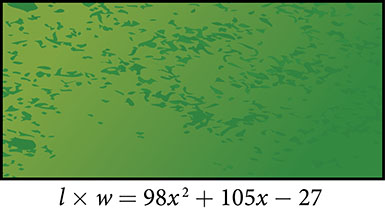

Factor by grouping to find the length and width of the park.
Answer
1.5-53 §1.5 source ↗
For the following exercises, consider this scenario:
Charlotte has appointed a chairperson to lead a city beautification project. The first act is to install statues and fountains in one of the city’s parks. The park is a rectangle with an area of m2, as shown in the figure below. The length and width of the park are perfect factors of the area.
At the northwest corner of the park, the city is going to install a fountain. The area of the base of the fountain is Factor the area to find the lengths of the sides of the fountain.
Answer
1.5-55 §1.5 source ↗
For the following exercises, factor the polynomials completely.
Answer
1.5-57 §1.5 source ↗
For the following exercises, factor the polynomials completely.
Answer
1.5-59 §1.5 source ↗
For the following exercises, factor the polynomials completely.
Answer
Try It #1 §1.6 source ↗
Answer
Try It #2 §1.6 source ↗
Multiply the rational expressions and show the product in simplest form:
Answer
Try It #3 §1.6 source ↗
Divide the rational expressions and express the quotient in simplest form:
Answer
Try It #4 §1.6 source ↗
Answer
Try It #5 §1.6 source ↗
Answer
1.6-1 §1.6 source ↗
Answer
1.6-3 §1.6 source ↗
Answer
1.6-5 §1.6 source ↗
For the following exercises, simplify the rational expressions.
Answer
1.6-7 §1.6 source ↗
For the following exercises, simplify the rational expressions.
Answer
1.6-9 §1.6 source ↗
For the following exercises, simplify the rational expressions.
Answer
1.6-11 §1.6 source ↗
For the following exercises, simplify the rational expressions.
Answer
1.6-13 §1.6 source ↗
For the following exercises, simplify the rational expressions.
Answer
1.6-15 §1.6 source ↗
For the following exercises, multiply the rational expressions and express the product in simplest form.
Answer
1.6-17 §1.6 source ↗
For the following exercises, multiply the rational expressions and express the product in simplest form.
Answer
1.6-19 §1.6 source ↗
For the following exercises, multiply the rational expressions and express the product in simplest form.
Answer
1.6-21 §1.6 source ↗
For the following exercises, multiply the rational expressions and express the product in simplest form.
Answer
1.6-23 §1.6 source ↗
For the following exercises, multiply the rational expressions and express the product in simplest form.
Answer
1.6-25 §1.6 source ↗
For the following exercises, divide the rational expressions.
Answer
1.6-27 §1.6 source ↗
For the following exercises, divide the rational expressions.
Answer
1.6-29 §1.6 source ↗
For the following exercises, divide the rational expressions.
Answer
1.6-31 §1.6 source ↗
For the following exercises, divide the rational expressions.
Answer
1.6-33 §1.6 source ↗
For the following exercises, add and subtract the rational expressions, and then simplify.
Answer
1.6-35 §1.6 source ↗
For the following exercises, add and subtract the rational expressions, and then simplify.
Answer
1.6-37 §1.6 source ↗
For the following exercises, add and subtract the rational expressions, and then simplify.
Answer
1.6-39 §1.6 source ↗
For the following exercises, add and subtract the rational expressions, and then simplify.
Answer
1.6-41 §1.6 source ↗
For the following exercises, add and subtract the rational expressions, and then simplify.
Answer
1.6-43 §1.6 source ↗
For the following exercises, simplify the rational expression.
Answer
1.6-45 §1.6 source ↗
For the following exercises, simplify the rational expression.
Answer
1.6-47 §1.6 source ↗
For the following exercises, simplify the rational expression.
Answer
1.6-49 §1.6 source ↗
For the following exercises, simplify the rational expression.
Answer
1.6-51 §1.6 source ↗
For the following exercises, simplify the rational expression.
Brenda is placing tile on her bathroom floor. The area of the floor is ft2. The area of one tile is To find the number of tiles needed, simplify the rational expression:
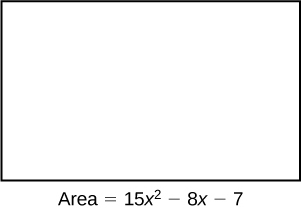
Answer
1.6-53 §1.6 source ↗
For the following exercises, simplify the rational expression.
Elroi wants to mulch his garden. His garden is ft2. One bag of mulch covers ft2. Divide the expressions and simplify to find how many bags of mulch Elroi needs to mulch his garden.
Answer
1.6-55 §1.6 source ↗
For the following exercises, perform the given operations and simplify.
Answer
1.6-57 §1.6 source ↗
For the following exercises, perform the given operations and simplify.
Answer
1.R-1 §1.R source ↗
For the following exercises, perform the given operations.
Answer
1.R-3 §1.R source ↗
For the following exercises, perform the given operations.
Answer
1.R-5 §1.R source ↗
For the following exercises, solve the equation.
Answer
1.R-7 §1.R source ↗
For the following exercises, simplify the expression.
Answer
1.R-9 §1.R source ↗
For the following exercises, identify the number as rational, irrational, whole, or natural. Choose the most descriptive answer.
0
Answer
1.R-11 §1.R source ↗
For the following exercises, identify the number as rational, irrational, whole, or natural. Choose the most descriptive answer.
Answer
1.R-13 §1.R source ↗
For the following exercises, simplify the expression.
Answer
1.R-15 §1.R source ↗
For the following exercises, simplify the expression.
Answer
1.R-17 §1.R source ↗
For the following exercises, simplify the expression.
Answer
1.R-19 §1.R source ↗
For the following exercises, simplify the expression.
Answer
1.R-21 §1.R source ↗
For the following exercises, simplify the expression.
Write the number in scientific notation: 16,340,000
Answer
1.R-23 §1.R source ↗
For the following exercises, find the principal square root.
Answer
1.R-25 §1.R source ↗
For the following exercises, find the principal square root.
Answer
1.R-27 §1.R source ↗
For the following exercises, find the principal square root.
Answer
1.R-29 §1.R source ↗
For the following exercises, find the principal square root.
Answer
1.R-31 §1.R source ↗
For the following exercises, find the principal square root.
Answer
1.R-33 §1.R source ↗
For the following exercises, find the principal square root.
Answer
1.R-35 §1.R source ↗
For the following exercises, perform the given operations and simplify.
Answer
1.R-37 §1.R source ↗
For the following exercises, perform the given operations and simplify.
Answer
1.R-39 §1.R source ↗
For the following exercises, perform the given operations and simplify.
Answer
1.R-41 §1.R source ↗
For the following exercises, perform the given operations and simplify.
Answer
1.R-43 §1.R source ↗
For the following exercises, perform the given operations and simplify.
Answer
1.R-45 §1.R source ↗
For the following exercises, find the greatest common factor.
Answer
1.R-47 §1.R source ↗
For the following exercises, find the greatest common factor.
Answer
1.R-49 §1.R source ↗
For the following exercises, factor the polynomial.
Answer
1.R-51 §1.R source ↗
For the following exercises, factor the polynomial.
Answer
1.R-53 §1.R source ↗
For the following exercises, factor the polynomial.
Answer
1.R-55 §1.R source ↗
For the following exercises, factor the polynomial.
Answer
1.R-57 §1.R source ↗
For the following exercises, factor the polynomial.
Answer
1.R-59 §1.R source ↗
For the following exercises, factor the polynomial.
Answer
1.R-61 §1.R source ↗
For the following exercises, simplify the expression.
Answer
1.R-63 §1.R source ↗
For the following exercises, simplify the expression.
Answer
1.R-65 §1.R source ↗
For the following exercises, simplify the expression.
Answer
1.R-67 §1.R source ↗
For the following exercises, simplify the expression.
Answer
1.R-69 §1.R source ↗
For the following exercises, simplify the expression.
Answer
1.T-1 §1.T source ↗
For the following exercises, identify the number as rational, irrational, whole, or natural. Choose the most descriptive answer.
Answer
1.T-3 §1.T source ↗
For the following exercises, evaluate the expression.
Answer
1.T-5 §1.T source ↗
For the following exercises, evaluate the expression.
Write the number in standard notation:
Answer
1.T-7 §1.T source ↗
For the following exercises, simplify the expression.
Answer
1.T-9 §1.T source ↗
For the following exercises, simplify the expression.
Answer
1.T-11 §1.T source ↗
For the following exercises, simplify the expression.
Answer
1.T-13 §1.T source ↗
For the following exercises, simplify the expression.
Answer
1.T-15 §1.T source ↗
For the following exercises, simplify the expression.
Answer
1.T-17 §1.T source ↗
For the following exercises, simplify the expression.
Answer
1.T-19 §1.T source ↗
For the following exercises, simplify the expression.
Answer
1.T-21 §1.T source ↗
For the following exercises, simplify the expression.
Answer
1.T-23 §1.T source ↗
For the following exercises, factor the polynomial.
Answer
1.T-25 §1.T source ↗
For the following exercises, factor the polynomial.
Answer
1.T-27 §1.T source ↗
For the following exercises, simplify the expression.
Answer
1.T-29 §1.T source ↗
For the following exercises, simplify the expression.
Answer
Loading chapter 2…
Problems and answers are adapted from College Algebra 2e by Jay Abramson, OpenStax, and are used under the CC BY-NC-SA 4.0 licence. Access for free at https://openstax.org/books/college-algebra-2e/pages/1-introduction-to-prerequisites. Illustrations: Copyright Rice University, OpenStax, under CC BY-NC-SA 4.0 license. This adaptation is released under the same licence, is non-commercial, and is neither affiliated with nor endorsed by OpenStax or Rice University.