Every problem in the chapter beside the book’s answer, a chapter at a time as you scroll.
Chapter 7: Trigonometric Identities and Equations
268 problems · 11 figuresTry It #1 §7.1 source ↗
Answer
Try It #2 §7.1 source ↗
Answer
Try It #3 §7.1 source ↗
Answer
Try It #4 §7.1 source ↗
Answer
Try It #5 §7.1 source ↗
Use algebraic techniques to verify the identity:
(Hint: Multiply the numerator and denominator on the left side by
Answer
7.1-1 §7.1 source ↗
Answer
All three functions, , , and are even.
This is because and
7.1-3 §7.1 source ↗
Answer
7.1-5 §7.1 source ↗
For the following exercises, use the fundamental identities to fully simplify the expression.
Answer
7.1-7 §7.1 source ↗
For the following exercises, use the fundamental identities to fully simplify the expression.
Answer
7.1-9 §7.1 source ↗
For the following exercises, use the fundamental identities to fully simplify the expression.
Answer
7.1-11 §7.1 source ↗
For the following exercises, use the fundamental identities to fully simplify the expression.
Answer
7.1-13 §7.1 source ↗
For the following exercises, use the fundamental identities to fully simplify the expression.
Answer
7.1-15 §7.1 source ↗
For the following exercises, use the fundamental identities to fully simplify the expression.
Answer
7.1-17 §7.1 source ↗
For the following exercises, simplify the first trigonometric expression by writing the simplified form in terms of the second expression.
Answer
7.1-19 §7.1 source ↗
For the following exercises, simplify the first trigonometric expression by writing the simplified form in terms of the second expression.
Answer
7.1-21 §7.1 source ↗
For the following exercises, simplify the first trigonometric expression by writing the simplified form in terms of the second expression.
Answer
7.1-23 §7.1 source ↗
For the following exercises, simplify the first trigonometric expression by writing the simplified form in terms of the second expression.
Answer
7.1-25 §7.1 source ↗
For the following exercises, simplify the first trigonometric expression by writing the simplified form in terms of the second expression.
Answer
7.1-27 §7.1 source ↗
For the following exercises, simplify the first trigonometric expression by writing the simplified form in terms of the second expression.
Answer
7.1-29 §7.1 source ↗
For the following exercises, verify the identity.
Answer
Answers will vary. Sample proof:
7.1-31 §7.1 source ↗
For the following exercises, verify the identity.
Answer
7.1-33 §7.1 source ↗
For the following exercises, verify the identity.
Answer
7.1-35 §7.1 source ↗
For the following exercises, prove or disprove the identity.
Answer
7.1-37 §7.1 source ↗
For the following exercises, prove or disprove the identity.
Answer
7.1-39 §7.1 source ↗
For the following exercises, prove or disprove the identity.
Answer
7.1-41 §7.1 source ↗
For the following exercises, determine whether the identity is true or false. If false, find an appropriate equivalent expression.
Answer
Try It #1 §7.2 source ↗
Answer
Try It #2 §7.2 source ↗
Answer
Try It #3 §7.2 source ↗
Answer
Try It #4 §7.2 source ↗
Answer
Try It #5 §7.2 source ↗
Answer
7.2-1 §7.2 source ↗
Answer
7.2-3 §7.2 source ↗
Answer
7.2-5 §7.2 source ↗
For the following exercises, find the exact value.
Answer
7.2-7 §7.2 source ↗
For the following exercises, find the exact value.
Answer
7.2-9 §7.2 source ↗
For the following exercises, find the exact value.
Answer
7.2-11 §7.2 source ↗
For the following exercises, rewrite in terms of and
Answer
7.2-13 §7.2 source ↗
For the following exercises, rewrite in terms of and
Answer
7.2-15 §7.2 source ↗
For the following exercises, simplify the given expression.
Answer
7.2-17 §7.2 source ↗
For the following exercises, simplify the given expression.
Answer
7.2-19 §7.2 source ↗
For the following exercises, simplify the given expression.
Answer
7.2-21 §7.2 source ↗
For the following exercises, find the requested information.
Given that and with and both in the interval find and
Answer
7.2-23 §7.2 source ↗
For the following exercises, find the exact value of each expression.
Answer
7.2-25 §7.2 source ↗
For the following exercises, simplify the expression, and then graph both expressions as functions to verify the graphs are identical.
Answer
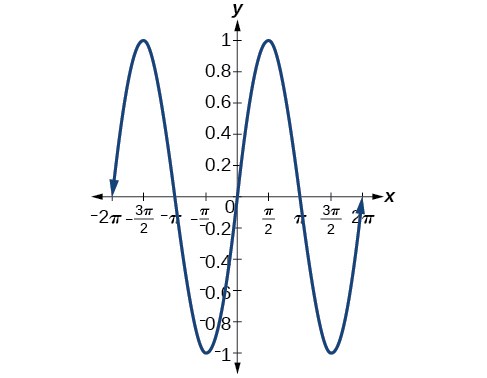
7.2-27 §7.2 source ↗
For the following exercises, simplify the expression, and then graph both expressions as functions to verify the graphs are identical.
Answer
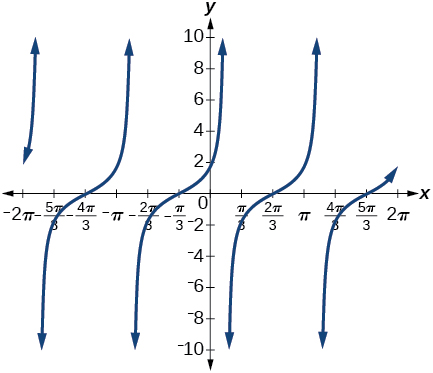
7.2-29 §7.2 source ↗
For the following exercises, simplify the expression, and then graph both expressions as functions to verify the graphs are identical.
Answer
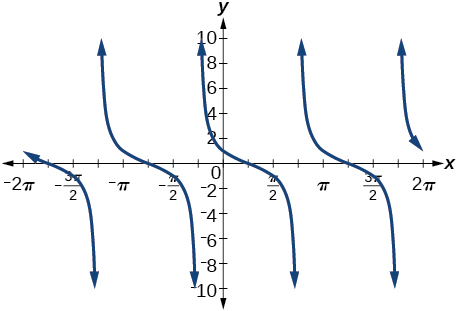
7.2-31 §7.2 source ↗
For the following exercises, simplify the expression, and then graph both expressions as functions to verify the graphs are identical.
Answer
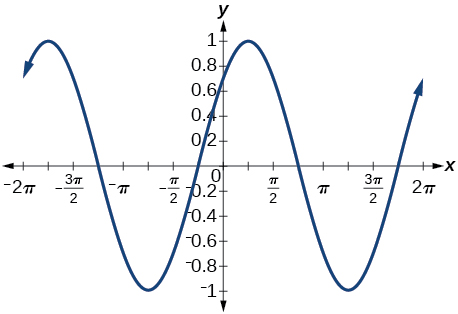
7.2-33 §7.2 source ↗
For the following exercises, use a graph to determine whether the functions are the same or different. If they are the same, show why. If they are different, replace the second function with one that is identical to the first. (Hint: think )
,
Answer
7.2-35 §7.2 source ↗
For the following exercises, use a graph to determine whether the functions are the same or different. If they are the same, show why. If they are different, replace the second function with one that is identical to the first. (Hint: think )
,
Answer
7.2-37 §7.2 source ↗
For the following exercises, use a graph to determine whether the functions are the same or different. If they are the same, show why. If they are different, replace the second function with one that is identical to the first. (Hint: think )
,
Answer
7.2-39 §7.2 source ↗
For the following exercises, use a graph to determine whether the functions are the same or different. If they are the same, show why. If they are different, replace the second function with one that is identical to the first. (Hint: think )
,
Answer
7.2-41 §7.2 source ↗
For the following exercises, use a graph to determine whether the functions are the same or different. If they are the same, show why. If they are different, replace the second function with one that is identical to the first. (Hint: think )
,
Answer
7.2-43 §7.2 source ↗
For the following exercises, find the exact value algebraically, and then confirm the answer with a calculator to the fourth decimal point.
Answer
7.2-45 §7.2 source ↗
For the following exercises, find the exact value algebraically, and then confirm the answer with a calculator to the fourth decimal point.
Answer
7.2-47 §7.2 source ↗
For the following exercises, prove the identities provided.
Answer
7.2-49 §7.2 source ↗
For the following exercises, prove the identities provided.
Answer
7.2-51 §7.2 source ↗
For the following exercises, prove the identities provided.
Answer
7.2-53 §7.2 source ↗
For the following exercises, prove or disprove the statements.
Answer
7.2-55 §7.2 source ↗
For the following exercises, prove or disprove the statements.
If and are angles in the same triangle, then prove or disprove
Answer
Try It #1 §7.3 source ↗
Answer
Try It #2 §7.3 source ↗
Answer
Try It #3 §7.3 source ↗
Answer
Try It #4 §7.3 source ↗
Answer
Try It #5 §7.3 source ↗
Answer
7.3-1 §7.3 source ↗
Answer
7.3-3 §7.3 source ↗
Answer
7.3-5 §7.3 source ↗
For the following exercises, find the exact values of a) b) and c) without solving for
If and is in quadrant I.
Answer
7.3-7 §7.3 source ↗
For the following exercises, find the exact values of a) b) and c) without solving for
If and is in quadrant III.
Answer
7.3-9 §7.3 source ↗
For the following exercises, find the values of the six trigonometric functions if the conditions provided hold.
and
Answer
7.3-11 §7.3 source ↗
For the following exercises, simplify to one trigonometric expression.
Answer
7.3-13 §7.3 source ↗
For the following exercises, find the exact value using half-angle formulas.
Answer
7.3-15 §7.3 source ↗
For the following exercises, find the exact value using half-angle formulas.
Answer
7.3-17 §7.3 source ↗
For the following exercises, find the exact value using half-angle formulas.
Answer
7.3-19 §7.3 source ↗
For the following exercises, find the exact value using half-angle formulas.
Answer
7.3-21 §7.3 source ↗
For the following exercises, find the exact values of a) b) and c) without solving for when
If and is in quadrant III.
Answer
7.3-23 §7.3 source ↗
For the following exercises, find the exact values of a) b) and c) without solving for when
If and is in quadrant II.
Answer
7.3-25 §7.3 source ↗
For the following exercises, use Figure 5 to find the requested half and double angles.
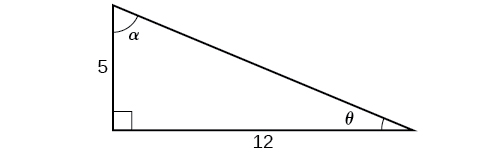 Figure 5
Find and
Answer
7.3-27 §7.3 source ↗
For the following exercises, use Figure 5 to find the requested half and double angles.
Figure 5 Find and
Answer
7.3-29 §7.3 source ↗
For the following exercises, simplify each expression. Do not evaluate.
Answer
7.3-31 §7.3 source ↗
For the following exercises, simplify each expression. Do not evaluate.
Answer
7.3-33 §7.3 source ↗
For the following exercises, simplify each expression. Do not evaluate.
Answer
7.3-35 §7.3 source ↗
For the following exercises, prove the identity given.
Answer
7.3-37 §7.3 source ↗
For the following exercises, prove the identity given.
Answer
7.3-39 §7.3 source ↗
For the following exercises, rewrite the expression with an exponent no higher than 1.
Answer
7.3-41 §7.3 source ↗
For the following exercises, rewrite the expression with an exponent no higher than 1.
Answer
7.3-43 §7.3 source ↗
For the following exercises, rewrite the expression with an exponent no higher than 1.
Answer
7.3-45 §7.3 source ↗
For the following exercises, reduce the equations to powers of one, and then check the answer graphically.
Answer
7.3-47 §7.3 source ↗
For the following exercises, reduce the equations to powers of one, and then check the answer graphically.
Answer
7.3-49 §7.3 source ↗
For the following exercises, reduce the equations to powers of one, and then check the answer graphically.
Answer
7.3-51 §7.3 source ↗
For the following exercises, reduce the equations to powers of one, and then check the answer graphically.
Answer
7.3-53 §7.3 source ↗
For the following exercises, algebraically find an equivalent function, only in terms of and/or and then check the answer by graphing both equations.
Answer
7.3-55 §7.3 source ↗
For the following exercises, prove the identities.
Answer
7.3-57 §7.3 source ↗
For the following exercises, prove the identities.
Answer
7.3-59 §7.3 source ↗
For the following exercises, prove the identities.
Answer
7.3-61 §7.3 source ↗
For the following exercises, prove the identities.
Answer
7.3-63 §7.3 source ↗
For the following exercises, prove the identities.
Answer
Try It #1 §7.4 source ↗
Answer
Try It #2 §7.4 source ↗
Answer
Try It #3 §7.4 source ↗
Answer
Try It #4 §7.4 source ↗
Answer
Try It #5 §7.4 source ↗
Answer
7.4-1 §7.4 source ↗
Answer
7.4-3 §7.4 source ↗
Answer
7.4-5 §7.4 source ↗
For the following exercises, rewrite the product as a sum or difference.
Answer
7.4-7 §7.4 source ↗
For the following exercises, rewrite the product as a sum or difference.
Answer
7.4-9 §7.4 source ↗
For the following exercises, rewrite the product as a sum or difference.
Answer
7.4-11 §7.4 source ↗
For the following exercises, rewrite the sum or difference as a product.
Answer
7.4-13 §7.4 source ↗
For the following exercises, rewrite the sum or difference as a product.
Answer
7.4-15 §7.4 source ↗
For the following exercises, rewrite the sum or difference as a product.
Answer
7.4-17 §7.4 source ↗
For the following exercises, evaluate the product for the following using a sum or difference of two functions.
Answer
7.4-19 §7.4 source ↗
For the following exercises, evaluate the product for the following using a sum or difference of two functions.
Answer
7.4-21 §7.4 source ↗
For the following exercises, evaluate the product for the following using a sum or difference of two functions.
Answer
7.4-23 §7.4 source ↗
For the following exercises, evaluate the product using a sum or difference of two functions. Leave in terms of sine and cosine.
Answer
7.4-25 §7.4 source ↗
For the following exercises, evaluate the product using a sum or difference of two functions. Leave in terms of sine and cosine.
Answer
7.4-27 §7.4 source ↗
For the following exercises, rewrite the sum as a product of two functions. Leave in terms of sine and cosine.
Answer
7.4-29 §7.4 source ↗
For the following exercises, rewrite the sum as a product of two functions. Leave in terms of sine and cosine.
Answer
7.4-31 §7.4 source ↗
For the following exercises, rewrite the sum as a product of two functions. Leave in terms of sine and cosine.
Answer
7.4-33 §7.4 source ↗
For the following exercises, prove the identity.
Answer
7.4-35 §7.4 source ↗
For the following exercises, prove the identity.
Answer
7.4-37 §7.4 source ↗
For the following exercises, prove the identity.
Answer
7.4-39 §7.4 source ↗
For the following exercises, rewrite the sum as a product of two functions or the product as a sum of two functions. Give your answer in terms of sines and cosines. Then evaluate the final answer numerically, rounded to four decimal places.
Answer
7.4-41 §7.4 source ↗
For the following exercises, rewrite the sum as a product of two functions or the product as a sum of two functions. Give your answer in terms of sines and cosines. Then evaluate the final answer numerically, rounded to four decimal places.
Answer
7.4-43 §7.4 source ↗
For the following exercises, rewrite the sum as a product of two functions or the product as a sum of two functions. Give your answer in terms of sines and cosines. Then evaluate the final answer numerically, rounded to four decimal places.
Answer
7.4-45 §7.4 source ↗
For the following exercises, algebraically determine whether each of the given expressions is a true identity. If it is not an identity, replace the right-hand side with an expression equivalent to the left side. Verify the results by graphing both expressions on a calculator.
Answer
7.4-47 §7.4 source ↗
For the following exercises, algebraically determine whether each of the given expressions is a true identity. If it is not an identity, replace the right-hand side with an expression equivalent to the left side. Verify the results by graphing both expressions on a calculator.
Answer
7.4-49 §7.4 source ↗
For the following exercises, simplify the expression to one term, then graph the original function and your simplified version to verify they are identical.
Answer
7.4-51 §7.4 source ↗
For the following exercises, simplify the expression to one term, then graph the original function and your simplified version to verify they are identical.
Answer
7.4-53 §7.4 source ↗
For the following exercises, simplify the expression to one term, then graph the original function and your simplified version to verify they are identical.
Answer
7.4-55 §7.4 source ↗
For the following exercises, prove the following sum-to-product formulas.
Answer
Start with Make a substitution and let and let so becomes
Since and we can solve for and in terms of x and y and substitute in for and get
7.4-57 §7.4 source ↗
For the following exercises, prove the identity.
Answer
7.4-59 §7.4 source ↗
For the following exercises, prove the identity.
Answer
7.4-61 §7.4 source ↗
For the following exercises, prove the identity.
Answer
7.4-63 §7.4 source ↗
For the following exercises, prove the identity.
Answer
Try It #1 §7.5 source ↗
Answer
Try It #2 §7.5 source ↗
Answer
Try It #3 §7.5 source ↗
Answer
Try It #4 §7.5 source ↗
Answer
Try It #5 §7.5 source ↗
Answer
7.5-1 §7.5 source ↗
Answer
7.5-3 §7.5 source ↗
Answer
7.5-5 §7.5 source ↗
For the following exercises, find all solutions exactly on the interval
Answer
7.5-7 §7.5 source ↗
For the following exercises, find all solutions exactly on the interval
Answer
7.5-9 §7.5 source ↗
For the following exercises, find all solutions exactly on the interval
Answer
7.5-11 §7.5 source ↗
For the following exercises, find all solutions exactly on the interval
Answer
7.5-13 §7.5 source ↗
For the following exercises, solve exactly on
Answer
7.5-15 §7.5 source ↗
For the following exercises, solve exactly on
Answer
7.5-17 §7.5 source ↗
For the following exercises, solve exactly on
Answer
7.5-19 §7.5 source ↗
For the following exercises, solve exactly on
Answer
7.5-21 §7.5 source ↗
For the following exercises, solve exactly on
Answer
7.5-23 §7.5 source ↗
For the following exercises, find all exact solutions on
Answer
7.5-25 §7.5 source ↗
For the following exercises, find all exact solutions on
Answer
7.5-27 §7.5 source ↗
For the following exercises, find all exact solutions on
Answer
7.5-29 §7.5 source ↗
For the following exercises, find all exact solutions on
Answer
7.5-31 §7.5 source ↗
For the following exercises, find all exact solutions on
Answer
7.5-33 §7.5 source ↗
For the following exercises, solve with the methods shown in this section exactly on the interval
Answer
7.5-35 §7.5 source ↗
For the following exercises, solve with the methods shown in this section exactly on the interval
Answer
7.5-37 §7.5 source ↗
For the following exercises, solve with the methods shown in this section exactly on the interval
Answer
7.5-39 §7.5 source ↗
For the following exercises, solve with the methods shown in this section exactly on the interval
Answer
7.5-41 §7.5 source ↗
For the following exercises, solve exactly on the interval Use the quadratic formula if the equations do not factor.
Answer
7.5-43 §7.5 source ↗
For the following exercises, solve exactly on the interval Use the quadratic formula if the equations do not factor.
Answer
7.5-45 §7.5 source ↗
For the following exercises, solve exactly on the interval Use the quadratic formula if the equations do not factor.
Answer
7.5-47 §7.5 source ↗
For the following exercises, solve exactly on the interval Use the quadratic formula if the equations do not factor.
Answer
7.5-49 §7.5 source ↗
For the following exercises, solve exactly on the interval Use the quadratic formula if the equations do not factor.
Answer
7.5-51 §7.5 source ↗
For the following exercises, find exact solutions on the interval Look for opportunities to use trigonometric identities.
Answer
7.5-53 §7.5 source ↗
For the following exercises, find exact solutions on the interval Look for opportunities to use trigonometric identities.
Answer
7.5-55 §7.5 source ↗
For the following exercises, find exact solutions on the interval Look for opportunities to use trigonometric identities.
Answer
7.5-57 §7.5 source ↗
For the following exercises, find exact solutions on the interval Look for opportunities to use trigonometric identities.
Answer
7.5-59 §7.5 source ↗
For the following exercises, find exact solutions on the interval Look for opportunities to use trigonometric identities.
Answer
7.5-61 §7.5 source ↗
For the following exercises, find exact solutions on the interval Look for opportunities to use trigonometric identities.
Answer
7.5-63 §7.5 source ↗
For the following exercises, find exact solutions on the interval Look for opportunities to use trigonometric identities.
Answer
7.5-65 §7.5 source ↗
For the following exercises, find exact solutions on the interval Look for opportunities to use trigonometric identities.
Answer
7.5-67 §7.5 source ↗
For the following exercises, algebraically determine all solutions of the trigonometric equation exactly, then verify the results by graphing the equation and finding the zeros. Use an interval of .
Answer
7.5-69 §7.5 source ↗
For the following exercises, algebraically determine all solutions of the trigonometric equation exactly, then verify the results by graphing the equation and finding the zeros. Use an interval of .
Answer
7.5-71 §7.5 source ↗
For the following exercises, algebraically determine all solutions of the trigonometric equation exactly, then verify the results by graphing the equation and finding the zeros. Use an interval of .
Answer
7.5-73 §7.5 source ↗
For the following exercises, use a calculator to find all solutions to four decimal places.
Answer
7.5-75 §7.5 source ↗
For the following exercises, use a calculator to find all solutions to four decimal places.
Answer
7.5-77 §7.5 source ↗
For the following exercises, solve the equations algebraically, and then use a calculator to find the values on the interval Round to four decimal places.
Answer
7.5-79 §7.5 source ↗
For the following exercises, solve the equations algebraically, and then use a calculator to find the values on the interval Round to four decimal places.
Answer
7.5-81 §7.5 source ↗
For the following exercises, solve the equations algebraically, and then use a calculator to find the values on the interval Round to four decimal places.
Answer
7.5-83 §7.5 source ↗
For the following exercises, find all solutions exactly to the equations on the interval
Answer
7.5-85 §7.5 source ↗
For the following exercises, find all solutions exactly to the equations on the interval
Answer
7.5-87 §7.5 source ↗
For the following exercises, find all solutions exactly to the equations on the interval
Answer
7.5-89 §7.5 source ↗
For the following exercises, find all solutions exactly to the equations on the interval
Answer
7.5-91 §7.5 source ↗
For the following exercises, find all solutions exactly to the equations on the interval
Answer
7.5-93 §7.5 source ↗
For the following exercises, find all solutions exactly to the equations on the interval
An airplane has only enough gas to fly to a city 200 miles northeast of its current location. If the pilot knows that the city is 25 miles north, how many degrees north of east should the airplane fly?
Answer
7.5-95 §7.5 source ↗
For the following exercises, find all solutions exactly to the equations on the interval
If a loading ramp is placed next to a truck, at a height of 2 feet, and the ramp is 20 feet long, what angle does the ramp make with the ground?
Answer
7.5-97 §7.5 source ↗
For the following exercises, find all solutions exactly to the equations on the interval
An astronaut is in a launched rocket currently 15 miles in altitude. If a man is standing 2 miles from the launch pad, at what angle is she looking down at him from horizontal? (Hint: this is called the angle of depression.)
Answer
7.5-99 §7.5 source ↗
For the following exercises, find all solutions exactly to the equations on the interval
A man is standing 10 meters away from a 6-meter tall building. Someone at the top of the building is looking down at him. At what angle is the person looking at him?
Answer
7.5-101 §7.5 source ↗
For the following exercises, find all solutions exactly to the equations on the interval
A 90-foot tall building has a shadow that is 2 feet long. What is the angle of elevation of the sun?
Answer
7.5-103 §7.5 source ↗
For the following exercises, find all solutions exactly to the equations on the interval
A spotlight on the ground 3 feet from a 5-foot tall woman casts a 15-foot tall shadow on a wall 6 feet from the woman. At what angle is the light?
Answer
7.5-105 §7.5 source ↗
For the following exercises, find a solution to the word problem algebraically. Then use a calculator to verify the result. Round the answer to the nearest tenth of a degree.
A person does a handstand with her feet touching a wall and her hands 3 feet away from the wall. If the person is 5 feet tall, what angle do her feet make with the wall?
Answer
Try It #1 §7.6 source ↗
Answer
Try It #2 §7.6 source ↗
Answer
| x | |
|---|---|
| 0 | 0 |
| 3 | |
| 0 | |
| 0 |
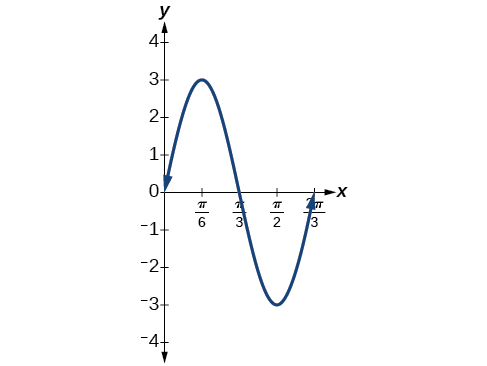
Try It #3 §7.6 source ↗
Answer
The temperature reaches freezing at noon and at midnight.
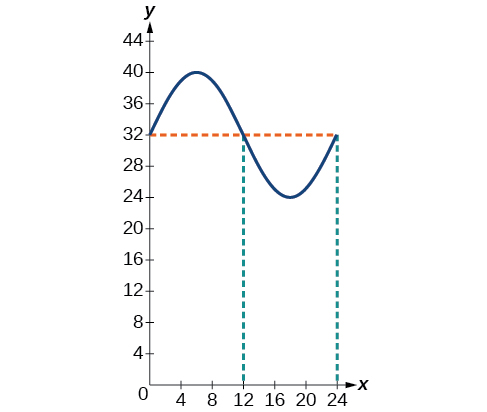
Try It #4 §7.6 source ↗
Answer
Try It #5 §7.6 source ↗
Answer
Try It #6 §7.6 source ↗
Answer
7.6-1 §7.6 source ↗
Answer
7.6-3 §7.6 source ↗
Answer
7.6-5 §7.6 source ↗
For the following exercises, find a possible formula for the trigonometric function represented by the given table of values.
Answer
7.6-7 §7.6 source ↗
For the following exercises, find a possible formula for the trigonometric function represented by the given table of values.
Answer
7.6-8 §7.6 source ↗
For the following exercises, find a possible formula for the trigonometric function represented by the given table of values.
Answer
7.6-10 §7.6 source ↗
For the following exercises, find a possible formula for the trigonometric function represented by the given table of values.
Answer
7.6-12 §7.6 source ↗
For the following exercises, find a possible formula for the trigonometric function represented by the given table of values.
Answer
7.6-13 §7.6 source ↗
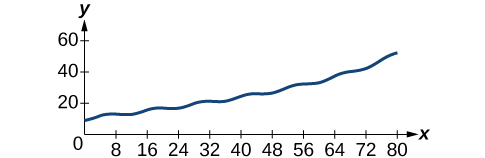
For the following exercises, graph the given function, and then find a possible physical process that the equation could model.
Answer
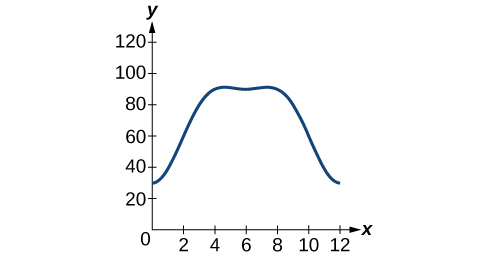
7.6-15 §7.6 source ↗
For the following exercises, graph the given function, and then find a possible physical process that the equation could model.
on the interval
Answer
7.6-17 §7.6 source ↗
For the following exercises, construct a sinusoidal function with the provided information, and then solve the equation for the requested values.
Outside temperatures over the course of a day can be modeled as a sinusoidal function. Suppose the high temperature of occurs at 5PM and the average temperature for the day is Find the temperature, to the nearest degree, at 9AM.
Answer
7.6-19 §7.6 source ↗
For the following exercises, construct a sinusoidal function with the provided information, and then solve the equation for the requested values.
Outside temperatures over the course of a day can be modeled as a sinusoidal function. Suppose the temperature varies between and during the day and the average daily temperature first occurs at 10 AM. How many hours after midnight does the temperature first reach
Answer
7.6-21 §7.6 source ↗
For the following exercises, construct a sinusoidal function with the provided information, and then solve the equation for the requested values.
A Ferris wheel is 20 meters in diameter and boarded from a platform that is 2 meters above the ground. The six o’clock position on the Ferris wheel is level with the loading platform. The wheel completes 1 full revolution in 6 minutes. How much of the ride, in minutes and seconds, is spent higher than 13 meters above the ground?
Answer
7.6-23 §7.6 source ↗
For the following exercises, construct a sinusoidal function with the provided information, and then solve the equation for the requested values.
The sea ice area around the North Pole fluctuates between about 6 million square kilometers on September 1 to 14 million square kilometers on March 1. Assuming a sinusoidal fluctuation, when are there less than 9 million square kilometers of sea ice? Give your answer as a range of dates, to the nearest day.
Answer
7.6-25 §7.6 source ↗
For the following exercises, construct a sinusoidal function with the provided information, and then solve the equation for the requested values.
During a 90-day monsoon season, daily rainfall can be modeled by sinusoidal functions. If the rainfall fluctuates between a low of 2 inches on day 10 and 12 inches on day 55, during what period is daily rainfall more than 10 inches?
Answer
7.6-27 §7.6 source ↗
For the following exercises, construct a sinusoidal function with the provided information, and then solve the equation for the requested values.
In a certain region, monthly precipitation peaks at 8 inches on June 1 and falls to a low of 1 inch on December 1. Identify the periods when the region is under flood conditions (greater than 7 inches) and drought conditions (less than 2 inches). Give your answer in terms of the nearest day.
Answer
7.6-29 §7.6 source ↗
For the following exercises, find the amplitude, period, and frequency of the given function.
The displacement in centimeters of a mass suspended by a spring is modeled by the function where is measured in seconds. Find the amplitude, period, and frequency of this displacement.
Answer
7.6-31 §7.6 source ↗
For the following exercises, find the amplitude, period, and frequency of the given function.
The displacement in centimeters of a mass suspended by a spring is modeled by the function where is measured in seconds. Find the amplitude, period, and frequency of this displacement.
Answer
7.6-33 §7.6 source ↗
For the following exercises, construct an equation that models the described behavior.
A deer population oscillates 19 above and below average during the year, reaching the lowest value in January. The average population starts at 800 deer and increases by 160 each year. Find a function that models the population, in terms of months since January,
Answer
7.6-35 §7.6 source ↗
For the following exercises, construct an equation that models the described behavior.
A muskrat population oscillates 33 above and below average during the year, reaching the lowest value in January. The average population starts at 900 muskrats and increases by 7% each month. Find a function that models the population, in terms of months since January,
Answer
7.6-37 §7.6 source ↗
For the following exercises, construct an equation that models the described behavior.
A spring attached to the ceiling is pulled 10 cm down from equilibrium and released. The amplitude decreases by 15% each second. The spring oscillates 18 times each second. Find a function that models the distance, the end of the spring is from equilibrium in terms of seconds, since the spring was released.
Answer
7.6-39 §7.6 source ↗
For the following exercises, construct an equation that models the described behavior.
A spring attached to the ceiling is pulled 17 cm down from equilibrium and released. After 3 seconds, the amplitude has decreased to 13 cm. The spring oscillates 14 times each second. Find a function that models the distance, the end of the spring is from equilibrium in terms of seconds, since the spring was released.
Answer
7.6-41 §7.6 source ↗
For the following exercises, create a function modeling the described behavior. Then, calculate the desired result using a calculator.
A certain lake currently has an average trout population of 20,000. The population naturally oscillates above and below average by 2,000 every year. This year, the lake was opened to fishermen. If fishermen catch 3,000 fish every year, how long will it take for the lake to have no more trout?
Answer
7.6-43 §7.6 source ↗
For the following exercises, create a function modeling the described behavior. Then, calculate the desired result using a calculator.
A spring attached to a ceiling is pulled down 11 cm from equilibrium and released. After 2 seconds, the amplitude has decreased to 6 cm. The spring oscillates 8 times each second. Find when the spring first comes between and effectively at rest.
Answer
7.6-45 §7.6 source ↗
For the following exercises, create a function modeling the described behavior. Then, calculate the desired result using a calculator.
Two springs are pulled down from the ceiling and released at the same time. The first spring, which oscillates 8 times per second, was initially pulled down 32 cm from equilibrium, and the amplitude decreases by 50% each second. The second spring, oscillating 18 times per second, was initially pulled down 15 cm from equilibrium and after 4 seconds has an amplitude of 2 cm. Which spring comes to rest first, and at what time? Consider “rest” as an amplitude less than
Answer
7.6-47 §7.6 source ↗
For the following exercises, create a function modeling the described behavior. Then, calculate the desired result using a calculator.
A plane flies 1 hour at 150 mph at east of north, then continues to fly for 1.5 hours at 120 mph, this time at a bearing of east of north. Find the total distance from the starting point and the direct angle flown north of east.
Answer
7.6-49 §7.6 source ↗
For the following exercises, find a function of the form that fits the given data.
| 0 | 1 | 2 | 3 | |
| 6 | 29 | 96 | 379 |
Answer
7.6-51 §7.6 source ↗
For the following exercises, find a function of the form that fits the given data.
| 0 | 1 | 2 | 3 | |
| 4 | 0 | 16 | -40 |
Answer
7.6-53 §7.6 source ↗
For the following exercises, find a function of the form that fits the given data.
| 0 | 1 | 2 | 3 | |
| 4 | 1 | −11 | 1 |
Answer
7.R-1 §7.R source ↗
For the following exercises, find all solutions exactly that exist on the interval
Answer
7.R-3 §7.R source ↗
For the following exercises, find all solutions exactly that exist on the interval
Answer
7.R-5 §7.R source ↗
For the following exercises, find all solutions exactly that exist on the interval
Answer
7.R-7 §7.R source ↗
For the following exercises, use basic identities to simplify the expression.
Answer
7.R-9 §7.R source ↗
For the following exercises, determine if the given identities are equivalent.
Answer
7.R-11 §7.R source ↗
For the following exercises, find the exact value.
Answer
7.R-13 §7.R source ↗
For the following exercises, find the exact value.
Answer
7.R-15 §7.R source ↗
For the following exercises, prove the identity.
Answer
7.R-17 §7.R source ↗
For the following exercise, simplify the expression.
Answer
7.R-19 §7.R source ↗
For the following exercises, find the exact value.
Answer
7.R-21 §7.R source ↗
For the following exercises, find the exact value.
Find and given and is in the interval
Answer
7.R-23 §7.R source ↗
For the following exercises, find the exact value.
Answer
7.R-25 §7.R source ↗
For the following exercises, use Figure 1 to find the desired quantities.
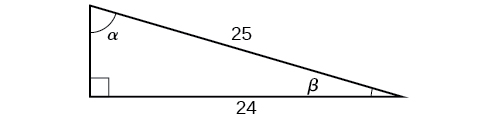 Figure 1
Answer
7.R-27 §7.R source ↗
For the following exercises, prove the identity.
Answer
7.R-29 §7.R source ↗
For the following exercises, rewrite the expression with no powers.
Answer
7.R-31 §7.R source ↗
For the following exercises, evaluate the product for the given expression using a sum or difference of two functions. Write the exact answer.
Answer
7.R-33 §7.R source ↗
For the following exercises, evaluate the sum by using a product formula. Write the exact answer.
Answer
7.R-35 §7.R source ↗
For the following exercises, change the functions from a product to a sum or a sum to a product.
Answer
7.R-37 §7.R source ↗
For the following exercises, change the functions from a product to a sum or a sum to a product.
Answer
7.R-39 §7.R source ↗
For the following exercises, find all exact solutions on the interval
Answer
7.R-41 §7.R source ↗
For the following exercises, find all exact solutions on the interval
Answer
7.R-43 §7.R source ↗
For the following exercises, find all exact solutions on the interval
Answer
7.R-45 §7.R source ↗
For the following exercises, find all exact solutions on the interval
Answer
7.R-47 §7.R source ↗
For the following exercises, simplify the equation algebraically as much as possible. Then use a calculator to find the solutions on the interval Round to four decimal places.
Answer
7.R-49 §7.R source ↗
For the following exercises, graph each side of the equation to find the zeroes on the interval
Answer
7.R-51 §7.R source ↗
For the following exercises, graph the points and find a possible formula for the trigonometric values in the given table.
Answer
7.R-53 §7.R source ↗
For the following exercises, graph the points and find a possible formula for the trigonometric values in the given table.
A man with his eye level 6 feet above the ground is standing 3 feet away from the base of a 15-foot vertical ladder. If he looks to the top of the ladder, at what angle above horizontal is he looking?
Answer
7.R-55 §7.R source ↗
For the following exercises, construct functions that model the described behavior.
A population of lemmings varies with a yearly low of 500 in March. If the average yearly population of lemmings is 950, write a function that models the population with respect to the month.
Answer
7.R-57 §7.R source ↗
For the following exercises, find the amplitude, frequency, and period of the given equations.
Answer
7.R-59 §7.R source ↗
For the following exercises, model the described behavior and find requested values.
An invasive species of carp is introduced to Lake Freshwater. Initially there are 100 carp in the lake and the population varies by 20 fish seasonally. If by year 5, there are 625 carp, find a function modeling the population of carp with respect to the number of years from now.
Answer
7.T-1 §7.T source ↗
For the following exercises, simplify the given expression.
Answer
7.T-3 §7.T source ↗
For the following exercises, find the exact value.
Answer
7.T-5 §7.T source ↗
For the following exercises, find the exact value.
Answer
7.T-7 §7.T source ↗
For the following exercises, find all exact solutions to the equation on
Answer
7.T-9 §7.T source ↗
For the following exercises, find all exact solutions to the equation on
Answer
7.T-11 §7.T source ↗
For the following exercises, find all exact solutions to the equation on
Rewrite the expression as a product instead of a sum:
Answer
7.T-13 §7.T source ↗
For the following exercises, find all exact solutions to the equation on
Find the solutions of on the interval algebraically; then graph both sides of the equation to determine the answer.
Answer
7.T-15 §7.T source ↗
For the following exercises, find all exact solutions to the equation on
Find and given and is in quadrant IV.
Answer
7.T-17 §7.T source ↗
For the following exercises, prove the identity.
Answer
7.T-19 §7.T source ↗
For the following exercises, prove the identity.
Answer
7.T-21 §7.T source ↗
For the following exercises, prove the identity.
The displacement in centimeters of a mass suspended by a spring is modeled by the function where is measured in seconds. Find the amplitude, period, and frequency of this displacement.
Answer
7.T-23 §7.T source ↗
For the following exercises, prove the identity.
Two frequencies of sound are played on an instrument governed by the equation What are the period and frequency of the “fast” and “slow” oscillations? What is the amplitude?
Answer
7.T-25 §7.T source ↗
For the following exercises, prove the identity.
A spring attached to a ceiling is pulled down 20 cm. After 3 seconds, wherein it completes 6 full periods, the amplitude is only 15 cm. Find the function modeling the position of the spring seconds after being released. At what time will the spring come to rest? In this case, use 1 cm amplitude as rest.
Answer
Loading chapter 8…
Problems and answers are adapted from Precalculus 2e by Jay Abramson, OpenStax, and are used under the CC BY-NC-SA 4.0 licence. Access for free at https://openstax.org/books/precalculus-2e/pages/1-introduction-to-functions. Illustrations: Copyright Rice University, OpenStax, under CC BY-NC-SA 4.0 license. This adaptation is released under the same licence, is non-commercial, and is neither affiliated with nor endorsed by OpenStax or Rice University.