Every problem in the chapter beside the book’s answer, a chapter at a time as you scroll.
Chapter 6: Power Series
161 problems · 12 figuresCheckpoint 6.1 §6.1 source ↗
Answer
Checkpoint 6.2 §6.1 source ↗
Answer
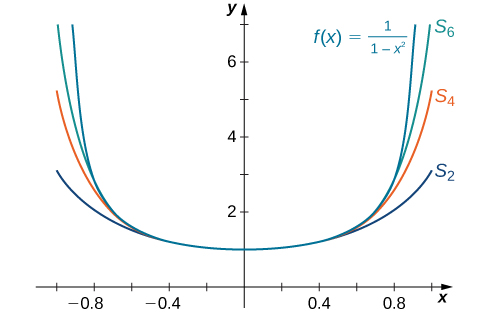
Checkpoint 6.3 §6.1 source ↗
Answer
6-1 §6.1 source ↗
In the following exercises, state whether each statement is true, or give an example to show that it is false.
If converges, then as
Answer
6-3 §6.1 source ↗
In the following exercises, state whether each statement is true, or give an example to show that it is false.
Given any sequence there is always some possibly very small, such that converges on
Answer
6-5 §6.1 source ↗
In the following exercises, state whether each statement is true, or give an example to show that it is false.
Suppose that converges at At which of the following points might the series diverge? Use the fact that if converges at x, then it converges at any point closer to c than x.
a.
b.
c.
d.
e.
f.
Answer
6-7 §6.1 source ↗
In the following exercises, suppose that as Find the radius of convergence for each series.
Answer
6-9 §6.1 source ↗
In the following exercises, suppose that as Find the radius of convergence for each series.
Answer
6-11 §6.1 source ↗
In the following exercises, suppose that as Find the radius of convergence for each series.
Answer
6-13 §6.1 source ↗
In the following exercises, find the radius of convergence R and interval of convergence for with the given coefficients
Answer
6-15 §6.1 source ↗
In the following exercises, find the radius of convergence R and interval of convergence for with the given coefficients
Answer
6-17 §6.1 source ↗
In the following exercises, find the radius of convergence R and interval of convergence for with the given coefficients
Answer
6-19 §6.1 source ↗
In the following exercises, find the radius of convergence R and interval of convergence for with the given coefficients
Answer
6-21 §6.1 source ↗
In the following exercises, find the radius of convergence R and interval of convergence for with the given coefficients
Answer
6-23 §6.1 source ↗
In the following exercises, find the radius of convergence of each series.
Answer
6-25 §6.1 source ↗
In the following exercises, find the radius of convergence of each series.
Answer
6-27 §6.1 source ↗
In the following exercises, find the radius of convergence of each series.
where
Answer
6-29 §6.1 source ↗
In the following exercises, use the ratio test to determine the radius of convergence of each series.
Answer
6-31 §6.1 source ↗
In the following exercises, use the ratio test to determine the radius of convergence of each series.
Answer
6-33 §6.1 source ↗
In the following exercises, given that with convergence in find the power series for each function with the given center a, and identify its interval of convergence.
(Hint:
Answer
6-35 §6.1 source ↗
In the following exercises, given that with convergence in find the power series for each function with the given center a, and identify its interval of convergence.
Answer
6-37 §6.1 source ↗
In the following exercises, given that with convergence in find the power series for each function with the given center a, and identify its interval of convergence.
Answer
6-39 §6.1 source ↗
In the following exercises, given that with convergence in find the power series for each function with the given center a, and identify its interval of convergence.
Answer
6-41 §6.1 source ↗
In the following exercises, given that with convergence in find the power series for each function with the given center a, and identify its interval of convergence.
Answer
6-43 §6.1 source ↗
Use the next exercise to find the radius of convergence of the given series in the subsequent exercises.
Explain why, if then whenever and, therefore, the radius of convergence of is
Answer
6-45 §6.1 source ↗
Use the next exercise to find the radius of convergence of the given series in the subsequent exercises.
Answer
6-47 §6.1 source ↗
Use the next exercise to find the radius of convergence of the given series in the subsequent exercises.
Answer
6-49 §6.1 source ↗
Use the next exercise to find the radius of convergence of the given series in the subsequent exercises.
Suppose that such that if n is odd. Explain why
Answer
6-51 §6.1 source ↗
Use the next exercise to find the radius of convergence of the given series in the subsequent exercises.
Suppose that converges on Find the interval of convergence of
Answer
6-53 §6.1 source ↗
In the following exercises, suppose that satisfies where for each n. State whether each series converges on the full interval or if there is not enough information to draw a conclusion. Use the comparison test when appropriate.
Answer
6-55 §6.1 source ↗
In the following exercises, suppose that satisfies where for each n. State whether each series converges on the full interval or if there is not enough information to draw a conclusion. Use the comparison test when appropriate.
(Hint: Let if for some n, otherwise
Answer
6-57 §6.1 source ↗
In the following exercises, suppose that satisfies where for each n. State whether each series converges on the full interval or if there is not enough information to draw a conclusion. Use the comparison test when appropriate.
[T] Plot the graphs of and of the partial sums for on the interval Comment on the approximation of by near and near as N increases.
Answer
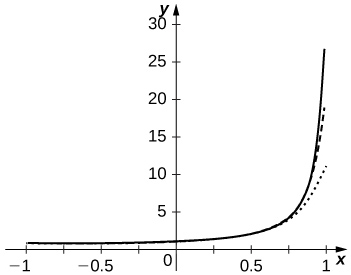
The approximation is more accurate near The partial sums follow more closely as N increases but are never accurate near since the series diverges there.
6-59 §6.1 source ↗
In the following exercises, suppose that satisfies where for each n. State whether each series converges on the full interval or if there is not enough information to draw a conclusion. Use the comparison test when appropriate.
[T] Plot the graphs of the partial sums for on the interval Comment on the behavior of the sums near and near as N increases.
Answer
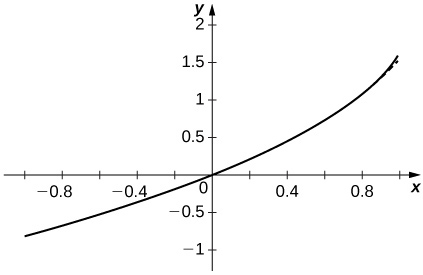
The approximation appears to stabilize quickly near both
6-61 §6.1 source ↗
In the following exercises, suppose that satisfies where for each n. State whether each series converges on the full interval or if there is not enough information to draw a conclusion. Use the comparison test when appropriate.
[T] Plot the graphs of the partial sums for on the interval Comment on how these plots approximate as N increases.
Answer
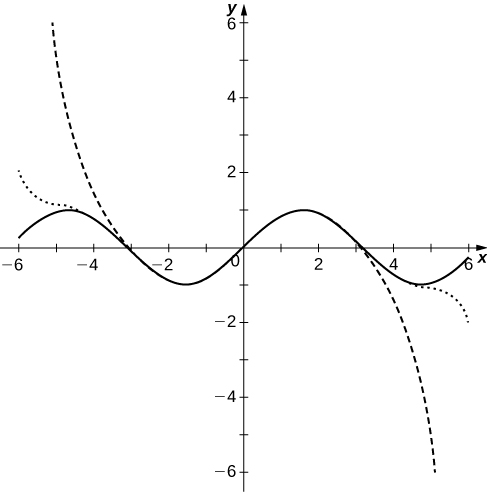
The polynomial curves have roots close to those of up to their degree and then the polynomials diverge from
Checkpoint 6.4 §6.2 source ↗
Answer
Checkpoint 6.5 §6.2 source ↗
Answer
Checkpoint 6.6 §6.2 source ↗
Answer
Checkpoint 6.7 §6.2 source ↗
Answer
Checkpoint 6.8 §6.2 source ↗
Answer
Checkpoint 6.9 §6.2 source ↗
Answer
6-63 §6.2 source ↗
Answer
6-65 §6.2 source ↗
In the following exercises, use partial fractions to find the power series of each function.
Answer
6-67 §6.2 source ↗
In the following exercises, use partial fractions to find the power series of each function.
Answer
6-69 §6.2 source ↗
In the following exercises, express each series as a rational function.
Answer
6-71 §6.2 source ↗
In the following exercises, express each series as a rational function.
Answer
6-73 §6.2 source ↗
The following exercises explore applications of annuities.
Calculate the present values P of an annuity in which $10,000 is to be paid out annually for a period of 20 years, assuming interest rates of and
Answer
6-75 §6.2 source ↗
The following exercises explore applications of annuities.
Calculate the annual payouts C to be given for 20 years on annuities having present value $100,000 assuming respective interest rates of and
Answer
6-77 §6.2 source ↗
The following exercises explore applications of annuities.
Suppose that an annuity has a present value What interest rate r would allow for perpetual annual payouts of $50,000?
Answer
6-79 §6.2 source ↗
In the following exercises, express the sum of each power series in terms of geometric series, and then express the sum as a rational function.
(Hint: Group powers x3k, and
Answer
6-81 §6.2 source ↗
In the following exercises, express the sum of each power series in terms of geometric series, and then express the sum as a rational function.
(Hint: Group powers x3k, and
Answer
6-83 §6.2 source ↗
In the following exercises, find the power series of given f and g as defined.
Answer
6-85 §6.2 source ↗
In the following exercises, find the power series of given f and g as defined.
Answer
6-87 §6.2 source ↗
In the following exercises, differentiate the given series expansion of f term-by-term to obtain the corresponding series expansion for the derivative of f.
Answer
6-89 §6.2 source ↗
In the following exercises, integrate the given series expansion of term-by-term from zero to x to obtain the corresponding series expansion for the indefinite integral of
Answer
6-91 §6.2 source ↗
In the following exercises, evaluate each infinite series by identifying it as the value of a derivative or integral of geometric series.
Evaluate as where
Answer
6-93 §6.2 source ↗
In the following exercises, evaluate each infinite series by identifying it as the value of a derivative or integral of geometric series.
Evaluate as where
Answer
6-95 §6.2 source ↗
In the following exercises, given that use term-by-term differentiation or integration to find power series for each function centered at the given point.
centered at (Hint:
Answer
6-97 §6.2 source ↗
In the following exercises, given that use term-by-term differentiation or integration to find power series for each function centered at the given point.
at
Answer
6-99 §6.2 source ↗
In the following exercises, given that use term-by-term differentiation or integration to find power series for each function centered at the given point.
at
Answer
6-101 §6.2 source ↗
In the following exercises, given that use term-by-term differentiation or integration to find power series for each function centered at the given point.
where
Answer
6-103 §6.2 source ↗
In the following exercises, given that use term-by-term differentiation or integration to find power series for each function centered at the given point.
[T] Subtract the infinite series of from to get a power series for Evaluate at What is the smallest N such that the Nth partial sum of this series approximates with an error less than 0.001?
Answer
6-105 §6.2 source ↗
In the following exercises, using a substitution if indicated, express each series in terms of elementary functions and find the radius of convergence of the sum.
Answer
6-107 §6.2 source ↗
In the following exercises, using a substitution if indicated, express each series in terms of elementary functions and find the radius of convergence of the sum.
using
Answer
6-109 §6.2 source ↗
In the following exercises, using a substitution if indicated, express each series in terms of elementary functions and find the radius of convergence of the sum.
Differentiate the series term-by-term to show that is equal to its derivative.
Answer
6-111 §6.2 source ↗
In the following exercises, using a substitution if indicated, express each series in terms of elementary functions and find the radius of convergence of the sum.
[T] Suppose that the coefficients an of the series are defined by the recurrence relation For and compute and plot the sums for on
Answer
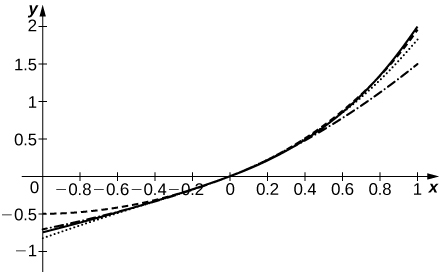
The solid curve is S5. The dashed curve is S2, dotted is S3, and dash-dotted is S4
6-113 §6.2 source ↗
In the following exercises, using a substitution if indicated, express each series in terms of elementary functions and find the radius of convergence of the sum.
[T] Given the power series expansion determine how many terms N of the sum evaluated at are needed to approximate accurate to within 1/1000. Evaluate the corresponding partial sum
Answer
6-115 §6.2 source ↗
In the following exercises, using a substitution if indicated, express each series in terms of elementary functions and find the radius of convergence of the sum.
[T] Recall that Assuming an exact value of estimate by evaluating partial sums of the power series expansion at What is the smallest number N such that approximates π accurately to within 0.001? How many terms are needed for accuracy to within 0.00001?
Answer
Checkpoint 6.10 §6.3 source ↗
Answer
Checkpoint 6.11 §6.3 source ↗
Answer
Checkpoint 6.12 §6.3 source ↗
Answer
Checkpoint 6.13 §6.3 source ↗
Answer
Checkpoint 6.14 §6.3 source ↗
Answer
Checkpoint 6.15 §6.3 source ↗
Answer
By the ratio test, the interval of convergence is Since the series converges to for all real x.
6-117 §6.3 source ↗
In the following exercises, find the Taylor polynomials of degree two approximating the given function centered at the given point.
at
Answer
6-119 §6.3 source ↗
In the following exercises, find the Taylor polynomials of degree two approximating the given function centered at the given point.
at
Answer
6-121 §6.3 source ↗
In the following exercises, find the Taylor polynomials of degree two approximating the given function centered at the given point.
at
Answer
6-123 §6.3 source ↗
In the following exercises, find the Taylor polynomials of degree two approximating the given function centered at the given point.
at
Answer
6-125 §6.3 source ↗
In the following exercises, verify that the given choice of n in the remainder estimate where M is the maximum value of on the interval between a and the indicated point, yields Find the value of the Taylor polynomial pn of at the indicated point. If is not less than , determine what it is.
[T]
Answer
6-127 §6.3 source ↗
In the following exercises, verify that the given choice of n in the remainder estimate where M is the maximum value of on the interval between a and the indicated point, yields Find the value of the Taylor polynomial pn of at the indicated point. If is not less than , determine what it is.
[T] e2;
Answer
6-129 §6.3 source ↗
In the following exercises, verify that the given choice of n in the remainder estimate where M is the maximum value of on the interval between a and the indicated point, yields Find the value of the Taylor polynomial pn of at the indicated point. If is not less than , determine what it is.
[T]
Answer
6-131 §6.3 source ↗
In the following exercises, verify that the given choice of n in the remainder estimate where M is the maximum value of on the interval between a and the indicated point, yields Find the value of the Taylor polynomial pn of at the indicated point. If is not less than , determine what it is.
Integrate the approximation evaluated at −x2 to approximate
Answer
whereas
6-133 §6.3 source ↗
In the following exercises, find the smallest value of n such that the remainder estimate where M is the maximum value of on the interval between a and the indicated point, yields on the indicated interval.
on
Answer
6-135 §6.3 source ↗
In the following exercises, find the smallest value of n such that the remainder estimate where M is the maximum value of on the interval between a and the indicated point, yields on the indicated interval.
on
Answer
6-137 §6.3 source ↗
In the following exercises, the maximum of the right-hand side of the remainder estimate on occurs at a or Estimate the maximum value of R such that on by plotting this maximum as a function of R.
[T] approximated by x,
Answer
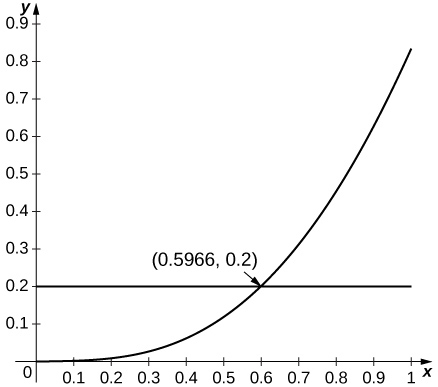
Since is increasing for small x and since the estimate applies whenever which applies up to
6-139 §6.3 source ↗
In the following exercises, the maximum of the right-hand side of the remainder estimate on occurs at a or Estimate the maximum value of R such that on by plotting this maximum as a function of R.
[T] approximated by
Answer
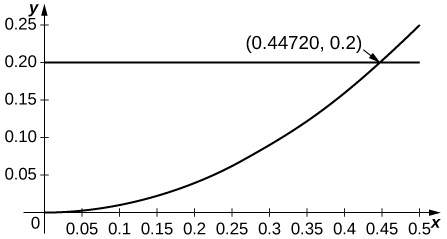
Since the second derivative of is and since is decreasing away from the estimate applies when or
6-141 §6.3 source ↗
In the following exercises, find the Taylor series of the given function centered at the indicated point.
at
Answer
6-143 §6.3 source ↗
In the following exercises, find the Taylor series of the given function centered at the indicated point.
at
Answer
6-145 §6.3 source ↗
In the following exercises, find the Taylor series of the given function centered at the indicated point.
at
Answer
6-147 §6.3 source ↗
In the following exercises, find the Taylor series of the given function centered at the indicated point.
at
Answer
6-149 §6.3 source ↗
In the following exercises, find the Taylor series of the given function centered at the indicated point.
at
Answer
6-151 §6.3 source ↗
In the following exercises, compute the Taylor series of each function around
Answer
6-153 §6.3 source ↗
In the following exercises, compute the Taylor series of each function around
Answer
6-155 §6.3 source ↗
In the following exercises, compute the Taylor series of each function around
Answer
6-157 §6.3 source ↗
In the following exercises, compute the Taylor series of each function around
Answer
6-159 §6.3 source ↗
In the following exercises, compute the Taylor series of each function around
Answer
6-161 §6.3 source ↗
[T] In the following exercises, identify the value of x such that the given series is the value of the Maclaurin series of at Approximate the value of using
Answer
6-163 §6.3 source ↗
[T] In the following exercises, identify the value of x such that the given series is the value of the Maclaurin series of at Approximate the value of using
Answer
6-165 §6.3 source ↗
The following exercises make use of the functions and on
[T] Plot on Compare the maximum difference with the square of the Taylor remainder estimate for
Answer
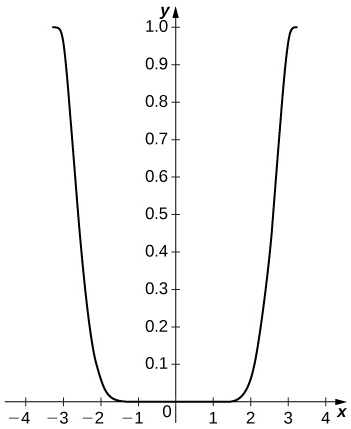
The difference is small on the interior of the interval but approaches near the endpoints. The remainder estimate is
6-167 §6.3 source ↗
The following exercises make use of the functions and on
[T] Compare on to Compare this with the Taylor remainder estimate for the approximation of by
Answer
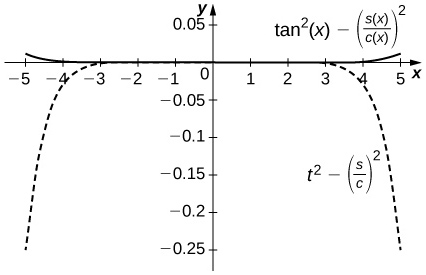
The difference is on the order of on while the Taylor approximation error is around near The top curve is a plot of and the lower dashed plot shows
6-169 §6.3 source ↗
The following exercises make use of the functions and on
(Taylor approximations and root finding.) Recall that Newton’s method approximates solutions of near the input
a. If and are inverse functions, explain why a solution of is the value
b. Let be the degree Maclaurin polynomial of Use Newton’s method to approximate solutions of for
c. Explain why the approximate roots of are approximate values of
Answer
6-171 §6.3 source ↗
In the following exercises, use the fact that if converges in an interval containing then to evaluate each limit using Taylor series.
Answer
6-173 §6.3 source ↗
In the following exercises, use the fact that if converges in an interval containing then to evaluate each limit using Taylor series.
Answer
Checkpoint 6.16 §6.4 source ↗
Answer
Checkpoint 6.17 §6.4 source ↗
Answer
Checkpoint 6.18 §6.4 source ↗
Answer
Checkpoint 6.19 §6.4 source ↗
Answer
Checkpoint 6.20 §6.4 source ↗
Answer
Checkpoint 6.21 §6.4 source ↗
Answer
Checkpoint 6.22 §6.4 source ↗
Answer
6-175 §6.4 source ↗
In the following exercises, use appropriate substitutions to write down the Maclaurin series for the given binomial.
Answer
6-177 §6.4 source ↗
In the following exercises, use appropriate substitutions to write down the Maclaurin series for the given binomial.
Answer
6-179 §6.4 source ↗
In the following exercises, use the substitution in the binomial expansion to find the Taylor series of each function with the given center.
at
Answer
6-181 §6.4 source ↗
In the following exercises, use the substitution in the binomial expansion to find the Taylor series of each function with the given center.
at (Hint:
Answer
6-183 §6.4 source ↗
In the following exercises, use the substitution in the binomial expansion to find the Taylor series of each function with the given center.
at
Answer
6-185 §6.4 source ↗
In the following exercises, use the substitution in the binomial expansion to find the Taylor series of each function with the given center.
at
Answer
6-187 §6.4 source ↗
In the following exercises, use the binomial theorem to estimate each number, computing enough terms to obtain an estimate accurate to an error of at most
[T] using
Answer
6-189 §6.4 source ↗
In the following exercises, use the binomial approximation for to approximate each number. Compare this value to the value given by a scientific calculator.
[T] using in
Answer
6-191 §6.4 source ↗
In the following exercises, use the binomial approximation for to approximate each number. Compare this value to the value given by a scientific calculator.
[T] using in
Answer
6-193 §6.4 source ↗
In the following exercises, use the binomial approximation for to approximate each number. Compare this value to the value given by a scientific calculator.
[T] Recall that the graph of is an upper semicircle of radius Integrate the binomial approximation of up to order from to to estimate
Answer
Thus
whereas
6-195 §6.4 source ↗
In the following exercises, use the expansion to write the first five terms (not necessarily a quartic polynomial) of each expression.
Answer
6-197 §6.4 source ↗
In the following exercises, use the expansion to write the first five terms (not necessarily a quartic polynomial) of each expression.
Answer
6-199 §6.4 source ↗
In the following exercises, use the expansion to write the first five terms (not necessarily a quartic polynomial) of each expression.
Use the approximation for to approximate
Answer
6-201 §6.4 source ↗
In the following exercises, use the expansion to write the first five terms (not necessarily a quartic polynomial) of each expression.
Find the th derivative at of
Answer
6-203 §6.4 source ↗
In the following exercises, find the Maclaurin series of each function.
Answer
6-205 §6.4 source ↗
In the following exercises, find the Maclaurin series of each function.
Answer
6-207 §6.4 source ↗
In the following exercises, find the Maclaurin series of each function.
Answer
6-209 §6.4 source ↗
In the following exercises, find the Maclaurin series of each function.
using the identity
Answer
6-211 §6.4 source ↗
In the following exercises, find the Maclaurin series of by integrating the Maclaurin series of term by term. If is not strictly defined at zero, you may substitute the value of the Maclaurin series at zero.
Answer
6-213 §6.4 source ↗
In the following exercises, find the Maclaurin series of by integrating the Maclaurin series of term by term. If is not strictly defined at zero, you may substitute the value of the Maclaurin series at zero.
Answer
6-215 §6.4 source ↗
In the following exercises, find the Maclaurin series of by integrating the Maclaurin series of term by term. If is not strictly defined at zero, you may substitute the value of the Maclaurin series at zero.
Answer
6-217 §6.4 source ↗
In the following exercises, find the Maclaurin series of by integrating the Maclaurin series of term by term. If is not strictly defined at zero, you may substitute the value of the Maclaurin series at zero.
Answer
6-219 §6.4 source ↗
In the following exercises, compute at least the first three nonzero terms (not necessarily a quadratic polynomial) of the Maclaurin series of
Answer
6-221 §6.4 source ↗
In the following exercises, compute at least the first three nonzero terms (not necessarily a quadratic polynomial) of the Maclaurin series of
Answer
6-223 §6.4 source ↗
In the following exercises, compute at least the first three nonzero terms (not necessarily a quadratic polynomial) of the Maclaurin series of
Answer
6-225 §6.4 source ↗
In the following exercises, compute at least the first three nonzero terms (not necessarily a quadratic polynomial) of the Maclaurin series of
(see expansion for
Answer
6-227 §6.4 source ↗
In the following exercises, find the radius of convergence of the Maclaurin series of each function.
Answer
6-229 §6.4 source ↗
In the following exercises, find the radius of convergence of the Maclaurin series of each function.
Answer
6-231 §6.4 source ↗
In the following exercises, find the radius of convergence of the Maclaurin series of each function.
Find the Maclaurin series of
Answer
6-233 §6.4 source ↗
In the following exercises, find the radius of convergence of the Maclaurin series of each function.
[T] Let and denote the respective Maclaurin polynomials of degree of and degree of Plot the errors for and compare them to on
Answer
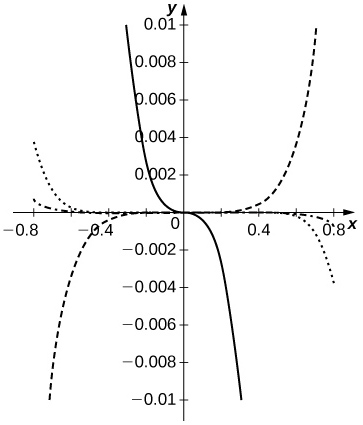
The ratio approximates better than does for The dashed curves are for The dotted curve corresponds to and the dash-dotted curve corresponds to The solid curve is
6-235 §6.4 source ↗
In the following exercises, find the radius of convergence of the Maclaurin series of each function.
If find the power series expansions of and
Answer
6-237 §6.4 source ↗
In the following exercises, find the radius of convergence of the Maclaurin series of each function.
[T] Suppose that a set of standardized test scores is normally distributed with mean and standard deviation Set up an integral that represents the probability that a test score will be between and and use the integral of the degree Maclaurin polynomial of to estimate this probability.
Answer
6-239 §6.4 source ↗
In the following exercises, find the radius of convergence of the Maclaurin series of each function.
[T] Suppose that converges to a function such that and Find a formula for and plot the partial sum for on
Answer
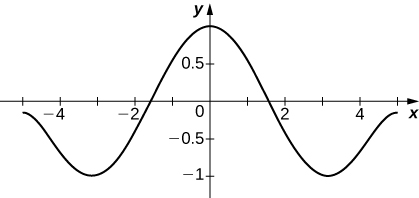
As in the previous problem one obtains if is odd and if is even, so leads to
6-241 §6.4 source ↗
In the following exercises, find the radius of convergence of the Maclaurin series of each function.
Suppose that converges to a function such that where and Find a formula that relates and and compute
Answer
6-243 §6.4 source ↗
The error in approximating the integral by that of a Taylor approximation is at most In the following exercises, the Taylor remainder estimate guarantees that the integral of the Taylor polynomial of the given order approximates the integral of with an error less than
[T] (You may assume that the absolute value of the ninth derivative of is bounded by
Answer
6-245 §6.4 source ↗
The following exercises deal with Fresnel integrals.
The Fresnel integrals are defined by and Compute the power series of and and plot the sums and of the first nonzero terms on
Answer
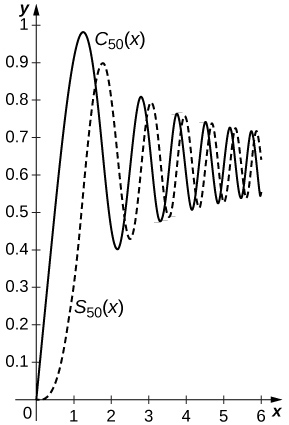
Since and one has and The sums of the first nonzero terms are plotted below with the solid curve and the dashed curve.
6-247 §6.4 source ↗
The following exercises deal with Fresnel integrals.
Estimate by approximating using the binomial approximation
Answer
whereas
6-249 §6.4 source ↗
The following exercises deal with Fresnel integrals.
Use the approximation to approximate the period of a pendulum having length meters and maximum angle where Compare this with the small angle estimate
Answer
6-251 §6.4 source ↗
The following exercises deal with Fresnel integrals.
Evaluate in the approximation to obtain an improved estimate for
Answer
6-253 §6.R source ↗
True or False? In the following exercises, justify your answer with a proof or a counterexample.
If the radius of convergence for a power series is then the radius of convergence for the series is also
Answer
6-255 §6.R source ↗
True or False? In the following exercises, justify your answer with a proof or a counterexample.
For small values of
Answer
6-257 §6.R source ↗
In the following exercises, find the radius of convergence and the interval of convergence for the given series.
Answer
6-259 §6.R source ↗
In the following exercises, find the radius of convergence and the interval of convergence for the given series.
Answer
6-261 §6.R source ↗
In the following exercises, find the power series representation for the given function. Determine the radius of convergence and the interval of convergence for that series.
Answer
6-263 §6.R source ↗
In the following exercises, find the power series for the given function using term-by-term differentiation or integration.
Answer
6-265 §6.R source ↗
In the following exercises, evaluate the Taylor series expansion of degree four for the given function at the specified point. What is the error in the approximation?
Answer
6-267 §6.R source ↗
In the following exercises, find the Maclaurin series for the given function.
Answer
6-269 §6.R source ↗
In the following exercises, find the Taylor series at the given value.
Answer
6-271 §6.R source ↗
In the following exercises, find the Maclaurin series for the given function.
Answer
6-273 §6.R source ↗
In the following exercises, find the Maclaurin series for by integrating the Maclaurin series of term by term.
Answer
6-275 §6.R source ↗
In the following exercises, find the Maclaurin series for by integrating the Maclaurin series of term by term.
Use power series to prove Euler’s formula:
Answer
6-277 §6.R source ↗
The following exercises consider problems of annuity payments.
A lottery winner has an annuity that has a present value of million. What interest rate would they need to live on perpetual annual payments of
Answer
Loading chapter 7…
Problems and answers are adapted from Calculus Volume 2 by Gilbert Strang and Edwin “Jed” Herman, OpenStax, and are used under the CC BY-NC-SA 4.0 licence. Access for free at https://openstax.org/books/calculus-volume-2/pages/1-introduction. Illustrations: Copyright Rice University, OpenStax, under CC BY-NC-SA 4.0 license. This adaptation is released under the same licence, is non-commercial, and is neither affiliated with nor endorsed by OpenStax or Rice University.