Every problem in the chapter beside the book’s answer, a chapter at a time as you scroll.
Chapter 9: Quadratic Equations and Functions
434 problems · 105 figuresBe Prepared 9.1 §9.1 source ↗
If you missed this problem, review Example 8.13.
Answer
Be Prepared 9.2 §9.1 source ↗
If you missed this problem, review Example 8.50.
Answer
Be Prepared 9.3 §9.1 source ↗
If you missed this problem, review Example 6.23.
Answer
Try It 9.1 §9.1 source ↗
Answer
Try It 9.2 §9.1 source ↗
Answer
Try It 9.3 §9.1 source ↗
Answer
Try It 9.4 §9.1 source ↗
Answer
Try It 9.5 §9.1 source ↗
Answer
Try It 9.6 §9.1 source ↗
Answer
Try It 9.7 §9.1 source ↗
Answer
Try It 9.8 §9.1 source ↗
Answer
Try It 9.9 §9.1 source ↗
Answer
Try It 9.10 §9.1 source ↗
Answer
Try It 9.11 §9.1 source ↗
Answer
Try It 9.12 §9.1 source ↗
Answer
Try It 9.13 §9.1 source ↗
Answer
Try It 9.14 §9.1 source ↗
Answer
Try It 9.15 §9.1 source ↗
Answer
Try It 9.16 §9.1 source ↗
Answer
Try It 9.17 §9.1 source ↗
Answer
Try It 9.18 §9.1 source ↗
Answer
Try It 9.19 §9.1 source ↗
Answer
Try It 9.20 §9.1 source ↗
Answer
9.1-1 §9.1 source ↗
Solve Quadratic Equations of the Form ax2 = k Using the Square Root Property
In the following exercises, solve each equation.
Answer
9.1-3 §9.1 source ↗
Solve Quadratic Equations of the Form ax2 = k Using the Square Root Property
In the following exercises, solve each equation.
Answer
9.1-5 §9.1 source ↗
Solve Quadratic Equations of the Form ax2 = k Using the Square Root Property
In the following exercises, solve each equation.
Answer
9.1-7 §9.1 source ↗
Solve Quadratic Equations of the Form ax2 = k Using the Square Root Property
In the following exercises, solve each equation.
Answer
9.1-9 §9.1 source ↗
Solve Quadratic Equations of the Form ax2 = k Using the Square Root Property
In the following exercises, solve each equation.
Answer
9.1-11 §9.1 source ↗
Solve Quadratic Equations of the Form ax2 = k Using the Square Root Property
In the following exercises, solve each equation.
Answer
9.1-13 §9.1 source ↗
Solve Quadratic Equations of the Form ax2 = k Using the Square Root Property
In the following exercises, solve each equation.
Answer
9.1-15 §9.1 source ↗
Solve Quadratic Equations of the Form ax2 = k Using the Square Root Property
In the following exercises, solve each equation.
Answer
9.1-17 §9.1 source ↗
Solve Quadratic Equations of the Form ax2 = k Using the Square Root Property
In the following exercises, solve each equation.
Answer
9.1-19 §9.1 source ↗
Solve Quadratic Equations of the Form ax2 = k Using the Square Root Property
In the following exercises, solve each equation.
Answer
9.1-21 §9.1 source ↗
Solve Quadratic Equations of the Form ax2 = k Using the Square Root Property
In the following exercises, solve each equation.
Answer
9.1-23 §9.1 source ↗
Solve Quadratic Equations of the Form a(x − h)2 = k Using the Square Root Property
In the following exercises, solve each equation.
Answer
9.1-25 §9.1 source ↗
Solve Quadratic Equations of the Form a(x − h)2 = k Using the Square Root Property
In the following exercises, solve each equation.
Answer
9.1-27 §9.1 source ↗
Solve Quadratic Equations of the Form a(x − h)2 = k Using the Square Root Property
In the following exercises, solve each equation.
Answer
9.1-29 §9.1 source ↗
Solve Quadratic Equations of the Form a(x − h)2 = k Using the Square Root Property
In the following exercises, solve each equation.
Answer
9.1-31 §9.1 source ↗
Solve Quadratic Equations of the Form a(x − h)2 = k Using the Square Root Property
In the following exercises, solve each equation.
Answer
9.1-33 §9.1 source ↗
Solve Quadratic Equations of the Form a(x − h)2 = k Using the Square Root Property
In the following exercises, solve each equation.
Answer
9.1-35 §9.1 source ↗
Solve Quadratic Equations of the Form a(x − h)2 = k Using the Square Root Property
In the following exercises, solve each equation.
Answer
9.1-37 §9.1 source ↗
Solve Quadratic Equations of the Form a(x − h)2 = k Using the Square Root Property
In the following exercises, solve each equation.
Answer
9.1-39 §9.1 source ↗
Solve Quadratic Equations of the Form a(x − h)2 = k Using the Square Root Property
In the following exercises, solve each equation.
Answer
9.1-41 §9.1 source ↗
Solve Quadratic Equations of the Form a(x − h)2 = k Using the Square Root Property
In the following exercises, solve each equation.
Answer
9.1-43 §9.1 source ↗
Solve Quadratic Equations of the Form a(x − h)2 = k Using the Square Root Property
In the following exercises, solve each equation.
Answer
9.1-45 §9.1 source ↗
Solve Quadratic Equations of the Form a(x − h)2 = k Using the Square Root Property
In the following exercises, solve each equation.
Answer
9.1-47 §9.1 source ↗
In the following exercises, solve using the Square Root Property.
Answer
9.1-49 §9.1 source ↗
In the following exercises, solve using the Square Root Property.
Answer
9.1-51 §9.1 source ↗
In the following exercises, solve using the Square Root Property.
Answer
9.1-53 §9.1 source ↗
In the following exercises, solve using the Square Root Property.
Answer
9.1-55 §9.1 source ↗
In the following exercises, solve using the Square Root Property.
Answer
9.1-57 §9.1 source ↗
In the following exercises, solve using the Square Root Property.
Answer
9.1-59 §9.1 source ↗
In the following exercises, solve using the Square Root Property.
Answer
9.1-61 §9.1 source ↗
In the following exercises, solve using the Square Root Property.
Answer
9.1-63 §9.1 source ↗
In the following exercises, solve using the Square Root Property.
Answer
9.1-65 §9.1 source ↗
In the following exercises, solve using the Square Root Property.
Answer
9.1-67 §9.1 source ↗
In the following exercises, solve using the Square Root Property.
Answer
9.1-69 §9.1 source ↗
In the following exercises, solve using the Square Root Property.
In your own words, explain the Square Root Property.
Answer
Be Prepared 9.4 §9.2 source ↗
If you missed this problem, review Example 5.32.
Answer
Be Prepared 9.5 §9.2 source ↗
If you missed this problem, review Example 6.9.
Answer
Be Prepared 9.6 §9.2 source ↗
If you missed this problem, review Example 6.14.
Answer
Try It 9.21 §9.2 source ↗
Complete the square to make a perfect square trinomial. Then write the result as a binomial squared.
ⓐ ⓑ ⓒ
Answer
ⓒ
Try It 9.22 §9.2 source ↗
Complete the square to make a perfect square trinomial. Then write the result as a binomial squared.
ⓐ ⓑ ⓒ
Answer
ⓒ
Try It 9.23 §9.2 source ↗
Answer
Try It 9.24 §9.2 source ↗
Answer
Try It 9.25 §9.2 source ↗
Answer
Try It 9.26 §9.2 source ↗
Answer
Try It 9.27 §9.2 source ↗
Answer
Try It 9.28 §9.2 source ↗
Answer
Try It 9.29 §9.2 source ↗
Answer
Try It 9.30 §9.2 source ↗
Answer
Try It 9.31 §9.2 source ↗
Answer
Try It 9.32 §9.2 source ↗
Answer
Try It 9.33 §9.2 source ↗
Answer
Try It 9.34 §9.2 source ↗
Answer
Try It 9.35 §9.2 source ↗
Answer
Try It 9.36 §9.2 source ↗
Answer
Try It 9.37 §9.2 source ↗
Answer
Try It 9.38 §9.2 source ↗
Answer
Try It 9.39 §9.2 source ↗
Answer
Try It 9.40 §9.2 source ↗
Answer
9.2-71 §9.2 source ↗
Complete the Square of a Binomial Expression
In the following exercises, complete the square to make a perfect square trinomial. Then write the result as a binomial squared.
ⓐ ⓑ ⓒ
Answer
ⓒ
9.2-73 §9.2 source ↗
Complete the Square of a Binomial Expression
In the following exercises, complete the square to make a perfect square trinomial. Then write the result as a binomial squared.
ⓐ ⓑ ⓒ
Answer
ⓒ
9.2-75 §9.2 source ↗
Solve Quadratic Equations of the form x2 + bx + c = 0 by Completing the Square
In the following exercises, solve by completing the square.
Answer
9.2-77 §9.2 source ↗
Solve Quadratic Equations of the form x2 + bx + c = 0 by Completing the Square
In the following exercises, solve by completing the square.
Answer
9.2-79 §9.2 source ↗
Solve Quadratic Equations of the form x2 + bx + c = 0 by Completing the Square
In the following exercises, solve by completing the square.
Answer
9.2-81 §9.2 source ↗
Solve Quadratic Equations of the form x2 + bx + c = 0 by Completing the Square
In the following exercises, solve by completing the square.
Answer
9.2-83 §9.2 source ↗
Solve Quadratic Equations of the form x2 + bx + c = 0 by Completing the Square
In the following exercises, solve by completing the square.
Answer
9.2-85 §9.2 source ↗
Solve Quadratic Equations of the form x2 + bx + c = 0 by Completing the Square
In the following exercises, solve by completing the square.
Answer
9.2-87 §9.2 source ↗
Solve Quadratic Equations of the form x2 + bx + c = 0 by Completing the Square
In the following exercises, solve by completing the square.
Answer
9.2-89 §9.2 source ↗
Solve Quadratic Equations of the form x2 + bx + c = 0 by Completing the Square
In the following exercises, solve by completing the square.
Answer
9.2-91 §9.2 source ↗
Solve Quadratic Equations of the form x2 + bx + c = 0 by Completing the Square
In the following exercises, solve by completing the square.
Answer
9.2-93 §9.2 source ↗
Solve Quadratic Equations of the form x2 + bx + c = 0 by Completing the Square
In the following exercises, solve by completing the square.
Answer
9.2-95 §9.2 source ↗
Solve Quadratic Equations of the form x2 + bx + c = 0 by Completing the Square
In the following exercises, solve by completing the square.
Answer
9.2-97 §9.2 source ↗
Solve Quadratic Equations of the form x2 + bx + c = 0 by Completing the Square
In the following exercises, solve by completing the square.
Answer
9.2-99 §9.2 source ↗
Solve Quadratic Equations of the form ax2 + bx + c = 0 by Completing the Square
In the following exercises, solve by completing the square.
Answer
9.2-101 §9.2 source ↗
Solve Quadratic Equations of the form ax2 + bx + c = 0 by Completing the Square
In the following exercises, solve by completing the square.
Answer
9.2-103 §9.2 source ↗
Solve Quadratic Equations of the form ax2 + bx + c = 0 by Completing the Square
In the following exercises, solve by completing the square.
Answer
9.2-105 §9.2 source ↗
Solve Quadratic Equations of the form ax2 + bx + c = 0 by Completing the Square
In the following exercises, solve by completing the square.
Answer
9.2-107 §9.2 source ↗
Solve Quadratic Equations of the form ax2 + bx + c = 0 by Completing the Square
In the following exercises, solve by completing the square.
Answer
9.2-109 §9.2 source ↗
Solve Quadratic Equations of the form ax2 + bx + c = 0 by Completing the Square
In the following exercises, solve by completing the square.
Answer
9.2-111 §9.2 source ↗
Solve Quadratic Equations of the form ax2 + bx + c = 0 by Completing the Square
In the following exercises, solve by completing the square.
Solve the equation
ⓐ by using the Square Root Property
ⓑ by Completing the Square
ⓒ Which method do you prefer? Why?
Answer
Be Prepared 9.7 §9.3 source ↗
If you missed this problem, review Example 1.21.
Answer
Be Prepared 9.8 §9.3 source ↗
If you missed this problem, review Example 8.13.
Answer
Be Prepared 9.9 §9.3 source ↗
If you missed this problem, review Example 8.76.
Answer
Try It 9.41 §9.3 source ↗
Answer
Try It 9.42 §9.3 source ↗
Answer
Try It 9.43 §9.3 source ↗
Answer
Try It 9.44 §9.3 source ↗
Answer
Try It 9.45 §9.3 source ↗
Answer
Try It 9.46 §9.3 source ↗
Answer
Try It 9.47 §9.3 source ↗
Answer
Try It 9.48 §9.3 source ↗
Answer
Try It 9.49 §9.3 source ↗
Answer
Try It 9.50 §9.3 source ↗
Answer
Try It 9.51 §9.3 source ↗
Answer
Try It 9.52 §9.3 source ↗
Answer
Try It 9.53 §9.3 source ↗
Answer
Try It 9.54 §9.3 source ↗
Answer
Try It 9.55 §9.3 source ↗
Determine the numberand type of solutions to each quadratic equation.
ⓐ ⓑ ⓒ
Answer
Try It 9.56 §9.3 source ↗
Determine the number and type of solutions to each quadratic equation.
ⓐ ⓑ ⓒ
Answer
Try It 9.57 §9.3 source ↗
Identify the most appropriate method to use to solve each quadratic equation.
ⓐ ⓑ ⓒ
Answer
Try It 9.58 §9.3 source ↗
Identify the most appropriate method to use to solve each quadratic equation.
ⓐ ⓑ ⓒ
Answer
ⓑ Factoring or Square Root Property ⓒ Square Root Property
9.3-113 §9.3 source ↗
Solve Quadratic Equations Using the Quadratic Formula
In the following exercises, solve by using the Quadratic Formula.
Answer
9.3-115 §9.3 source ↗
Solve Quadratic Equations Using the Quadratic Formula
In the following exercises, solve by using the Quadratic Formula.
Answer
9.3-117 §9.3 source ↗
Solve Quadratic Equations Using the Quadratic Formula
In the following exercises, solve by using the Quadratic Formula.
Answer
9.3-119 §9.3 source ↗
Solve Quadratic Equations Using the Quadratic Formula
In the following exercises, solve by using the Quadratic Formula.
Answer
9.3-121 §9.3 source ↗
Solve Quadratic Equations Using the Quadratic Formula
In the following exercises, solve by using the Quadratic Formula.
Answer
9.3-123 §9.3 source ↗
Solve Quadratic Equations Using the Quadratic Formula
In the following exercises, solve by using the Quadratic Formula.
Answer
9.3-125 §9.3 source ↗
Solve Quadratic Equations Using the Quadratic Formula
In the following exercises, solve by using the Quadratic Formula.
Answer
9.3-127 §9.3 source ↗
Solve Quadratic Equations Using the Quadratic Formula
In the following exercises, solve by using the Quadratic Formula.
Answer
9.3-129 §9.3 source ↗
Solve Quadratic Equations Using the Quadratic Formula
In the following exercises, solve by using the Quadratic Formula.
Answer
9.3-131 §9.3 source ↗
Solve Quadratic Equations Using the Quadratic Formula
In the following exercises, solve by using the Quadratic Formula.
Answer
9.3-133 §9.3 source ↗
Solve Quadratic Equations Using the Quadratic Formula
In the following exercises, solve by using the Quadratic Formula.
Answer
9.3-135 §9.3 source ↗
Solve Quadratic Equations Using the Quadratic Formula
In the following exercises, solve by using the Quadratic Formula.
Answer
9.3-137 §9.3 source ↗
Solve Quadratic Equations Using the Quadratic Formula
In the following exercises, solve by using the Quadratic Formula.
Answer
9.3-139 §9.3 source ↗
Solve Quadratic Equations Using the Quadratic Formula
In the following exercises, solve by using the Quadratic Formula.
Answer
9.3-141 §9.3 source ↗
Solve Quadratic Equations Using the Quadratic Formula
In the following exercises, solve by using the Quadratic Formula.
Answer
9.3-143 §9.3 source ↗
Solve Quadratic Equations Using the Quadratic Formula
In the following exercises, solve by using the Quadratic Formula.
Answer
9.3-145 §9.3 source ↗
Use the Discriminant to Predict the Number of Real Solutions of a Quadratic Equation
In the following exercises, determine the number of real solutions for each quadratic equation.
ⓐ ⓑ ⓒ
Answer
ⓒ
9.3-147 §9.3 source ↗
Use the Discriminant to Predict the Number of Real Solutions of a Quadratic Equation
In the following exercises, determine the number of real solutions for each quadratic equation.
ⓐ ⓑ ⓒ
Answer
ⓒ
9.3-149 §9.3 source ↗
Identify the Most Appropriate Method to Use to Solve a Quadratic Equation
In the following exercises, identify the most appropriate method (Factoring, Square Root, or Quadratic Formula) to use to solve each quadratic equation. Do not solve.
ⓐ
ⓑ
ⓒ
Answer
ⓐ
ⓑ
ⓒ
9.3-151 §9.3 source ↗
Identify the Most Appropriate Method to Use to Solve a Quadratic Equation
In the following exercises, identify the most appropriate method (Factoring, Square Root, or Quadratic Formula) to use to solve each quadratic equation. Do not solve.
ⓐ
ⓑ
ⓒ
Answer
ⓐ
ⓑ
ⓒ
9.3-153 §9.3 source ↗
Identify the Most Appropriate Method to Use to Solve a Quadratic Equation
In the following exercises, identify the most appropriate method (Factoring, Square Root, or Quadratic Formula) to use to solve each quadratic equation. Do not solve.
Solve the equation
ⓐ by completing the square
ⓑ using the Quadratic Formula
ⓒ Which method do you prefer? Why?
Answer
Be Prepared 9.10 §9.4 source ↗
If you missed this problem, review Example 6.21.
Answer
Be Prepared 9.11 §9.4 source ↗
If you missed this problem, review Example 6.22.
Answer
Be Prepared 9.12 §9.4 source ↗
If you missed this problem, review Example 8.33.
Answer
Try It 9.59 §9.4 source ↗
Answer
Try It 9.60 §9.4 source ↗
Answer
Try It 9.61 §9.4 source ↗
Answer
Try It 9.62 §9.4 source ↗
Answer
Try It 9.63 §9.4 source ↗
Answer
Try It 9.64 §9.4 source ↗
Answer
Try It 9.65 §9.4 source ↗
Answer
Try It 9.66 §9.4 source ↗
Answer
Try It 9.67 §9.4 source ↗
Answer
Try It 9.68 §9.4 source ↗
Answer
9.4-155 §9.4 source ↗
Solve Equations in Quadratic Form
In the following exercises, solve.
Answer
9.4-157 §9.4 source ↗
Solve Equations in Quadratic Form
In the following exercises, solve.
Answer
9.4-159 §9.4 source ↗
Solve Equations in Quadratic Form
In the following exercises, solve.
Answer
9.4-161 §9.4 source ↗
Solve Equations in Quadratic Form
In the following exercises, solve.
Answer
9.4-163 §9.4 source ↗
Solve Equations in Quadratic Form
In the following exercises, solve.
Answer
9.4-165 §9.4 source ↗
Solve Equations in Quadratic Form
In the following exercises, solve.
Answer
9.4-167 §9.4 source ↗
Solve Equations in Quadratic Form
In the following exercises, solve.
Answer
9.4-169 §9.4 source ↗
Solve Equations in Quadratic Form
In the following exercises, solve.
Answer
9.4-171 §9.4 source ↗
Solve Equations in Quadratic Form
In the following exercises, solve.
Answer
9.4-173 §9.4 source ↗
Solve Equations in Quadratic Form
In the following exercises, solve.
Answer
9.4-175 §9.4 source ↗
Solve Equations in Quadratic Form
In the following exercises, solve.
Answer
9.4-177 §9.4 source ↗
Solve Equations in Quadratic Form
In the following exercises, solve.
Answer
9.4-179 §9.4 source ↗
Solve Equations in Quadratic Form
In the following exercises, solve.
Answer
9.4-181 §9.4 source ↗
Solve Equations in Quadratic Form
In the following exercises, solve.
Answer
9.4-183 §9.4 source ↗
Solve Equations in Quadratic Form
In the following exercises, solve.
Answer
9.4-185 §9.4 source ↗
Solve Equations in Quadratic Form
In the following exercises, solve.
Answer
9.4-187 §9.4 source ↗
Solve Equations in Quadratic Form
In the following exercises, solve.
Answer
9.4-189 §9.4 source ↗
Solve Equations in Quadratic Form
In the following exercises, solve.
Answer
9.4-191 §9.4 source ↗
Solve Equations in Quadratic Form
In the following exercises, solve.
Answer
9.4-193 §9.4 source ↗
Solve Equations in Quadratic Form
In the following exercises, solve.
Explain how to recognize an equation in quadratic form.
Answer
Be Prepared 9.13 §9.5 source ↗
If you missed this problem, review Example 2.18.
Answer
Be Prepared 9.14 §9.5 source ↗
If you missed this problem, review Example 7.35.
Answer
Be Prepared 9.15 §9.5 source ↗
If you missed this problem, review Example 2.34.
Answer
Try It 9.69 §9.5 source ↗
Answer
Try It 9.70 §9.5 source ↗
Answer
Try It 9.71 §9.5 source ↗
Answer
Try It 9.72 §9.5 source ↗
Answer
Try It 9.73 §9.5 source ↗
Answer
Try It 9.74 §9.5 source ↗
Answer
Try It 9.75 §9.5 source ↗
Answer
Try It 9.76 §9.5 source ↗
Answer
Try It 9.77 §9.5 source ↗
Answer
Try It 9.78 §9.5 source ↗
Answer
Try It 9.79 §9.5 source ↗
Answer
Try It 9.80 §9.5 source ↗
Answer
Try It 9.81 §9.5 source ↗
Answer
Try It 9.82 §9.5 source ↗
Answer
9.5-195 §9.5 source ↗
Solve Applications Modeled by Quadratic Equations
In the following exercises, solve using any method.
The product of two consecutive odd numbers is 255. Find the numbers.
Answer
9.5-197 §9.5 source ↗
Solve Applications Modeled by Quadratic Equations
In the following exercises, solve using any method.
The product of two consecutive even numbers is 624. Find the numbers.
Answer
9.5-199 §9.5 source ↗
Solve Applications Modeled by Quadratic Equations
In the following exercises, solve using any method.
The product of two consecutive odd numbers is 483. Find the numbers.
Answer
9.5-201 §9.5 source ↗
In the following exercises, solve using any method. Round your answers to the nearest tenth, if needed.
A triangle with area 45 square inches has a height that is two less than four times the base Find the base and height of the triangle.
Answer
9.5-203 §9.5 source ↗
In the following exercises, solve using any method. Round your answers to the nearest tenth, if needed.
The area of a triangular flower bed in the park has an area of 120 square feet. The base is 4 feet longer that twice the height. What are the base and height of the triangle?
Answer
9.5-205 §9.5 source ↗
In the following exercises, solve using any method. Round your answers to the nearest tenth, if needed.
The length of a rectangular driveway is five feet more than three times the width. The area is 50 square feet. Find the length and width of the driveway.
Answer
9.5-207 §9.5 source ↗
In the following exercises, solve using any method. Round your answers to the nearest tenth, if needed.
A rectangular table for the dining room has a surface area of 24 square feet. The length is two more feet than twice the width of the table. Find the length and width of the table.
Answer
9.5-209 §9.5 source ↗
In the following exercises, solve using any method. Round your answers to the nearest tenth, if needed.
The hypotenuse of a right triangle is twice the length of one of its legs. The length of the other leg is three feet. Find the lengths of the three sides of the triangle.
Answer
9.5-211 §9.5 source ↗
In the following exercises, solve using any method. Round your answers to the nearest tenth, if needed.
A rectangular garden will be divided into two plots by fencing it on the diagonal. The diagonal distance from one corner of the garden to the opposite corner is five yards longer than the width of the garden. The length of the garden is three times the width. Find the length of the diagonal of the garden.
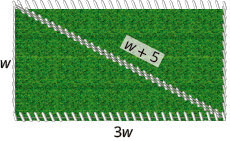
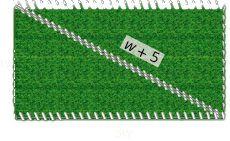
Answer
9.5-213 §9.5 source ↗
In the following exercises, solve using any method. Round your answers to the nearest tenth, if needed.
Gerry plans to place a 25-foot ladder against the side of his house to clean his gutters. The bottom of the ladder will be 5 feet from the house.How far up the side of the house will the ladder reach?
Answer
9.5-215 §9.5 source ↗
In the following exercises, solve using any method. Round your answers to the nearest tenth, if needed.
A firework rocket is shot upward at a rate of 640 ft/sec. Use the projectile formula h = −16t2 + v0t to determine when the height of the firework rocket will be 1200 feet.
Answer
9.5-217 §9.5 source ↗
In the following exercises, solve using any method. Round your answers to the nearest tenth, if needed.
A bullet is fired straight up from a BB gun with initial velocity 1120 feet per second at an initial height of 8 feet. Use the formula h = −16t2 + v0t + 8 to determine how many seconds it will take for the bullet to hit the ground. (That is, when will h = 0?)
Answer
9.5-219 §9.5 source ↗
In the following exercises, solve using any method. Round your answers to the nearest tenth, if needed.
The businessman took a small airplane for a quick flight up the coast for a lunch meeting and then returned home. The plane flew a total of 4 hours and each way the trip was 200 miles. What was the speed of the wind that affected the plane which was flying at a speed of 120 mph?
Answer
9.5-221 §9.5 source ↗
In the following exercises, solve using any method. Round your answers to the nearest tenth, if needed.
Roy kayaked up the river and then back in a total time of 6 hours. The trip was 4 miles each way and the current was difficult. If Roy kayaked at a speed of 5 mph, what was the speed of the current?
Answer
9.5-223 §9.5 source ↗
In the following exercises, solve using any method. Round your answers to the nearest tenth, if needed.
Two painters can paint a room in 2 hours if they work together. The less experienced painter takes 3 hours more than the more experienced painter to finish the job. How long does it take for each painter to paint the room individually?
Answer
9.5-225 §9.5 source ↗
In the following exercises, solve using any method. Round your answers to the nearest tenth, if needed.
It takes two hours for two machines to manufacture 10,000 parts. If Machine #1 can do the job alone in one hour less than Machine #2 can do the job, how long does it take for each machine to manufacture 10,000 parts alone?
Answer
9.5-227 §9.5 source ↗
In the following exercises, solve using any method. Round your answers to the nearest tenth, if needed.
Make up a problem involving the product of two consecutive odd integers.
ⓐ Start by choosing two consecutive odd integers. What are your integers?
ⓑ What is the product of your integers?
ⓒ Solve the equation n(n + 2) = p, where p is the product you found in part (b).
ⓓ Did you get the numbers you started with?
Answer
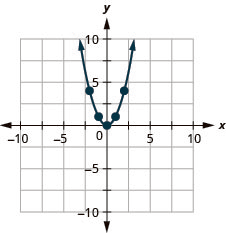
Be Prepared 9.16 §9.6 source ↗
If you missed this problem, review Example 3.54.
Answer
Be Prepared 9.17 §9.6 source ↗
If you missed this problem, review Example 6.45.
Answer
Be Prepared 9.18 §9.6 source ↗
If you missed this problem, review Example 1.21.
Answer
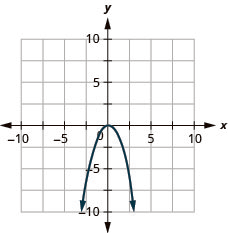
Try It 9.83 §9.6 source ↗
Answer
Try It 9.84 §9.6 source ↗
Answer
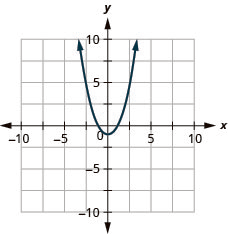
Try It 9.85 §9.6 source ↗
Determine whether the graph of each function is a parabola that opens upward or downward:
ⓐ ⓑ
Answer
Try It 9.86 §9.6 source ↗
Determine whether the graph of each function is a parabola that opens upward or downward:
ⓐ ⓑ
Answer
Try It 9.87 §9.6 source ↗
For the graph of find:
ⓐ the axis of symmetry ⓑ the vertex.
Answer
Try It 9.88 §9.6 source ↗
For the graph of find:
ⓐ the axis of symmetry ⓑ the vertex.
Answer
Try It 9.89 §9.6 source ↗
Answer
Try It 9.90 §9.6 source ↗
Answer
Try It 9.91 §9.6 source ↗
Answer
Try It 9.92 §9.6 source ↗
Answer
Try It 9.93 §9.6 source ↗
Answer
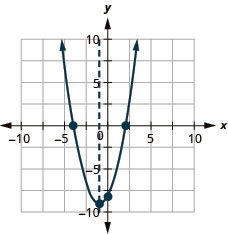
Try It 9.94 §9.6 source ↗
Answer
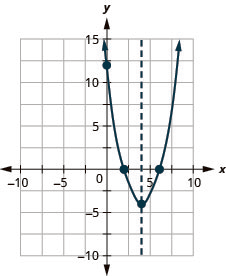
Try It 9.95 §9.6 source ↗
Answer
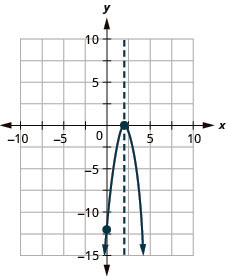
Try It 9.96 §9.6 source ↗
Answer
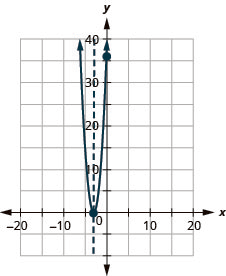
Try It 9.97 §9.6 source ↗
Answer
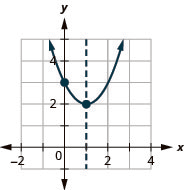
Try It 9.98 §9.6 source ↗
Answer
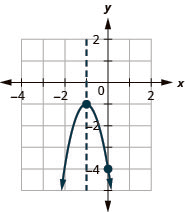
Try It 9.99 §9.6 source ↗
Answer
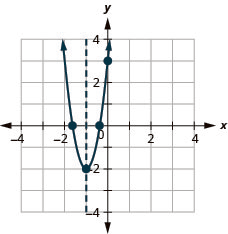
Try It 9.100 §9.6 source ↗
Answer
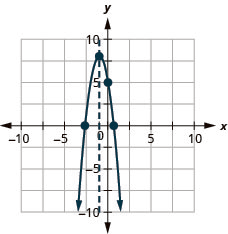
Try It 9.101 §9.6 source ↗
Answer
Try It 9.102 §9.6 source ↗
Answer
Try It 9.103 §9.6 source ↗
Solve, rounding answers to the nearest tenth.
The quadratic function h(t) = −16t2 + 128t + 32 is used to find the height of a stone thrown upward from a height of 32 feet at a rate of 128 ft/sec. How long will it take for the stone to reach its maximum height? What is the maximum height?
Answer
Try It 9.104 §9.6 source ↗
Answer
9.6-229 §9.6 source ↗
Recognize the Graph of a Quadratic Function
In the following exercises, graph the functions by plotting points.
Answer
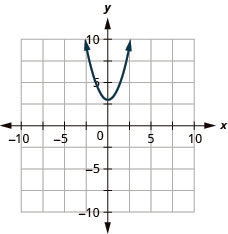
9.6-231 §9.6 source ↗
Recognize the Graph of a Quadratic Function
In the following exercises, graph the functions by plotting points.
Answer
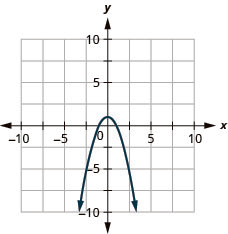
9.6-233 §9.6 source ↗
For each of the following exercises, determine if the parabola opens up or down.
ⓐ ⓑ
Answer
9.6-235 §9.6 source ↗
For each of the following exercises, determine if the parabola opens up or down.
ⓐ ⓑ
Answer
9.6-237 §9.6 source ↗
Find the Axis of Symmetry and Vertex of a Parabola
In the following functions, find ⓐ the equation of the axis of symmetry and ⓑ the vertex of its graph.
Answer
9.6-239 §9.6 source ↗
Find the Axis of Symmetry and Vertex of a Parabola
In the following functions, find ⓐ the equation of the axis of symmetry and ⓑ the vertex of its graph.
Answer
9.6-241 §9.6 source ↗
Find the Intercepts of a Parabola
In the following exercises, find the intercepts of the parabola whose function is given.
Answer
9.6-243 §9.6 source ↗
Find the Intercepts of a Parabola
In the following exercises, find the intercepts of the parabola whose function is given.
Answer
9.6-245 §9.6 source ↗
Find the Intercepts of a Parabola
In the following exercises, find the intercepts of the parabola whose function is given.
Answer
9.6-247 §9.6 source ↗
Find the Intercepts of a Parabola
In the following exercises, find the intercepts of the parabola whose function is given.
Answer
9.6-249 §9.6 source ↗
Find the Intercepts of a Parabola
In the following exercises, find the intercepts of the parabola whose function is given.
Answer
9.6-251 §9.6 source ↗
Find the Intercepts of a Parabola
In the following exercises, find the intercepts of the parabola whose function is given.
Answer
9.6-253 §9.6 source ↗
Graph Quadratic Functions Using Properties
In the following exercises, graph the function by using its properties.
Answer
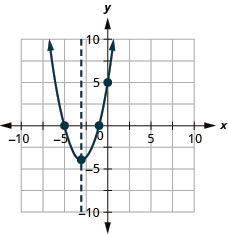
9.6-255 §9.6 source ↗
Graph Quadratic Functions Using Properties
In the following exercises, graph the function by using its properties.
Answer
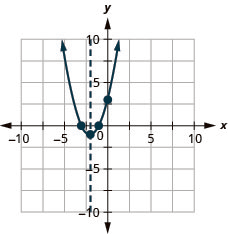
9.6-257 §9.6 source ↗
Graph Quadratic Functions Using Properties
In the following exercises, graph the function by using its properties.
Answer
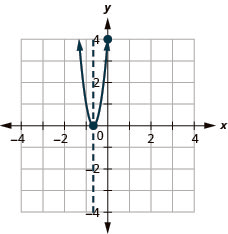
9.6-259 §9.6 source ↗
Graph Quadratic Functions Using Properties
In the following exercises, graph the function by using its properties.
Answer
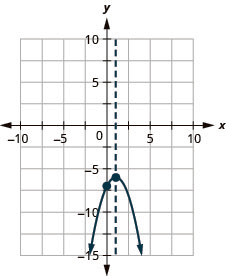
9.6-261 §9.6 source ↗
Graph Quadratic Functions Using Properties
In the following exercises, graph the function by using its properties.
Answer
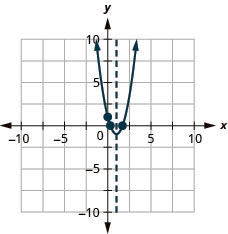
9.6-263 §9.6 source ↗
Graph Quadratic Functions Using Properties
In the following exercises, graph the function by using its properties.
Answer
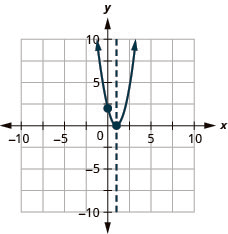
9.6-265 §9.6 source ↗
Graph Quadratic Functions Using Properties
In the following exercises, graph the function by using its properties.
Answer
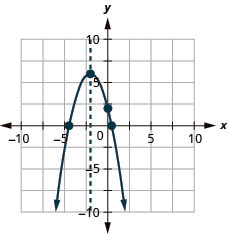
9.6-267 §9.6 source ↗
Graph Quadratic Functions Using Properties
In the following exercises, graph the function by using its properties.
Answer
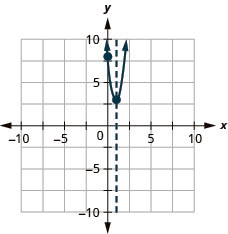
9.6-269 §9.6 source ↗
Graph Quadratic Functions Using Properties
In the following exercises, graph the function by using its properties.
Answer
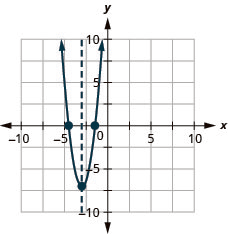
9.6-271 §9.6 source ↗
Solve Maximum and Minimum Applications
In the following exercises, find the maximum or minimum value of each function.
Answer
9.6-273 §9.6 source ↗
Solve Maximum and Minimum Applications
In the following exercises, find the maximum or minimum value of each function.
Answer
9.6-275 §9.6 source ↗
Solve Maximum and Minimum Applications
In the following exercises, find the maximum or minimum value of each function.
Answer
9.6-277 §9.6 source ↗
In the following exercises, solve. Round answers to the nearest tenth.
An arrow is shot vertically upward from a platform 45 feet high at a rate of 168 ft/sec. Use the quadratic function h(t) = −16t2 + 168t + 45 find how long it will take the arrow to reach its maximum height, and then find the maximum height.
Answer
9.6-279 §9.6 source ↗
In the following exercises, solve. Round answers to the nearest tenth.
A ball is thrown vertically upward from the ground with an initial velocity of 109 ft/sec. Use the quadratic function h(t) = −16t2 + 109t + 0 to find how long it will take for the ball to reach its maximum height, and then find the maximum height.
Answer
9.6-281 §9.6 source ↗
In the following exercises, solve. Round answers to the nearest tenth.
A computer store owner estimates that by charging x dollars each for a certain computer, he can sell 40 − x computers each week. The quadratic function R(x) = −x2 +40x is used to find the revenue, R, received when the selling price of a computer is x, Find the selling price that will give him the maximum revenue, and then find the amount of the maximum revenue.
Answer
9.6-283 §9.6 source ↗
In the following exercises, solve. Round answers to the nearest tenth.
A retailer who sells fashion boots estimates that by selling them for x dollars each, he will be able to sell 70 − x boots a week. Use the quadratic function R(x) = −x2 +70x to find the revenue received when the average selling price of a pair of fashion boots is x. Find the selling price that will give him the maximum revenue, and then find the amount of the maximum revenue per day.
Answer
9.6-285 §9.6 source ↗
In the following exercises, solve. Round answers to the nearest tenth.
A rancher is going to fence three sides of a corral next to a river. He needs to maximize the corral area using 240 feet of fencing. The quadratic equation gives the area of the corral, A, for the length, x, of the corral along the river. Find the length of the corral along the river that will give the maximum area, and then find the maximum area of the corral.
Answer
9.6-287 §9.6 source ↗
In the following exercises, solve. Round answers to the nearest tenth.
A land owner is planning to build a fenced in rectangular patio behind his garage, using his garage as one of the “walls.” He wants to maximize the area using 80 feet of fencing. The quadratic function A(x) = x(80 − 2x) gives the area of the patio, where x is the width of one side. Find the maximum area of the patio.
Answer
9.6-289 §9.6 source ↗
In the following exercises, solve. Round answers to the nearest tenth.
How do the graphs of the functions and differ? We graphed them at the start of this section. What is the difference between their graphs? How are their graphs the same?
Answer
9.6-291 §9.6 source ↗
In the following exercises, solve. Round answers to the nearest tenth.
Explain how to find the intercepts of a parabola.
Answer
Be Prepared 9.19 §9.7 source ↗
If you missed this problem, review Example 3.54.
Answer
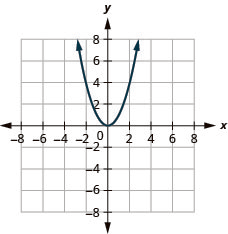
Be Prepared 9.20 §9.7 source ↗
If you missed this problem, review Example 6.24.
Answer
Be Prepared 9.21 §9.7 source ↗
If you missed this problem, review Example 6.26.
Answer
Try It 9.105 §9.7 source ↗
ⓑ Describe what effect adding a constant to the function has on the basic parabola.
Answer
ⓐ
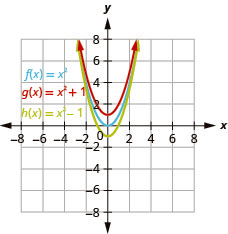
ⓑ The graph of is the same as the graph of but shifted up 1 unit. The graph of is the same as the graph of but shifted down 1 unit.
Try It 9.106 §9.7 source ↗
ⓑ Describe what effect adding a constant to the function has on the basic parabola.
Answer
ⓐ
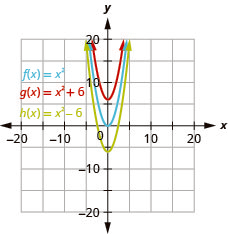
ⓑ The graph of is the same as the graph of but shifted up 6 units. The graph of is the same as the graph of but shifted down 6 units.
Try It 9.107 §9.7 source ↗
Answer
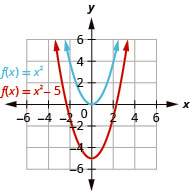
Try It 9.108 §9.7 source ↗
Answer
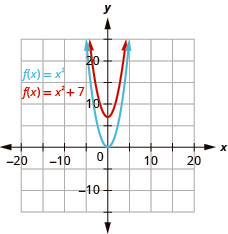
Try It 9.109 §9.7 source ↗
ⓑ Describe what effect adding a constant to the function has on the basic parabola.
Answer
ⓐ
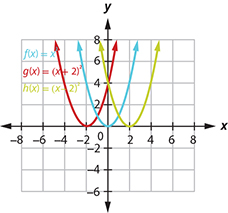
ⓑ The graph of is the same as the graph of but shifted left 2 units. The graph of is the same as the graph of but shift right 2 units.
Try It 9.110 §9.7 source ↗
ⓑ Describe what effect adding a constant to the function has on the basic parabola.
Answer
ⓐ
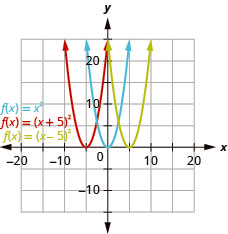
ⓑ The graph of is the same as the graph of but shifted left 5 units. The graph of is the same as the graph of but shifted right 5 units.
Try It 9.111 §9.7 source ↗
Answer
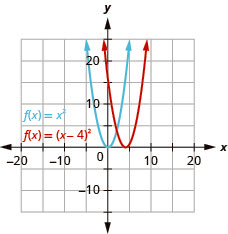
Try It 9.112 §9.7 source ↗
Answer
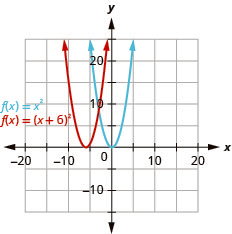
Try It 9.113 §9.7 source ↗
Answer
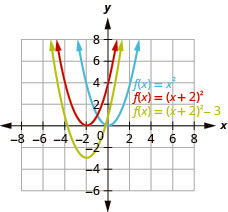
Try It 9.114 §9.7 source ↗
Answer
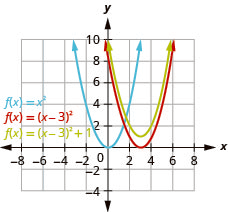
Try It 9.115 §9.7 source ↗
Answer
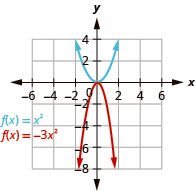
Try It 9.116 §9.7 source ↗
Answer
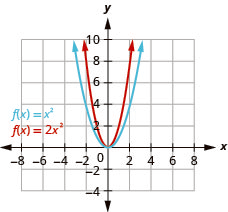
Try It 9.117 §9.7 source ↗
Answer
Try It 9.118 §9.7 source ↗
Answer
Try It 9.119 §9.7 source ↗
Answer
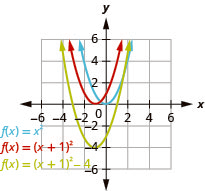
Try It 9.120 §9.7 source ↗
Answer
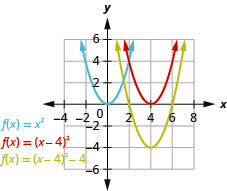
Try It 9.121 §9.7 source ↗
Answer
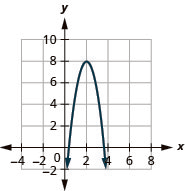
Try It 9.122 §9.7 source ↗
Answer
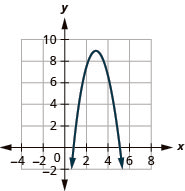
Try It 9.123 §9.7 source ↗
Answer
ⓐ
ⓑ
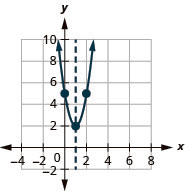
Try It 9.124 §9.7 source ↗
Answer
ⓐ
ⓑ
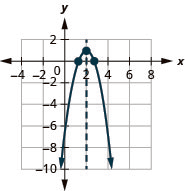
Try It 9.125 §9.7 source ↗
Write the quadratic function in form whose graph is shown.
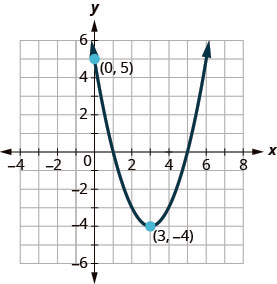
Answer
Try It 9.126 §9.7 source ↗
Determine the quadratic function whose graph is shown.
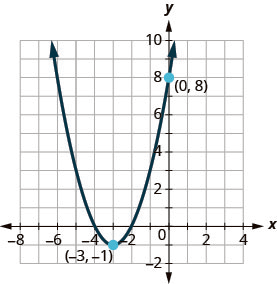
Answer
9.7-293 §9.7 source ↗
Graph Quadratic Functions of the form
In the following exercises, ⓐ graph the quadratic functions on the same rectangular coordinate system and ⓑ describe what effect adding a constant, k, to the function has on the basic parabola.
and
Answer
ⓐ
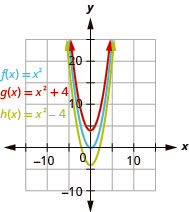
ⓑ The graph of is the same as the graph of but shifted up 4 units. The graph of is the same as the graph of but shift down 4 units.
9.7-295 §9.7 source ↗
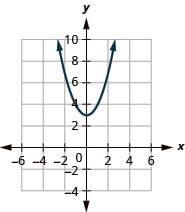
In the following exercises, graph each function using a vertical shift.
Answer
9.7-297 §9.7 source ↗
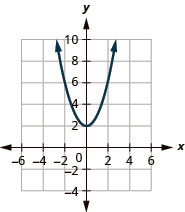
In the following exercises, graph each function using a vertical shift.
Answer
9.7-299 §9.7 source ↗
In the following exercises, graph each function using a vertical shift.
Answer
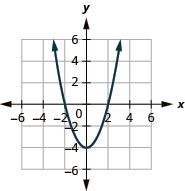
9.7-301 §9.7 source ↗
Graph Quadratic Functions of the form
In the following exercises, ⓐ graph the quadratic functions on the same rectangular coordinate system and ⓑ describe what effect adding a constant, , inside the parentheses has
and
Answer
ⓐ
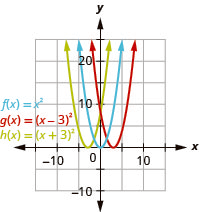
ⓑ The graph of is the same as the graph of but shifted right 3 units. The graph of is the same as the graph of but shifted left 3 units.
9.7-303 §9.7 source ↗
In the following exercises, graph each function using a horizontal shift.
Answer
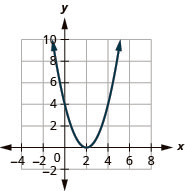
9.7-305 §9.7 source ↗
In the following exercises, graph each function using a horizontal shift.
Answer
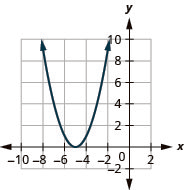
9.7-307 §9.7 source ↗
In the following exercises, graph each function using a horizontal shift.
Answer
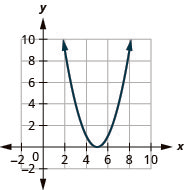
9.7-309 §9.7 source ↗
In the following exercises, graph each function using transformations.
Answer
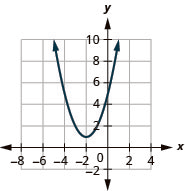
9.7-311 §9.7 source ↗
In the following exercises, graph each function using transformations.
Answer
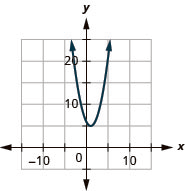
9.7-313 §9.7 source ↗
In the following exercises, graph each function using transformations.
Answer
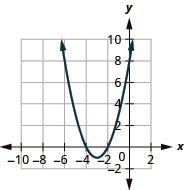
9.7-315 §9.7 source ↗
In the following exercises, graph each function using transformations.
Answer
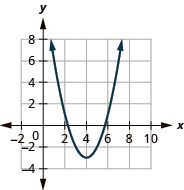
9.7-317 §9.7 source ↗
Graph Quadratic Functions of the form
In the following exercises, graph each function.
Answer
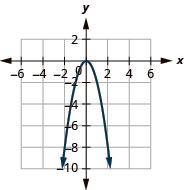
9.7-319 §9.7 source ↗
Graph Quadratic Functions of the form
In the following exercises, graph each function.
Answer
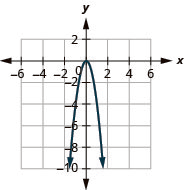
9.7-321 §9.7 source ↗
Graph Quadratic Functions of the form
In the following exercises, graph each function.
Answer
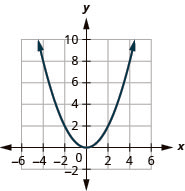
9.7-323 §9.7 source ↗
Graph Quadratic Functions of the form
In the following exercises, graph each function.
Answer
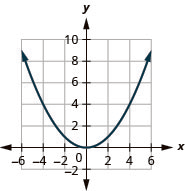
9.7-325 §9.7 source ↗
Graph Quadratic Functions Using Transformations
In the following exercises, rewrite each function in the form by completing the square.
Answer
9.7-327 §9.7 source ↗
Graph Quadratic Functions Using Transformations
In the following exercises, rewrite each function in the form by completing the square.
Answer
9.7-329 §9.7 source ↗
In the following exercises, ⓐ rewrite each function in form and ⓑ graph it by using transformations.
Answer
ⓐ
ⓑ
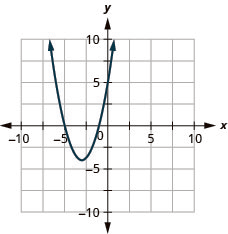
9.7-331 §9.7 source ↗
In the following exercises, ⓐ rewrite each function in form and ⓑ graph it by using transformations.
Answer
ⓐ
ⓑ
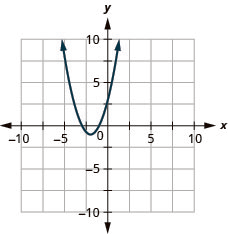
9.7-333 §9.7 source ↗
In the following exercises, ⓐ rewrite each function in form and ⓑ graph it by using transformations.
Answer
ⓐ
ⓑ
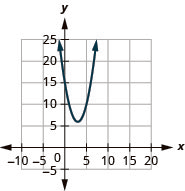
9.7-335 §9.7 source ↗
In the following exercises, ⓐ rewrite each function in form and ⓑ graph it by using transformations.
Answer
ⓐ
ⓑ
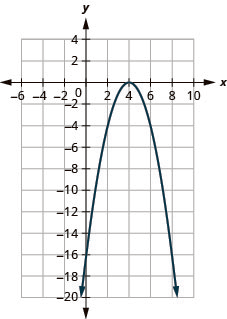
9.7-337 §9.7 source ↗
In the following exercises, ⓐ rewrite each function in form and ⓑ graph it by using transformations.
Answer
ⓐ
ⓑ
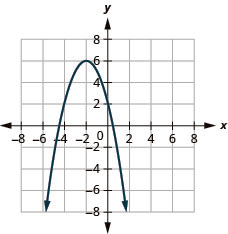
9.7-339 §9.7 source ↗
In the following exercises, ⓐ rewrite each function in form and ⓑ graph it by using transformations.
Answer
ⓐ
ⓑ
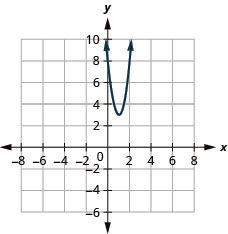
9.7-341 §9.7 source ↗
In the following exercises, ⓐ rewrite each function in form and ⓑ graph it by using transformations.
Answer
ⓐ
ⓑ
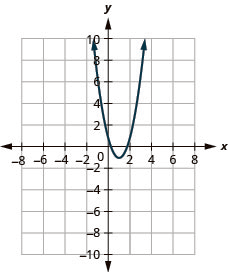
9.7-343 §9.7 source ↗
In the following exercises, ⓐ rewrite each function in form and ⓑ graph it by using transformations.
Answer
ⓐ
ⓑ
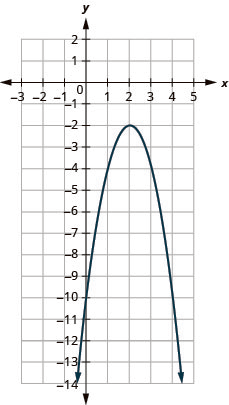
9.7-345 §9.7 source ↗
In the following exercises, ⓐ rewrite each function in form and ⓑ graph it using properties.
Answer
ⓐ
ⓑ
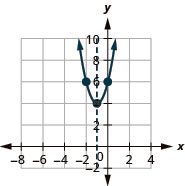
9.7-347 §9.7 source ↗
In the following exercises, ⓐ rewrite each function in form and ⓑ graph it using properties.
Answer
ⓐ
ⓑ
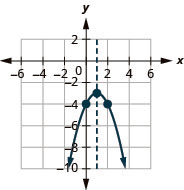
9.7-349 §9.7 source ↗
Matching
In the following exercises, match the graphs to one of the following functions: ⓐ ⓑ ⓒ ⓓ ⓔ ⓕ ⓖ ⓗ
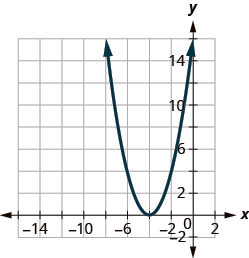
Answer
9.7-351 §9.7 source ↗
Matching
In the following exercises, match the graphs to one of the following functions: ⓐ ⓑ ⓒ ⓓ ⓔ ⓕ ⓖ ⓗ
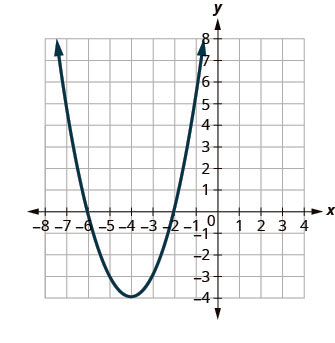
Answer
9.7-353 §9.7 source ↗
Matching
In the following exercises, match the graphs to one of the following functions: ⓐ ⓑ ⓒ ⓓ ⓔ ⓕ ⓖ ⓗ
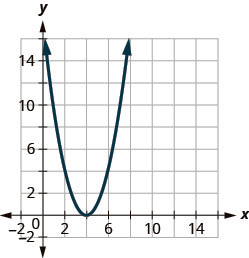
Answer
9.7-355 §9.7 source ↗
Matching
In the following exercises, match the graphs to one of the following functions: ⓐ ⓑ ⓒ ⓓ ⓔ ⓕ ⓖ ⓗ
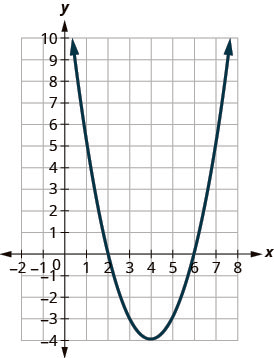
Answer
9.7-357 §9.7 source ↗
Find a Quadratic Function from its Graph
In the following exercises, write the quadratic function in form whose graph is shown.
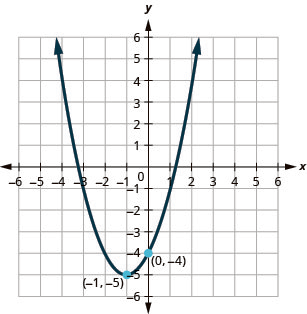
Answer
9.7-359 §9.7 source ↗
Find a Quadratic Function from its Graph
In the following exercises, write the quadratic function in form whose graph is shown.
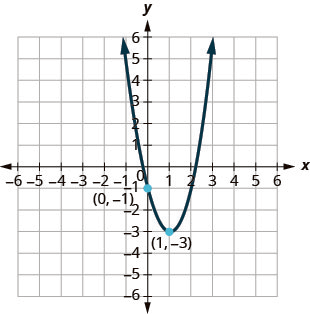
Answer
9.7-361 §9.7 source ↗
Find a Quadratic Function from its Graph
In the following exercises, write the quadratic function in form whose graph is shown.
Graph the quadratic function first using the properties as we did in the last section and then graph it using transformations. Which method do you prefer? Why?
Answer
Be Prepared 9.22 §9.8 source ↗
If you missed this problem, review Example 2.2.
Answer
Be Prepared 9.23 §9.8 source ↗
If you missed this problem, review Example 6.45.
Answer
Be Prepared 9.24 §9.8 source ↗
If you missed this problem, review Example 7.56.
Answer
Try It 9.127 §9.8 source ↗
Answer
ⓐ
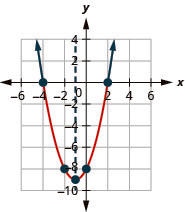
ⓑ
Try It 9.128 §9.8 source ↗
Answer
ⓐ
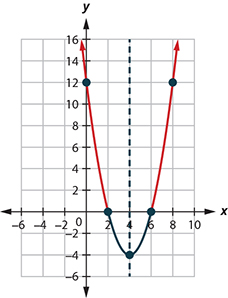
ⓑ
Try It 9.129 §9.8 source ↗
Answer
ⓐ
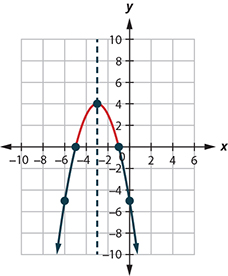
ⓑ
Try It 9.130 §9.8 source ↗
Answer
ⓐ
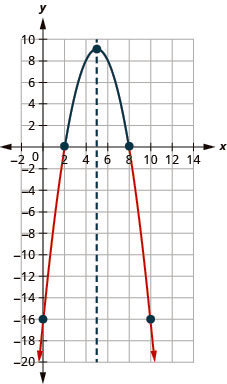
ⓑ
Try It 9.131 §9.8 source ↗
Answer
Try It 9.132 §9.8 source ↗
Answer
Try It 9.133 §9.8 source ↗
Answer
Try It 9.134 §9.8 source ↗
Answer
Try It 9.135 §9.8 source ↗
ⓐ ⓑ
Answer
ⓑ no solution
Try It 9.136 §9.8 source ↗
ⓐ ⓑ
Answer
ⓑ
9.8-363 §9.8 source ↗
Solve Quadratic Inequalities Graphically
In the following exercises, ⓐ solve graphically and ⓑ write the solution in interval notation.
Answer
ⓐ
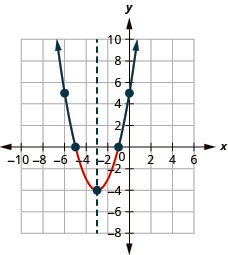
ⓑ
9.8-365 §9.8 source ↗
Solve Quadratic Inequalities Graphically
In the following exercises, ⓐ solve graphically and ⓑ write the solution in interval notation.
Answer
ⓐ
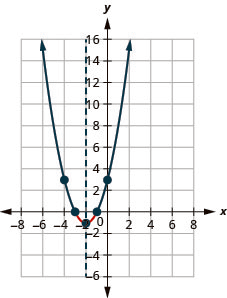
ⓑ
9.8-367 §9.8 source ↗
Solve Quadratic Inequalities Graphically
In the following exercises, ⓐ solve graphically and ⓑ write the solution in interval notation.
Answer
ⓐ
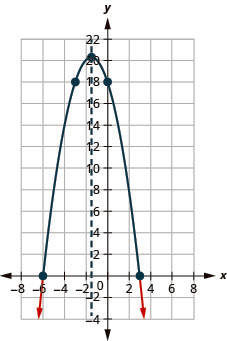
ⓑ
9.8-369 §9.8 source ↗
Solve Quadratic Inequalities Graphically
In the following exercises, ⓐ solve graphically and ⓑ write the solution in interval notation.
Answer
ⓐ
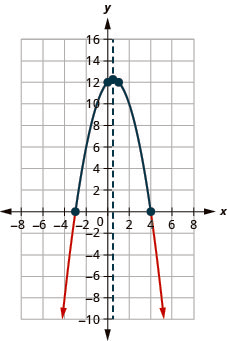
ⓑ
9.8-371 §9.8 source ↗
In the following exercises, solve each inequality algebraically and write any solution in interval notation.
Answer
9.8-373 §9.8 source ↗
In the following exercises, solve each inequality algebraically and write any solution in interval notation.
Answer
9.8-375 §9.8 source ↗
In the following exercises, solve each inequality algebraically and write any solution in interval notation.
Answer
9.8-377 §9.8 source ↗
In the following exercises, solve each inequality algebraically and write any solution in interval notation.
Answer
9.8-379 §9.8 source ↗
In the following exercises, solve each inequality algebraically and write any solution in interval notation.
Answer
9.8-381 §9.8 source ↗
In the following exercises, solve each inequality algebraically and write any solution in interval notation.
Answer
9.8-383 §9.8 source ↗
In the following exercises, solve each inequality algebraically and write any solution in interval notation.
Answer
9.8-385 §9.8 source ↗
In the following exercises, solve each inequality algebraically and write any solution in interval notation.
Answer
9.8-387 §9.8 source ↗
In the following exercises, solve each inequality algebraically and write any solution in interval notation.
Answer
9.8-389 §9.8 source ↗
In the following exercises, solve each inequality algebraically and write any solution in interval notation.
Answer
9.8-391 §9.8 source ↗
In the following exercises, solve each inequality algebraically and write any solution in interval notation.
Explain zero partition numbers and how they are used to solve quadratic inequalities algebraically.
Answer
9.8-393 §9.8 source ↗
In the following exercises, solve each inequality algebraically and write any solution in interval notation.
Describe the steps needed to solve a quadratic inequality graphically.
Answer
9.R-395 §9.R source ↗
Solve Quadratic Equations of the form ax2 = k Using the Square Root Property
In the following exercises, solve using the Square Root Property.
Answer
9.R-397 §9.R source ↗
Solve Quadratic Equations of the form ax2 = k Using the Square Root Property
In the following exercises, solve using the Square Root Property.
Answer
9.R-399 §9.R source ↗
Solve Quadratic Equations of the form ax2 = k Using the Square Root Property
In the following exercises, solve using the Square Root Property.
Answer
9.R-401 §9.R source ↗
Solve Quadratic Equations of the form ax2 = k Using the Square Root Property
In the following exercises, solve using the Square Root Property.
Answer
9.R-403 §9.R source ↗
Solve Quadratic Equations of the Form Using the Square Root Property
In the following exercises, solve using the Square Root Property.
Answer
9.R-405 §9.R source ↗
Solve Quadratic Equations of the Form Using the Square Root Property
In the following exercises, solve using the Square Root Property.
Answer
9.R-407 §9.R source ↗
Solve Quadratic Equations of the Form Using the Square Root Property
In the following exercises, solve using the Square Root Property.
Answer
9.R-409 §9.R source ↗
Solve Quadratic Equations of the Form Using the Square Root Property
In the following exercises, solve using the Square Root Property.
Answer
9.R-411 §9.R source ↗
Solve Quadratic Equations Using Completing the Square
In the following exercises, complete the square to make a perfect square trinomial. Then write the result as a binomial squared.
Answer
9.R-413 §9.R source ↗
Solve Quadratic Equations Using Completing the Square
In the following exercises, complete the square to make a perfect square trinomial. Then write the result as a binomial squared.
Answer
9.R-415 §9.R source ↗
In the following exercises, solve by completing the square.
Answer
9.R-417 §9.R source ↗
In the following exercises, solve by completing the square.
Answer
9.R-419 §9.R source ↗
In the following exercises, solve by completing the square.
Answer
9.R-421 §9.R source ↗
In the following exercises, solve by completing the square.
Answer
9.R-423 §9.R source ↗
In the following exercises, solve by completing the square.
Answer
9.R-425 §9.R source ↗
In the following exercises, solve by completing the square.
Answer
9.R-427 §9.R source ↗
Solve Quadratic Equations of the form ax2 + bx + c = 0 by Completing the Square
In the following exercises, solve by completing the square.
Answer
9.R-429 §9.R source ↗
Solve Quadratic Equations of the form ax2 + bx + c = 0 by Completing the Square
In the following exercises, solve by completing the square.
Answer
9.R-431 §9.R source ↗
Solve Quadratic Equations of the form ax2 + bx + c = 0 by Completing the Square
In the following exercises, solve by completing the square.
Answer
9.R-433 §9.R source ↗
Solve Quadratic Equations of the form ax2 + bx + c = 0 by Completing the Square
In the following exercises, solve by completing the square.
Answer
9.R-435 §9.R source ↗
In the following exercises, solve by using the Quadratic Formula.
Answer
9.R-437 §9.R source ↗
In the following exercises, solve by using the Quadratic Formula.
Answer
9.R-439 §9.R source ↗
In the following exercises, solve by using the Quadratic Formula.
Answer
9.R-441 §9.R source ↗
In the following exercises, solve by using the Quadratic Formula.
Answer
9.R-443 §9.R source ↗
In the following exercises, solve by using the Quadratic Formula.
Answer
9.R-445 §9.R source ↗
In the following exercises, solve by using the Quadratic Formula.
Answer
9.R-447 §9.R source ↗
In the following exercises, solve by using the Quadratic Formula.
Answer
9.R-449 §9.R source ↗
In the following exercises, solve by using the Quadratic Formula.
Answer
9.R-451 §9.R source ↗
Use the Discriminant to Predict the Number of Solutions of a Quadratic Equation
In the following exercises, determine the number of solutions for each quadratic equation.
ⓐ
ⓑ
ⓒ
ⓓ
Answer
9.R-453 §9.R source ↗
Identify the Most Appropriate Method to Use to Solve a Quadratic Equation
In the following exercises, identify the most appropriate method (Factoring, Square Root, or Quadratic Formula) to use to solve each quadratic equation. Do not solve.
ⓐ
ⓑ
ⓒ
Answer
9.R-455 §9.R source ↗
Solve Equations in Quadratic Form
In the following exercises, solve.
Answer
9.R-457 §9.R source ↗
Solve Equations in Quadratic Form
In the following exercises, solve.
Answer
9.R-459 §9.R source ↗
Solve Equations in Quadratic Form
In the following exercises, solve.
Answer
9.R-461 §9.R source ↗
Solve Equations in Quadratic Form
In the following exercises, solve.
Answer
9.R-463 §9.R source ↗
Solve Equations in Quadratic Form
In the following exercises, solve.
Answer
9.R-465 §9.R source ↗
Solve Applications Modeled by Quadratic Equations
In the following exercises, solve by using the method of factoring, the square root principle, or the Quadratic Formula. Round your answers to the nearest tenth, if needed.
Find two consecutive even numbers whose product is 624.
Answer
9.R-467 §9.R source ↗
Solve Applications Modeled by Quadratic Equations
In the following exercises, solve by using the method of factoring, the square root principle, or the Quadratic Formula. Round your answers to the nearest tenth, if needed.
Julius built a triangular display case for his coin collection. The height of the display case is six inches less than twice the width of the base. The area of the of the back of the case is 70 square inches. Find the height and width of the case.
Answer
9.R-469 §9.R source ↗
Solve Applications Modeled by Quadratic Equations
In the following exercises, solve by using the method of factoring, the square root principle, or the Quadratic Formula. Round your answers to the nearest tenth, if needed.
A rectangular piece of plywood has a diagonal which measures two feet more than the width. The length of the plywood is twice the width. What is the length of the plywood’s diagonal? Round to the nearest tenth.
Answer
9.R-471 §9.R source ↗
Solve Applications Modeled by Quadratic Equations
In the following exercises, solve by using the method of factoring, the square root principle, or the Quadratic Formula. Round your answers to the nearest tenth, if needed.
For Sophia’s graduation party, several tables of the same width will be arranged end to end to give serving table with a total area of 75 square feet. The total length of the tables will be two more than three times the width. Find the length and width of the serving table so Sophia can purchase the correct size tablecloth . Round answer to the nearest tenth.
Answer
The width of the serving table is 4.7 feet and the length is 16.1 feet.
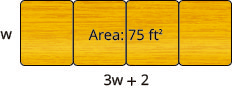
9.R-473 §9.R source ↗
Solve Applications Modeled by Quadratic Equations
In the following exercises, solve by using the method of factoring, the square root principle, or the Quadratic Formula. Round your answers to the nearest tenth, if needed.
The couple took a small airplane for a quick flight up to the wine country for a romantic dinner and then returned home. The plane flew a total of 5 hours and each way the trip was 360 miles. If the plane was flying at 150 mph, what was the speed of the wind that affected the plane?
Answer
9.R-475 §9.R source ↗
Solve Applications Modeled by Quadratic Equations
In the following exercises, solve by using the method of factoring, the square root principle, or the Quadratic Formula. Round your answers to the nearest tenth, if needed.
Two handymen can do a home repair in 2 hours if they work together. One of the men takes 3 hours more than the other man to finish the job by himself. How long does it take for each handyman to do the home repair individually?
Answer
9.R-477 §9.R source ↗
Recognize the Graph of a Quadratic Function
In the following exercises, graph by plotting point.
Graph
Answer
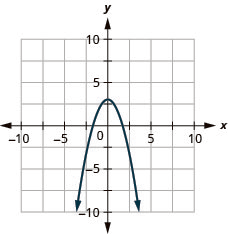
9.R-479 §9.R source ↗
In the following exercises, determine if the following parabolas open up or down.
ⓐ
ⓑ
Answer
9.R-481 §9.R source ↗
Find the Axis of Symmetry and Vertex of a Parabola
In the following exercises, find ⓐ the equation of the axis of symmetry and ⓑ the vertex.
Answer
9.R-483 §9.R source ↗
Find the Intercepts of a Parabola
In the following exercises, find the x- and y-intercepts.
Answer
9.R-485 §9.R source ↗
Find the Intercepts of a Parabola
In the following exercises, find the x- and y-intercepts.
Answer
9.R-487 §9.R source ↗
Find the Intercepts of a Parabola
In the following exercises, find the x- and y-intercepts.
Answer
9.R-489 §9.R source ↗
Graph Quadratic Functions Using Properties
In the following exercises, graph by using its properties.
Answer
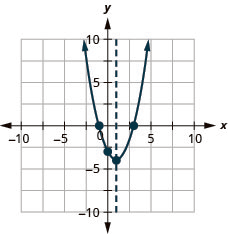
9.R-491 §9.R source ↗
Graph Quadratic Functions Using Properties
In the following exercises, graph by using its properties.
Answer
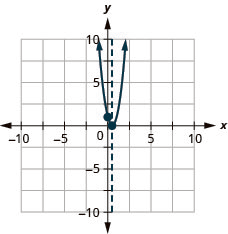
9.R-493 §9.R source ↗
Graph Quadratic Functions Using Properties
In the following exercises, graph by using its properties.
Answer
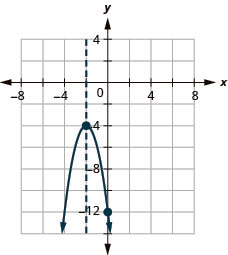
9.R-495 §9.R source ↗
Solve Maximum and Minimum Applications
In the following exercises, find the minimum or maximum value.
Answer
9.R-497 §9.R source ↗
In the following exercises, solve. Rounding answers to the nearest tenth.
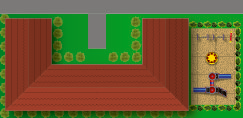
A daycare facility is enclosing a rectangular area along the side of their building for the children to play outdoors. They need to maximize the area using 180 feet of fencing on three sides of the yard. The quadratic equation gives the area, A, of the yard for the length, x, of the building that will border the yard. Find the length of the building that should border the yard to maximize the area, and then find the maximum area.
Answer
9.R-499 §9.R source ↗
Graph Quadratic Functions of the form
In the following exercises, graph each function using a vertical shift.
Answer
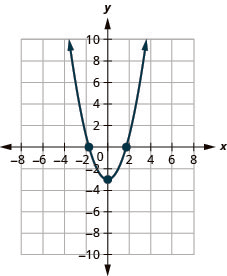
9.R-501 §9.R source ↗
In the following exercises, graph each function using a horizontal shift.
Answer
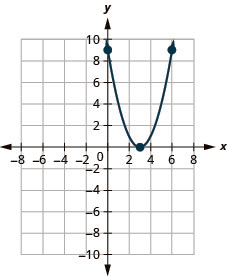
9.R-503 §9.R source ↗
In the following exercises, graph each function using transformations.
Answer
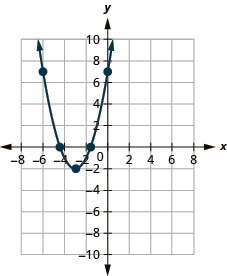
9.R-505 §9.R source ↗
In the following exercises, graph each function using transformations.
Answer
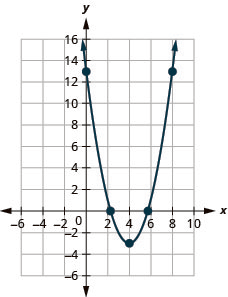
9.R-507 §9.R source ↗
Graph Quadratic Functions of the form
In the following exercises, graph each function.
Answer
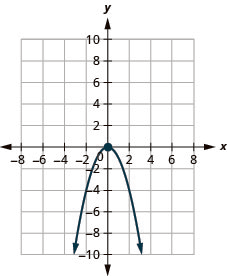
9.R-509 §9.R source ↗
Graph Quadratic Functions Using Transformations
In the following exercises, rewrite each function in the form by completing the square.
Answer
9.R-511 §9.R source ↗
In the following exercises, ⓐ rewrite each function in form and ⓑ graph it by using transformations.
Answer
ⓐ
ⓑ
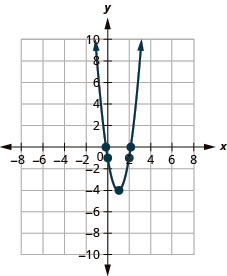
9.R-513 §9.R source ↗
In the following exercises, ⓐ rewrite each function in form and ⓑ graph it by using transformations.
Answer
ⓐ
ⓑ
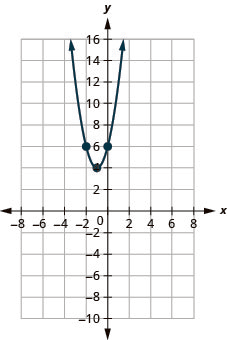
9.R-515 §9.R source ↗
In the following exercises, ⓐ rewrite each function in form and ⓑ graph it using properties.
Answer
ⓐ
ⓑ
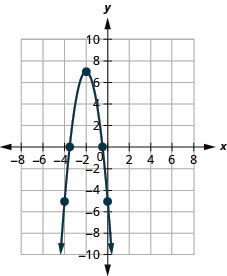
9.R-517 §9.R source ↗
Find a Quadratic Function from its Graph
In the following exercises, write the quadratic function in form.
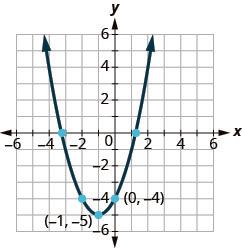
Answer
9.R-519 §9.R source ↗
Solve Quadratic Inequalities Graphically
In the following exercises, solve graphically and write the solution in interval notation.
Answer
ⓐ
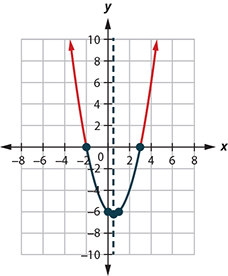
ⓑ
9.R-521 §9.R source ↗
Solve Quadratic Inequalities Graphically
In the following exercises, solve graphically and write the solution in interval notation.
Answer
ⓐ
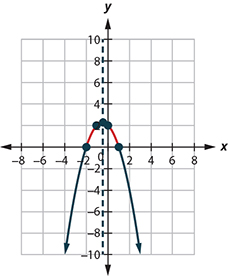
ⓑ
9.R-523 §9.R source ↗
In the following exercises, solve each inequality algebraically and write any solution in interval notation.
Answer
9.R-525 §9.R source ↗
In the following exercises, solve each inequality algebraically and write any solution in interval notation.
Answer
9.R-527 §9.R source ↗
In the following exercises, solve each inequality algebraically and write any solution in interval notation.
Answer
9.T-529 §9.T source ↗
Answer
9.T-531 §9.T source ↗
Answer
9.T-533 §9.T source ↗
Solve the following quadratic equations. Use any method.
Answer
9.T-535 §9.T source ↗
Use the discriminant to determine the number and type of solutions of each quadratic equation.
Answer
9.T-537 §9.T source ↗
Solve each equation.
Answer
9.T-539 §9.T source ↗
For each parabola, find ⓐ which direction it opens, ⓑ the equation of the axis of symmetry, ⓒ the vertex, ⓓ the x- and y-intercepts, and e) the maximum or minimum value.
Answer
ⓒ ⓓ
ⓔ maximum value of when
9.T-541 §9.T source ↗
Graph each quadratic function using intercepts, the vertex, and the equation of the axis of symmetry.
Answer
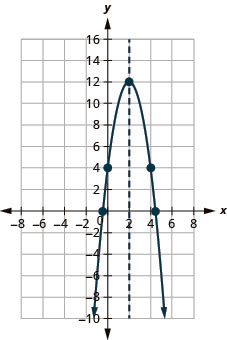
9.T-543 §9.T source ↗
In the following exercises, graph each function using transformations.
Answer
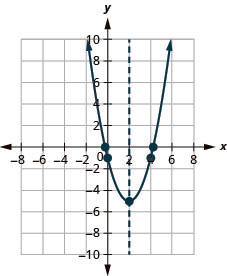
9.T-545 §9.T source ↗
In the following exercises, solve each inequality algebraically and write any solution in interval notation.
Answer
9.T-547 §9.T source ↗
Model the situation with a quadratic equation and solve by any method.
The length of a diagonal of a rectangle is three more than the width. The length of the rectangle is three times the width. Find the length of the diagonal. (Round to the nearest tenth.)
Answer
Loading chapter 10…
Problems and answers are adapted from Intermediate Algebra 2e by Lynn Marecek and Andrea Honeycutt Mathis, OpenStax, and are used under the CC BY-NC-SA 4.0 licence. Access for free at https://openstax.org/books/intermediate-algebra-2e/pages/1-introduction. Illustrations: Copyright Rice University, OpenStax, under CC BY-NC-SA 4.0 license. This adaptation is released under the same licence, is non-commercial, and is neither affiliated with nor endorsed by OpenStax or Rice University.