Every problem in the chapter beside the book’s answer, a chapter at a time as you scroll.

Chapter 10: Organohalides

13 problems · 36 figures

10-1 §10.1 source ↗

Give IUPAC names for the following alkyl halides:
(a)
(b)
(c)
(d)
(e)
(f)

Answer (6 parts)

(a)
1-Iodobutane
(b)
1-Chloro-3-methylbutane
(c)
1,5-Dibromo-2,2-dimethylpentane
(d)
1,3-Dichloro-3-methylbutane
(e)
1-Chloro-3-ethyl-4-iodopentane
(f)
2-Bromo-5-chlorohexane

10-2 §10.1 source ↗

Draw structures corresponding to the following IUPAC names:
(a)
2-Chloro-3,3-dimethylhexane
(b)
3,3-Dichloro-2-methylhexane
(c)
3-Bromo-3-ethylpentane
(d)
1,1-Dibromo-4-isopropylcyclohexane
(e)
4-sec-Butyl-2-chlorononane
(f)
1,1-Dibromo-4-tert-butylcyclohexane

Answer (6 parts)

(a)
(b)
(c)
(d)
(e)
(f)

10-3 §10.2 source ↗

Draw and name all monochloro products you would expect to obtain from radical chlorination of 2-methylpentane. Which, if any, are chiral?

Answer

Chiral: 1-chloro-2-methylpentane, 3-chloro-2-methylpentane, 2-chloro-4-methylpentane Achiral: 2-chloro-2-methylpentane, 1-chloro-4-methylpentane

10-4 §10.2 source ↗

Taking the relative reactivities of 1°, 2°, and 3° hydrogen atoms into account, what product(s) would you expect to obtain from monochlorination of 2-methylbutane? What would the approximate percentage of each product be? (Don’t forget to take into account the number of each kind of hydrogen.)

Answer

1-Chloro-2-methylbutane (29%), 1-chloro-3-methylbutane (14%), 2-chloro-2-methylbutane (24%), 2-chloro-3-methylbutane (33%)

10-5 §10.4 source ↗

Draw three resonance forms for the cyclohexadienyl radical.

Answer

10-6 §10.4 source ↗

The major product of the reaction of methylenecyclohexane with N-bromosuccinimide is 1-(bromomethyl)cyclohexene. Explain.

Answer

The intermediate allylic radical reacts at the more accessible site and gives the more highly substituted double bond.

10-7 §10.4 source ↗

What products would you expect from reaction of the following alkenes with NBS? If more than one product is formed, show the structures of all.
(a)
(b)

Answer (2 parts)

(a)
3-Bromo-5-methylcycloheptene and 3-bromo-6-methylcycloheptene
(b)
Four products

10-8 §10.5 source ↗

How would you prepare the following alkyl halides from the corresponding alcohols?
(a)
(b)
(c)
(d)

Answer (4 parts)

(a)
2-Methyl-2-propanol + HCl
(b)
4-Methyl-2-pentanol + PBr3
(c)
5-Methyl-1-pentanol + PBr3
(d)
3,3-Dimethyl-cyclopentanol + HF, pyridine

10-9 §10.6 source ↗

How strong a base would you expect a Grignard reagent to be? Look at Table 9.1 and predict whether the following reactions will occur as written. (The pKa of NH3 is 35.)

(a) CH3MgBr + H–C ≡ C–H ​ ⟶ ​CH4 + H–C ≡ C–MgBr (b) CH3MgBr + NH3 ​ ⟶ ​CH4 + H2N–MgBr

Table 9.1 Acidity of Simple Hydrocarbons in the book ↗
Family Example Ka pKa
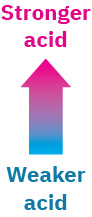
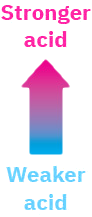
Alkyne HC≡CH 10−25 25 The figure shows a table with Ka and pKa values of simple hydrocarbons. The acidity order is shown by an arrow in increasing order from the bottom to the top.The figure shows a table with Ka and pKa values of simple hydrocarbons. The acidity order is shown by an arrow in increasing order from the bottom to the top.
Alkene H2C═CH2 10−44 44
Alkane CH4 10−60 60

Answer

Both reactions occur.

10-10 §10.6 source ↗

How might you replace a halogen substituent by a deuterium atom if you wanted to prepare a deuterated compound?

Answer

React Grignard reagent with D2O.

10-11 §10.7 source ↗

How would you carry out the following transformations using an organocopper coupling reaction? More than one step is required in each case.
(a)
(b)
(c)

Answer (3 parts)

(a)
1. NBS; 2. (CH3)2CuLi
(b)
1. Li; 2. CuI; 3. CH3CH2CH2CH2Br
(c)
1. BH3; 2. H2O2, NaOH; 3. PBr3; 4. Li, then CuI; 5. CH3(CH2)4Br

10-12 §10.8 source ↗

Rank both sets of compounds in order of increasing oxidation level:
(a)
(b)

Answer (2 parts)

(a)
(b)

10-13 §10.8 source ↗

Tell whether each of the following reactions is an oxidation, a reduction, or neither.
(a)
(b)

Answer (2 parts)

(a)
Reduction
(b)
Neither

Loading chapter 11…

Problems and answers are adapted from Organic Chemistry: A Tenth Edition by John McMurry, OpenStax, and are used under the CC BY-NC-SA 4.0 licence. Access for free at https://openstax.org/books/organic-chemistry/pages/1-why-this-chapter. Illustrations: Copyright Rice University, OpenStax, under CC BY-NC-SA 4.0 license. This adaptation is released under the same licence, is non-commercial, and is neither affiliated with nor endorsed by OpenStax or Rice University.