Every problem in the chapter beside the book’s answer, a chapter at a time as you scroll.
Chapter 1: Parametric Equations and Polar Coordinates
195 problems · 59 figuresCheckpoint 1.1 §1.1 source ↗
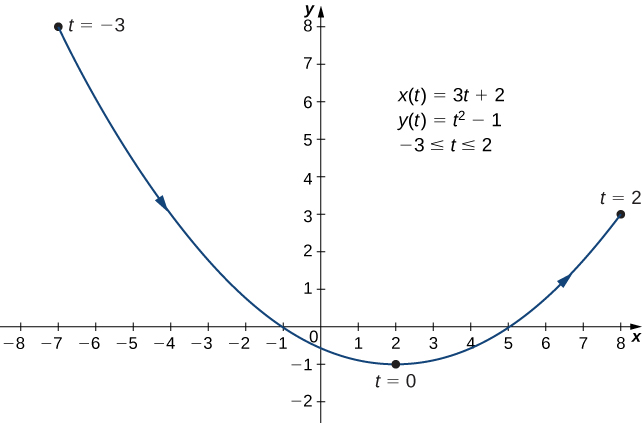
Sketch the curve described by the parametric equations
Answer
Checkpoint 1.2 §1.1 source ↗
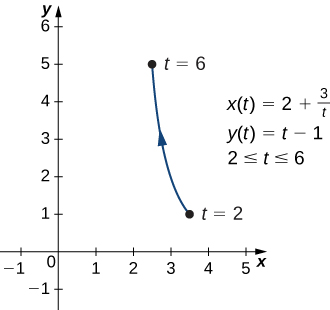
Eliminate the parameter for the plane curve defined by the following parametric equations and describe the resulting graph.
Answer
or This equation describes a portion of a rectangular hyperbola centered at
Checkpoint 1.3 §1.1 source ↗
Answer
One possibility is Another possibility is
There are, in fact, an infinite number of possibilities.
1-1 §1.1 source ↗
For the following exercises, sketch the curves below by eliminating the parameter t. Give the orientation of the curve.
Answer
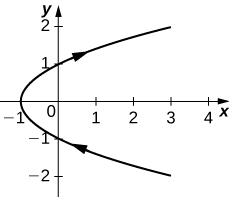
orientation: bottom to top
1-3 §1.1 source ↗
For the following exercises, sketch the curves below by eliminating the parameter t. Give the orientation of the curve.
Answer
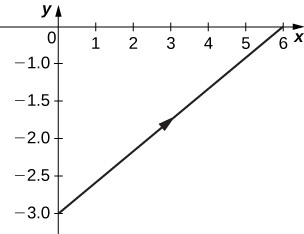
orientation: left to right
1-5 §1.1 source ↗
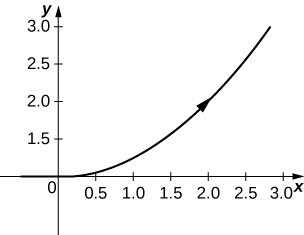
For the following exercises, eliminate the parameter and sketch the graphs.
Answer
1-7 §1.1 source ↗
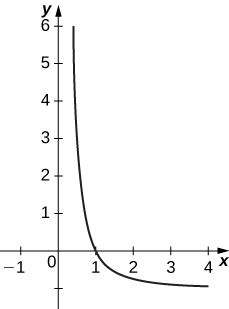
For the following exercises, use technology (CAS or calculator) to sketch the parametric equations.
[T]
Answer
1-9 §1.1 source ↗
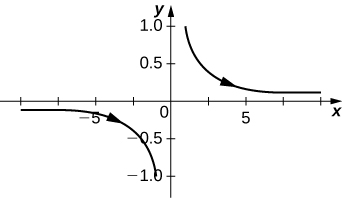
For the following exercises, use technology (CAS or calculator) to sketch the parametric equations.
[T]
Answer
1-11 §1.1 source ↗
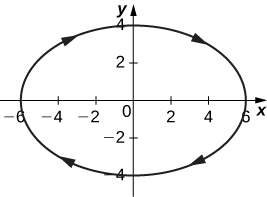
For the following exercises, sketch the parametric equations by eliminating the parameter. Indicate any asymptotes of the graph.
Answer
1-13 §1.1 source ↗
For the following exercises, sketch the parametric equations by eliminating the parameter. Indicate any asymptotes of the graph.
Answer
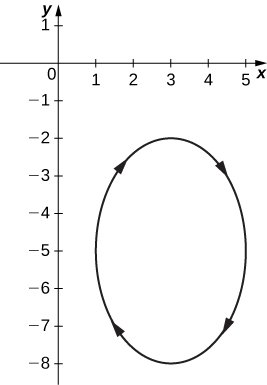
1-15 §1.1 source ↗
For the following exercises, sketch the parametric equations by eliminating the parameter. Indicate any asymptotes of the graph.
Answer
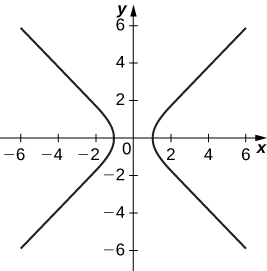
Asymptotes are and
1-17 §1.1 source ↗
For the following exercises, sketch the parametric equations by eliminating the parameter. Indicate any asymptotes of the graph.
Answer
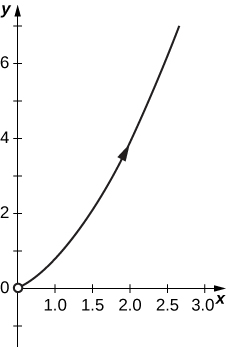
1-19 §1.1 source ↗
For the following exercises, sketch the parametric equations by eliminating the parameter. Indicate any asymptotes of the graph.
Answer
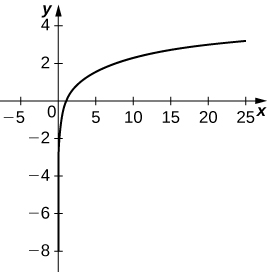
1-21 §1.1 source ↗
For the following exercises, convert the parametric equations of a curve into rectangular form. No sketch is necessary. State the domain of the rectangular form.
Answer
1-23 §1.1 source ↗
For the following exercises, convert the parametric equations of a curve into rectangular form. No sketch is necessary. State the domain of the rectangular form.
Answer
1-25 §1.1 source ↗
For the following exercises, convert the parametric equations of a curve into rectangular form. No sketch is necessary. State the domain of the rectangular form.
Answer
1-27 §1.1 source ↗
For the following exercises, convert the parametric equations of a curve into rectangular form. No sketch is necessary. State the domain of the rectangular form.
Answer
1-29 §1.1 source ↗
For the following exercises, convert the parametric equations of a curve into rectangular form. No sketch is necessary. State the domain of the rectangular form.
Answer
1-31 §1.1 source ↗
For the following exercises, convert the parametric equations of a curve into rectangular form. No sketch is necessary. State the domain of the rectangular form.
Answer
1-33 §1.1 source ↗
For the following exercises, convert the parametric equations of a curve into rectangular form. No sketch is necessary. State the domain of the rectangular form.
Answer
1-35 §1.1 source ↗
For the following exercises, convert the parametric equations of a curve into rectangular form. No sketch is necessary. State the domain of the rectangular form.
where n is a natural number
Answer
1-37 §1.1 source ↗
For the following exercises, convert the parametric equations of a curve into rectangular form. No sketch is necessary. State the domain of the rectangular form.
Answer
1-39 §1.1 source ↗
For the following exercises, the pairs of parametric equations represent lines, parabolas, circles, ellipses, or hyperbolas. Name the type of basic curve that each pair of equations represents.
Answer
1-41 §1.1 source ↗
For the following exercises, the pairs of parametric equations represent lines, parabolas, circles, ellipses, or hyperbolas. Name the type of basic curve that each pair of equations represents.
Answer
1-43 §1.1 source ↗
For the following exercises, the pairs of parametric equations represent lines, parabolas, circles, ellipses, or hyperbolas. Name the type of basic curve that each pair of equations represents.
Answer
1-45 §1.1 source ↗
For the following exercises, the pairs of parametric equations represent lines, parabolas, circles, ellipses, or hyperbolas. Name the type of basic curve that each pair of equations represents.
Answer
1-47 §1.1 source ↗
For the following exercises, the pairs of parametric equations represent lines, parabolas, circles, ellipses, or hyperbolas. Name the type of basic curve that each pair of equations represents.
Answer
1-51 §1.1 source ↗
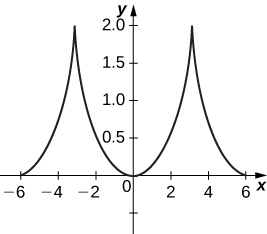
For the following exercises, use a graphing utility to graph the curve represented by the parametric equations and identify the curve from its equation.
[T]
Answer
The equations represent a cycloid.
1-53 §1.1 source ↗
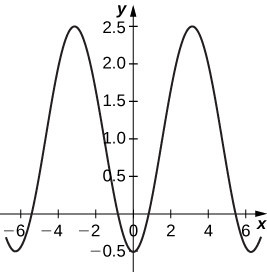
For the following exercises, use a graphing utility to graph the curve represented by the parametric equations and identify the curve from its equation.
[T]
Answer
1-55 §1.1 source ↗
For the following exercises, use a graphing utility to graph the curve represented by the parametric equations and identify the curve from its equation.
The trajectory of a bullet is given by where and When will the bullet hit the ground? How far from the gun will the bullet hit the ground?
Answer
1-57 §1.1 source ↗
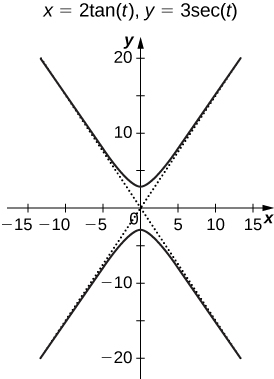
For the following exercises, use a graphing utility to graph the curve represented by the parametric equations and identify the curve from its equation.
[T] Use technology to sketch
Answer
1-59 §1.1 source ↗
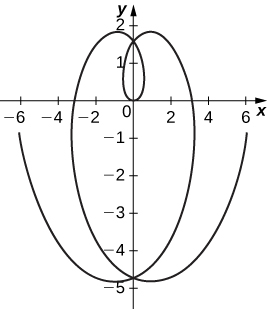
For the following exercises, use a graphing utility to graph the curve represented by the parametric equations and identify the curve from its equation.
[T] Use technology to sketch the spiral curve given by from
Answer
1-61 §1.1 source ↗
For the following exercises, use a graphing utility to graph the curve represented by the parametric equations and identify the curve from its equation.
[T] Sketch the curve given by parametric equations where
Answer
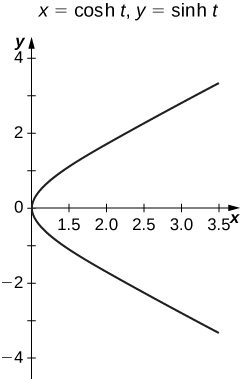
Checkpoint 1.4 §1.2 source ↗
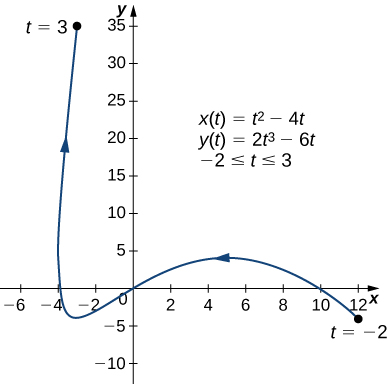
Calculate the derivative for the plane curve defined by the equations
and locate any critical points on its graph.
Answer
and so
This expression is undefined when and equal to zero when
Checkpoint 1.5 §1.2 source ↗
Find an equation of the tangent line to the curve defined by the equations
Answer
Checkpoint 1.6 §1.2 source ↗
Calculate the second derivative for the plane curve defined by the equations
and locate any critical points on its graph.
Answer
Checkpoint 1.7 §1.2 source ↗
Find the area under the curve of the hypocycloid defined by the equations
Answer
Checkpoint 1.8 §1.2 source ↗
Find the arc length of the curve defined by the equations
Answer
Checkpoint 1.9 §1.2 source ↗
Find the surface area generated when the plane curve defined by the equations
is revolved around the x-axis.
Answer
1-63 §1.2 source ↗
For the following exercises, each set of parametric equations represents a line. Without eliminating the parameter, find the slope of each line.
Answer
1-65 §1.2 source ↗
For the following exercises, each set of parametric equations represents a line. Without eliminating the parameter, find the slope of each line.
Answer
1-67 §1.2 source ↗
For the following exercises, determine the slope of the tangent line, then find an equation of the tangent line at the given value of the parameter.
Answer
1-69 §1.2 source ↗
For the following exercises, determine the slope of the tangent line, then find an equation of the tangent line at the given value of the parameter.
Answer
1-71 §1.2 source ↗
For the following exercises, find all points on the curve that have the given slope.
slope = 0.5
Answer
1-73 §1.2 source ↗
For the following exercises, find all points on the curve that have the given slope.
Answer
1-75 §1.2 source ↗
For the following exercises, write the equation of the tangent line in Cartesian coordinates for the given parameter t.
Answer
1-77 §1.2 source ↗
For the following exercises, write the equation of the tangent line in Cartesian coordinates for the given parameter t.
Answer
1-79 §1.2 source ↗
For the following exercises, write the equation of the tangent line in Cartesian coordinates for the given parameter t.
For where Find all values of t at which a vertical tangent line exists.
Answer
1-81 §1.2 source ↗
For the following exercises, write the equation of the tangent line in Cartesian coordinates for the given parameter t.
Find for
Answer
1-83 §1.2 source ↗
For the following exercises, write the equation of the tangent line in Cartesian coordinates for the given parameter t.
For the curve find the slope and concavity of the curve at
Answer
1-85 §1.2 source ↗
For the following exercises, write the equation of the tangent line in Cartesian coordinates for the given parameter t.
Find the slope and concavity for the curve whose equation is at
Answer
1-87 §1.2 source ↗
For the following exercises, write the equation of the tangent line in Cartesian coordinates for the given parameter t.
Find all points on the curve at which horizontal and vertical tangents exist.
Answer
1-89 §1.2 source ↗
For the following exercises, find
Answer
1-91 §1.2 source ↗
For the following exercises, find points on the curve at which tangent line is horizontal or vertical.
Answer
1-93 §1.2 source ↗
For the following exercises, find at the value of the parameter.
Answer
1-95 §1.2 source ↗
For the following exercises, find at the value of the parameter.
Answer
1-97 §1.2 source ↗
For the following exercises, find at the given point without eliminating the parameter.
Answer
1-99 §1.2 source ↗
For the following exercises, find at the given point without eliminating the parameter.
Determine the concavity of the curve
Answer
1-101 §1.2 source ↗
For the following exercises, find at the given point without eliminating the parameter.
Find the area bounded by the curve and the lines and
Answer
1-103 §1.2 source ↗
For the following exercises, find at the given point without eliminating the parameter.
Find the area of the region bounded by for
Answer
1-105 §1.2 source ↗
For the following exercises, find the area of the regions bounded by the parametric curves and the indicated values of the parameter.
[T]
Answer
1-107 §1.2 source ↗
For the following exercises, find the area of the regions bounded by the parametric curves and the indicated values of the parameter.
[T] (the “teardrop”)
Answer
1-109 §1.2 source ↗
For the following exercises, find the arc length of the curve on the indicated interval of the parameter.
Answer
1-111 §1.2 source ↗
For the following exercises, find the arc length of the curve on the indicated interval of the parameter.
Answer
1-113 §1.2 source ↗
For the following exercises, find the arc length of the curve on the indicated interval of the parameter.
on the interval (the hypocycloid)
Answer
1-115 §1.2 source ↗
For the following exercises, find the arc length of the curve on the indicated interval of the parameter.
Find the distance traveled by a particle with position as t varies in the given time interval:
Answer
1-119 §1.2 source ↗
For the following exercises, find the area of the surface obtained by rotating the given curve about the x-axis.
Answer
1-121 §1.2 source ↗
For the following exercises, find the area of the surface obtained by rotating the given curve about the x-axis.
[T] Use a CAS to find the area of the surface generated by rotating about the x-axis. (Answer to three decimal places.)
Answer
1-123 §1.2 source ↗
For the following exercises, find the area of the surface obtained by rotating the given curve about the x-axis.
Find the area of the surface generated by revolving about the x-axis.
Answer
Checkpoint 1.10 §1.3 source ↗
Answer
Checkpoint 1.11 §1.3 source ↗
Answer
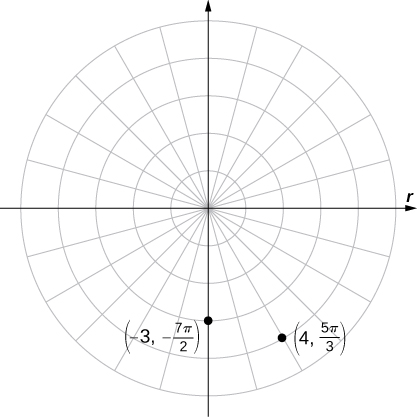
Checkpoint 1.12 §1.3 source ↗
Answer
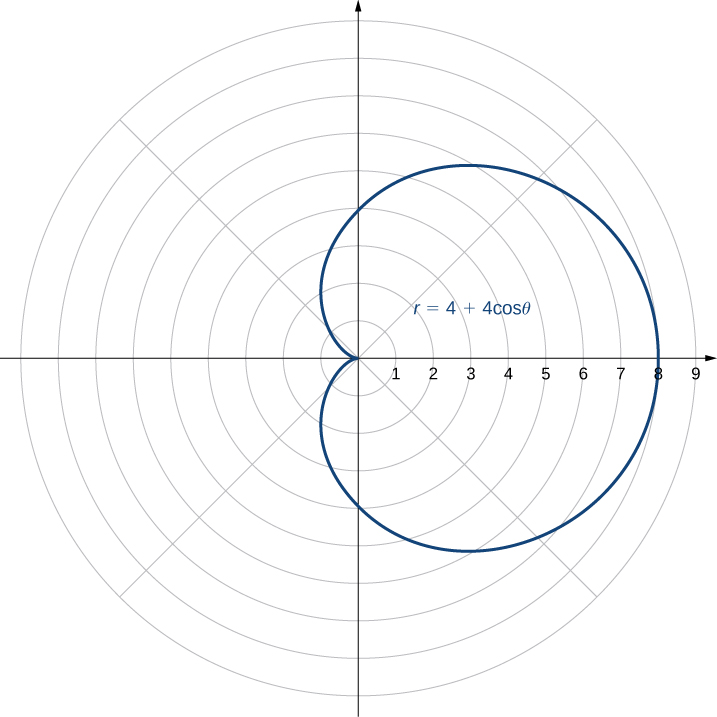
The name of this shape is a cardioid, which we will study further later in this section.
Checkpoint 1.13 §1.3 source ↗
Answer
Checkpoint 1.14 §1.3 source ↗
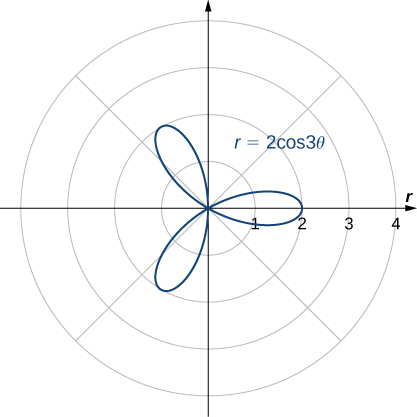
Answer
Symmetric with respect to the polar axis.
1-125 §1.3 source ↗
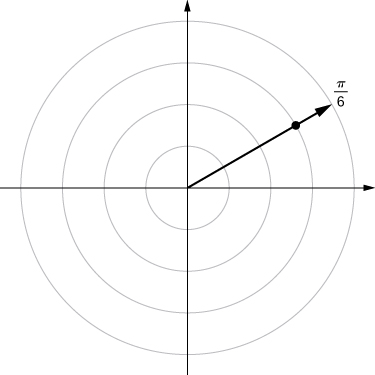
In the following exercises, plot the point whose polar coordinates are given by first constructing the angle and then marking off the distance r along the ray.
Answer
1-127 §1.3 source ↗
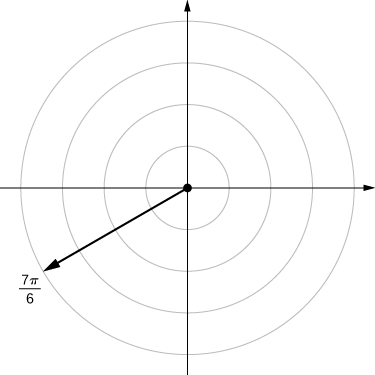
In the following exercises, plot the point whose polar coordinates are given by first constructing the angle and then marking off the distance r along the ray.
Answer
1-129 §1.3 source ↗
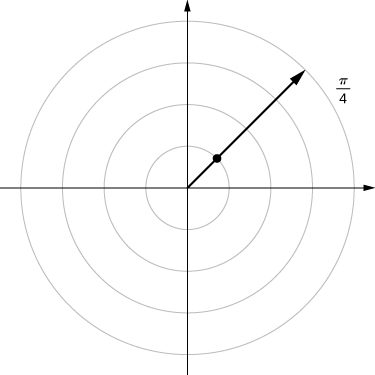
In the following exercises, plot the point whose polar coordinates are given by first constructing the angle and then marking off the distance r along the ray.
Answer
1-131 §1.3 source ↗
In the following exercises, plot the point whose polar coordinates are given by first constructing the angle and then marking off the distance r along the ray.
Answer
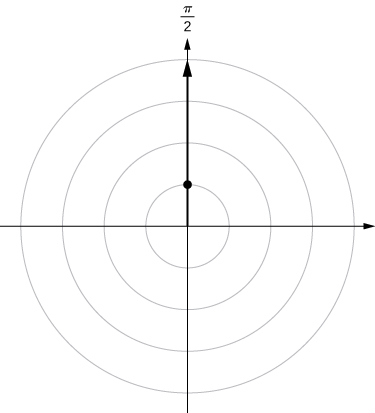
1-133 §1.3 source ↗
For the following exercises, consider the polar graph below. Give two sets of polar coordinates for each point.
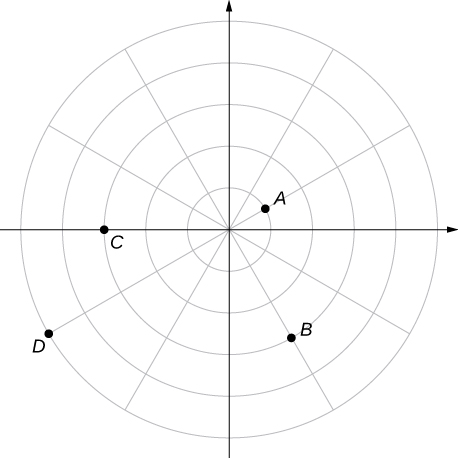
Coordinates of point B.
Answer
1-135 §1.3 source ↗
For the following exercises, consider the polar graph below. Give two sets of polar coordinates for each point.
Coordinates of point D.
Answer
1-137 §1.3 source ↗
For the following exercises, the rectangular coordinates of a point are given. Find two sets of polar coordinates for the point in Round to three decimal places.
Answer
1-139 §1.3 source ↗
For the following exercises, the rectangular coordinates of a point are given. Find two sets of polar coordinates for the point in Round to three decimal places.
Answer
1-141 §1.3 source ↗
For the following exercises, the rectangular coordinates of a point are given. Find two sets of polar coordinates for the point in Round to three decimal places.
Answer
1-143 §1.3 source ↗
For the following exercises, find rectangular coordinates for the given point in polar coordinates.
Answer
1-145 §1.3 source ↗
For the following exercises, find rectangular coordinates for the given point in polar coordinates.
Answer
1-147 §1.3 source ↗
For the following exercises, find rectangular coordinates for the given point in polar coordinates.
Answer
1-149 §1.3 source ↗
For the following exercises, determine whether the graphs of the polar equation are symmetric with respect to the -axis, the -axis, or the origin.
Answer
1-151 §1.3 source ↗
For the following exercises, determine whether the graphs of the polar equation are symmetric with respect to the -axis, the -axis, or the origin.
Answer
1-153 §1.3 source ↗
For the following exercises, determine whether the graphs of the polar equation are symmetric with respect to the -axis, the -axis, or the origin.
Answer
1-155 §1.3 source ↗
For the following exercises, describe the graph of each polar equation. Confirm each description by converting into a rectangular equation.
Answer
1-157 §1.3 source ↗
For the following exercises, describe the graph of each polar equation. Confirm each description by converting into a rectangular equation.
Answer
1-159 §1.3 source ↗
For the following exercises, convert the rectangular equation to polar form and sketch its graph.
Answer
Hyperbola; polar form or
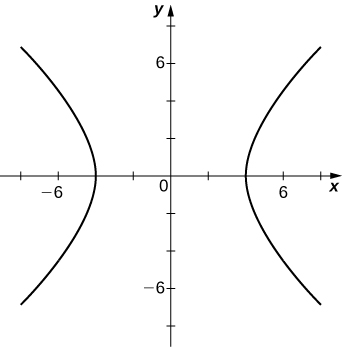
1-161 §1.3 source ↗
For the following exercises, convert the rectangular equation to polar form and sketch its graph.
Answer
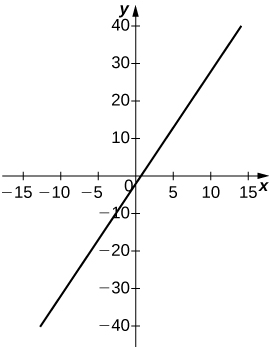
1-163 §1.3 source ↗
For the following exercises, convert the polar equation to rectangular form and sketch its graph.
Answer
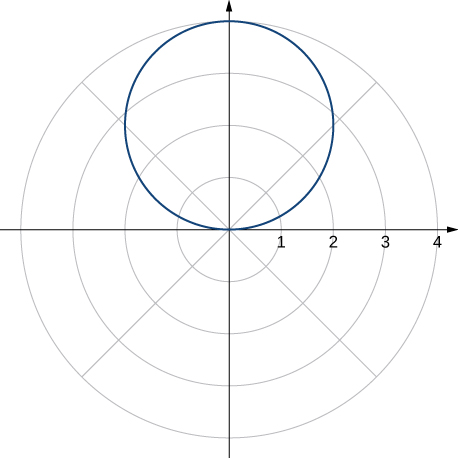
1-165 §1.3 source ↗
For the following exercises, convert the polar equation to rectangular form and sketch its graph.
Answer
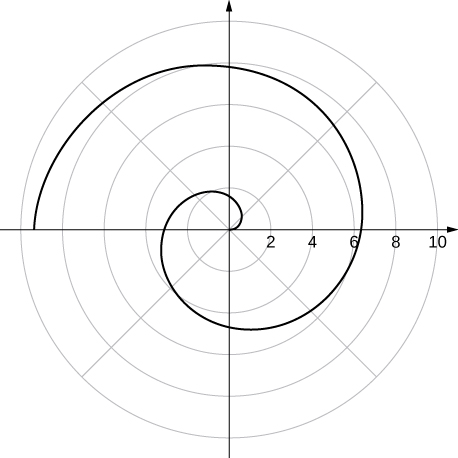
1-167 §1.3 source ↗
For the following exercises, sketch a graph of the polar equation and identify any symmetry.
Answer
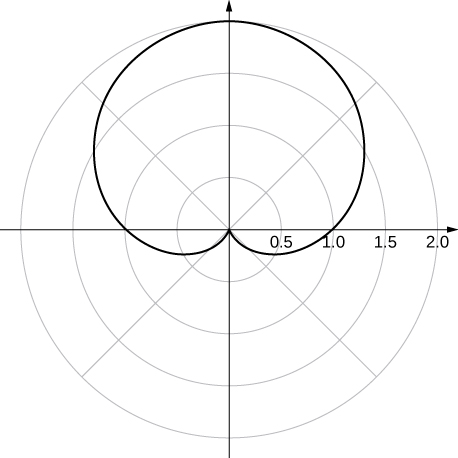
y-axis symmetry
1-169 §1.3 source ↗
For the following exercises, sketch a graph of the polar equation and identify any symmetry.
Answer
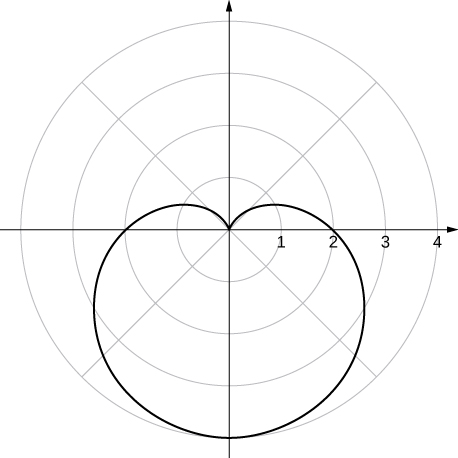
y-axis symmetry
1-171 §1.3 source ↗
For the following exercises, sketch a graph of the polar equation and identify any symmetry.
Answer
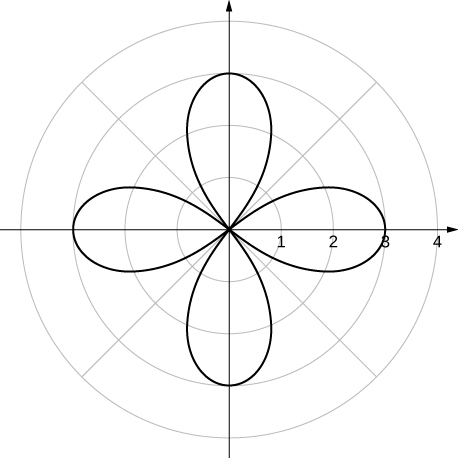
x- and y-axis symmetry and symmetry about the pole
1-173 §1.3 source ↗
For the following exercises, sketch a graph of the polar equation and identify any symmetry.
Answer
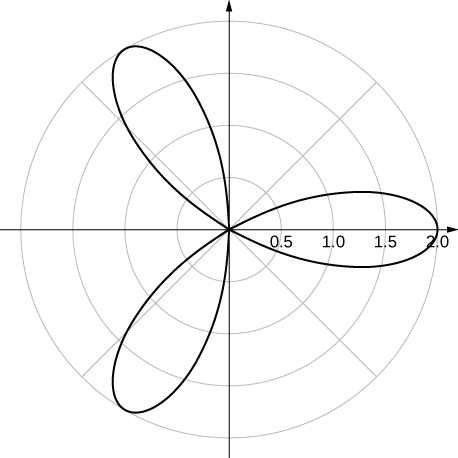
x-axis symmetry
1-175 §1.3 source ↗
For the following exercises, sketch a graph of the polar equation and identify any symmetry.
Answer
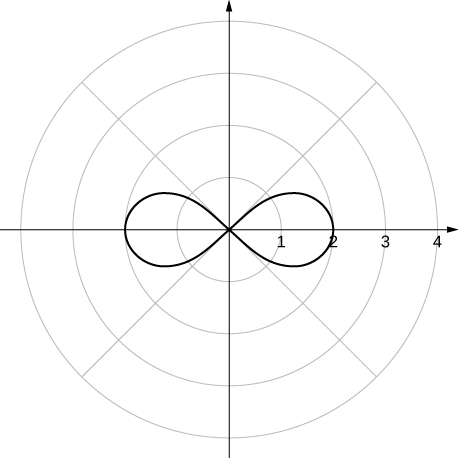
x- and y-axis symmetry and symmetry about the pole
1-177 §1.3 source ↗
For the following exercises, sketch a graph of the polar equation and identify any symmetry.
Answer
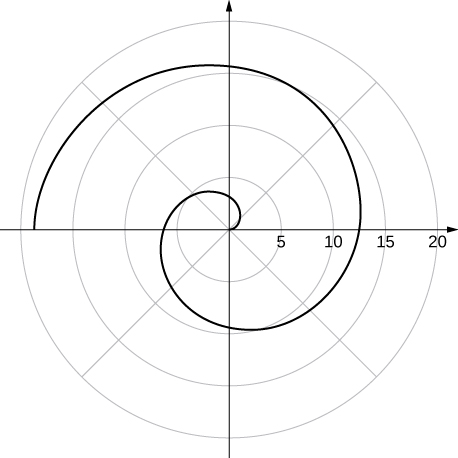
no symmetry
1-179 §1.3 source ↗
For the following exercises, sketch a graph of the polar equation and identify any symmetry.
[T] Use a graphing utility and sketch the graph of
Answer
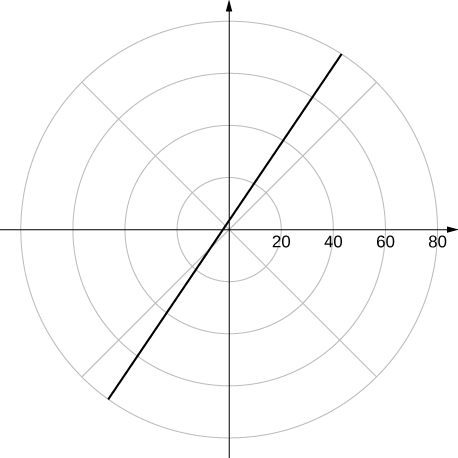
a line
1-181 §1.3 source ↗
For the following exercises, sketch a graph of the polar equation and identify any symmetry.
[T] Use technology to graph
Answer
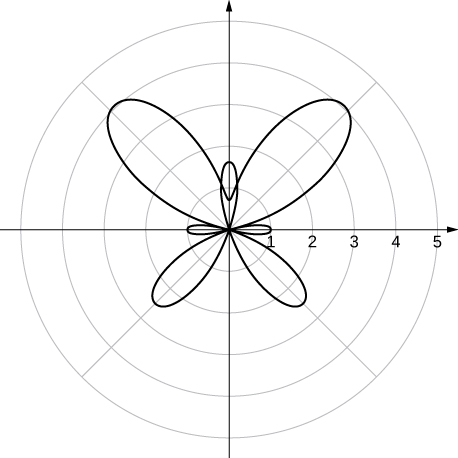
1-183 §1.3 source ↗
For the following exercises, sketch a graph of the polar equation and identify any symmetry.
Without using technology, sketch the polar curve
Answer
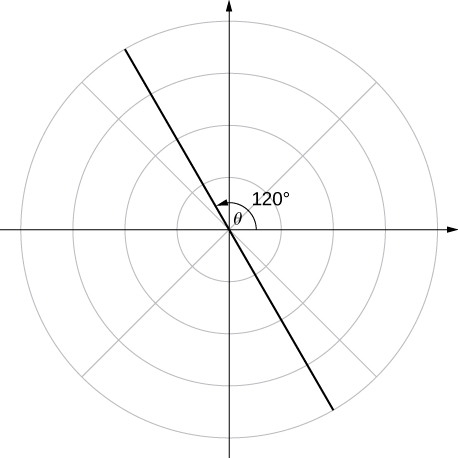
1-185 §1.3 source ↗
For the following exercises, sketch a graph of the polar equation and identify any symmetry.
[T] Use technology to plot for
Answer
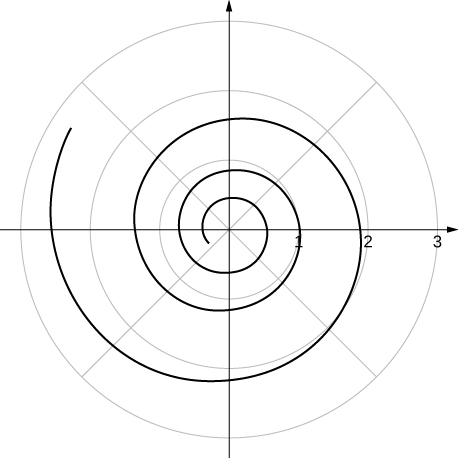
1-187 §1.3 source ↗
For the following exercises, sketch a graph of the polar equation and identify any symmetry.
[T] Use the results of the preceding two problems to explore the graphs of and for
Answer
Checkpoint 1.15 §1.4 source ↗
Answer
Checkpoint 1.16 §1.4 source ↗
Answer
Checkpoint 1.17 §1.4 source ↗
Answer
1-189 §1.4 source ↗
For the following exercises, determine a definite integral that represents the area.
Region enclosed by
Answer
1-191 §1.4 source ↗
For the following exercises, determine a definite integral that represents the area.
Region enclosed by one petal of
Answer
1-193 §1.4 source ↗
For the following exercises, determine a definite integral that represents the area.
Region below the polar axis and enclosed by
Answer
1-195 §1.4 source ↗
For the following exercises, determine a definite integral that represents the area.
Region enclosed by the inner loop of
Answer
1-197 §1.4 source ↗
For the following exercises, determine a definite integral that represents the area.
Region enclosed by and outside the inner loop
Answer
1-199 §1.4 source ↗
For the following exercises, determine a definite integral that represents the area.
Region common to
Answer
1-201 §1.4 source ↗
For the following exercises, find the area of the described region.
Enclosed by
Answer
1-203 §1.4 source ↗
For the following exercises, find the area of the described region.
Below the polar axis and enclosed by
Answer
1-205 §1.4 source ↗
For the following exercises, find the area of the described region.
Enclosed by one petal of
Answer
1-207 §1.4 source ↗
For the following exercises, find the area of the described region.
Enclosed by the inner loop of
Answer
1-209 §1.4 source ↗
For the following exercises, find the area of the described region.
Common interior of
Answer
1-211 §1.4 source ↗
For the following exercises, find the area of the described region.
Common interior of
Answer
1-213 §1.4 source ↗
For the following exercises, find the area of the described region.
Common interior of
Answer
1-215 §1.4 source ↗
For the following exercises, find a definite integral that represents the arc length.
on the interval
Answer
1-217 §1.4 source ↗
For the following exercises, find a definite integral that represents the arc length.
Answer
1-219 §1.4 source ↗
For the following exercises, find the length of the curve over the given interval.
Answer
1-221 §1.4 source ↗
For the following exercises, find the length of the curve over the given interval.
Answer
1-223 §1.4 source ↗
For the following exercises, use the integration capabilities of a calculator to approximate the length of the curve.
[T]
Answer
1-225 §1.4 source ↗
For the following exercises, use the integration capabilities of a calculator to approximate the length of the curve.
[T]
Answer
1-227 §1.4 source ↗
For the following exercises, use the integration capabilities of a calculator to approximate the length of the curve.
[T]
Answer
1-229 §1.4 source ↗
For the following exercises, use the familiar formula from geometry to find the area of the region described and then confirm by using the definite integral.
Answer
1-231 §1.4 source ↗
For the following exercises, use the familiar formula from geometry to find the length of the curve and then confirm using the definite integral.
Answer
1-233 §1.4 source ↗
For the following exercises, use the familiar formula from geometry to find the length of the curve and then confirm using the definite integral.
Answer
1-235 §1.4 source ↗
For the following exercises, find the slope of a tangent line to a polar curve Let and so the polar equation is now written in parametric form.
Use the definition of the derivative and the product rule to derive the derivative of a polar equation.
Answer
1-237 §1.4 source ↗
For the following exercises, find the slope of a tangent line to a polar curve Let and so the polar equation is now written in parametric form.
Answer
1-239 §1.4 source ↗
For the following exercises, find the slope of a tangent line to a polar curve Let and so the polar equation is now written in parametric form.
Answer
1-241 §1.4 source ↗
For the following exercises, find the slope of a tangent line to a polar curve Let and so the polar equation is now written in parametric form.
tips of the leaves
Answer
1-243 §1.4 source ↗
For the following exercises, find the slope of a tangent line to a polar curve Let and so the polar equation is now written in parametric form.
Answer
1-245 §1.4 source ↗
For the following exercises, find the slope of a tangent line to a polar curve Let and so the polar equation is now written in parametric form.
For the cardioid find the slope of the tangent line when
Answer
1-247 §1.4 source ↗
For the following exercises, find the slope of the tangent line to the given polar curve at the point given by the value of
Answer
1-249 §1.4 source ↗
For the following exercises, find the slope of the tangent line to the given polar curve at the point given by the value of
[T] Use technology: at
Answer
1-251 §1.4 source ↗
For the following exercises, find the points at which the following polar curves have a horizontal or vertical tangent line.
Answer
1-253 §1.4 source ↗
For the following exercises, find the points at which the following polar curves have a horizontal or vertical tangent line.
The cardioid
Answer
Checkpoint 1.18 §1.5 source ↗
Answer
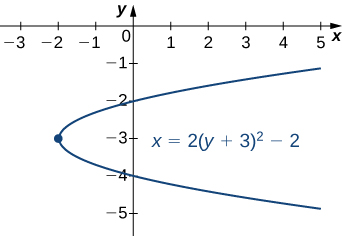
Checkpoint 1.19 §1.5 source ↗
Answer
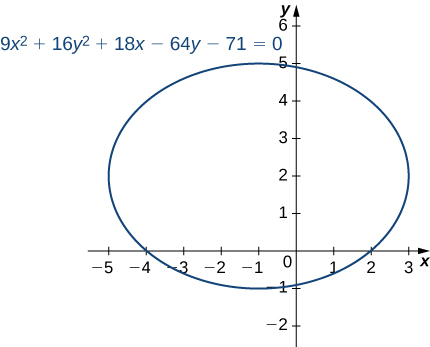
Checkpoint 1.20 §1.5 source ↗
Answer
This is a vertical hyperbola. Asymptotes
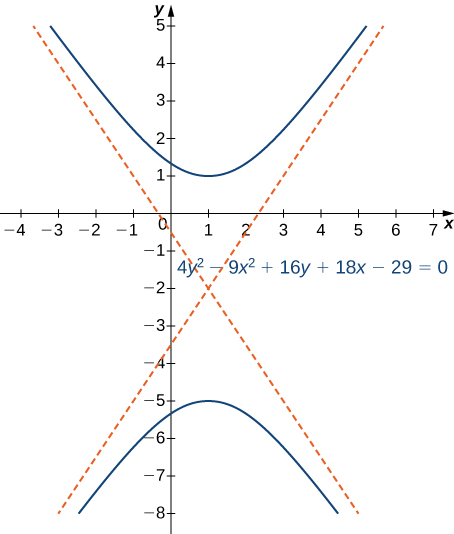
Checkpoint 1.21 §1.5 source ↗
Determine the eccentricity of the hyperbola described by the equation
Answer
Checkpoint 1.22 §1.5 source ↗
Identify and create a graph of the conic section described by the equation
Answer
Here and This conic section is an ellipse.
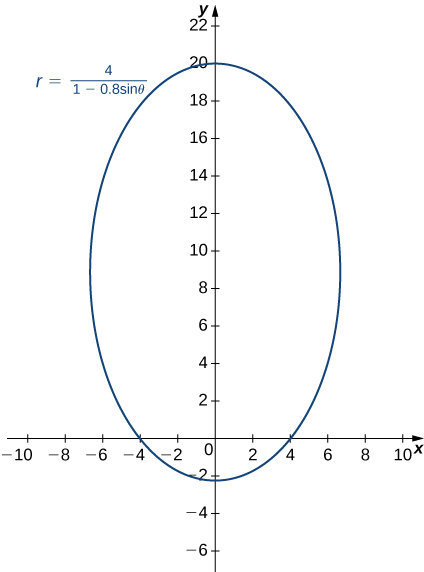
Checkpoint 1.23 §1.5 source ↗
Identify the conic and calculate the angle of rotation of axes for the curve described by the equation
Answer
1-255 §1.5 source ↗
For the following exercises, determine the equation of the parabola using the information given.
Focus and directrix
Answer
1-257 §1.5 source ↗
For the following exercises, determine the equation of the parabola using the information given.
Focus and directrix
Answer
1-259 §1.5 source ↗
For the following exercises, determine the equation of the parabola using the information given.
Focus and directrix
Answer
1-261 §1.5 source ↗
For the following exercises, determine the equation of the parabola using the information given.
Focus and directrix
Answer
1-263 §1.5 source ↗
For the following exercises, determine the equation of the ellipse using the information given.
Endpoints of major axis at and foci located at
Answer
1-265 §1.5 source ↗
For the following exercises, determine the equation of the ellipse using the information given.
Endpoints of minor axis at and foci located at
Answer
1-267 §1.5 source ↗
For the following exercises, determine the equation of the ellipse using the information given.
Endpoints of major axis at and foci located at
Answer
1-269 §1.5 source ↗
For the following exercises, determine the equation of the ellipse using the information given.
Foci located at and eccentricity of
Answer
1-271 §1.5 source ↗
For the following exercises, determine the equation of the hyperbola using the information given.
Vertices located at and foci located at
Answer
1-273 §1.5 source ↗
For the following exercises, determine the equation of the hyperbola using the information given.
Endpoints of the conjugate axis located at and foci located
Answer
1-275 §1.5 source ↗
For the following exercises, determine the equation of the hyperbola using the information given.
Vertices located at and focus located at
Answer
1-277 §1.5 source ↗
For the following exercises, determine the equation of the hyperbola using the information given.
Foci located at and eccentricity of 3
Answer
1-279 §1.5 source ↗
For the following exercises, consider the following polar equations of conics. Determine the eccentricity and identify the conic.
Answer
1-281 §1.5 source ↗
For the following exercises, consider the following polar equations of conics. Determine the eccentricity and identify the conic.
Answer
1-283 §1.5 source ↗
For the following exercises, consider the following polar equations of conics. Determine the eccentricity and identify the conic.
Answer
1-285 §1.5 source ↗
For the following exercises, find a polar equation of the conic with focus at the origin and eccentricity and directrix as given.
Answer
1-287 §1.5 source ↗
For the following exercises, find a polar equation of the conic with focus at the origin and eccentricity and directrix as given.
Answer
1-289 §1.5 source ↗
For the following exercises, sketch the graph of each conic.
Answer
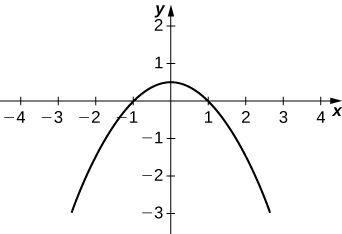
1-291 §1.5 source ↗
For the following exercises, sketch the graph of each conic.
Answer
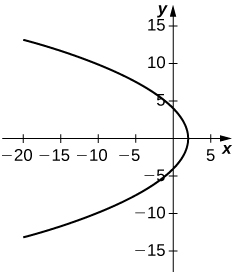
1-293 §1.5 source ↗
For the following exercises, sketch the graph of each conic.
Answer
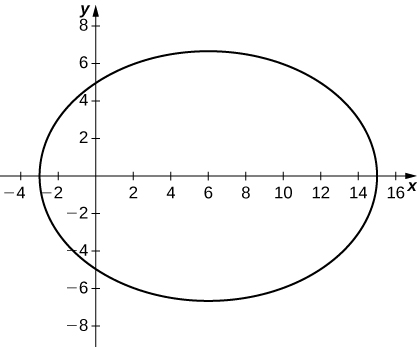
1-295 §1.5 source ↗
For the following exercises, sketch the graph of each conic.
Answer
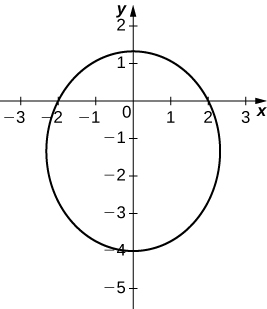
1-297 §1.5 source ↗
For the following exercises, sketch the graph of each conic.
Answer
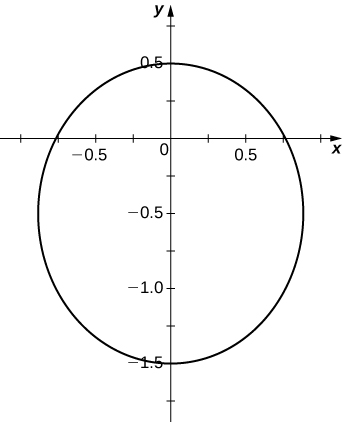
1-299 §1.5 source ↗
For the following exercises, sketch the graph of each conic.
Answer
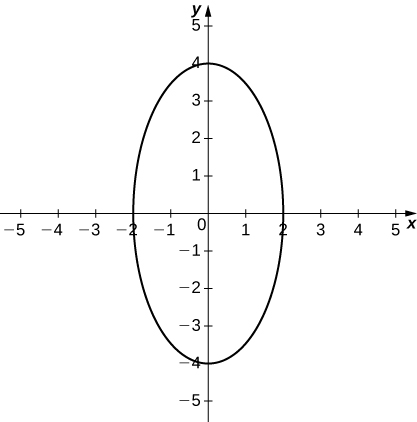
1-301 §1.5 source ↗
For the following exercises, sketch the graph of each conic.
Answer
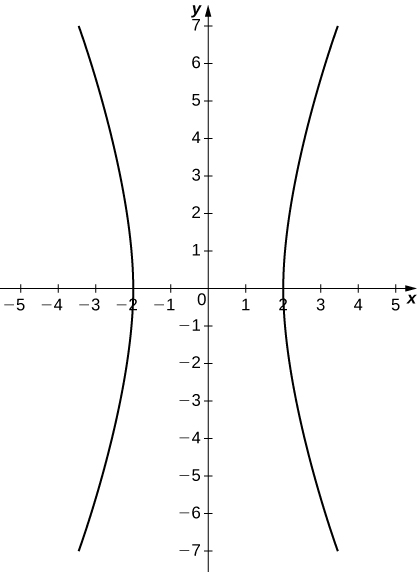
1-303 §1.5 source ↗
For the following exercises, sketch the graph of each conic.
Answer
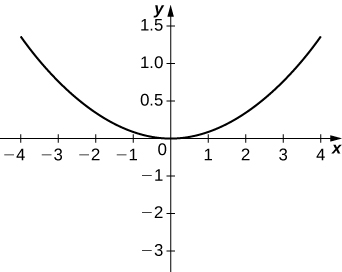
1-305 §1.5 source ↗
For the following exercises, sketch the graph of each conic.
Answer
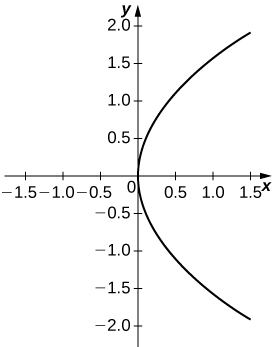
1-307 §1.5 source ↗
For the following equations, determine which of the conic sections is described.
Answer
1-309 §1.5 source ↗
For the following equations, determine which of the conic sections is described.
Answer
1-311 §1.5 source ↗
For the following equations, determine which of the conic sections is described.
Answer
1-313 §1.5 source ↗
For the following equations, determine which of the conic sections is described.
A satellite dish is shaped like a paraboloid of revolution. The receiver is to be located at the focus. If the dish is 12 feet across at its opening and 4 feet deep at its center, where should the receiver be placed?
Answer
1-315 §1.5 source ↗
For the following equations, determine which of the conic sections is described.
A searchlight is shaped like a paraboloid of revolution. A light source is located 1 foot from the base along the axis of symmetry. If the opening of the searchlight is 3 feet across, find the depth.
Answer
1-317 §1.5 source ↗
For the following equations, determine which of the conic sections is described.
A person is standing 8 feet from the nearest wall in a whispering gallery. If that person is at one focus and the other focus is 80 feet away, what is the length and the height at the center of the gallery?
Answer
1-319 §1.5 source ↗
For the following exercises, determine the polar equation form of the orbit given the length of the major axis and eccentricity for the orbits of the comets or planets. Distance is given in astronomical units (AU).
Hale-Bopp Comet: length of major axis = 525.91, eccentricity = 0.995
Answer
1-321 §1.5 source ↗
For the following exercises, determine the polar equation form of the orbit given the length of the major axis and eccentricity for the orbits of the comets or planets. Distance is given in astronomical units (AU).
Jupiter: length of major axis = 10.408, eccentricity = 0.0484
Answer
1-323 §1.R source ↗
True or False? Justify your answer with a proof or a counterexample.
The equations represent a hyperbola.
Answer
1-325 §1.R source ↗
True or False? Justify your answer with a proof or a counterexample.
Given and if then where C is a constant.
Answer
1-327 §1.R source ↗
For the following exercises, sketch the parametric curve and eliminate the parameter to find the Cartesian equation of the curve.
Answer
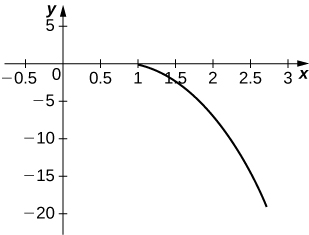
1-329 §1.R source ↗
For the following exercises, sketch the parametric curve and eliminate the parameter to find the Cartesian equation of the curve.
Answer
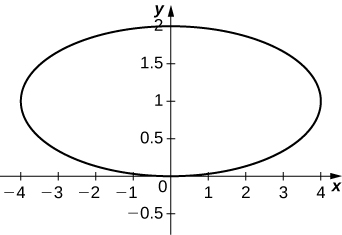
1-331 §1.R source ↗
For the following exercises, sketch the polar curve and determine what type of symmetry exists, if any.
Answer
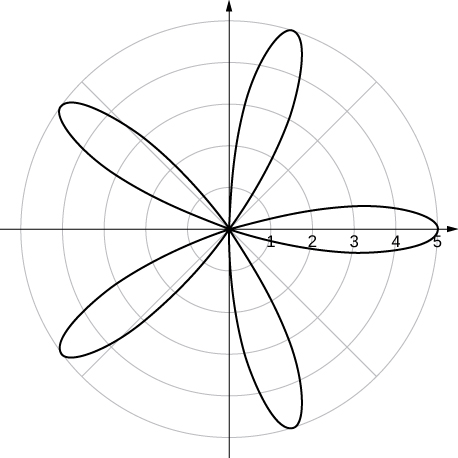
Symmetric about polar axis
1-333 §1.R source ↗
For the following exercises, find the polar equation for the curve given as a Cartesian equation.
Answer
1-335 §1.R source ↗
For the following exercises, find an equation of the tangent line to the given curve. Graph both the function and its tangent line.
Answer
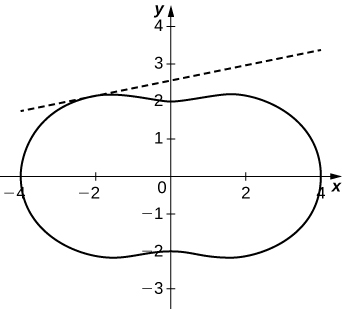
1-337 §1.R source ↗
For the following exercises, find the area of the region.
Answer
1-339 §1.R source ↗
For the following exercises, find the arc length of the curve over the given interval.
Answer
1-341 §1.R source ↗
For the following exercises, find the Cartesian equation describing the given shapes.
A parabola with focus and directrix
Answer
1-343 §1.R source ↗
For the following exercises, find the Cartesian equation describing the given shapes.
A hyperbola with vertices at and and foci at and
Answer
1-345 §1.R source ↗
For the following exercises, determine the eccentricity and identify the conic. Sketch the conic.
Answer
ellipse
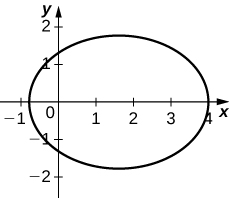
1-347 §1.R source ↗
For the following exercises, determine the eccentricity and identify the conic. Sketch the conic.
Determine the Cartesian equation describing the orbit of Pluto, the most eccentric orbit around the Sun. The length of the major axis is 39.26 AU and minor axis is 38.07 AU. What is the eccentricity?
Answer
Loading chapter 2…
Problems and answers are adapted from Calculus Volume 3 by Gilbert Strang and Edwin “Jed” Herman, OpenStax, and are used under the CC BY-NC-SA 4.0 licence. Access for free at https://openstax.org/books/calculus-volume-3/pages/1-introduction. Illustrations: Copyright Rice University, OpenStax, under CC BY-NC-SA 4.0 license. This adaptation is released under the same licence, is non-commercial, and is neither affiliated with nor endorsed by OpenStax or Rice University.