Every problem in the chapter beside the book’s answer, a chapter at a time as you scroll.
Chapter 3: Vector-Valued Functions
130 problems · 44 figuresCheckpoint 3.1 §3.1 source ↗
Answer
The domain of is all real numbers.
Checkpoint 3.2 §3.1 source ↗
Answer
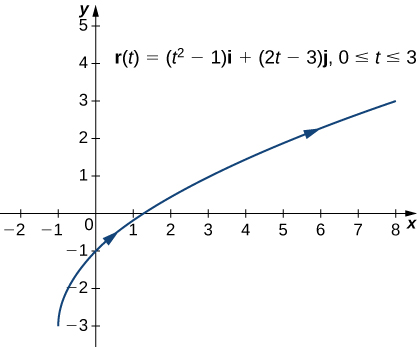
Checkpoint 3.3 §3.1 source ↗
Answer
3-1 §3.1 source ↗
Answer
3-3 §3.1 source ↗
Answer
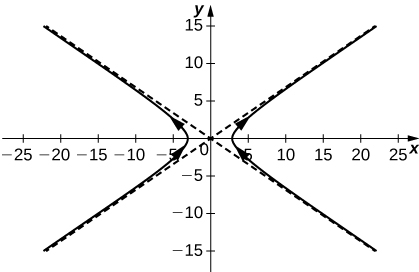
3-5 §3.1 source ↗
Given the vector-valued function find the following values:
a.
b.
c. Is continuous at
d. Graph
Answer
a. b. c. Yes, the limit as t approaches is equal to d.
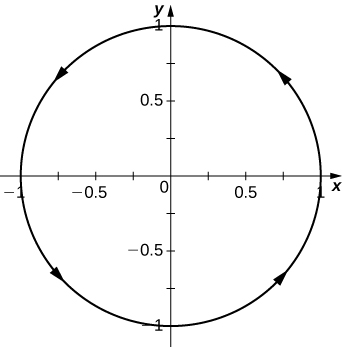
3-7 §3.1 source ↗
Let Find the following values:
a.
b.
c. Is continuous at
Answer
3-9 §3.1 source ↗
Find the limit of the following vector-valued functions at the indicated value of t.
for
Answer
3-11 §3.1 source ↗
Find the limit of the following vector-valued functions at the indicated value of t.
Answer
3-13 §3.1 source ↗
Find the limit of the following vector-valued functions at the indicated value of t.
for
Answer
3-15 §3.1 source ↗
Find the domain of the vector-valued functions.
Domain:
Answer
3-17 §3.1 source ↗
Find the domain of the vector-valued functions.
Domain:
Answer
3-19 §3.1 source ↗
Let and use it to answer the following questions.
Sketch the graph of
Answer
3-21 §3.1 source ↗
Let and use it to answer the following questions.
For what values of t is continuous?
Answer
3-23 §3.1 source ↗
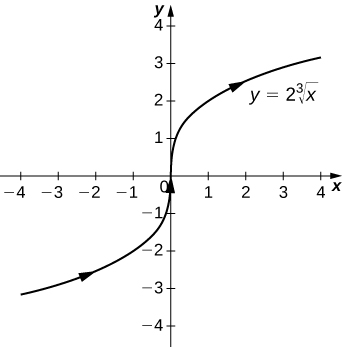
Eliminate the parameter t, write the equation in Cartesian coordinates, then sketch the graphs of the vector-valued functions.
Answer
a variation of the cube-root function
3-25 §3.1 source ↗
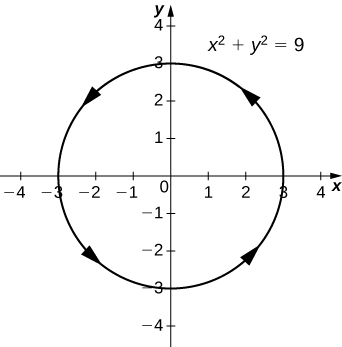
Eliminate the parameter t, write the equation in Cartesian coordinates, then sketch the graphs of the vector-valued functions.
Answer
a circle centered at with radius 3, and a counterclockwise orientation
3-27 §3.1 source ↗
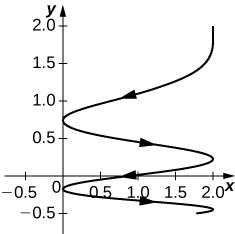
Use a graphing utility to sketch each of the following vector-valued functions:
[T]
Answer
3-29 §3.1 source ↗
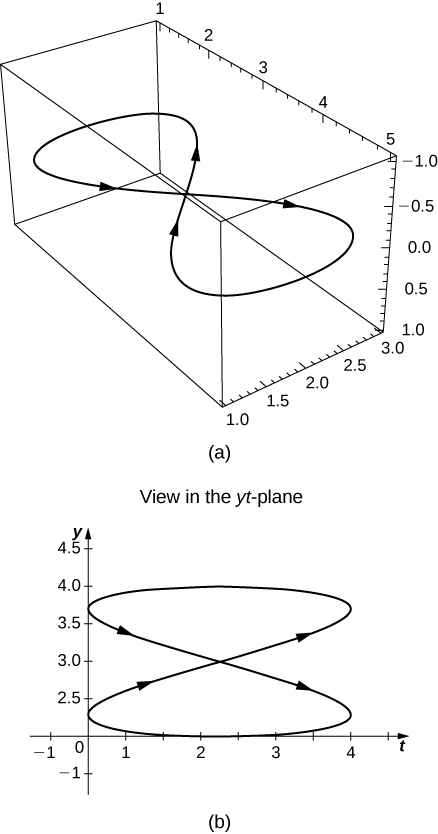
Use a graphing utility to sketch each of the following vector-valued functions:
[T]
Answer
Find a vector-valued function that traces out the given curve in the indicated direction.
3-31 §3.1 source ↗
Use a graphing utility to sketch each of the following vector-valued functions:
from left to right
Answer
3-33 §3.1 source ↗
Consider the curve described by the vector-valued function
What is the initial point of the path corresponding to
Answer
3-35 §3.1 source ↗
Consider the curve described by the vector-valued function
[T] Use technology to sketch the curve.
Answer
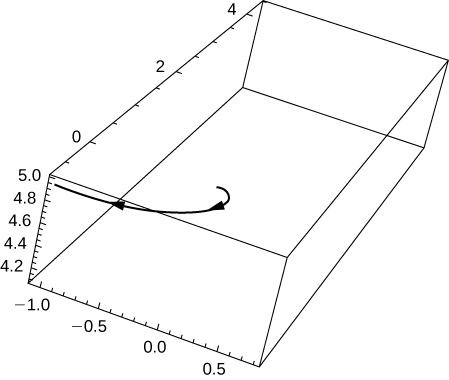
3-37 §3.1 source ↗
Consider the curve described by the vector-valued function
[T] Let Use technology to graph the curve (called the roller-coaster curve) over the interval Choose at least two views to determine the peaks and valleys.
Answer
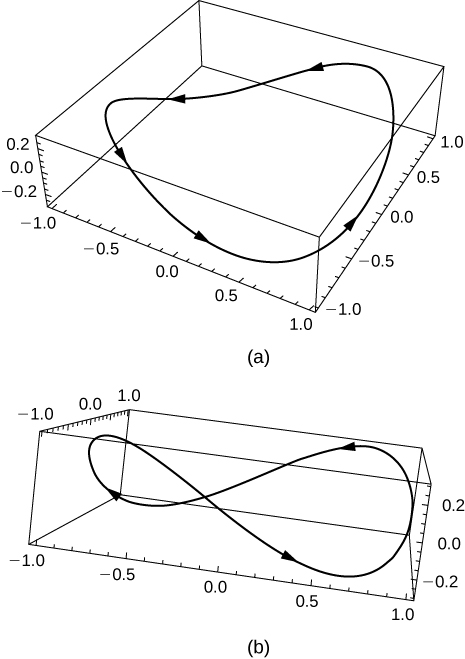
3-39 §3.1 source ↗
Consider the curve described by the vector-valued function
Use the results of the preceding two problems to construct an equation of a path of a roller coaster with more than two turning points (peaks and valleys).
Answer
One possibility is By increasing the coefficient of t in the third component, the number of turning points will increase.
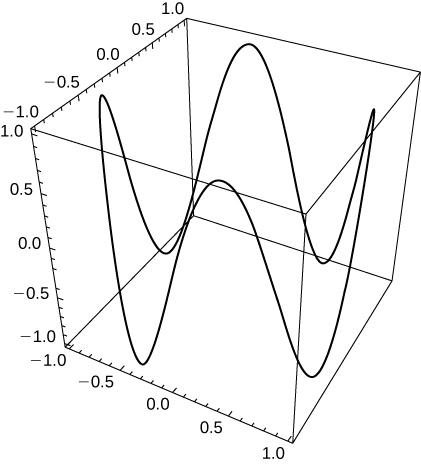
Checkpoint 3.4 §3.2 source ↗
Answer
Checkpoint 3.5 §3.2 source ↗
Calculate the derivative of the function
Answer
Checkpoint 3.6 §3.2 source ↗
Answer
Checkpoint 3.7 §3.2 source ↗
Find the unit tangent vector for the vector-valued function
Answer
Checkpoint 3.8 §3.2 source ↗
Calculate the following integral:
Answer
3-41 §3.2 source ↗
Compute the derivatives of the vector-valued functions.
Answer
3-43 §3.2 source ↗
Compute the derivatives of the vector-valued functions.
A sketch of the graph is shown here. Notice the varying periodic nature of the graph.
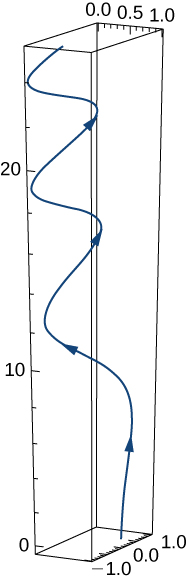
Answer
3-45 §3.2 source ↗
Compute the derivatives of the vector-valued functions.
Answer
3-47 §3.2 source ↗
Compute the derivatives of the vector-valued functions.
Answer
3-49 §3.2 source ↗
Compute the derivatives of the vector-valued functions.
Answer
3-51 §3.2 source ↗
For the following problems, find a tangent vector at the indicated value of t.
Answer
3-53 §3.2 source ↗
For the following problems, find a tangent vector at the indicated value of t.
Answer
3-55 §3.2 source ↗
Find the unit tangent vector for the following parameterized curves.
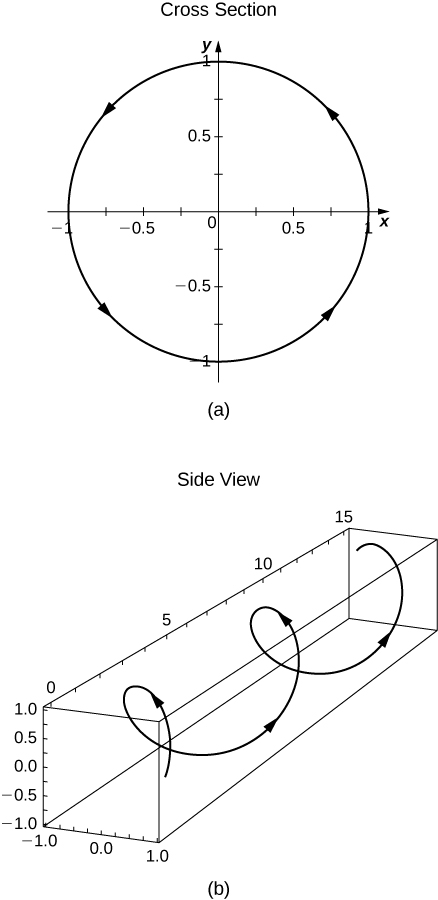
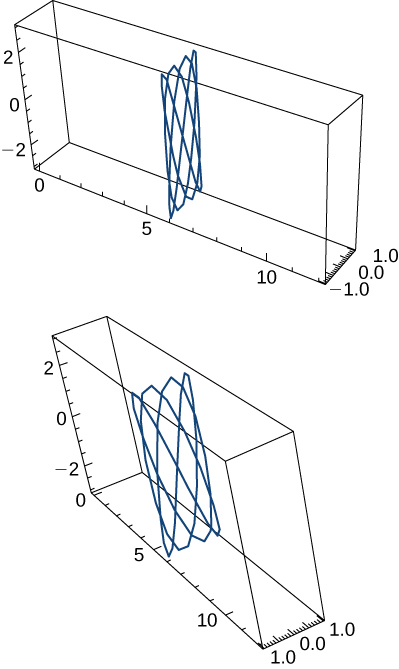
. Two views of this curve are presented here:
Answer
3-57 §3.2 source ↗
Find the unit tangent vector for the following parameterized curves.
Answer
3-59 §3.2 source ↗
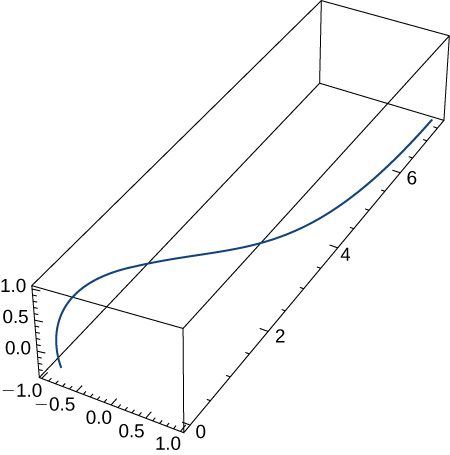
Let and Here is the graph of the function:
Find the following.
Answer
3-61 §3.2 source ↗
Let and Here is the graph of the function:
Find the following.
Answer
3-63 §3.2 source ↗
Let and Here is the graph of the function:
Find the following.
Find
Answer
3-65 §3.2 source ↗
Let and Here is the graph of the function:
Find the following.
The position vector of a particle is
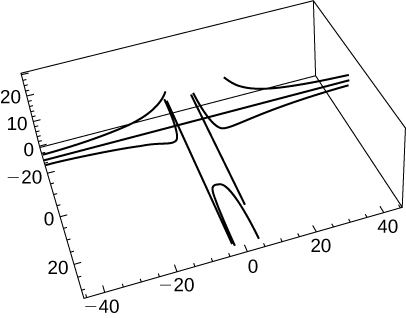
a. Graph the position function and display a view of the graph that illustrates the asymptotic behavior of the function.
b. Find the velocity as t approaches but is not equal to (if it exists).
Answer
a.
b. Undefined or infinite
3-67 §3.2 source ↗
A particle moves on a circular path of radius b according to the function where is the angular velocity,
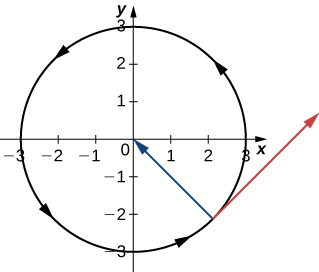
Find the velocity function and show that is always orthogonal to
Answer
3-69 §3.2 source ↗
A particle moves on a circular path of radius b according to the function where is the angular velocity,
Evaluate given
Answer
3-71 §3.2 source ↗
A particle moves on a circular path of radius b according to the function where is the angular velocity,
Evaluate
Answer
3-73 §3.2 source ↗
A particle moves on a circular path of radius b according to the function where is the angular velocity,
Show that if the speed of a particle traveling along a curve represented by a vector-valued function is constant, then the velocity function is always perpendicular to the acceleration function.
Answer
The last statement implies that the velocity and acceleration are perpendicular or orthogonal.
3-75 §3.2 source ↗
A particle moves on a circular path of radius b according to the function where is the angular velocity,
Given find the velocity and the speed at any time.
Answer
3-77 §3.2 source ↗
A particle moves on a circular path of radius b according to the function where is the angular velocity,
Find an equation of the tangent line to the curve at
Answer
3-79 §3.2 source ↗
A particle moves on a circular path of radius b according to the function where is the angular velocity,
Locate the highest point on the curve and give the value of the function at this point.
Answer
3-81 §3.2 source ↗
The position vector for a particle is The graph is shown here:
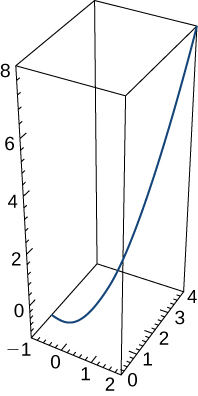
Find the speed of the particle at time sec.
Answer
3-83 §3.2 source ↗
A particle travels along the path of a helix with the equation See the graph presented here:
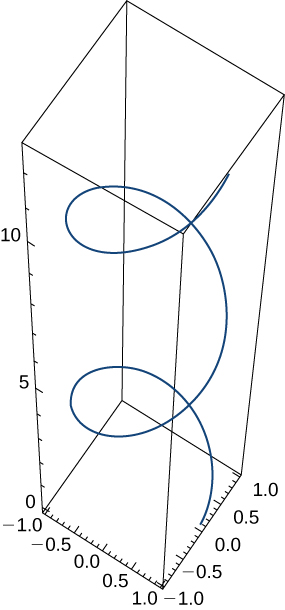
Find the following:
Velocity of the particle at any time
Answer
3-85 §3.2 source ↗
A particle travels along the path of a helix with the equation See the graph presented here:
Find the following:
Acceleration of the particle at any time
Answer
3-87 §3.2 source ↗
A particle travels along the path of an ellipse with the equation Find the following:
Velocity of the particle
Answer
3-89 §3.2 source ↗
A particle travels along the path of an ellipse with the equation Find the following:
Acceleration of the particle at
Answer
3-91 §3.2 source ↗
Given the vector-valued function (graph is shown here), find the following:
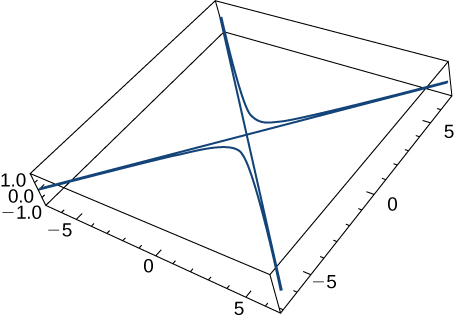
Speed
Answer
3-93 §3.2 source ↗
Given the vector-valued function (graph is shown here), find the following:
Find the minimum speed of a particle traveling along the curve
Answer
3-95 §3.2 source ↗
Given and find the following:
Answer
3-97 §3.2 source ↗
Find the unit tangent vector T(t) for the following vector-valued functions.
The graph is shown here:
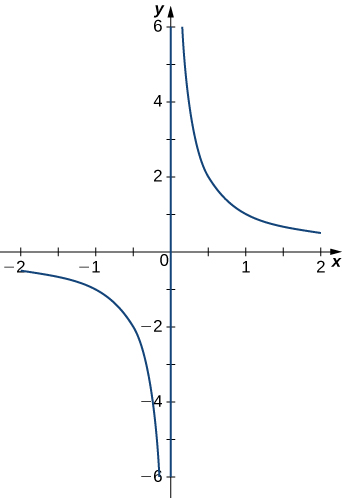
Answer
3-99 §3.2 source ↗
Find the unit tangent vector T(t) for the following vector-valued functions.
Answer
3-101 §3.2 source ↗
Evaluate the following integrals:
where
Answer
Checkpoint 3.9 §3.3 source ↗
Calculate the arc length of the parameterized curve
Answer
Checkpoint 3.10 §3.3 source ↗
Find the arc-length function for the helix
Then, use the relationship between the arc length and the parameter t to find an arc-length parameterization of
Answer
or Substituting this into gives
Checkpoint 3.11 §3.3 source ↗
Find the curvature of the curve defined by the function
at the point
Answer
Checkpoint 3.12 §3.3 source ↗
Answer
Checkpoint 3.13 §3.3 source ↗
Answer
At the point the curvature is equal to 4. Therefore, the radius of the osculating circle is
A graph of this function appears next:
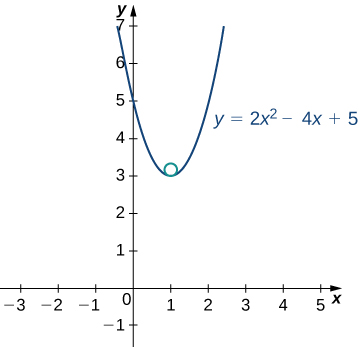
The vertex of this parabola is located at the point Furthermore, the center of the osculating circle is directly above the vertex. Therefore, the coordinates of the center are The equation of the osculating circle is
3-103 §3.3 source ↗
Find the arc length of the curve on the given interval.
Answer
3-105 §3.3 source ↗
Find the arc length of the curve on the given interval.
Answer
3-107 §3.3 source ↗
Find the arc length of the curve on the given interval.
Find the length of one turn of the helix given by
Answer
3-109 §3.3 source ↗
Find the arc length of the curve on the given interval.
A particle travels once around a circle with the equation of motion Find the distance traveled around the circle by the particle.
Answer
3-111 §3.3 source ↗
Find the arc length of the curve on the given interval.
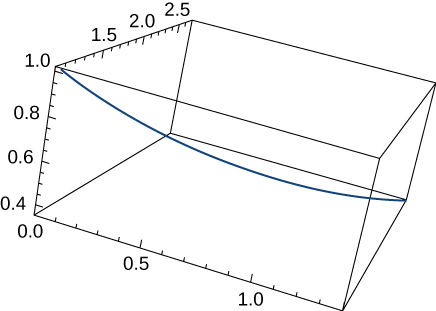
Find the length of the curve over the interval The graph is shown here:
Answer
3-113 §3.3 source ↗
Find the arc length of the curve on the given interval.
The position function for a particle is Find the unit tangent vector and the unit normal vector at
Answer
3-115 §3.3 source ↗
Find the arc length of the curve on the given interval.
Given determine the tangent vector
Answer
3-117 §3.3 source ↗
Find the arc length of the curve on the given interval.
Given find the unit normal vector evaluated at
Answer
3-119 §3.3 source ↗
Find the arc length of the curve on the given interval.
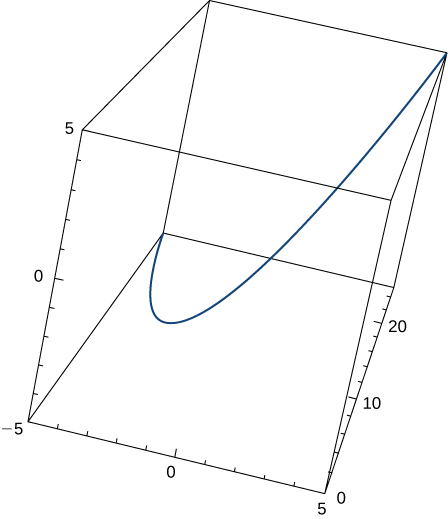
Given find the unit tangent vector The graph is shown here:
Answer
3-121 §3.3 source ↗
Find the arc length of the curve on the given interval.
Find the unit tangent vector for
Answer
3-123 §3.3 source ↗
Find the arc length of the curve on the given interval.
Find for the curve
Answer
3-125 §3.3 source ↗
Find the arc length of the curve on the given interval.
Find the unit normal vector for
Answer
3-127 §3.3 source ↗
Find the arc length of the curve on the given interval.
Find the arc-length function for the line segment given by Write r as a parameter of s.
Answer
3-129 §3.3 source ↗
Find the arc length of the curve on the given interval.
Parameterize the curve using the arc-length parameter s, at the point at which for
Answer
3-131 §3.3 source ↗
Find the arc length of the curve on the given interval.
Find the x-coordinate at which the curvature of the curve is a maximum value.
Answer
3-133 §3.3 source ↗
Find the arc length of the curve on the given interval.
Find the curvature for the curve at the point
Answer
3-135 §3.3 source ↗
Find the arc length of the curve on the given interval.
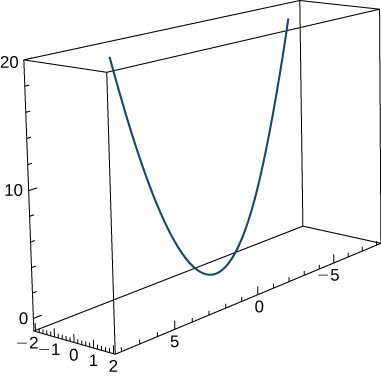
Find the curvature of the curve The graph is shown here:
Answer
3-137 §3.3 source ↗
Find the arc length of the curve on the given interval.
Find the curvature of at point
Answer
3-139 §3.3 source ↗
Find the arc length of the curve on the given interval.
What happens to the curvature as for the curve
Answer
3-141 §3.3 source ↗
Find the arc length of the curve on the given interval.
Find the equations of the normal plane and the osculating plane of the curve at point
Answer
3-143 §3.3 source ↗
Find the arc length of the curve on the given interval.
Find the equation for the osculating plane at point on the curve
Answer
3-145 §3.3 source ↗
Find the arc length of the curve on the given interval.
Find the curvature at each point on the hyperbola
Answer
3-147 §3.3 source ↗
Find the arc length of the curve on the given interval.
Find the radius of curvature of at point
Answer
3-149 §3.3 source ↗
A particle moves along the plane curve C described by Solve the following problems.
Find the length of the curve over the interval
Answer
3-151 §3.3 source ↗
A particle moves along the plane curve C described by Solve the following problems.
Describe the curvature as t increases from to
Answer
3-153 §3.3 source ↗
The surface of a large cup is formed by revolving the graph of the function from to about the y-axis (measured in centimeters).
Find the curvature of the generating curve as a function of x.
Answer
Checkpoint 3.14 §3.4 source ↗
Answer
The units for velocity and speed are feet per second, and the units for acceleration are feet per second squared.
Checkpoint 3.15 §3.4 source ↗
An object moves in a path defined by the vector-valued function where t measures time in seconds.
a. Find and as functions of t.
b. Find and at time
Answer
a.
b.
Checkpoint 3.16 §3.4 source ↗
Answer
Checkpoint 3.17 §3.4 source ↗
Answer
3-155 §3.4 source ↗
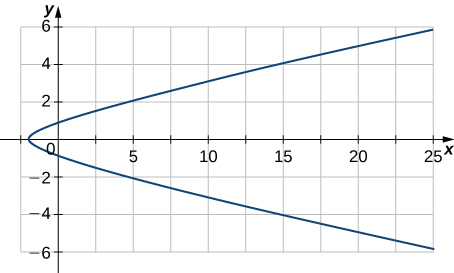
Given find the velocity of a particle moving along this curve.
Answer
3-157 §3.4 source ↗
Given the following position functions, find the velocity, acceleration, and speed in terms of the parameter t.
Answer
3-159 §3.4 source ↗
Given the following position functions, find the velocity, acceleration, and speed in terms of the parameter t.
Answer
3-161 §3.4 source ↗
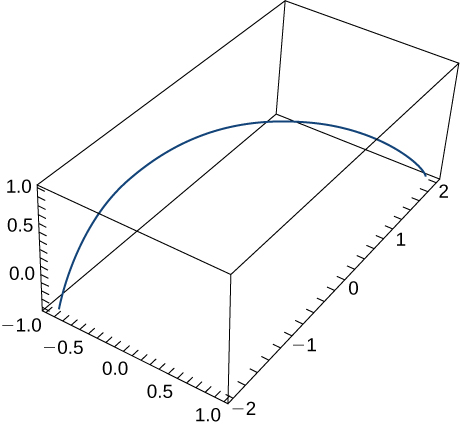
Find the velocity, acceleration, and speed of a particle with the given position function.
. The graph is shown here:
Answer
3-163 §3.4 source ↗
Find the velocity, acceleration, and speed of a particle with the given position function.
The position function of an object is given by At what time is the speed a minimum?
Answer
3-165 §3.4 source ↗
Consider the motion of a point on the circumference of a rolling circle. As the circle rolls, it generates the cycloid where is the angular velocity of the circle:
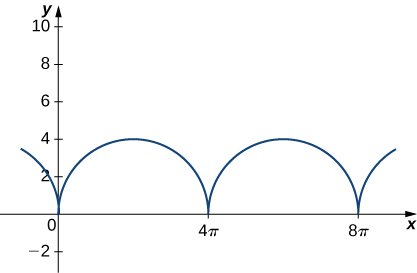
Find the equations for the velocity, acceleration, and speed of the particle at any time.
Answer
3-167 §3.4 source ↗
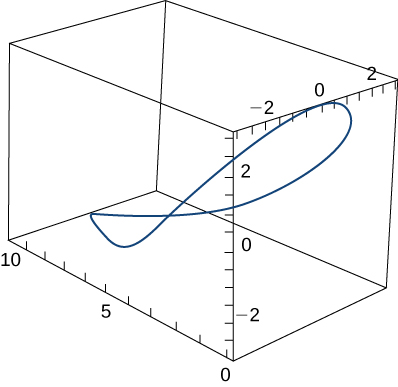
A person on a hang glider is spiraling upward as a result of the rapidly rising air on a path having position vector The path is similar to that of a helix, although it is not a helix. The graph is shown here:
Find the following quantities:
The glider’s speed at any time
Answer
3-169 §3.4 source ↗
Given that is the position vector of a moving particle, find the following quantities:
The velocity of the particle
Answer
3-171 §3.4 source ↗
Given that is the position vector of a moving particle, find the following quantities:
The acceleration of the particle
Answer
3-173 §3.4 source ↗
A projectile is shot in the air from ground level with an initial velocity of 500 m/sec at an angle of 60° with the horizontal. The graph is shown here:
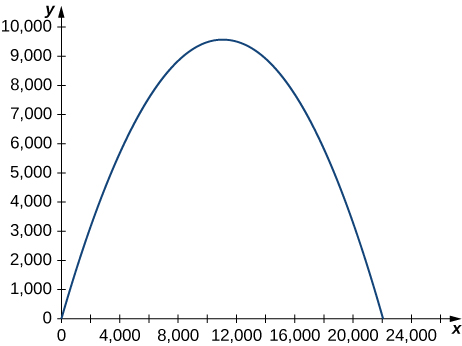
At what time does the projectile reach maximum height?
Answer
3-175 §3.4 source ↗
A projectile is shot in the air from ground level with an initial velocity of 500 m/sec at an angle of 60° with the horizontal. The graph is shown here:
At what time is the maximum range of the projectile attained?
Answer
3-177 §3.4 source ↗
A projectile is shot in the air from ground level with an initial velocity of 500 m/sec at an angle of 60° with the horizontal. The graph is shown here:
What is the total flight time of the projectile?
Answer
3-179 §3.4 source ↗
A projectile is fired at a height of 1.5 m above the ground with an initial velocity of 100 m/sec and at an angle of 30° above the horizontal. Use this information to answer the following questions:
Determine the range of the projectile.
Answer
3-181 §3.4 source ↗
A projectile is fired at a height of 1.5 m above the ground with an initial velocity of 100 m/sec and at an angle of 30° above the horizontal. Use this information to answer the following questions:
A projectile is fired from ground level at an angle of 8° with the horizontal. The projectile is to have a range of 50 m. Find the minimum velocity necessary to achieve this range.
Answer
3-183 §3.4 source ↗
A projectile is fired at a height of 1.5 m above the ground with an initial velocity of 100 m/sec and at an angle of 30° above the horizontal. Use this information to answer the following questions:
The acceleration of an object is given by The velocity at sec is and the position of the object at sec is Find the object’s position at any time.
Answer
3-185 §3.4 source ↗
A projectile is fired at a height of 1.5 m above the ground with an initial velocity of 100 m/sec and at an angle of 30° above the horizontal. Use this information to answer the following questions:
Find the tangential and normal components of acceleration for at
Answer
3-187 §3.4 source ↗
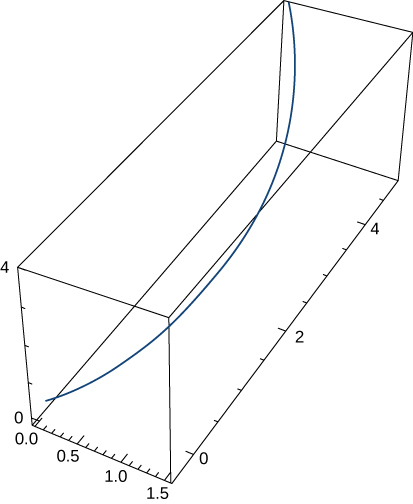
For each of the following problems, find the tangential and normal components of acceleration.
The graph is shown here:
Answer
3-189 §3.4 source ↗
For each of the following problems, find the tangential and normal components of acceleration.
Answer
3-191 §3.4 source ↗
For each of the following problems, find the tangential and normal components of acceleration.
Answer
3-193 §3.4 source ↗
For each of the following problems, find the tangential and normal components of acceleration.
Answer
3-195 §3.4 source ↗
For each of the following problems, find the tangential and normal components of acceleration.
The force on a particle is given by The particle is located at point at The initial velocity of the particle is given by Find the path of the particle of mass m. (Recall,
Answer
3-197 §3.4 source ↗
For each of the following problems, find the tangential and normal components of acceleration.
Using Kepler’s laws, it can be shown that is the minimum speed needed when so that an object will escape from the pull of a central force resulting from mass M. Use this result to find the minimum speed when for a space capsule to escape from the gravitational pull of Earth if the probe is at an altitude of 300 km above Earth’s surface.
Answer
3-201 §3.4 source ↗
Suppose that the position function for an object in three dimensions is given by the equation
Find the tangential and normal components of acceleration when
Answer
3-203 §3.R source ↗
True or False? Justify your answer with a proof or a counterexample.
Answer
3-205 §3.R source ↗
True or False? Justify your answer with a proof or a counterexample.
The speed of a particle with a position function is
Answer
3-207 §3.R source ↗
Find the domains of the vector-valued functions.
Answer
3-209 §3.R source ↗
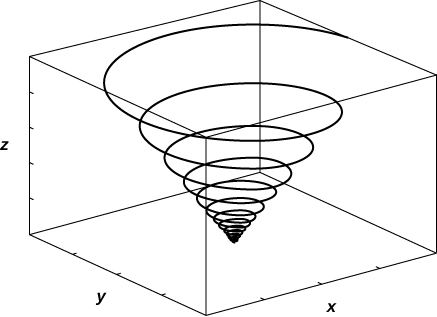
Sketch the curves for the following vector equations. Use a calculator if needed.
[T]
Answer
3-211 §3.R source ↗
Find a vector function that describes the following curves.
Intersection of the cone and plane
Answer
3-213 §3.R source ↗
Find the derivatives of and Find the unit tangent vector.
Answer
3-215 §3.R source ↗
Evaluate the following integrals.
with
Answer
3-217 §3.R source ↗
Find the length for the following curves.
for
Answer
3-219 §3.R source ↗
Reparameterize the following functions with respect to their arc length measured from in direction of increasing
Answer
3-221 §3.R source ↗
Find the curvature for the following vector functions.
Answer
3-223 §3.R source ↗
Find the curvature for the following vector functions.
Find the tangential and normal acceleration components with the position vector
Answer
3-225 §3.R source ↗
Find the curvature for the following vector functions.
The position of a particle is given by where is measured in seconds and is measured in meters. Find the velocity, acceleration, and speed functions. What are the position, velocity, speed, and acceleration of the particle at 1 sec?
Answer
3-227 §3.R source ↗
The following problems consider launching a cannonball out of a cannon. The cannonball is shot out of the cannon with an angle and initial velocity The only force acting on the cannonball is gravity, so we begin with a constant acceleration
Find the position vector and the parametric representation for the position.
Answer
Loading chapter 4…
Problems and answers are adapted from Calculus Volume 3 by Gilbert Strang and Edwin “Jed” Herman, OpenStax, and are used under the CC BY-NC-SA 4.0 licence. Access for free at https://openstax.org/books/calculus-volume-3/pages/1-introduction. Illustrations: Copyright Rice University, OpenStax, under CC BY-NC-SA 4.0 license. This adaptation is released under the same licence, is non-commercial, and is neither affiliated with nor endorsed by OpenStax or Rice University.