Every problem in the chapter beside the book’s answer, a chapter at a time as you scroll.
Chapter 20: Organic Chemistry
42 problems · 53 figuresExample 20.1 §20.1 source ↗
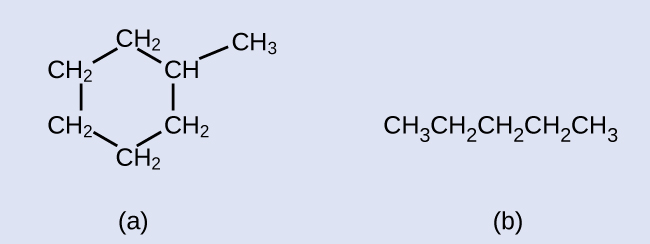
Answer
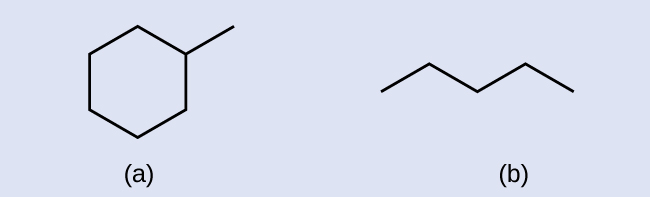
Example 20.2 §20.1 source ↗
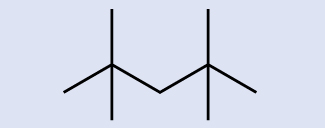
Answer
Example 20.3 §20.1 source ↗

Answer
Example 20.4 §20.1 source ↗
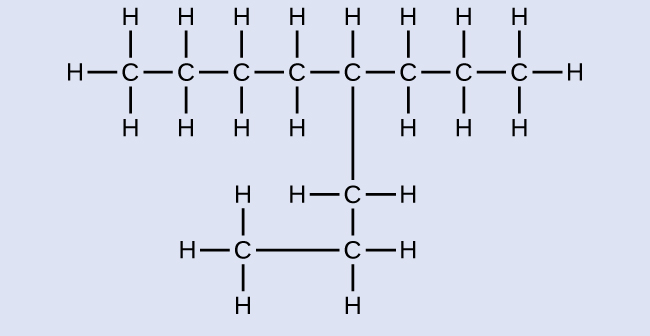
Answer
Example 20.5 §20.1 source ↗

Answer
Example 20.6 §20.1 source ↗

Answer
Example 20.7 §20.1 source ↗
Answer
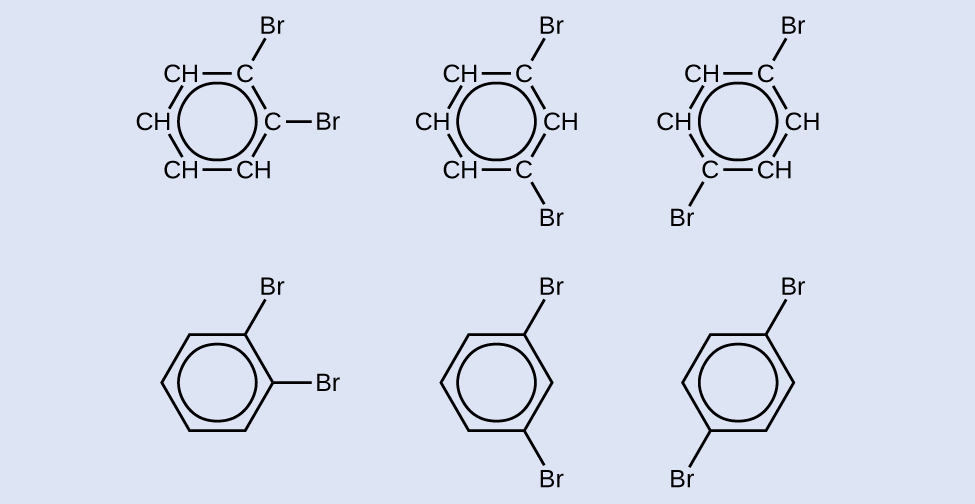
Example 20.8 §20.2 source ↗
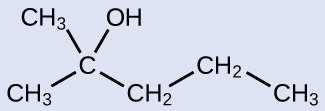
Answer
Example 20.9 §20.2 source ↗
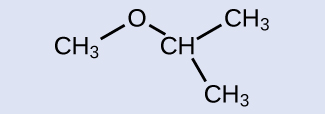
Answer
Example 20.10 §20.3 source ↗

There is no need to calculate oxidation states in this case; instead, just compare the types of atoms bonded to the marked carbon atoms:
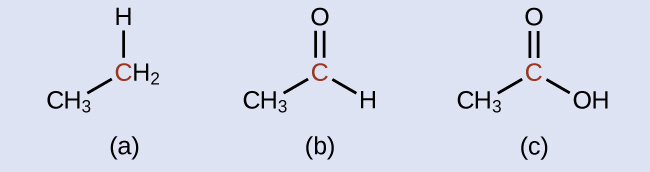
Answer
20-1 §20.1 source ↗
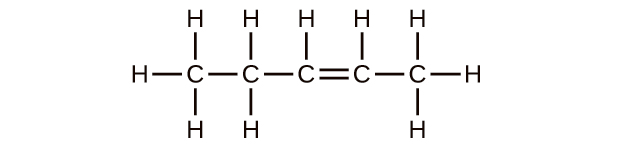
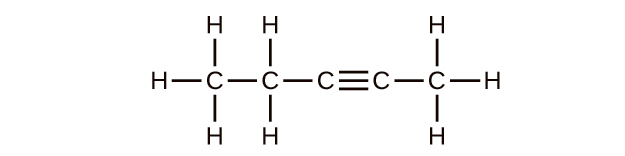
Write the chemical formula and Lewis structure of the following, each of which contains five carbon atoms:
(a) an alkane
(b) an alkene
(c) an alkyne
Answer
There are several sets of answers; one is:
(a) C5H12

(b) C5H10
(c) C5H8
20-3 §20.1 source ↗
Answer
20-5 §20.1 source ↗
Answer
20-7 §20.1 source ↗
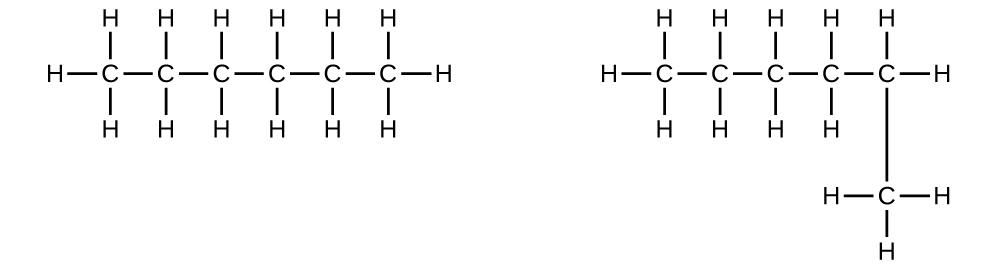
Explain why these two molecules are not isomers:
Answer
20-9 §20.1 source ↗
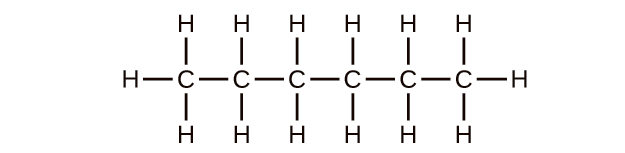
Write the Lewis structure and molecular formula for each of the following hydrocarbons:
(a) hexane
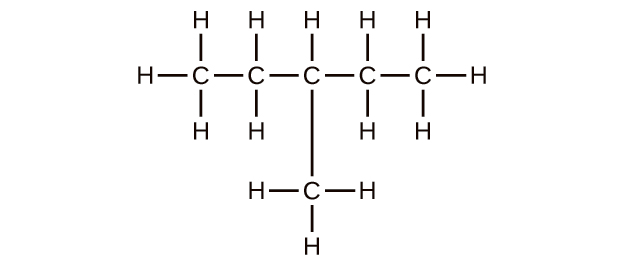
(b) 3-methylpentane
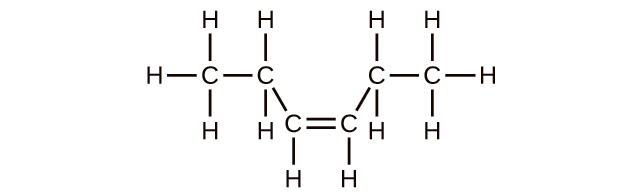
(c) cis-3-hexene
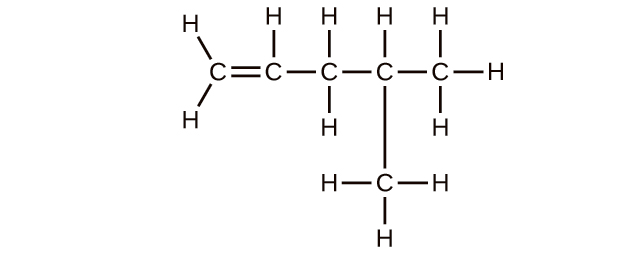
(d) 4-methyl-1-pentene
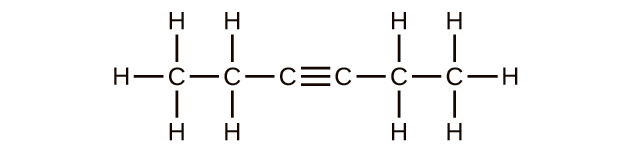
(e) 3-hexyne
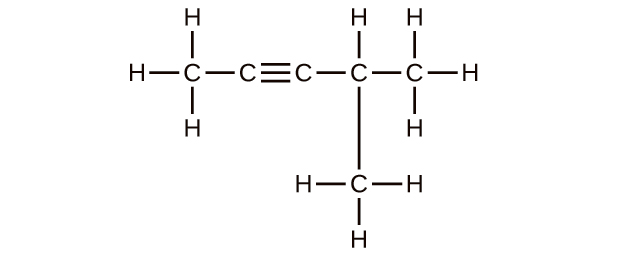
(f) 4-methyl-2-pentyne
Answer
(a) C6H14
(b) C6H14
(c) C6H12
(d) C6H12
(e) C6H10
(f) C6H10
20-11 §20.1 source ↗
Give the complete IUPAC name for each of the following compounds:
(a) CH3CH2CBr2CH3
(b) (CH3)3CCl
(c)

(d)

(e)

(f)

(g)
Answer
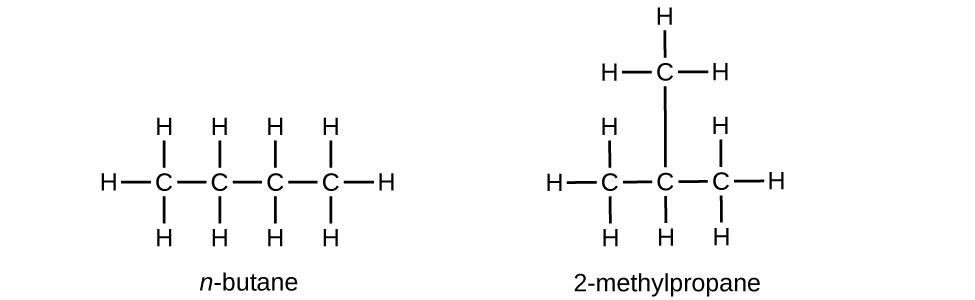
20-13 §20.1 source ↗
Answer
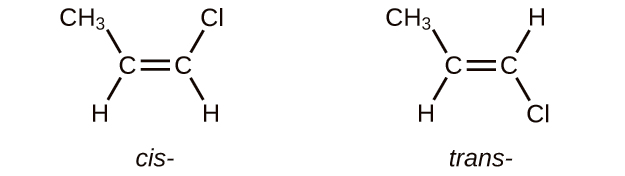
20-15 §20.1 source ↗
Answer
20-17 §20.1 source ↗
Isooctane is the common name of the isomer of C8H18 used as the standard of 100 for the gasoline octane rating:

(a) What is the IUPAC name for the compound?
(b) Name the other isomers that contain a five-carbon chain with three methyl substituents.
Answer
(a) 2,2,4-trimethylpentane; (b) 2,2,3-trimethylpentane, 2,3,4-trimethylpentane, and 2,3,3-trimethylpentane:

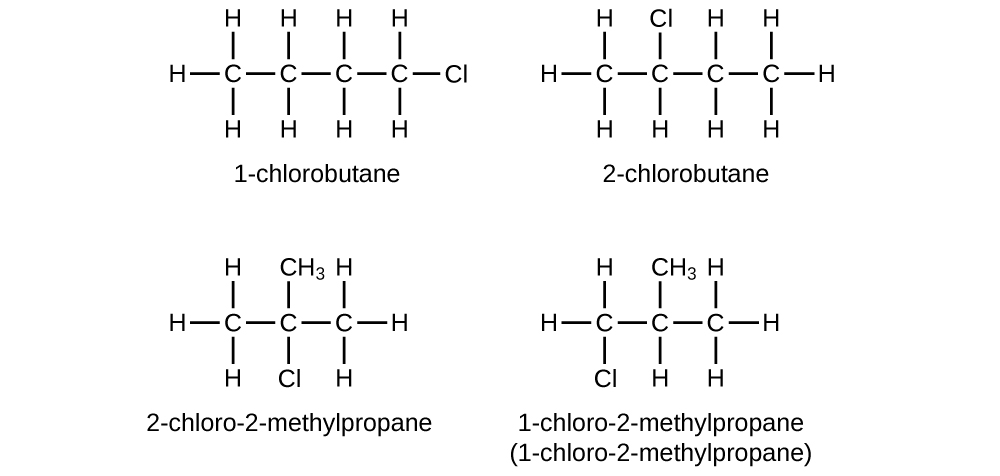
20-19 §20.1 source ↗
Answer
20-21 §20.1 source ↗
Answer
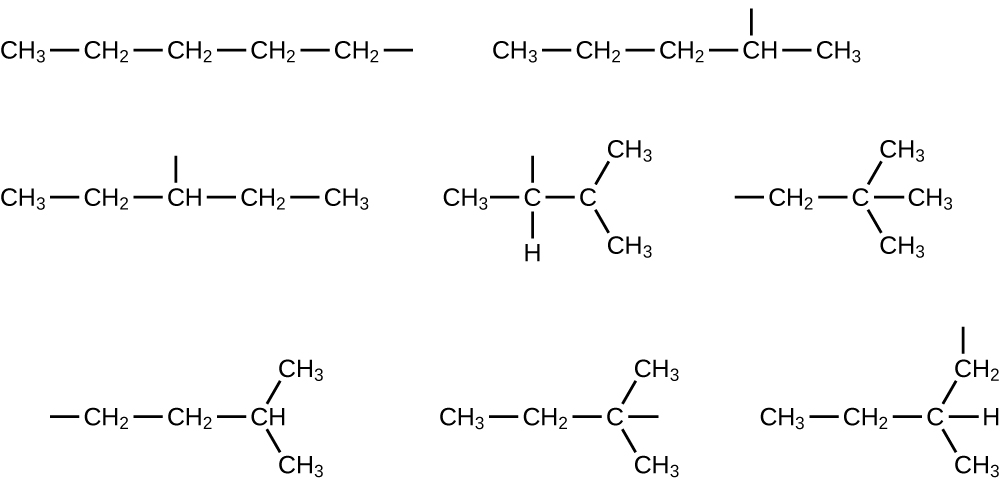
In the following, the carbon backbone and the appropriate number of hydrogen atoms are shown in condensed form:
20-23 §20.1 source ↗
Benzene is one of the compounds used as an octane enhancer in unleaded gasoline. It is manufactured by the catalytic conversion of acetylene to benzene:
Draw Lewis structures for these compounds, with resonance structures as appropriate, and determine the hybridization of the carbon atoms in each.
Answer
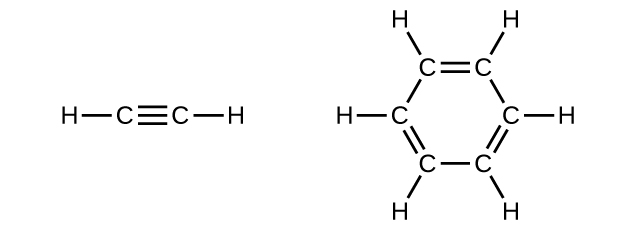
In acetylene, the bonding uses sp hybrids on carbon atoms and s orbitals on hydrogen atoms. In benzene, the carbon atoms are sp2 hybridized.
20-25 §20.1 source ↗
Write two complete, balanced equations for each of the following reactions, one using condensed formulas and one using Lewis structures.
(a) 1 mol of 1-butyne reacts with 2 mol of iodine.
(b) Pentane is burned in air.
Answer
(a)

(b)

20-27 §20.1 source ↗
Answer
20-29 §20.1 source ↗
Ethylene can be produced by the pyrolysis of ethane:
How many kilograms of ethylene is produced by the pyrolysis of 1.000 103 kg of ethane, assuming a 100.0% yield?
Answer
20-31 §20.2 source ↗
Write condensed formulas and provide IUPAC names for the following compounds:
(a) ethyl alcohol (in beverages)
(b) methyl alcohol (used as a solvent, for example, in shellac)
(c) ethylene glycol (antifreeze)
(d) isopropyl alcohol (used in rubbing alcohol)
(e) glycerine
Answer
20-33 §20.2 source ↗
Give the complete IUPAC name and the common name for each of the following compounds:
(a)

(b)

(c)

Answer
20-35 §20.2 source ↗
Answer
20-37 §20.2 source ↗
MTBE, Methyl tert-butyl ether, CH3OC(CH3)3, is used as an oxygen source in oxygenated gasolines. MTBE is manufactured by reacting 2-methylpropene with methanol.
(a) Using Lewis structures, write the chemical equation representing the reaction.
(b) What volume of methanol, density 0.7915 g/mL, is required to produce exactly 1000 kg of MTBE, assuming a 100% yield?
Answer
(a)

(b) 4.593 102 L
20-39 §20.2 source ↗
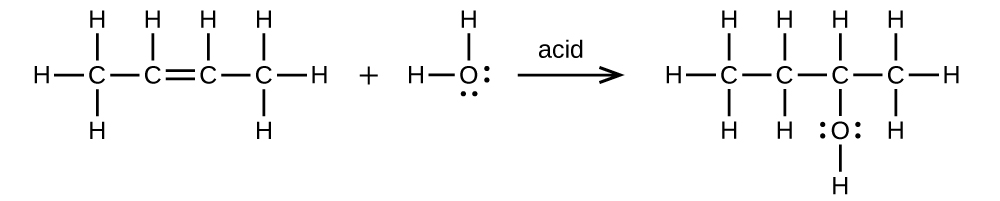
Write two complete balanced equations for each of the following reactions, one using condensed formulas and one using Lewis structures.
(a) 2-butene is treated with water in dilute acid
(b) ethanol is dehydrated to yield ethene
Answer
(a)
(b)

20-41 §20.3 source ↗
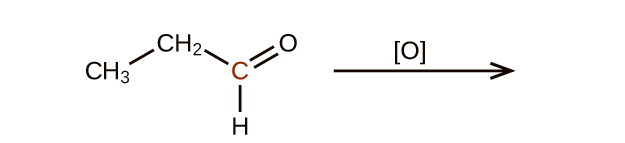
Predict the products of oxidizing the molecules shown in this problem. In each case, identify the product that will result from the minimal increase in oxidation state for the highlighted carbon atom:
(a)
(b)

(c)

Answer
(a)

(b)

(c)

20-43 §20.3 source ↗
Answer
20-45 §20.3 source ↗
Answer
20-47 §20.3 source ↗
Write a condensed structural formula, such as CH3CH3, and describe the molecular geometry at each carbon atom.
(a) 2-propanol
(b) acetone
(c) dimethyl ether
(d) acetic acid
(e) 3-methyl-1-hexene
Answer
20-49 §20.3 source ↗
Answer
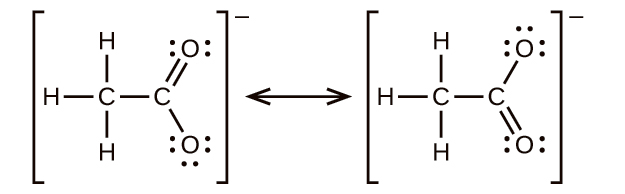
20-51 §20.3 source ↗
Write two complete balanced equations for each of the following reactions, one using condensed formulas and one using Lewis structures.
(a) 1-butanol reacts with acetic acid
(b) propionic acid is poured onto solid calcium carbonate
Answer
(a)

(b)

20-53 §20.3 source ↗
Answer
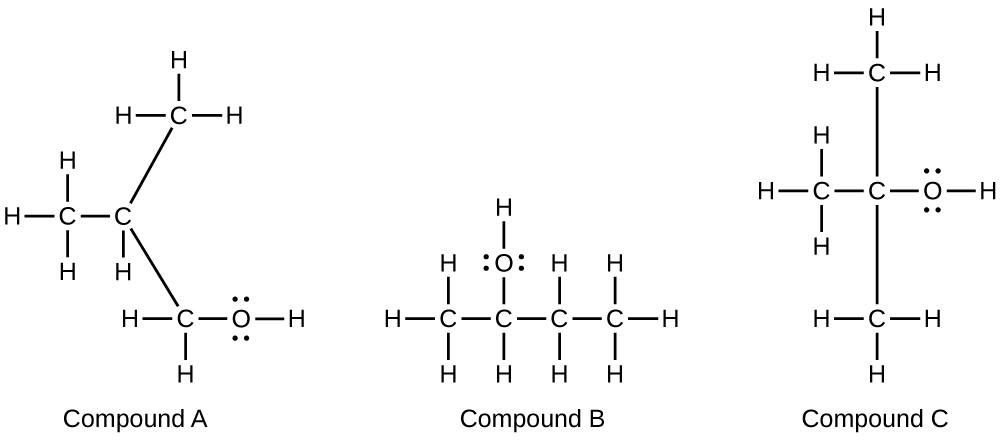
20-55 §20.4 source ↗
Answer
20-57 §20.4 source ↗
Answer
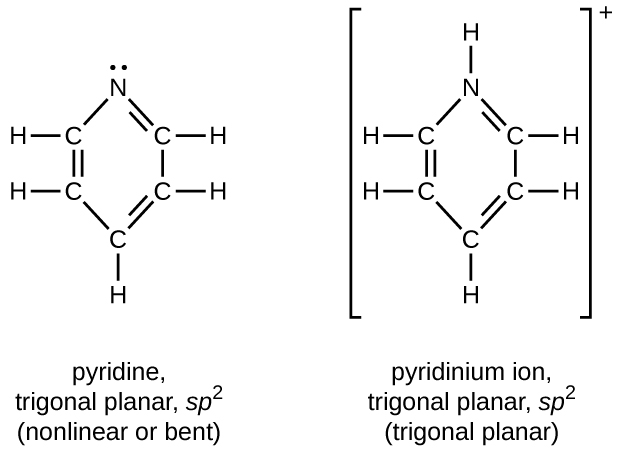
20-59 §20.4 source ↗
Write two complete balanced equations for the following reaction, one using condensed formulas and one using Lewis structures.
Methyl amine is added to a solution of HCl.
Answer

20-61 §20.4 source ↗
Answer
20-63 §20.4 source ↗
Answer
Loading chapter 21…
Problems and answers are adapted from Chemistry 2e by Paul Flowers, Klaus Theopold, Richard Langley and William R. Robinson, OpenStax, and are used under the CC BY-NC-SA 4.0 licence. Access for free at https://openstax.org/books/chemistry-2e/pages/1-introduction. Illustrations: Copyright Rice University, OpenStax, under CC BY-NC-SA 4.0 license. This adaptation is released under the same licence, is non-commercial, and is neither affiliated with nor endorsed by OpenStax or Rice University.