Every problem in the chapter beside the book’s answer, a chapter at a time as you scroll.
Chapter 3: Composition of Substances and Solutions
65 problems · 4 figuresExample 3.1 §3.1 source ↗
Answer
Example 3.2 §3.1 source ↗
Answer
Example 3.3 §3.1 source ↗
Answer
Example 3.4 §3.1 source ↗
Answer
Example 3.5 §3.1 source ↗
Answer
Example 3.6 §3.1 source ↗
Answer
Example 3.7 §3.1 source ↗
Answer
Example 3.8 §3.1 source ↗
Answer
Example 3.9 §3.2 source ↗
Answer
Example 3.10 §3.2 source ↗
Answer
Example 3.11 §3.2 source ↗
Answer
Example 3.12 §3.2 source ↗
Answer
Example 3.13 §3.2 source ↗
Answer
Example 3.14 §3.3 source ↗
Answer
Example 3.15 §3.3 source ↗
Answer
Example 3.16 §3.3 source ↗
Answer
Example 3.17 §3.3 source ↗
Answer
Example 3.18 §3.3 source ↗
Answer
Example 3.19 §3.3 source ↗
Answer
Example 3.20 §3.3 source ↗
Answer
Example 3.21 §3.3 source ↗
Answer
Example 3.22 §3.4 source ↗
Answer
Example 3.23 §3.4 source ↗
Answer
Example 3.24 §3.4 source ↗
Answer
Example 3.25 §3.4 source ↗
Answer
3-1 §3.1 source ↗
What is the total mass (amu) of carbon in each of the following molecules?
(a) CH4
(b) CHCl3
(c) C12H10O6
(d) CH3CH2CH2CH2CH3
Answer
3-3 §3.1 source ↗
Calculate the molecular or formula mass of each of the following:
(a) P4
(b) H2O
(c) Ca(NO3)2
(d) CH3CO2H (acetic acid)
(e) C12H22O11 (sucrose, cane sugar)
Answer
3-5 §3.1 source ↗
Determine the molecular mass of the following compounds:
(a)
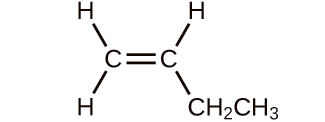
(b)
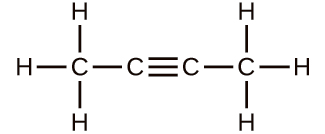
(c)
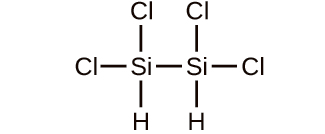
(d)
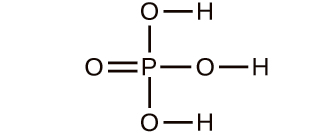
Answer
3-7 §3.1 source ↗
Answer
3-9 §3.1 source ↗
Answer
3-11 §3.1 source ↗
Answer
3-13 §3.1 source ↗
Calculate the molar mass of each of the following:
(a) S8
(b) C5H12
(c) Sc2(SO4)3
(d) CH3COCH3 (acetone)
(e) C6H12O6 (glucose)
Answer
3-15 §3.1 source ↗
Calculate the molar mass of each of the following:
(a) the anesthetic halothane, C2HBrClF3
(b) the herbicide paraquat, C12H14N2Cl2
(c) caffeine, C8H10N4O2
(d) urea, CO(NH2)2
(e) a typical soap, C17H35CO2Na
Answer
3-17 §3.1 source ↗
Determine the mass of each of the following:
(a) 0.0146 mol KOH
(b) 10.2 mol ethane, C2H6
(c) 1.6 10−3 mol Na2 SO4
(d) 6.854 103 mol glucose, C6 H12 O6
(e) 2.86 mol Co(NH3)6Cl3
Answer
3-19 §3.1 source ↗
Determine the mass of each of the following:
(a) 2.345 mol LiCl
(b) 0.0872 mol acetylene, C2H2
(c) 3.3 10−2 mol Na2CO3
(d) 1.23 103 mol fructose, C6H12O6
(e) 0.5758 mol FeSO4(H2O)7
Answer
3-21 §3.1 source ↗
Determine the mass in grams of each of the following:
(a) 0.600 mol of oxygen atoms
(b) 0.600 mol of oxygen molecules, O2
(c) 0.600 mol of ozone molecules, O3
Answer
3-23 §3.1 source ↗
Answer
3-25 §3.1 source ↗
Answer
3-27 §3.1 source ↗
Answer
3-29 §3.1 source ↗
Answer
3-31 §3.1 source ↗
Which of the following represents the least number of molecules?
(a) 20.0 g of H2O (18.02 g/mol)
(b) 77.0 g of CH4 (16.06 g/mol)
(c) 68.0 g of C3H6 (42.08 g/mol)
(d) 100.0 g of N2O (44.02 g/mol)
(e) 84.0 g of HF (20.01 g/mol)
Answer
3-33 §3.2 source ↗
Calculate the following to four significant figures:
(a) the percent composition of ammonia, NH3
(b) the percent composition of photographic fixer solution (“hypo”), Na2S2O3
(c) the percent of calcium ion in Ca3(PO4)2
Answer
3-35 §3.2 source ↗
Answer
3-37 §3.2 source ↗
Determine the empirical formulas for compounds with the following percent compositions:
(a) 15.8% carbon and 84.2% sulfur
(b) 40.0% carbon, 6.7% hydrogen, and 53.3% oxygen
Answer
3-39 §3.2 source ↗
Answer
3-41 §3.2 source ↗
Answer
3-43 §3.2 source ↗
Answer
3-45 §3.3 source ↗
Answer
3-47 §3.3 source ↗
Determine the molarity for each of the following solutions:
(a) 0.444 mol of CoCl2 in 0.654 L of solution
(b) 98.0 g of phosphoric acid, H3PO4, in 1.00 L of solution
(c) 0.2074 g of calcium hydroxide, Ca(OH)2, in 40.00 mL of solution
(d) 10.5 kg of Na2SO4·10H2O in 18.60 L of solution
(e) 7.0 10−3 mol of I2 in 100.0 mL of solution
(f) 1.8 104 mg of HCl in 0.075 L of solution
Answer
3-49 §3.3 source ↗
Consider this question: What is the mass of the solute in 0.500 L of 0.30 M glucose, C6H12O6, used for intravenous injection?
(a) Outline the steps necessary to answer the question.
(b) Answer the question.
Answer
3-51 §3.3 source ↗
Calculate the number of moles and the mass of the solute in each of the following solutions:
(a) 2.00 L of 18.5 M H2SO4, concentrated sulfuric acid
(b) 100.0 mL of 3.8 10−6 M NaCN, the minimum lethal concentration of sodium cyanide in blood serum
(c) 5.50 L of 13.3 M H2CO, the formaldehyde used to “fix” tissue samples
(d) 325 mL of 1.8 10−6 M FeSO4, the minimum concentration of iron sulfate detectable by taste in drinking water
Answer
3-53 §3.3 source ↗
Consider this question: What is the molarity of KMnO4 in a solution of 0.0908 g of KMnO4 in 0.500 L of solution?
(a) Outline the steps necessary to answer the question.
(b) Answer the question.
Answer
3-55 §3.3 source ↗
Calculate the molarity of each of the following solutions:
(a) 0.195 g of cholesterol, C27H46O, in 0.100 L of serum, the average concentration of cholesterol in human serum
(b) 4.25 g of NH3 in 0.500 L of solution, the concentration of NH3 in household ammonia
(c) 1.49 kg of isopropyl alcohol, C3H7OH, in 2.50 L of solution, the concentration of isopropyl alcohol in rubbing alcohol
(d) 0.029 g of I2 in 0.100 L of solution, the solubility of I2 in water at 20 °C
Answer
3-57 §3.3 source ↗
Answer
3-59 §3.3 source ↗
Answer
3-61 §3.3 source ↗
Answer
3-63 §3.3 source ↗
What is the molarity of the diluted solution when each of the following solutions is diluted to the given final volume?
(a) 1.00 L of a 0.250-M solution of Fe(NO3)3 is diluted to a final volume of 2.00 L
(b) 0.5000 L of a 0.1222-M solution of C3H7OH is diluted to a final volume of 1.250 L
(c) 2.35 L of a 0.350-M solution of H3PO4 is diluted to a final volume of 4.00 L
(d) 22.50 mL of a 0.025-M solution of C12H22O11 is diluted to 100.0 mL
Answer
3-65 §3.3 source ↗
Answer
3-67 §3.3 source ↗
Answer
3-69 §3.4 source ↗
Consider this question: What mass of a concentrated solution of nitric acid (68.0% HNO3 by mass) is needed to prepare 400.0 g of a 10.0% solution of HNO3 by mass?
(a) Outline the steps necessary to answer the question.
(b) Answer the question.
Answer
3-71 §3.4 source ↗
Answer
3-73 §3.4 source ↗
Answer
3-75 §3.4 source ↗
Answer
3-77 §3.4 source ↗
Answer
3-79 §3.4 source ↗
Answer
Loading chapter 4…
Problems and answers are adapted from Chemistry 2e by Paul Flowers, Klaus Theopold, Richard Langley and William R. Robinson, OpenStax, and are used under the CC BY-NC-SA 4.0 licence. Access for free at https://openstax.org/books/chemistry-2e/pages/1-introduction. Illustrations: Copyright Rice University, OpenStax, under CC BY-NC-SA 4.0 license. This adaptation is released under the same licence, is non-commercial, and is neither affiliated with nor endorsed by OpenStax or Rice University.