Every problem in the chapter beside the book’s answer, a chapter at a time as you scroll.

Chapter 7: Chemical Bonding and Molecular Geometry

76 problems · 72 figures

Example 7.1 §7.1 source ↗

Potassium and magnesium are required in our diet. Write the electron configurations of the ions expected from these elements.

Answer

K+: [Ar], Mg2+: [Ne]

Example 7.2 §7.1 source ↗

Write the electron configurations of a phosphorus atom and its negative ion. Give the charge on the anion.

Answer

P: [Ne]3s23p3; P3–: [Ne]3s23p6

Example 7.3 §7.2 source ↗

Silicones are polymeric compounds containing, among others, the following types of covalent bonds: Si–O, Si–C, C–H, and C–C. Using the electronegativity values in Figure 7.6, arrange the bonds in order of increasing polarity and designate the positive and negative atoms using the symbols δ+ and δ–.
Figure 7.6 in the book ↗
The electronegativity values derived by Pauling follow predictable periodic trends, with the higher electronegativities toward the upper right of the periodic table.

Answer

Bond Electronegativity Difference Polarity
C–C 0.0 nonpolar
C–H 0.4 Cδ−−Hδ+
Si–C 0.7 Siδ+−Cδ−
Si–O 1.7 Siδ+−Oδ−

Example 7.4 §7.3 source ↗

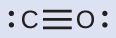
Both carbon monoxide, CO, and carbon dioxide, CO2, are products of the combustion of fossil fuels. Both of these gases also cause problems: CO is toxic and CO2 has been implicated in global climate change. What are the Lewis structures of these two molecules?

Answer

Two Lewis structures are shown. The left shows a carbon triple bonded to an oxygen, each with a lone electron pair. The right structure shows a carbon double bonded to an oxygen on each side. Each oxygen has two lone pairs of electrons.

Example 7.5 §7.3 source ↗

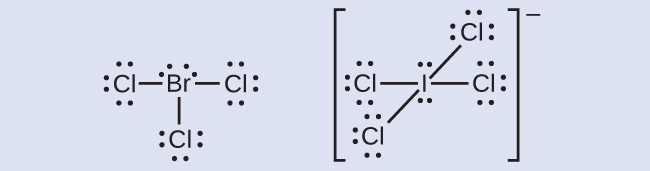
The halogens form a class of compounds called the interhalogens, in which halogen atoms covalently bond to each other. Write the Lewis structures for the interhalogens BrCl3 and ICl4−.

Answer

Two Lewis structures are shown. The left depicts a bromine atom with two lone pairs of electrons single bonded to three chlorine atoms, each with three lone pairs of electrons. The right shows an iodine atom, with two lone pairs of electrons, single boned to four chlorine atoms, each with three lone pairs of electrons. This structure is surrounded by brackets and has a superscripted negative sign.

Example 7.6 §7.4 source ↗

Calculate the formal charge for each atom in the carbon monoxide molecule: A Lewis structure is shown. A carbon atom with one lone pair of electrons is triple bonded to an oxygen with one lone pair of electrons.

Answer

C −1, O +1

Example 7.7 §7.4 source ↗

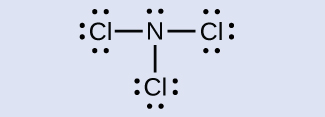
Determine the formal charge for each atom in NCl3.

Answer

N: 0; all three Cl atoms: 0

A Lewis structure is shown. A nitrogen atom with one lone pair of electrons is single bonded to three chlorine atoms, each of which has three lone pairs of electrons.

Example 7.8 §7.4 source ↗

Which is the most likely molecular structure for the nitrite (NO2−) ion? Two Lewis structures are shown with the word “or” written between them. The left structure shows a nitrogen atom with two lone pairs of electrons double bonded to an oxygen atom with one lone pair of electrons that is single bonded to an oxygen atom with three lone pairs of electrons. Brackets surround this structure and there is a superscripted negative sign. The right structure shows an oxygen atom with two lone pairs of electrons double bonded to a nitrogen atom with one lone pair of electrons that is single bonded to an oxygen with three lone pairs of electrons. Brackets surround this structure and there is a superscripted negative sign.

Answer

ONO–

Example 7.9 §7.5 source ↗

Ethyl alcohol, CH3CH2OH, was one of the first organic chemicals deliberately synthesized by humans. It has many uses in industry, and it is the alcohol contained in alcoholic beverages. It can be obtained by the fermentation of sugar or synthesized by the hydration of ethylene in the following reaction: A set of Lewis structures show a chemical reaction. The first structure shows two carbon atoms that are double bonded together and are each single bonded to two hydrogen atoms. This structure is followed by a plus sign, then an oxygen atom with two lone pairs of electrons single bonded to two hydrogen atoms. A right-facing arrow leads to a carbon atom single bonded to three hydrogen atoms and a second carbon atom. The second carbon atom is single bonded to two hydrogen atoms and an oxygen atom with two lone pairs of electrons. The oxygen atom is single bonded to a hydrogen atom as well.

Using the bond energies in Table 7.3, calculate an approximate enthalpy change, ΔH, for this reaction.

Table 7.3 in the book ↗
Bond Bond Length (Å) Bond Energy (kJ/mol)
C–C 1.54 345
C=C 1.34 611
C≡C 1.20 837
C–N 1.43 290
C=N 1.38 615
C≡N 1.16 891
C–O 1.43 350
C=O 1.23 741
C≡O 1.13 1080

Answer

–35 kJ

Example 7.10 §7.5 source ↗

Zinc oxide, ZnO, is a very effective sunscreen. How would the lattice energy of ZnO compare to that of NaCl?

Answer

ZnO would have the larger lattice energy because the Z values of both the cation and the anion in ZnO are greater, and the interionic distance of ZnO is smaller than that of NaCl.

Example 7.11 §7.6 source ↗

Carbonate, CO32−, is a common polyatomic ion found in various materials from eggshells to antacids. What are the electron-pair geometry and molecular structure of this polyatomic ion?

Answer

The electron-pair geometry is trigonal planar and the molecular structure is trigonal planar. Due to resonance, all three C–O bonds are identical. Whether they are single, double, or an average of the two, each bond counts as one region of electron density.

Example 7.12 §7.6 source ↗

Identify a molecule with trigonal bipyramidal molecular structure.

Answer

Any molecule with five electron pairs around the central atoms including no lone pairs will be trigonal bipyramidal. PF5 is a common example.

Example 7.13 §7.6 source ↗

The hydronium ion, H3O+, forms when acids are dissolved in water. Predict the electron-pair geometry and molecular structure of this cation.

Answer

electron pair geometry: tetrahedral; molecular structure: trigonal pyramidal

Example 7.14 §7.6 source ↗

Predict the electron pair geometry and molecular structure for molecules of XeF2.

Answer

The electron-pair geometry is trigonal bipyramidal. The molecular structure is linear.

Example 7.15 §7.6 source ↗

In a certain molecule, the central atom has three lone pairs and two bonds. What will the electron pair geometry and molecular structure be?

Answer

electron pair geometry: trigonal bipyramidal; molecular structure: linear

Example 7.16 §7.6 source ↗

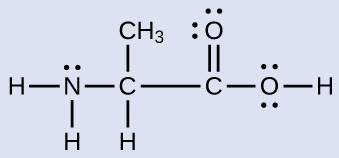
Another amino acid is alanine, which has the Lewis structure shown here. Predict the electron-pair geometry and local structure of the nitrogen atom, the three carbon atoms, and the oxygen atom with hydrogen attached: A Lewis structure depicts a nitrogen atom with two lone pairs of electrons that is single bonded to two hydrogen atoms and a carbon atom, which is, in turn, single bonded to a hydrogen atom, a methyl group and another carbon atom. This carbon atom is single bonded to an oxygen atom with two lone pairs of electrons and single bonded to an oxygen that has two lone pairs of electrons and a single bond to a hydrogen atom.

Answer

electron-pair geometries: nitrogen––tetrahedral; carbon (CH)—tetrahedral; carbon (CH3)—tetrahedral; carbon (CO2)—trigonal planar; oxygen (OH)—tetrahedral; local structures: nitrogen—trigonal pyramidal; carbon (CH)—tetrahedral; carbon (CH3)—tetrahedral; carbon (CO2)—trigonal planar; oxygen (OH)—bent (109°)

Example 7.17 §7.6 source ↗

Build a more complex molecule in the simulator. Identify the electron-group geometry, molecular structure, and bond angles. Then try to find a chemical formula that would match the structure you have drawn.

Answer

Answers will vary. For example, an atom with four single bonds, a double bond, and a lone pair has an octahedral electron-group geometry and a square pyramidal molecular structure. XeOF4 is a molecule that adopts this structure.

Example 7.18 §7.6 source ↗

Determine the partial charges that will give the largest possible bond dipoles.

Answer

The largest bond moments will occur with the largest partial charges. The two solutions above represent how unevenly the electrons are shared in the bond. The bond moments will be maximized when the electronegativity difference is greatest. The controls for A and C should be set to one extreme, and B should be set to the opposite extreme. Although the magnitude of the bond moment will not change based on whether B is the most electronegative or the least, the direction of the bond moment will.

7-1 §7.1 source ↗

Does a cation gain protons to form a positive charge or does it lose electrons?

Answer

The protons in the nucleus do not change during normal chemical reactions. Only the outer electrons move. Positive charges form when electrons are lost.

7-3 §7.1 source ↗

Which of the following atoms would be expected to form negative ions in binary ionic compounds and which would be expected to form positive ions: P, I, Mg, Cl, In, Cs, O, Pb, Co?

Answer

P, I, Cl, and O would form anions because they are nonmetals. Mg, In, Cs, Pb, and Co would form cations because they are metals.

7-5 §7.1 source ↗

Predict the charge on the monatomic ions formed from the following atoms in binary ionic compounds:

(a) P

(b) Mg

(c) Al

(d) O

(e) Cl

(f) Cs

Answer

(a) P3–; (b) Mg2+; (c) Al3+; (d) O2–; (e) Cl–; (f) Cs+

7-7 §7.1 source ↗

Write the electron configuration for each of the following ions:

(a) As3–

(b) I–

(c) Be2+

(d) Cd2+

(e) O2–

(f) Ga3+

(g) Li+

(h) N3–

(i) Sn2+

(j) Co2+

(k) Fe2+

(l) As3+

Answer

(a) [Ar]4s23d104p6; (b) [Kr]4d105s25p6 (c) 1s2 (d) [Kr]4d10; (e) [He]2s22p6; (f) [Ar]3d10; (g) 1s2 (h) [He]2s22p6 (i) [Kr]4d105s2 (j) [Ar]3d7 (k) [Ar]3d6, (l) [Ar]3d104s2

7-9 §7.1 source ↗

Write out the full electron configuration for each of the following atoms and for the monatomic ion found in binary ionic compounds containing the element:

(a) Al

(b) Br

(c) Sr

(d) Li

(e) As

(f) S

Answer

(a) 1s22s22p63s23p1; Al3+: 1s22s22p6; (b) 1s22s22p63s23p63d104s24p5; 1s22s22p63s23p63d104s24p6; (c) 1s22s22p63s23p63d104s24p65s2; Sr2+: 1s22s22p63s23p63d104s24p6; (d) 1s22s1; Li+: 1s2; (e) 1s22s22p63s23p63d104s24p3; 1s22s22p63s23p63d104s24p6; (f) 1s22s22p63s23p4; 1s22s22p63s23p6

7-11 §7.2 source ↗

Why is it incorrect to speak of a molecule of solid NaCl?

Answer

NaCl consists of discrete ions arranged in a crystal lattice, not covalently bonded molecules.

7-13 §7.2 source ↗

Predict which of the following compounds are ionic and which are covalent, based on the location of their constituent atoms in the periodic table:

(a) Cl2CO

(b) MnO

(c) NCl3

(d) CoBr2

(e) K2S

(f) CO

(g) CaF2

(h) HI

(i) CaO

(j) IBr

(k) CO2

Answer

ionic: (b), (d), (e), (g), and (i); covalent: (a), (c), (f), (h), (j), and (k)

7-15 §7.2 source ↗

From its position in the periodic table, determine which atom in each pair is more electronegative:

(a) Br or Cl

(b) N or O

(c) S or O

(d) P or S

(e) Si or N

(f) Ba or P

(g) N or K

Answer

(a) Cl; (b) O; (c) O; (d) S; (e) N; (f) P; (g) N

7-17 §7.2 source ↗

From their positions in the periodic table, arrange the atoms in each of the following series in order of increasing electronegativity:

(a) C, F, H, N, O

(b) Br, Cl, F, H, I

(c) F, H, O, P, S

(d) Al, H, Na, O, P

(e) Ba, H, N, O, As

Answer

(a) H, C, N, O, F; (b) H, I, Br, Cl, F; (c) H, P, S, O, F; (d) Na, Al, H, P, O; (e) Ba, H, As, N, O

7-19 §7.2 source ↗

Which atoms can bond to sulfur so as to produce a positive partial charge on the sulfur atom?

Answer

N, O, F, and Cl

7-21 §7.2 source ↗

Identify the more polar bond in each of the following pairs of bonds:

(a) HF or HCl

(b) NO or CO

(c) SH or OH

(d) PCl or SCl

(e) CH or NH

(f) SO or PO

(g) CN or NN

Answer

(a) HF; (b) CO; (c) OH; (d) PCl; (e) NH; (f) PO; (g) CN

7-23 §7.3 source ↗

Write the Lewis symbols for each of the following ions:

(a) As3–

(b) I–

(c) Be2+

(d) O2–

(e) Ga3+

(f) Li+

(g) N3–

Answer

(a) eight electrons:

A Lewis dot diagram shows the symbol for arsenic, A s, surrounded by eight dots and a superscripted three negative sign.


(b) eight electrons:

A Lewis dot diagram shows the symbol for iodine, I, surrounded by eight dots and a superscripted negative sign.


(c) no electrons Be2+
(d) eight electrons:

A Lewis dot diagram shows the symbol for oxygen, O, surrounded by eight dots and a superscripted two negative sign.


(e) no electrons Ga3+
(f) no electrons Li+
(g) eight electrons:

A Lewis dot diagram shows the symbol for nitrogen, N, surrounded by eight dots and a superscripted three negative sign.

7-25 §7.3 source ↗

Write the Lewis symbols of the ions in each of the following ionic compounds and the Lewis symbols of the atom from which they are formed:

(a) MgS

(b) Al2O3

(c) GaCl3

(d) K2O

(e) Li3N

(f) KF

Answer

(a)

Two Lewis structures are shown. The left shows the symbol M g with a superscripted two positive sign while the right shows the symbol S surrounded by eight dots and a superscripted two negative sign.


(b)

Two Lewis structures are shown. The left shows the symbol A l with a superscripted three positive sign while the right shows the symbol O surrounded by eight dots and a superscripted two negative sign.


(c)

Two Lewis structures are shown. The left shows the symbol G a with a superscripted three positive sign while the right shows the symbol C l surrounded by eight dots and a superscripted negative sign.


(d)

Two Lewis structures are shown. The left shows the symbol K with a superscripted positive sign while the right shows the symbol O surrounded by eight dots and a superscripted two negative sign.


(e)

Two Lewis structures are shown. The left shows the symbol L i with a superscripted positive sign while the right shows the symbol N surrounded by eight dots and a superscripted three negative sign.


(f)

Two Lewis structures are shown. The left shows the symbol K with a superscripted positive sign while the right shows the symbol F surrounded by eight dots and a superscripted negative sign.

7-27 §7.3 source ↗

Write the Lewis structure for the diatomic molecule P2, an unstable form of phosphorus found in high-temperature phosphorus vapor.

Answer


A Lewis diagram shows two phosphorus atoms triple bonded together each with one lone electron pair.

7-29 §7.3 source ↗

Write Lewis structures for the following:

(a) O2

(b) H2CO

(c) AsF3

(d) ClNO

(e) SiCl4

(f) H3O+

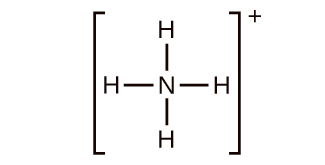
(g) NH4+

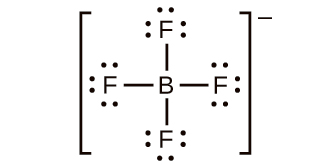
(h) BF4−

(i) HCCH

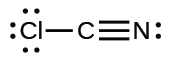
(j) ClCN

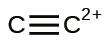
(k) C22+

Answer

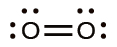
(a)

A Lewis structure shows two oxygen atoms double bonded together, and each has two lone pairs of electrons.


In this case, the Lewis structure is inadequate to depict the fact that experimental studies have shown two unpaired electrons in each oxygen molecule.
(b)
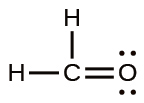
A Lewis structure shows a carbon atom that is single bonded to two hydrogen atoms and double bonded to an oxygen atom. The oxygen atom has two lone pairs of electrons.


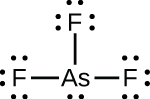
(c)

A Lewis structure shows an arsenic atom single bonded to three fluorine atoms. Each fluorine atom has a lone pair of electrons.


(d)

A Lewis structure shows a nitrogen atom with a lone pair of electrons single bonded to a chlorine atom that has three lone pairs of electrons. The nitrogen is also double bonded to an oxygen which has two lone pairs of electrons.


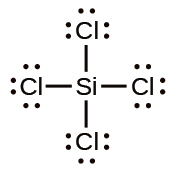
(e)

A Lewis structure shows a silicon atom that is single bonded to four chlorine atoms. Each chlorine atom has three lone pairs of electrons.


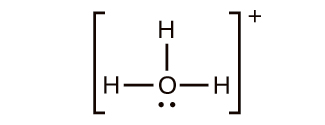
(f)

A Lewis structure shows an oxygen atom with a lone pair of electrons single bonded to three hydrogen atoms. The structure is surrounded by brackets with a superscripted positive sign.


(g)

A Lewis structure shows a nitrogen atom single bonded to four hydrogen atoms. The structure is surrounded by brackets with a superscripted positive sign.


(h)

A Lewis structure shows a boron atom single bonded to four fluorine atoms. Each fluorine atom has three lone pairs of electrons. The structure is surrounded by brackets with a superscripted negative sign.


(i)

A Lewis structure shows two carbon atoms that are triple bonded together. Each carbon is also single bonded to a hydrogen atom.


(j)

A Lewis structure shows a carbon atom that is triple bonded to a nitrogen atom that has one lone pair of electrons. The carbon is also single bonded to a chlorine atom that has three lone pairs of electrons.


(k)

A Lewis structure shows two carbon atoms joined with a triple bond. A superscripted 2 positive sign lies to the right of the second carbon.

7-31 §7.3 source ↗

Write Lewis structures for the following:

(a) SeF6

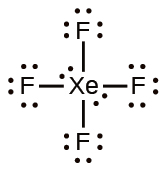
(b) XeF4

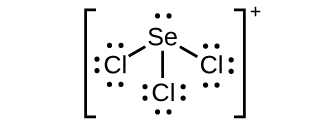
(c) SeCl3+

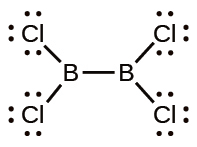
(d) Cl2BBCl2 (contains a B–B bond)

Answer

(a) SeF6:
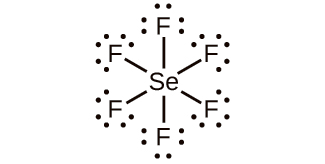
A Lewis structure shows a selenium atom single bonded to six fluorine atoms, each with three lone pairs of electrons.


(b) XeF4:

A Lewis structure shows a xenon atom with two lone pairs of electrons. It is single bonded to four fluorine atoms each with three lone pairs of electrons.


(c) SeCl3+:

A Lewis structure shows a selenium atom with one lone pair of electrons single bonded to three chlorine atoms each with three lone pairs of electrons. The whole structure is surrounded by brackets.


(d) Cl2BBCl2:

A Lewis structure shows two boron atoms that are single bonded together. Each is also single bonded to two chlorine atoms that both have three lone pairs of electrons.

7-33 §7.3 source ↗

Correct the following statement: “The bonds in solid PbCl2 are ionic; the bond in a HCl molecule is covalent. Thus, all of the valence electrons in PbCl2 are located on the Cl– ions, and all of the valence electrons in a HCl molecule are shared between the H and Cl atoms.”

Answer

Two valence electrons per Pb atom are transferred to Cl atoms; the resulting Pb2+ ion has a 6s2 valence shell configuration. Two of the valence electrons in the HCl molecule are shared, and the other six are located on the Cl atom as lone pairs of electrons.

7-35 §7.3 source ↗

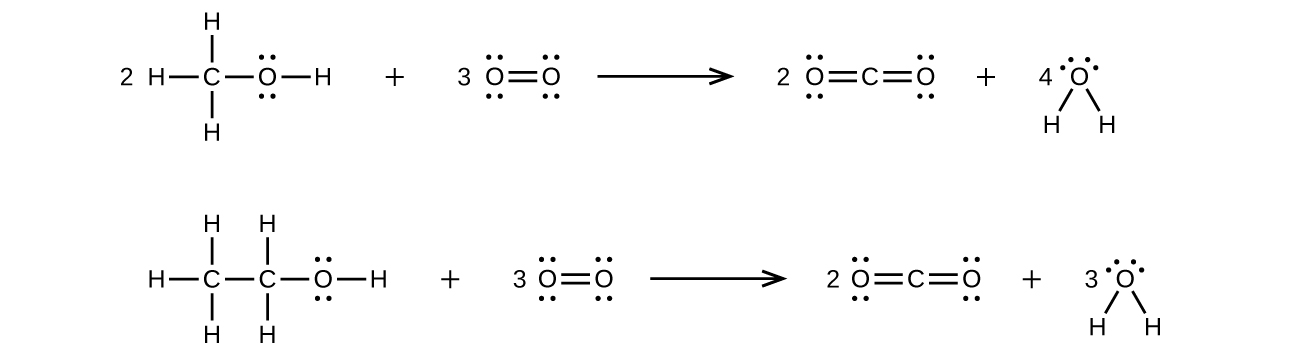
Methanol, H3COH, is used as the fuel in some race cars. Ethanol, C2H5OH, is used extensively as motor fuel in Brazil. Both methanol and ethanol produce CO2 and H2O when they burn. Write the chemical equations for these combustion reactions using Lewis structures instead of chemical formulas.

Answer

Two reactions are shown using Lewis structures. The top reaction shows a carbon atom, single bonded to three hydrogen atoms and single bonded to an oxygen atom with two lone pairs of electrons. The oxygen atom is also bonded to a hydrogen atom. This is followed by a plus sign and the number one point five, followed by two oxygen atoms bonded together with a double bond and each with two lone pairs of electrons. A right-facing arrow leads to a carbon atom that is double bonded to two oxygen atoms, each of which has two lone pairs of electrons. This structure is followed by a plus sign, a number two, and a structure made up of an oxygen with two lone pairs of electrons single bonded to two hydrogen atoms. The bottom reaction shows a carbon atom, single bonded to three hydrogen atoms and single bonded to another carbon atom. The second carbon atom is single bonded to two hydrogen atoms and one oxygen atom with two lone pairs of electrons. The oxygen atom is also bonded to a hydrogen atom. This is followed by a plus sign and the number three, followed by two oxygen atoms bonded together with a double bond. Each oxygen atom has two lone pairs of electrons. A right-facing arrow leads to a number two and a carbon atom that is double bonded to two oxygen atoms, each of which has two lone pairs of electrons. This structure is followed by a plus sign, a number three, and a structure made up of an oxygen with two lone pairs of electrons single bonded to two hydrogen atoms.

7-37 §7.3 source ↗

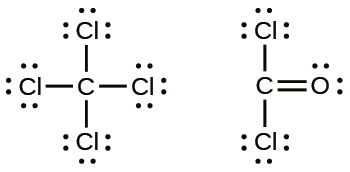
Carbon tetrachloride was formerly used in fire extinguishers for electrical fires. It is no longer used for this purpose because of the formation of the toxic gas phosgene, Cl2CO. Write the Lewis structures for carbon tetrachloride and phosgene.

Answer

Two Lewis structures are shown. The left depicts a carbon atom single bonded to four chlorine atoms, each with three lone pairs of electrons. The right shows a carbon atom double bonded to an oxygen atom that has two lone pairs of electrons. The carbon atom is also single bonded to two chlorine atoms, each of which has three lone pairs of electrons.

7-39 §7.3 source ↗

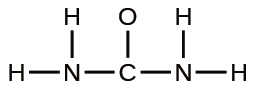
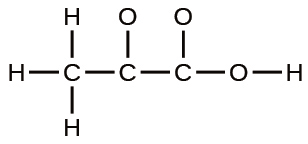
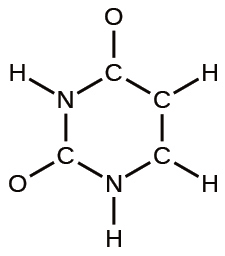
The arrangement of atoms in several biologically important molecules is given here. Complete the Lewis structures of these molecules by adding multiple bonds and lone pairs. Do not add any more atoms.

(a) the amino acid serine:
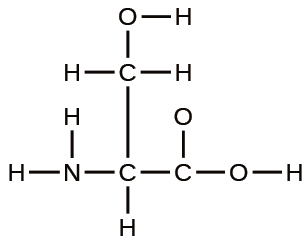
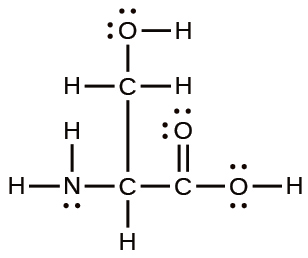
A Lewis structure is shown. A nitrogen atom is single bonded to two hydrogen atoms and a carbon atom. The carbon atom is single bonded to a hydrogen atom and two other carbon atoms. One of these carbon atoms is single bonded to two hydrogen atoms and an oxygen atom. The oxygen atom is bonded to a hydrogen atom. The other carbon atom is single bonded to two oxygen atoms, one of which is bonded to a hydrogen atom.

(b) urea:

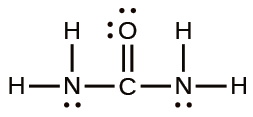
A Lewis structure is shown. A nitrogen atom is single bonded to two hydrogen atoms and a carbon atom. The carbon atom is single bonded to an oxygen atom and another nitrogen atom. That nitrogen atom is then single bonded to two hydrogen atoms.

(c) pyruvic acid:

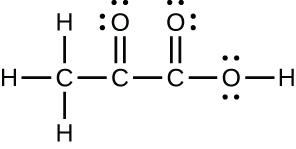
A Lewis structure is shown. A carbon atom is single bonded to three hydrogen atoms and another carbon atom. The second carbon atom is single bonded to an oxygen atom and a third carbon atom. This carbon is then single bonded to two oxygen atoms, one of which is single bonded to a hydrogen atom.

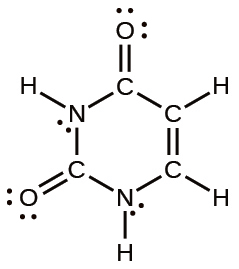
(d) uracil:

A Lewis hexagonal ring structure is shown. From the top of the ring (moving clockwise), three carbon atoms, one nitrogen atom, a carbon atom, and a nitrogen atom are single bonded to each another. The top carbon atom is single bonded to an oxygen atom. The second and third carbons and the nitrogen atom are each single bonded to a hydrogen atom. The next carbon atom is single bonded to an oxygen atom, and the last nitrogen atom is single bonded to a hydrogen atom.

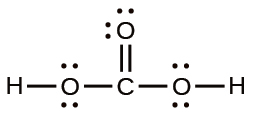
(e) carbonic acid:

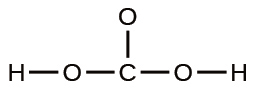
A Lewis structure is shown. A carbon atom is single bonded to three oxygen atoms. Two of those oxygen atoms are each single bonded to a hydrogen atom.

Answer

(a)

A Lewis structure is shown. A nitrogen atom is single bonded to two hydrogen atoms and a carbon atom. The carbon atom is single bonded to a hydrogen atom and two other carbon atoms. One of these carbon atoms is single bonded to two hydrogen atoms and an oxygen atom. The oxygen atom is bonded to a hydrogen atom. The other carbon is single bonded to two oxygen atoms, one of which is bonded to a hydrogen atom. The oxygen atoms have two lone pairs of electron dots, and the nitrogen atom has one lone pair of electron dots.


(b)

A Lewis structure is shown. A nitrogen atom is single bonded to two hydrogen atoms and a carbon atom. The carbon atom is single bonded to an oxygen atom and one nitrogen atom. That nitrogen atom is then single bonded to two hydrogen atoms. The oxygen atom has two lone pairs of electron dots, and the nitrogen atoms have one lone pair of electron dots each.


(c)

A Lewis structure is shown. A carbon atom is single bonded to three hydrogen atoms and a carbon atom. The carbon atom is single bonded to an oxygen atom and a third carbon atom. This carbon is then single bonded to two oxygen atoms, one of which is single bonded to a hydrogen atom. Each oxygen atom has two lone pairs of electron dots.


(d)

A Lewis hexagonal ring structure is shown. From the top of the ring, three carbon atoms, one nitrogen atom, a carbon atom and a nitrogen atom are single bonded to one another. The top carbon is single bonded to an oxygen, the second and third carbons and the nitrogen atom are each single bonded to a hydrogen atom. The next carbon is single bonded to an oxygen atom and the last nitrogen is single bonded to a hydrogen atom. The oxygen atoms have two lone pairs of electron dots, and the nitrogen atoms have one lone pair of electron dots.


(e)

A Lewis structure is shown. A carbon atom is single bonded to three oxygen atoms. Two of those oxygen atoms are each single bonded to a hydrogen atom. Each oxygen atom has two lone pairs of electron dots.

7-41 §7.3 source ↗

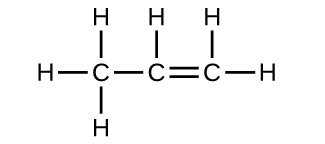
A compound with a molar mass of about 42 g/mol contains 85.7% carbon and 14.3% hydrogen by mass. Write the Lewis structure for a molecule of the compound.

Answer

A Lewis structure is shown. A carbon atom is single bonded to three hydrogen atoms and another carbon atom. The second carbon atom is double bonded to another carbon atom and single bonded to a hydrogen atom. The last carbon is single bonded to two hydrogen atoms.

7-43 §7.3 source ↗

How are single, double, and triple bonds similar? How do they differ?

Answer

Each bond includes a sharing of electrons between atoms. Two electrons are shared in a single bond; four electrons are shared in a double bond; and six electrons are shared in a triple bond.

7-45 §7.4 source ↗

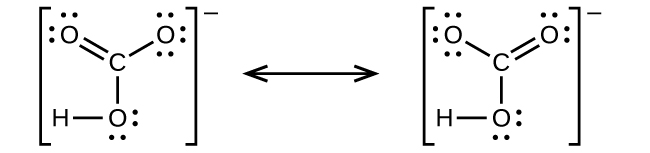
Write resonance forms that describe the distribution of electrons in each of these molecules or ions.

(a) sulfur dioxide, SO2

(b) carbonate ion, CO32−

(c) hydrogen carbonate ion, HCO3− (C is bonded to an OH group and two O atoms)

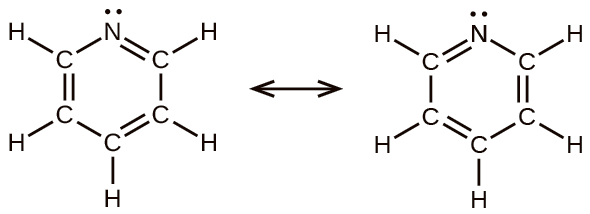
(d) pyridine:
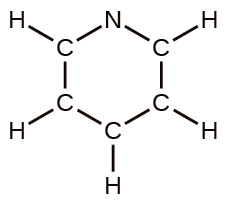
A Lewis structure depicts a hexagonal ring composed of five carbon atoms and one nitrogen atom. Each carbon atom is single bonded to a hydrogen atom.

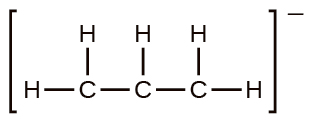
(e) the allyl ion:

A Lewis structure shows a carbon atom single bonded to two hydrogen atoms and a second carbon atom. The second carbon atom is single bonded to a hydrogen atom and a third carbon atom. The third carbon atom is single bonded to two hydrogen atoms. The whole structure is surrounded by brackets, and there is a superscripted negative sign.

Answer

(a)

Two Lewis structures are shown with a double-headed arrow in between. The left structure shows a sulfur atom with a lone pair of electrons single bonded to the left to an oxygen atom with three lone pairs of electrons. The sulfur atom is also double bonded on the right to an oxygen atom with two lone pairs of electrons. The right structure depicts the same atoms, but this time the double bond is between the left oxygen and the sulfur atom. The lone pairs of electrons have also shifted to account for the change of bond types. The sulfur atom in the right structures, also has a third electron dot below it.


(b)

Three Lewis structures are shown, with double-headed arrows in between, each surrounded by brackets and a superscripted two negative sign. The left structure depicts a carbon atom bonded to three oxygen atoms. It is single bonded to two of these oxygen atoms, each of which has three lone pairs of electrons, and double bonded to the third, which has two lone pairs of electrons. The double bond is located between the bottom oxygen and the carbon. The central and right structures are the same as the first, but the position of the double bonded oxygen has moved to the left oxygen in the right structure while the central structure only has single bonds. The lone pairs of electrons change to correspond with the bonds as well.


(c)

Two Lewis structures are shown, with a double-headed arrow in between, each surrounded by brackets and a superscripted negative sign. The left structure depicts a carbon atom bonded to three oxygen atoms. It is single bonded to one of these oxygen atoms, which has three lone pairs of electrons, and double bonded to the other two, which have two lone pairs of electrons. One of the double bonded oxygen atoms also has a single bond to a hydrogen atom. The right structure is the same as the first, but there is only one double bonded oxygen. The oxygen with the single bonded hydrogen now has a single bond to the carbon atom. The lone pairs of electrons have also changed to correspond with the bonds.


(d)

Two Lewis structures are shown with a double-headed arrow in between. The left structure depicts a hexagonal ring composed of five carbon atoms, each single bonded to a hydrogen atom, and one nitrogen atom that has a lone pair of electrons. The ring has alternating single and double bonds. The right structure is the same as the first, but each double bond has rotated to a new position.


(e)

Two Lewis structures are shown with a double-headed arrow in between. The left structure shows a carbon atom single bonded to two hydrogen atoms and a second carbon atom. The second carbon atom is single bonded to a hydrogen atom and double bonded to a third carbon atom. The third carbon atom is single bonded to two hydrogen atoms. The whole structure is surrounded by brackets and a superscripted negative sign. The right structure shows a carbon atom single bonded to two hydrogen atoms and double bonded to a second carbon atom. The second carbon atom is single bonded to a hydrogen atom and a third carbon atom. The third carbon atom is single bonded to two hydrogen atoms. The whole structure is surrounded by brackets and a superscripted negative sign.

7-47 §7.4 source ↗

Sodium nitrite, which has been used to preserve bacon and other meats, is an ionic compound. Write the resonance forms of the nitrite ion, NO2–.

Answer


A pair of Lewis structures are shown with a double-headed arrow in between the pair. The left structure of the first pair shows a nitrogen atom with one lone pair of electrons single bonded to an oxygen atom with three lone pairs of electrons. It is also double bonded to an oxygen with two lone pairs of electrons. The right image of this pair depicts the mirror image of the left. Both images are surrounded by brackets and a superscripted negative sign. They are labeled, “For N O subscript two superscript negative sign.”

7-49 §7.4 source ↗

Write the Lewis structures for the following, and include resonance structures where appropriate. Indicate which has the strongest carbon-oxygen bond.

(a) CO2

(b) CO

Answer

(a)

This structure shows a carbon atom double bonded to two oxygen atoms, each of which has two lone pairs of electrons.


(b)

The right structure of this pair shows a carbon atom with one lone pair of electrons triple bonded to an oxygen with one lone pair of electrons.


CO has the strongest carbon-oxygen bond because there is a triple bond joining C and O. CO2 has double bonds.

7-51 §7.4 source ↗

Determine the formal charge of each element in the following:

(a) HCl

(b) CF4

(c) PCl3

(d) PF5

Answer

(a) H: 0, Cl: 0; (b) C: 0, F: 0; (c) P: 0, Cl 0; (d) P: 0, F: 0

7-53 §7.4 source ↗

Calculate the formal charge of chlorine in the molecules Cl2, BeCl2, and ClF5.

Answer

Cl in Cl2: 0; Cl in BeCl2: 0; Cl in ClF5: 0

7-55 §7.4 source ↗

Draw all possible resonance structures for each of these compounds. Determine the formal charge on each atom in each of the resonance structures:

(a) O3

(b) SO2

(c) NO2−

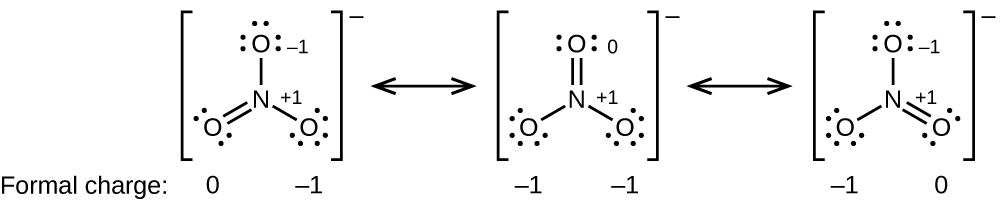
(d) NO3−

Answer

(a)

Two Lewis structures are shown with a double-headed arrow in between. The left structure shows an oxygen atom with one lone pair of electrons single bonded to an oxygen atom with three lone pairs of electrons. It is also double bonded to an oxygen atom with two lone pairs of electrons. The symbols and numbers below this structure read, “( 0 ), ( positive 1 ), ( negative 1 ).” The phrase, “Formal charge,” and a right-facing arrow lie to the left of this structure. The right structure appears as a mirror image of the left and the symbols and numbers below this structure read, “( negative 1 ), ( positive 1 ), ( 0 ).”


(b)

Two Lewis structures are shown, with a double-headed arrow in between. The left structure shows a sulfur atom with one lone pair of electrons single bonded to an oxygen atom with three lone pairs of electrons. The sulfur atom also double bonded to an oxygen atom with two lone pairs of electrons. The symbols and numbers below this structure read, “( negative 1 ), ( positive 1 ), ( 0 ).” The right structure appears as a mirror image of the left and the symbols and numbers below this structure read, “( 0 ), ( positive 1 ), ( negative 1 ).”


(c)

[Two Lewis structures are shown, with brackets surrounding each with a superscripted negative sign and a double ended arrow in between. The left structure shows a nitrogen atom with one lone pair of electrons single bonded to an oxygen atom with three lone pairs of electrons and double bonded to an oxygen atom with two lone pairs of electrons. The symbols and numbers below this structure read “open parenthesis, 0, close parenthesis, open parenthesis, 0, close parenthesis, open parenthesis, negative 1, close parenthesis. The right structure appears as a mirror image of the left and the symbols and numbers below this structure read “open parenthesis, negative 1, close parenthesis, open parenthesis, 0, close parenthesis, open parenthesis, 0, close parenthesis.]


(d)

[Three Lewis structures are shown, with brackets surrounding each with a superscripted negative sign and a double ended arrow in between. The left structure shows a nitrogen atom single bonded to two oxygen atoms, each with three lone pairs of electrons and double bonded to an oxygen atom with two lone pairs of electrons. The single bonded oxygen atoms are labeled, from the top of the structure and going clockwise, “open parenthesis, negative 1, close parenthesis, open parenthesis, positive 1, close parenthesis”. The symbols and numbers below this structure read “open parenthesis, 0, close parenthesis, open parenthesis, negative 1, close parenthesis. The middle structure shows a nitrogen atom single bonded to two oxygen atoms, each with three lone pairs of electrons, one of which is labeled “open parenthesis, positive 1, close parenthesis” and double bonded to an oxygen atom with two lone pairs of electrons labeled “open parenthesis, 0, close parenthesis”. The symbols and numbers below this structure read “open parenthesis, negative 1, close parenthesis, open parenthesis, negative 1, close parenthesis. The right structure shows a nitrogen atom single bonded to two oxygen atoms, each with three lone pairs of electrons and double bonded to an oxygen atom with two lone pairs of electrons. One of the single bonded oxygen atoms is labeled, “open parenthesis, negative 1, close parenthesis while the double bonded oxygen is labeled, “open parenthesis, positive 1, close parenthesis”. The symbols and numbers below this structure read “open parenthesis, negative 1, close parenthesis” and “open parenthesis, 0, close parenthesis”.]

7-57 §7.4 source ↗

Based on formal charge considerations, which of the following would likely be the correct arrangement of atoms in hypochlorous acid: HOCl or OClH?

Answer

HOCl

7-59 §7.4 source ↗

Draw the structure of hydroxylamine, H3NO, and assign formal charges; look up the structure. Is the actual structure consistent with the formal charges?

Answer

The structure that gives zero formal charges is consistent with the actual structure:
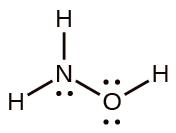
A Lewis structure shows a nitrogen atom with one lone pair of electrons single bonded to two hydrogen atoms and an oxygen atom which has two lone pairs of electrons. The oxygen atom is single bonded to a hydrogen atom.

7-61 §7.4 source ↗

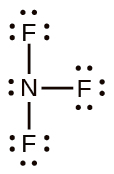
Write the Lewis structure and chemical formula of the compound with a molar mass of about 70 g/mol that contains 19.7% nitrogen and 80.3% fluorine by mass, and determine the formal charge of the atoms in this compound.

Answer

NF3;

A Lewis structure shows a nitrogen atom with one lone pair of electrons single bonded to three fluorine atoms, each with three lone pairs of electrons.

7-63 §7.4 source ↗

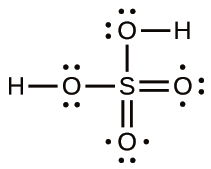
Sulfuric acid is the industrial chemical produced in greatest quantity worldwide. About 90 billion pounds are produced each year in the United States alone. Write the Lewis structure for sulfuric acid, H2SO4, which has two oxygen atoms and two OH groups bonded to the sulfur.

Answer


A Lewis structure shows a hydrogen atom single bonded to an oxygen atom with two lone pairs of electrons. The oxygen atom is single bonded to a sulfur atom. The sulfur atom is double bonded to two oxygen atoms, each of which have three lone pairs of electrons, and single bonded to an oxygen atom with two lone pairs of electrons. This oxygen atom is single bonded to a hydrogen atom.

7-65 §7.5 source ↗

Using the bond energies in Table 7.2, determine the approximate enthalpy change for each of the following reactions:

(a) H2(g)+ Br2(g)⟶ 2HBr(g)

(b) CH4(g)+ I2(g)⟶ CH3I(g)+ HI(g)

(c) C2H4(g)+ 3O2(g)⟶ 2CO2(g)+ 2H2O(g)

Table 7.2 in the book ↗
Bond Energies (kJ/mol)
Bond Bond Energy Bond Bond Energy Bond Bond Energy
H–H 436 C–S 260 F–Cl 255
H–C 415 C–Cl 330 F–Br 235
H–N 390 C–Br 275 Si–Si 230
H–O 464 C–I 240 Si–P 215
H–F 569 N–N 160 Si–S 225
H–Si 395 N=N 418 Si–Cl 359
H–P 320 N≡N 946 Si–Br 290
H–S 340 N–O 200 Si–I 215
H–Cl 432 N–F 270 P–P 215
H–Br 370 N–P 210 P–S 230
H–I 295 N–Cl 200 P–Cl 330
C–C 345 N–Br 245 P–Br 270
C=C 611 O–O 140 P–I 215
C≡C 837 O=O 498 S–S 215
C–N 290 O–F 160 S–Cl 250
C=N 615 O–Si 370 S–Br 215
C≡N 891 O–P 350 Cl–Cl 243
C–O 350 O–Cl 205 Cl–Br 220
C=O 741 O–I 200 Cl–I 210
C≡O 1080 F–F 160 Br–Br 190
C–F 439 F–Si 540 Br–I 180
C–Si 360 F–P 489 I–I 150
C–P 265 F–S 285

Answer

(a) −114 kJ; (b) 30 kJ; (c) −1055 kJ

7-67 §7.5 source ↗

When a molecule can form two different structures, the structure with the stronger bonds is usually the more stable form. Use bond energies to predict the correct structure of the hydroxylamine molecule:
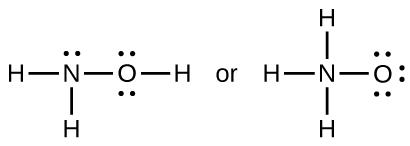
Two Lewis structures are shows with the word “or” written in between them. The left structure shows a nitrogen atom with one lone pair of electrons single bonded to two hydrogen atoms. It is also bonded to an oxygen atom with two lone pairs of electrons. The oxygen atom is bonded to a hydrogen atom. The right structure shows a nitrogen atom single bonded to three hydrogen atoms and an oxygen atom with three lone pairs of electrons.

Answer

The greater bond energy is in the figure on the left. It is the more stable form.

7-69 §7.5 source ↗

Using the standard enthalpy of formation data in Appendix G, show how the standard enthalpy of formation of HCl(g) can be used to determine the bond energy.

Answer


HCl(g)⟶12H2(g)+12Cl2(g)ΔH1°=−ΔHf[HCl(g)]°12H2(g)⟶H(g)ΔH2°=ΔHf[H(g)]°12Cl2(g)⟶Cl(g)ΔH3°=ΔHf[Cl(g)]°¯HCl(g)⟶H(g)+Cl(g)ΔH°=ΔH1°+ΔH2°+ΔH3°
DHCl=ΔH°=ΔHf[HCl(g)]°+ΔHf[H(g)]°+ΔHf[Cl(g)]°=−(−92.307kJ)+217.97kJ+121.3kJ=431.6kJ

7-71 §7.5 source ↗

Using the standard enthalpy of formation data in Appendix G, determine which bond is stronger: the S–F bond in SF4(g) or in SF6(g)?

Answer

The S–F bond in SF4 is stronger.

7-73 §7.5 source ↗

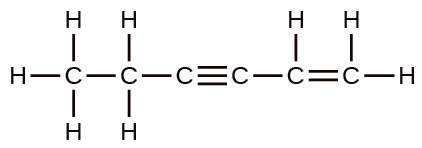
Complete the following Lewis structure by adding bonds (not atoms), and then indicate the longest bond:
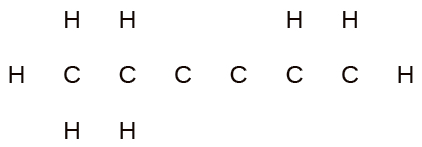
A Lewis structure is shown that is missing its bonds. It shows a horizontal row of six carbon atoms, equally spaced. Three hydrogen atoms are drawn around the first carbon, two around the second, one above the fifth, and two by the sixth.

Answer


A Lewis structure is shown. A carbon atom that is single bonded to three hydrogen atoms is bonded to a second carbon atom. The second carbon atom is single bonded to two hydrogen atoms. The second carbon atom is single bonded to a third carbon atom that is triple bonded to a fourth carbon atom and single bonded to a fifth carbon atom. The fifth carbon atom is single bonded to a hydrogen atom and double bonded to a sixth carbon atom that is single bonded to two hydrogen atoms.


The C–C single bonds are longest.

7-75 §7.5 source ↗

Use principles of atomic structure to answer each of the following:1

(a) The radius of the Ca atom is 197 pm; the radius of the Ca2+ ion is 99 pm. Account for the difference.

(b) The lattice energy of CaO(s) is –3460 kJ/mol; the lattice energy of K2O is –2240 kJ/mol. Account for the difference.

(c) Given these ionization values, explain the difference between Ca and K with regard to their first and second ionization energies.

Element First Ionization Energy (kJ/mol) Second Ionization Energy (kJ/mol)
K 419 3050
Ca 590 1140

(d) The first ionization energy of Mg is 738 kJ/mol and that of Al is 578 kJ/mol. Account for this difference.

Answer

(a) When two electrons are removed from the valence shell, the Ca radius loses the outermost energy level and reverts to the lower n = 3 level, which is much smaller in radius. (b) The +2 charge on calcium pulls the oxygen much closer compared with K, thereby increasing the lattice energy relative to a less charged ion. (c) Removal of the 4s electron in Ca requires more energy than removal of the 4s electron in K because of the stronger attraction of the nucleus and the extra energy required to break the pairing of the electrons. The second ionization energy for K requires that an electron be removed from a lower energy level, where the attraction is much stronger from the nucleus for the electron. In addition, energy is required to unpair two electrons in a full orbital. For Ca, the second ionization potential requires removing only a lone electron in the exposed outer energy level. (d) In Al, the removed electron is relatively unprotected and unpaired in a p orbital. The higher energy for Mg mainly reflects the unpairing of the 2s electron.

7-77 §7.5 source ↗

For which of the following substances is the least energy required to convert one mole of the solid into separate ions?

(a) MgO

(b) SrO

(c) KF

(d) CsF

(e) MgF2

Answer

(d)

7-79 §7.5 source ↗

The lattice energy of LiF is 1023 kJ/mol, and the Li–F distance is 201 pm. MgO crystallizes in the same structure as LiF but with a Mg–O distance of 205 pm. Which of the following values most closely approximates the lattice energy of MgO: 256 kJ/mol, 512 kJ/mol, 1023 kJ/mol, 2046 kJ/mol, or 4008 kJ/mol? Explain your choice.

Answer

4008 kJ/mol; both ions in MgO have twice the charge of the ions in LiF; the bond length is very similar and both have the same structure; a quadrupling of the energy is expected based on the equation for lattice energy

7-81 §7.5 source ↗

Which compound in each of the following pairs has the larger lattice energy? Note: Ba2+ and

K+ have similar radii; S2– and Cl– have similar radii. Explain your choices.

(a) K2O or Na2O

(b) K2S or BaS

(c) KCl or BaS

(d) BaS or BaCl2

Answer

(a) Na2O; Na+ has a smaller radius than K+; (b) BaS; Ba has a larger charge than K; (c) BaS; Ba and S have larger charges; (d) BaS; S has a larger charge

7-83 §7.5 source ↗

Which of the following compounds requires the most energy to convert one mole of the solid into separate ions?

(a) K2S

(b) K2O

(c) CaS

(d) Cs2S

(e) CaO

Answer

(e)

7-85 §7.6 source ↗

Explain why the HOH molecule is bent, whereas the HBeH molecule is linear.

Answer

The placement of the two sets of unpaired electrons in water forces the bonds to assume a tetrahedral arrangement, and the resulting HOH molecule is bent. The HBeH molecule (in which Be has only two electrons to bond with the two electrons from the hydrogens) must have the electron pairs as far from one another as possible and is therefore linear.

7-87 §7.6 source ↗

Explain the difference between electron-pair geometry and molecular structure.

Answer

Space must be provided for each pair of electrons whether they are in a bond or are present as lone pairs. Electron-pair geometry considers the placement of all electrons. Molecular structure considers only the bonding-pair geometry.

7-89 §7.6 source ↗

Explain how a molecule that contains polar bonds can be nonpolar.

Answer

As long as the polar bonds are compensated (for example. two identical atoms are found directly across the central atom from one another), the molecule can be nonpolar.

7-91 §7.6 source ↗

Predict the electron pair geometry and the molecular structure of each of the following molecules or ions:

(a) SF6

(b) PCl5

(c) BeH2

(d) CH3+

Answer

(a) Both the electron geometry and the molecular structure are octahedral. (b) Both the electron geometry and the molecular structure are trigonal bipyramid. (c) Both the electron geometry and the molecular structure are linear. (d) Both the electron geometry and the molecular structure are trigonal planar.

7-93 §7.6 source ↗

What are the electron-pair geometry and the molecular structure of each of the following molecules or ions?

(a) ClF5

(b) ClO2−

(c) TeCl42−

(d) PCl3

(e) SeF4

(f) PH2−

Answer

(a) electron-pair geometry: octahedral, molecular structure: square pyramidal; (b) electron-pair geometry: tetrahedral, molecular structure: bent; (c) electron-pair geometry: octahedral, molecular structure: square planar; (d) electron-pair geometry: tetrahedral, molecular structure: trigonal pyramidal; (e) electron-pair geometry: trigonal bypyramidal, molecular structure: seesaw; (f) electron-pair geometry: tetrahedral, molecular structure: bent (109°)

7-95 §7.6 source ↗

Identify the electron pair geometry and the molecular structure of each of the following molecules:

(a) ClNO (N is the central atom)

(b) CS2

(c) Cl2CO (C is the central atom)

(d) Cl2SO (S is the central atom)

(e) SO2F2 (S is the central atom)

(f) XeO2F2 (Xe is the central atom)

(g) ClOF2+ (Cl is the central atom)

Answer

(a) electron-pair geometry: trigonal planar, molecular structure: bent (120°); (b) electron-pair geometry: linear, molecular structure: linear; (c) electron-pair geometry: trigonal planar, molecular structure: trigonal planar; (d) electron-pair geometry: tetrahedral, molecular structure: trigonal pyramidal; (e) electron-pair geometry: tetrahedral, molecular structure: tetrahedral; (f) electron-pair geometry: trigonal bipyramidal, molecular structure: seesaw; (g) electron-pair geometry: tetrahedral, molecular structure: trigonal pyramidal

7-97 §7.6 source ↗

Which of the following molecules and ions contain polar bonds? Which of these molecules and ions have dipole moments?

(a) ClF5

(b) ClO2−

(c) TeCl42−

(d) PCl3

(e) SeF4

(f) PH2−

(g) XeF2

Answer

All of these molecules and ions contain polar bonds. Only ClF5, ClO2−, PCl3, SeF4, and PH2− have dipole moments.

7-99 §7.6 source ↗

Which of the following molecules have dipole moments?

(a) CS2

(b) SeS2

(c) CCl2F2

(d) PCl3 (P is the central atom)

(e) ClNO (N is the central atom)

Answer

SeS2, CCl2F2, PCl3, and ClNO all have dipole moments.

7-101 §7.6 source ↗

The molecule XF3 has a dipole moment. Is X boron or phosphorus?

Answer

P

7-103 §7.6 source ↗

Is the Cl2BBCl2 molecule polar or nonpolar?

Answer

nonpolar

7-105 §7.6 source ↗

Describe the molecular structure around the indicated atom or atoms:

(a) the sulfur atom in sulfuric acid, H2SO4 [(HO)2SO2]

(b) the chlorine atom in chloric acid, HClO3 [HOClO2]

(c) the oxygen atom in hydrogen peroxide, HOOH

(d) the nitrogen atom in nitric acid, HNO3 [HONO2]

(e) the oxygen atom in the OH group in nitric acid, HNO3 [HONO2]

(f) the central oxygen atom in the ozone molecule, O3

(g) each of the carbon atoms in propyne, CH3CCH

(h) the carbon atom in Freon, CCl2F2

(i) each of the carbon atoms in allene, H2CCCH2

Answer

(a) tetrahedral; (b) trigonal pyramidal; (c) bent (109°); (d) trigonal planar; (e) bent (<120°); (f) bent (109°); (g) CH3CCH tetrahedral, CH3CCH linear; (h) tetrahedral; (i) H2CCCH2 linear; H2CCCH2 trigonal planar

7-107 §7.6 source ↗

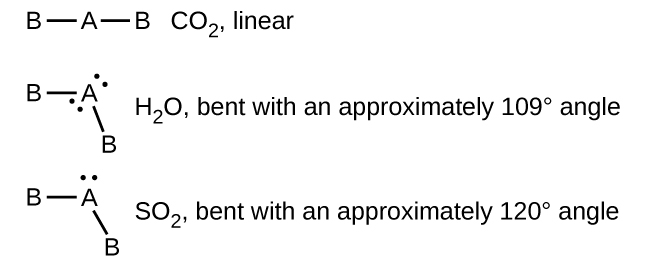
A molecule with the formula AB2, in which A and B represent different atoms, could have one of three different shapes. Sketch and name the three different shapes that this molecule might have. Give an example of a molecule or ion for each shape.

Answer


Three Lewis diagrams are shown. The first diagram shows the letter A single bonded to the left and right to the letter B. An example, “C O subscript 2,” and the term, “linear,” are written beside this diagram. The second diagram shows the letter A with two lone pairs of electrons, single bonded to the left and lower right to the letter B. An example, “H subscript 2 O,” and the term, “bent with an approximately 109 degree angle,” are written beside this diagram. The third diagram shows the letter A with one lone electron pair, single bonded to the left and lower right to the letter B. An example, “S O subscript 2,” and the term, “bent with an approximately 120 degree angle,” are written beside this diagram.

7-109 §7.6 source ↗

Draw the Lewis electron dot structures for these molecules, including resonance structures where appropriate:

(a) CS32−

(b) CS2

(c) CS

(d) predict the molecular shapes for CS32− and CS2 and explain how you arrived at your predictions

Answer

(a)

The figure shows three Lewis structures that are each surrounded by brackets and have a superscripted 2 negative sign. They are written with a double-headed arrow in between each diagram. The first of this trio has a carbon atom single bonded to two sulfur atoms, each of which has thee lone pairs of electrons, and double bonded to a third sulfur atom with two lone pairs of electrons. The second and third diagrams have the same atoms present, but each time the double bond moves between a different carbon and sulfur pair. The lone electron pairs also shift to correspond with the bond changes.


(b)

The Lewis structure shows a carbon atom double bonded to two sulfur atoms, each of which has two lone pairs of electrons.


(c)

This diagram shows a carbon with one lone electron pair triple bonded to a sulfur with one lone electron pair.


(d) CS32− includes three regions of electron density (all are bonds with no lone pairs); the shape is trigonal planar; CS2 has only two regions of electron density (all bonds with no lone pairs); the shape is linear

7-111 §7.6 source ↗

A compound with a molar mass of about 42 g/mol contains 85.7% carbon and 14.3% hydrogen. What is its molecular structure?

Answer

The Lewis structure is made from three units, but the atoms must be rearranged:
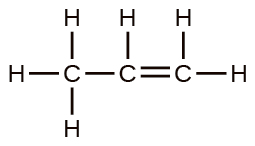
A Lewis structure is shown in which a carbon atom is single bonded to three hydrogen atoms and a second carbon atom. The second carbon is single bonded to a hydrogen atom and double bonded to a third carbon atom which is single bonded to two hydrogen atoms.

7-113 §7.6 source ↗

Use the simulation to perform the following exercises for a real molecule. You may need to rotate the molecules in three dimensions to see certain dipoles.

(a) Sketch the bond dipoles and molecular dipole (if any) for O3. Explain your observations.

(b) Look at the bond dipoles for NH3. Use these dipoles to predict whether N or H is more electronegative.

(c) Predict whether there should be a molecular dipole for NH3 and, if so, in which direction it will point. Check the molecular dipole box to test your hypothesis.

Answer

The molecular dipole points away from the hydrogen atoms.

7-115 §7.6 source ↗

Use the Molecule Shape simulator to explore real molecules. On the Real Molecules tab, select H2O. Switch between the “real” and “model” modes. Explain the difference observed.

Answer

The structures are very similar. In the model mode, each electron group occupies the same amount of space, so the bond angle is shown as 109.5°. In the “real” mode, the lone pairs are larger, causing the hydrogens to be compressed. This leads to the smaller angle of 104.5°.

Loading chapter 8…

Problems and answers are adapted from Chemistry 2e by Paul Flowers, Klaus Theopold, Richard Langley and William R. Robinson, OpenStax, and are used under the CC BY-NC-SA 4.0 licence. Access for free at https://openstax.org/books/chemistry-2e/pages/1-introduction. Illustrations: Copyright Rice University, OpenStax, under CC BY-NC-SA 4.0 license. This adaptation is released under the same licence, is non-commercial, and is neither affiliated with nor endorsed by OpenStax or Rice University.