Every problem in the chapter beside the book’s answer, a chapter at a time as you scroll.
Chapter 4: Number Representation and Calculation
92 problems · 27 figuresYour Turn 4.1 §4.1 source ↗
Evaluate the following exponential expressions.
Answer
Use the order of expressions (PEMDAS), which means
do the exponents first,
then multiplications,
then additions.
416
416Your Turn 4.1 (b) §4.1 source ↗
Evaluate the following exponential expressions.
Answer
Remember that any base raised to the exponent 0 is 1.
Use the order of expressions (PEMDAS), which means
do the exponents first,
then multiplications,
then additions.
1,851
1,851Your Turn 4.1 (c) §4.1 source ↗
Evaluate the following exponential expressions.
Answer
Remember that any base raised to the exponent 0 is 1.
Use the order of expressions (PEMDAS), which means
do the exponents first,
then multiplications,
then additions.
17,488
17,488Your Turn 4.2 §4.1 source ↗
Write the following in expanded form.
924Answer
Because there are three digits in 924, n is 3. So, start with the first digit (9) times 10 raised to n – 1, which is the second power.
Add the next digit times 10 raised to one less than the previous power.
Continue until you end with the last digit times 100.
Your Turn 4.2 (b) §4.1 source ↗
Write the following in expanded form.
1,279Answer
Because there are four digits in 1,279, n is 4. So, start with the first digit (1) times 10 raised to n – 1, which is the third power.
Add the next digit times 10 raised to one less than the previous power.
Continue until you end with the last digit times 100.
Your Turn 4.2 (c) §4.1 source ↗
Write the following in expanded form.
4,130,045Answer
Because there are seven digits in 4,130,045, n is 7. So, start with the first digit (4) times 10 raised to n – 1, which is the sixth power.
Add the next digit times 10 raised to one less than the previous power.
Continue until you end with the last digit times 100.
Your Turn 4.3 §4.1 source ↗
Convert the following to Hindu-Arabic Numerals.
Answer
Remember that any base raised to the exponent 0 is 1.
Use the order of expressions (PEMDAS), which means
do the exponents first,
then multiplications,
then additions.
621
621Your Turn 4.3 (b) §4.1 source ↗
Convert the following to Hindu-Arabic Numerals.
Answer
Remember that any base raised to the exponent 0 is 1.
Use the order of expressions (PEMDAS), which means
do the exponents first,
then multiplications,
then additions.
3,203
3,203Your Turn 4.3 (c) §4.1 source ↗
Convert the following to Hindu-Arabic Numerals.
Answer
Remember that any base raised to the exponent 0 is 1.
Use the order of expressions (PEMDAS), which means
do the exponents first,
then multiplications,
then additions.
40,630,891
40,630,891Check Your Understanding 4.1.1 §4.1 source ↗
Answer
Check Your Understanding 4.1.2 §4.1 source ↗
Answer
Remember that any base raised to the exponent 0 is 1.
Use the order of expressions (PEMDAS), which means
do the exponents first,
then multiplications,
then additions.
279
279Check Your Understanding 4.1.3 §4.1 source ↗
Answer
Because there are five digits in 45,209, n is 5. So, start with the first digit (4) times 10 raised to n – 1, which is the fourth power.
Add the next digit times 10 raised to one less than the previous power.
Continue until you end with the last digit times 100.
Check Your Understanding 4.1.4 §4.1 source ↗
Answer
Check Your Understanding 4.1.5 §4.1 source ↗
Answer
Check Your Understanding 4.1.6 §4.1 source ↗
Answer
Remember that any base raised to the exponent 0 is 1.
Use the order of expressions (PEMDAS), which means
do the exponents first,
then multiplications,
then additions.
601,947
601,947Your Turn 4.4 §4.2 source ↗
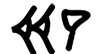

into a Hindu-Arabic number.
Answer
This is a two-digit number.
The first digit: 21
The second digit: 9
21(60) + 9 = 1,269
1269Your Turn 4.5 §4.2 source ↗
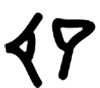


into a Hindu-Arabic number.
Answer
This is a three-digit number.
The first digit: 11
The second digit: 42
The third digit: 16
11(602) + 42(60) + 16 = 42,136
42,136Your Turn 4.6 §4.2 source ↗


into a Hindu-Arabic number.
Answer
This is a three-digit number.
The first digit: 29
The second digit: 16
The third digit: 43
29(602) + 16(60) + 43 = 105,403
6,105,643Your Turn 4.7 §4.2 source ↗


Answer
The top symbol represents 12.
The next symbol represents 17.
12 × 20 + 17 = 257
257Your Turn 4.8 §4.2 source ↗


Answer
The top symbol represents 15.
The next symbol represents 2.
The next symbol represents 14.
15 × 202 + 2 × 20 + 14 = 6,054
6,054Your Turn 4.9 §4.2 source ↗


Answer
The top symbol represents 7.
The next symbol represents 16.
The next symbol represents 0.
The next symbol represents 3.
The next symbol represents 13.
7 × 204 + 16 × 203 + 0 × 202 + 3 × 20 + 13 = 1,248,073
1,248,073Your Turn 4.10 §4.2 source ↗
Convert the following Roman numerals into Hindu-Arabic numerals.
LXXVIIAnswer
Unless a smaller digit precedes a larger digit, add the digit’s values.
| L | X | X | V | I | I |
| 50 | 10 | 10 | 5 | 1 | 1 |
Add the digit values: 50 + 10 + 10 + 5 + 1 + 1 = 77
77Your Turn 4.10 (b) §4.2 source ↗
Convert the following Roman numerals into Hindu-Arabic numerals.
CCXLAnswer
Unless a smaller digit precedes a larger digit, add the digit’s values.
| C | C | X | L |
| 100 | 100 | 10 | 50 |
| Subtract 10 from 50 50 – 10 = 40 | |||
100 + 100 + 40
240
240Your Turn 4.10 (c) §4.2 source ↗
Convert the following Roman numerals into Hindu-Arabic numerals.
MMMCDXLVIIAnswer
Unless a smaller digit precedes a larger digit, add the digit’s values.
| M | M | M | C | D | X | L | V | I | I |
| 1,000 | 1,000 | 1,000 | 100 | 500 | 10 | 50 | 5 | 1 | 1 |
| Subtract 100 from 500. 500 – 100 = 400 | Subtract 10 from 50. 50 – 10 = 40 | ||||||||
1,000 + 1,000 + 1,000 + 400 + 40 + 5 + 1 + 1
3,447
3,447Your Turn 4.11 §4.2 source ↗
Convert the following Hindu-Arabic numerals into Roman numerals.
27Answer
The maximum number of symbols in a row is three.
Special combinations: IV = 4, XL = 40, XC = 90, CD = 400, CM = 900
Write the larger symbols first.
27
Write 27 as a sum where there is an equivalent Roman numeral or special combination.
27 = 10 + 10 + 5 + 1 + 1
Translate to Roman numerals: XXVII
XXVIIYour Turn 4.11 (b) §4.2 source ↗
Convert the following Hindu-Arabic numerals into Roman numerals.
49Answer
The maximum number of symbols in a row is three.
Special combinations: IV = 4, IX = 9, XL = 40, XC = 90, CD = 400, CM = 900
Write the larger symbols first.
Write 49 as a sum where there is an equivalent Roman numeral or special combination.
49 = 10 + 10 + 10 + 10 + 5 + 1 + 1 + 1 + 1
This would have more than three symbols in a row. Look at the special combinations. You can use the ones for 40 and 9.
49 = 40 + 9
Translate to Roman numerals: XLIX
XLIXYour Turn 4.11 (c) §4.2 source ↗
Convert the following Hindu-Arabic numerals into Roman numerals.
739Answer
The maximum number of symbols in a row is three.
Special combinations: IV = 4, IX = 9, XL = 40, XC = 90, CD = 400, CM = 900
Write the larger symbols first.
Write 739 as a sum where there is an equivalent Roman numeral or special combination.
739 = 500 + 100 + 100 + 10 + 10 + 10 + 9
Translate to Roman numerals: DCCXXXIX
DCCXXXIXYour Turn 4.11 (d) §4.2 source ↗
Convert the following Hindu-Arabic numerals into Roman numerals.
3,647Answer
The maximum number of symbols in a row is three.
Special combinations: IV = 4, IX = 9, XL = 40, XC = 90, CD = 400, CM = 900
Write the larger symbols first.
Write 3,647 as a sum where there is an equivalent Roman numeral or special combination.
3,647 = 1,000 + 1,000 + 1,000 + 500 + 100 + 40 + 5 + 1 + 1
Translate to Roman numerals: MMMDCXLVII
MMMDCXLVIICheck Your Understanding 4.2.7 §4.2 source ↗
Answer
Check Your Understanding 4.2.8 §4.2 source ↗
Answer
Check Your Understanding 4.2.9 §4.2 source ↗
Answer
Check Your Understanding 4.2.10 §4.2 source ↗


into a Hindu-Arabic numeral.
Answer
This is a two-digit number.
The first digit: 5
The second digit: 41
5(60) + 41 = 341
341Check Your Understanding 4.2.11 §4.2 source ↗


Answer
The top symbol represents 10.
The next symbol represents 9.
10 × 20 + 9 = 209
Check Your Understanding 4.2.12 §4.2 source ↗
Answer
Unless a smaller digit precedes a larger digit, add the digit’s values.
| C | C | X | L | V | I | I |
| 100 | 100 | 10 | 50 | 5 | 1 | 1 |
| Subtract 10 from 50. 50 – 10 = 40 | ||||||
Add the digit values: 100 + 100 + 40 + 5 + 1 + 1 = 247
247Check Your Understanding 4.2.13 §4.2 source ↗
Answer
The maximum number of symbols in a row is three.
Special combinations: IV = 4, IX = 9, XL = 40, XC = 90, CD = 400, CM = 900
Write the larger symbols first.
Write 479 as a sum where there is an equivalent Roman numeral or special combination.
479 = 400 + 50 + 10 + 10 + 9
Translate to Roman numerals: CDLXXIX
CDLXXIXYour Turn 4.12 §4.3 source ↗
Answer
Your Turn 4.13 §4.3 source ↗
Answer
A represents the digit 10.
B represents the digit 11.
0, 1, 2, 3, 4, 5, 6, 7, 8, 9, A, BYour Turn 4.14 §4.3 source ↗
Answer
The place values are powers of 6 in base 6.
157
Your Turn 4.15 §4.3 source ↗
Answer
In base 14,
A represents the digit 10.
B represents the digit 11.
C represents the digit 12.
D represents the digit 13.
The place values are powers of 14 in base 14.
2,014
Your Turn 4.16 §4.3 source ↗
Answer
In base 12,
A represents the digit 10.
B represents the digit 11.
The place values are powers of 12 in base 12.
851
Your Turn 4.17 §4.3 source ↗
Answer
The place values are powers of 2 in base 2.
27
Your Turn 4.18 §4.3 source ↗
Answer
10, 11, 12, 13
20, 21, 22, 23
30, 31, 32, 33
100
There are four digits in the base four system:
When you run out of digits, you need two digits. Because the place value is 4 in the base 4 system, start with a 1 in the 4s place.
Now, add 2 in the 4s place.
Now, write 3 in the 4s place.
Now, you have run out of digits in the 4s place. Now, you move over to the place.
This is where you were told to stop.
Your Turn 4.19 §4.3 source ↗
Answer
There are 12 digits in the base four system:
A represents the digit 10.
B represents the digit 11.
When you run out of digits in the 1s place, you need two digits. Because the place value is 12 in the base 12 system, start with a 1 in the 12s place.
Now, add 2 in the 12s place.
Now, write 3 in the 12s place.
Now, write 4 in the 12s place.
Now, write 5 in the 12s place.
Now, write 6 in front.
Now, write 7 in front.
Now, write 8 in front.
Now, write 9 in front.
Now, write A in front.
Now, write B in front.
You’ve run out of digits for two-digit numbers.
Now, you move over to the place.
This is where you were told to stop.
0, 1, 2, 3, 4, 5, 6, 7, 8, 9, A, B
10, 11, 12, 13, 14, 15, 16, 17, 18, 19, 1A, 1B
20, 21, 22, 23, 24, 25, 26, 27, 28, 29, 2A, 2B
30, 31, 32, 33, 34, 35, 36, 37, 38, 39, 3A, 3B
40, 41, 42, 43, 44, 45, 46, 47, 48, 49, 4A, 4B
50, 51, 52, 53, 54, 55, 56, 57, 58, 59, 5A, 5B
60, 61, 62, 63, 64, 65, 66, 67, 68, 69, 6A, 6B
70, 71, 72, 73, 74, 75, 76, 77, 78, 79, 7A, 7B
80, 81, 82, 83, 84, 85, 86, 87, 88, 89, 8A, 8B
90, 91, 92, 93, 94, 95, 96, 97, 98, 99, 9A, 9B
A0, A1, A2, A3, A4, A5, A6, A7, A8, A9, AA, AB
B0, B1, B2, B3, B4, B5, B6, B7, B8, B9, BA, BB
100
Your Turn 4.20 §4.3 source ↗
Answer
There are three digits in the base three system:
When you run out of digits, you need two digits. Because the place value is 3 in the base 3 system, start with a 1 in the 3s place.
Now, add 2 in the 3s place.
Now, you have run out of digits in the 3s place. Now, you move over to the place.
This is where you were told to stop.
0, 1, 2, 10, 11, 12, 20, 21, 22, 100Your Turn 4.21 §4.3 source ↗
Answer
Step 1: Divide the number by 7.
| with no remainder. | |
| Step 2: Divide the quotient by 7. | |
| with a remainder. What is it? | |
| The remainder is 1. | |
| Step 3: Divide the quotient by 7. | |
| with no remainder. | |
| Step 4: Divide the quotient by 7. | |
| with remainder 2. |
The base 7 number has digits equal to the remainders in reverse order: .
20107Your Turn 4.22 §4.3 source ↗
Answer
Step 1: Divide the number by 12.
with a remainder. What is it?
| Step 2: Divide the quotient by 2. | |
| with a remainder. What is it? | |
| The remainder is 4. | |
| Step 3: Divide the quotient by 12. | |
| with a remainder. What is it? | |
| Step 4: Divide the quotient by 12. | |
| with remainder 5. |
The base 12 number has digits equal to the remainders in reverse order: .
554B12Your Turn 4.23 §4.3 source ↗
Answer
Step 1: Divide the number by 2.
with a remainder. What is it?
| The remainder is 1. | |
| In base two, any remainder will be 1. | |
| Step 2: Divide the quotient by 2. | |
| with no remainder. | |
| Step 3: Divide the quotient by 2. | |
| with remainder 0. | |
| Step 4: Divide the quotient by 2. | |
| with remainder 1. | |
| Step 5: Divide the quotient by 2. | |
| with no remainder. | |
| Step 6: Divide the quotient by 2. | |
| with no remainder. | |
| Step 7: Divide the quotient by 2. | |
| with no remainder. | |
| Step 8: Divide the quotient by 2. | |
| with remainder 1. |
The base 2 number has digits equal to the remainders in reverse order: .
100010012Your Turn 4.24 §4.3 source ↗
Convert the following into Mayan numbers.
137Answer
Convert the base 10 number into base 20.
Step 1: Divide the number by 20.
with a remainder. What is it?
| Step 2: Divide the quotient by 20. | |
| with remainder 6. |
The base 20 number has digits equal to the remainders in reverse order.
The Mayan number would have 6 in the top row and 17 in the bottom row.
In the top row, the symbol would have one bar and one dot.
In the bottom row, the symbol would have three bars and two dots.


Your Turn 4.24 (b) §4.3 source ↗
Convert the following into Mayan numbers.
2,171Answer
Convert the base 10 number into base 20.
Step 1: Divide the number by 20.
with a remainder. What is it?
| Step 2: Divide the quotient by 20. | |
| with a remainder. What is it? | |
| The remainder is 8. | |
| Step 2: Divide the quotient by 20. | |
| with remainder 5. |
The base 20 number has digits equal to the remainders in reverse order,
The Mayan number would have 5 in the top row, 8 in the middle, and 11 in the bottom row.
In the top row, the symbol would have one bar.
In the middle row, the symbol would have one bar and three dots.
In the bottom row, the symbol would have two bars and one dot.


Your Turn 4.25 §4.3 source ↗
Answer
Your Turn 4.26 §4.3 source ↗
Answer
Your Turn 4.27 §4.3 source ↗
Answer
Check Your Understanding 4.3.14 §4.3 source ↗
Answer
Check Your Understanding 4.3.15 §4.3 source ↗
Answer
Check Your Understanding 4.3.16 §4.3 source ↗
Answer
The place values are powers of 5 in base 5.
329
Check Your Understanding 4.3.17 §4.3 source ↗
Answer
Check Your Understanding 4.3.18 §4.3 source ↗
Answer
Step 1: Divide the number by 8.
with a remainder. What is it?
| The remainder is 1. | |
| Step 2: Divide the quotient by 8. | |
| with a remainder. What is it? | |
| The remainder is 1. | |
| Step 3: Divide the quotient by 8. | |
| with remainder 5. |
The base 8 number has digits equal to the remainders in reverse order: .
5118Check Your Understanding 4.3.19 §4.3 source ↗
Answer
In base 14,
A represents the digit 10.
B represents the digit 11.
C represents the digit 12.
D represents the digit 13.
The place values are powers of 14 in base 14.
2,126
Check Your Understanding 4.3.20 §4.3 source ↗
Answer
Your Turn 4.28 §4.4 source ↗
Answer
Step 1: Do the one’s place first.
In base 10: 3 + 5 = 8 = 6 + 2
In base 6: 12
One’s place: 2
Carry: 1
| Carry: | 1 | ||
| 4 | 5 | 3 | |
| + | 3 | 4 | 5 |
| = | 2 |
Next step: Do the next place to the left.
In base 10: 1 + 5 + 4 = 10 = 6 + 4
In base 6: 14
This column: 4
Carry: 1
| Carry: | 1 | 1 | |
| 4 | 5 | 3 | |
| + | 3 | 4 | 5 |
| = | 4 | 2 |
Next step: Do the next place to the left.
In base 10: 1 + 4 + 3 = 8 = 6 + 2
In base 6: 12
This column: 12
Carry: You don’t need to carry because there are no more columns.
| Carry: | 1 | 1 | |
| 4 | 5 | 3 | |
| + | 3 | 4 | 5 |
| = | 12 | 4 | 2 |
Your Turn 4.29 §4.4 source ↗
Answer
There are three digits in base 4: 0, 1, 2, 3. Fill in your table headers.
| + | 0 | 1 | 2 | 3 | |
| 0 | |||||
| 1 | |||||
| 2 | |||||
| 3 |
Add what you can that does not use more than those digits.
| + | 0 | 1 | 2 | 3 |
| 0 | 0 | 1 | 2 | 3 |
| 1 | 1 | 2 | 3 | |
| 2 | 2 | 3 | ||
| 3 | 3 |
For the rest, you need to use base 4 math.
1 + 3 in base 10 is 4. To write this in base 4, you need to use the four’s place: 10.
2 + 2 in base 10 is 4. That will also be 10 in base 4.
3 + 1 in base 10 is 4. That will also be 10 in base 4.
Write 10 in those three cells.
| + | 0 | 1 | 2 | 3 |
| 0 | 0 | 1 | 2 | 3 |
| 1 | 1 | 2 | 3 | 10 |
| 2 | 2 | 3 | 10 | |
| 3 | 3 | 10 |
2 + 3 in base 10 is 5. To write this in base 4, you need one 4 and one 1. That is 11 in base 4.
3 + 2 in base 10 is 5. That will also be 11 in base 4.
Write 11 in those cells.
| + | 0 | 1 | 2 | 3 |
| 0 | 0 | 1 | 2 | 3 |
| 1 | 1 | 2 | 3 | 10 |
| 2 | 2 | 3 | 10 | 11 |
| 3 | 3 | 10 | 11 |
3 + 3 = 6 in base 10. To write this in base 4, you need one 4 and two 1s. That is 12 in base 4.
Write 12 in that cell.
| + | 0 | 1 | 2 | 3 |
| 0 | 0 | 1 | 2 | 3 |
| 1 | 1 | 2 | 3 | 10 |
| 2 | 2 | 3 | 10 | 11 |
| 3 | 3 | 10 | 11 | 12 |
| + | 0 | 1 | 2 | 3 |
| 0 | 0 | 1 | 2 | 3 |
| 1 | 1 | 2 | 3 | 10 |
| 2 | 2 | 3 | 10 | 11 |
| 3 | 3 | 10 | 11 | 12 |
Your Turn 4.30 §4.4 source ↗
Answer
Step 1: Do the one’s place first.
In base 10: 1 + 2 = 3
In base 7: 3
One’s place: 3
Carry: No need
| Carry: | |||
| 4 | 6 | 1 | |
| + | 1 | 4 | 2 |
| = | 3 |
Next step: Do the next place to the left.
In base 10: 6 + 4 = 10 = 7 + 3
In base 7: 13
This column: 3
Carry: 1
| Carry: | 1 | ||
| 4 | 6 | 1 | |
| + | 1 | 4 | 2 |
| = | 3 | 3 |
Next step: Do the next place to the left.
In base 10: 1 + 4 + 1 = 6
In base 7: 6
This column: 6
Carry: You don’t need to carry because there are no more columns.
| Carry: | 1 | ||
| 4 | 6 | 1 | |
| + | 1 | 4 | 2 |
| = | 6 | 3 | 3 |
6337
Your Turn 4.31 §4.4 source ↗
Answer
| + | 0 | 1 | 2 | 3 | 4 | 5 | 6 | 7 | 8 | 9 | A | B | C | D |
| 0 | 0 | 1 | 2 | 3 | 4 | 5 | 6 | 7 | 8 | 9 | A | B | C | D |
| 1 | 1 | 2 | 3 | 4 | 5 | 6 | 7 | 8 | 9 | A | B | C | D | 10 |
| 2 | 2 | 3 | 4 | 5 | 6 | 7 | 8 | 9 | A | B | C | D | 10 | 11 |
| 3 | 3 | 4 | 5 | 6 | 7 | 8 | 9 | A | B | C | D | 10 | 11 | 12 |
| 4 | 4 | 5 | 6 | 7 | 8 | 9 | A | B | C | D | 10 | 11 | 12 | 13 |
| 5 | 5 | 6 | 7 | 8 | 9 | A | B | C | D | 10 | 11 | 12 | 13 | 14 |
| 6 | 6 | 7 | 8 | 9 | A | B | C | D | 10 | 11 | 12 | 13 | 14 | 15 |
| 7 | 7 | 8 | 9 | A | B | C | D | 10 | 11 | 12 | 13 | 14 | 15 | 16 |
| 8 | 8 | 9 | A | B | C | D | 10 | 11 | 12 | 13 | 14 | 15 | 16 | 17 |
| 9 | 9 | A | B | C | D | 10 | 11 | 12 | 13 | 14 | 15 | 16 | 17 | 18 |
| A | A | B | C | D | 10 | 11 | 12 | 13 | 14 | 15 | 16 | 17 | 18 | 19 |
| B | B | C | D | 10 | 11 | 12 | 13 | 14 | 15 | 16 | 17 | 18 | 19 | 1A |
| C | C | D | 10 | 11 | 12 | 13 | 14 | 15 | 16 | 17 | 18 | 19 | 1A | 1B |
| D | D | 10 | 11 | 12 | 13 | 14 | 15 | 16 | 17 | 18 | 19 | 1A | 1B | 1C |
Your Turn 4.32 §4.4 source ↗
Answer
A represents the digit 10.
B represents the digit 11.
Step 1: Do the one’s place first.
In base 10: 3 + 6 = 9
In base 12: 9
One’s place: 9
Carry: No need
| Carry: | |||
| 4 | B | 3 | |
| + | B | 0 | 6 |
| = | 9 |
Next step: Do the next place to the left.
In base 10: 11 + 0 = 11
In base 12: B
This column: B
Carry: No need
| Carry: | |||
| 4 | B | 3 | |
| + | B | 0 | 6 |
| = | B | 9 |
Next step: Do the next place to the left.
In base 10: 4 + 11 = 15 = 12 + 3
In base 12: 13
This column: 13
Carry: You don’t need to carry because there are no more columns.
| Carry: | |||
| 4 | B | 3 | |
| + | B | 0 | 6 |
| = | 13 | B | 9 |
13B912
Your Turn 4.33 §4.4 source ↗
Answer
Step 1: Do the one’s place first.
In base 10: 1 + 1 = 2
In base 2: 10
One’s place: 0
Carry: 1
| Carry: | 1 | ||||||
| 1 | 0 | 1 | 1 | 1 | 1 | ||
| + | 1 | 1 | 0 | 0 | 0 | 1 | 1 |
| = | 0 |
Next step: Do the next place to the left.
1 + 1 + 1 = 3 (base 10)
In base 2: 11
This column: 1
Carry: 1
| Carry: | 1 | 1 | |||||
| 1 | 0 | 1 | 1 | 1 | 1 | ||
| + | 1 | 1 | 0 | 0 | 0 | 1 | 1 |
| = | 1 | 0 |
Next step: Do the next place to the left.
1 + 1 + 0 = 2 (base 10)
In base 2: 10
This column: 0
Carry: 1
| Carry: | 1 | 1 | 1 | ||||
| 1 | 0 | 1 | 1 | 1 | 1 | ||
| + | 1 | 1 | 0 | 0 | 0 | 1 | 1 |
| = | 0 | 1 | 0 |
Next step: Do the next place to the left.
1 + 1 + 0 = 2 (base 10)
In base 2: 10
This column: 0
Carry: 1
| Carry: | 1 | 1 | 1 | 1 | |||
| 1 | 0 | 1 | 1 | 1 | 1 | ||
| + | 1 | 1 | 0 | 0 | 0 | 1 | 1 |
| = | 0 | 0 | 1 | 0 |
Next step: Do the next place to the left.
1 + 0 + 0 = 1 (base 10)
In base 2: 1
This column: 1
Carry: No need
| Carry: | 1 | 1 | 1 | 1 | |||
| 1 | 0 | 1 | 1 | 1 | 1 | ||
| + | 1 | 1 | 0 | 0 | 0 | 1 | 1 |
| = | 1 | 0 | 0 | 1 | 0 |
Next step: Do the next place to the left.
1 + 1 + 0 = 2 (base 10)
In base 2: 10
This column: 0
Carry: 1
| Carry: | 1 | 1 | 1 | 1 | 1 | ||
| 1 | 0 | 1 | 1 | 1 | 1 | ||
| + | 1 | 1 | 0 | 0 | 0 | 1 | 1 |
| = | 0 | 1 | 0 | 0 | 1 | 0 |
Next step: Do the next place to the left.
1 + 1 + 0 = 2 (base 10)
In base 2: 10
This column: 10
Carry: You don’t need to carry because there are no more columns.
| Carry: | 1 | 1 | 1 | 1 | 1 | ||
| 1 | 0 | 1 | 1 | 1 | 1 | ||
| + | 1 | 1 | 0 | 0 | 0 | 1 | 1 |
| = | 10 | 0 | 1 | 0 | 0 | 1 | 0 |
100100102
Your Turn 4.34 §4.4 source ↗
Answer
Step 1: Do the one’s place first.
In base 10: 5 – 3 = 2
In base 6: 2
| 1 | 1 | 5 | |
| – | 4 | 3 | |
| = | 2 |
Next step: Do the next place to the left.
Borrow from next column.
In base 10: When you borrow from next column, (6 + 1) – 4 = 3
In base 6: 3
This column: 3
0 | 1 | 5 | |
| – | 4 | 3 | |
| = | 3 | 2 |
Next step: Do the next place to the left.
This column is just the remaining 0. There is nothing to write.
0 | 1 | 5 | |
| – | 4 | 3 | |
| = | 3 | 2 |
326
Your Turn 4.35 §4.4 source ↗
Answer
A represents the digit 10.
B represents the digit 11.
Step 1: Do the one’s place first.
You need to borrow from the next place to the left.
In base 10: (12 + 6) – 11 = 18 – 11 = 7
In base 12: 7
One’s place: 7
| 7 | 0 | 6 | |
| – | 4 | A | B |
| = | 7 |
Next step: Do the next place to the left.
You need to borrow from the next place to the left.
In base 10: (12 + 0) – 10 = 12 – 10 = 2
In base 12: 2
This column: 2
6 | 0 | 6 | |
| – | 4 | A | B |
| = | 2 | 7 |
Next step: Do the next place to the left.
In base 10: 6 – 4 = 2
In base 12: 2
This column: 2
6 | 0 | 6 | |
| – | 4 | A | B |
| = | 2 | 2 | 7 |
Your Turn 4.36 §4.4 source ↗
Answer
The symbols 4 and 5 are not used in base 4.
Step 1: Do the one’s place first.
In base 10: 3 + 2 = 5
In base 4: 11
One’s place: 1
Carry: 1
| Carry: | 1 | ||
| 1 | 3 | 3 | |
| + | 1 | 1 | 2 |
| = | 1 |
Next step: Do the next place to the left.
In base 10: 1 + 3 + 1 = 5
In base 4: 11
This column: 1
Carry: 1
| Carry: | 1 | 1 | |
| 1 | 3 | 3 | |
| + | 1 | 1 | 2 |
| = | 3 | 1 | 1 |
The symbols 4 and 5 are not legal symbols in base 4. Careful use of the base 4 addition table would correct this error.
| 1 | 3 | 3 | |
| + | 1 | 1 | 2 |
| 3 | 1 | 1 |
Your Turn 4.37 §4.4 source ↗
Explain the error in the following calculation, and correct the error:
Answer
The answer is wrong because it shows the answer in base 10 but has a base indicated as base 14. In base 14,
A represents the digit 10.
B represents the digit 11.
C represents the digit 12.
D represents the digit 13.
Step 1: Do the one’s place first.
In base 10: 9 + 9 = 18 = 14 + 4
In base 14: 14
One’s place: 4
Carry: 1
| Carry: | 1 | ||
| 1 | 4 | 9 | |
| + | 1 | 9 | |
| = | 4 |
Next step: Do the next place to the left.
In base 10: 1 + 4 + 1 = 6
In base 14: 6
This column: 6
Carry: No need
| Carry: | 1 | ||
| 1 | 4 | 9 | |
| + | 1 | 9 | |
| = | 6 | 4 |
Next step: Do the next place to the left.
In base 10: Bring down the 1.
In base 14: Bring down the 1.
This column: 1
Carry: You don’t need to carry because there are no more columns.
| Carry: | 1 | ||
| 1 | 4 | 9 | |
| + | 1 | 9 | |
| = | 1 | 6 | 4 |
This is correct if the numbers are base 10 numbers, but these numbers are base 14 numbers. In base 14, 9 + 9 is not 18, but instead is 13. Careful use of the base 14 addition table generates the correct answer, .
Check Your Understanding 4.4.21 §4.4 source ↗
Answer
| + | 0 | 1 | 2 | 3 | 4 | 5 | 6 | 7 |
| 0 | 0 | 1 | 2 | 3 | 4 | 5 | 6 | 7 |
| 1 | 1 | 2 | 3 | 4 | 5 | 6 | 7 | 10 |
| 2 | 2 | 3 | 4 | 5 | 6 | 7 | 10 | 11 |
| 3 | 3 | 4 | 5 | 6 | 7 | 10 | 11 | 12 |
| 4 | 4 | 5 | 6 | 7 | 10 | 11 | 12 | 13 |
| 5 | 5 | 6 | 7 | 10 | 11 | 12 | 13 | 14 |
| 6 | 6 | 7 | 10 | 11 | 12 | 13 | 14 | 15 |
| 7 | 7 | 10 | 11 | 12 | 13 | 14 | 15 | 16 |
Check Your Understanding 4.4.22 §4.4 source ↗
Answer
Step 1: Do the one’s place first.
In base 10: 4 + 3 = 7 = 6 + 1
In base 6: 11
One’s place: 1
Carry: 1
| Carry: | 1 | |
| 2 | 4 | |
| + | 5 | 3 |
| = | 1 |
Next step: Do the next place to the left.
In base 10: 1 + 2 + 5 = 8 = 6 + 2
In base 6: 12
This column: 12
Carry: You don’t need to carry because there are no more columns.
| Carry: | 1 | |
| 2 | 4 | |
| + | 5 | 3 |
| = | 12 | 1 |
1216
Check Your Understanding 4.4.23 §4.4 source ↗
Answer
Step 1: Do the one’s place first.
Borrow from the next column. Change 3 in the next column to 2.
In base 10: (8 + 5) – 6 = 7
In base 8: 7
One’s place: 7
2 | 5 | |
| – | 2 | 6 |
| = | 1 |
Next step: Do the next place to the left.
In base 10: 2 – 2 = 0
In base 8: 0
This column: Leave blank as it is the last column.
2 | 5 | |
| – | 2 | 6 |
| = | 1 |
78
Check Your Understanding 4.4.24 §4.4 source ↗
Answer
A represents the digit 10.
B represents the digit 11.
C represents the digit 12.
D represents the digit 13.
Step 1: Do the one’s place first.
In base 10: B + 5 = 11 + 5 = 16 = 14 + 2
In base 14: 12
One’s place: 2
Carry: 1
| Carry: | 1 | |
| 3 | B | |
| + | 4 | 5 |
| = | 2 |
Next step: Do the next place to the left.
In base 10: 1 + 3 + 4 = 8
In base 14: 8
This column: 8
| Carry: | 1 | |
| 3 | B | |
| + | 4 | 5 |
| = | 8 | 2 |
8214
Check Your Understanding 4.4.25 §4.4 source ↗
Answer
A represents the digit 10.
B represents the digit 11.
Step 1: Do the one’s place first.
Borrow from the next column over. Change A to 9.
In base 10: (12 + 4) – B = 16 – 11 = 5
In base 12: 5
One’s place: 5
9 | 4 | |
| – | 9 | B |
| = | 5 |
Next step: Do the next place to the left.
In base 10: 9 – 9 = 0
In base 12: 0
This column: Leave blank.
9 | 4 | |
| – | 9 | B |
| = | 5 |
512
Check Your Understanding 4.4.26 §4.4 source ↗
Answer
Check Your Understanding 4.4.27 §4.4 source ↗
Answer
Your Turn 4.38 §4.5 source ↗
Answer
| * | 0 | 1 | 2 | 3 |
| 0 | 0 | 0 | 0 | 0 |
| 1 | 0 | 1 | 2 | 3 |
| 2 | 0 | 2 | 10 | 12 |
| 3 | 0 | 3 | 12 | 21 |
Your Turn 4.39 §4.5 source ↗
Answer
| * | 0 | 1 | 2 | 3 | 4 | 5 | 6 | 7 | 8 | 9 | A | B | C | D |
| 0 | 0 | 0 | 0 | 0 | 0 | 0 | 0 | 0 | 0 | 0 | 0 | 0 | 0 | 0 |
| 1 | 0 | 1 | 2 | 3 | 4 | 5 | 6 | 7 | 8 | 9 | A | B | C | D |
| 2 | 0 | 2 | 4 | 6 | 8 | A | C | 10 | 12 | 14 | 16 | 18 | 1A | 1C |
| 3 | 0 | 3 | 6 | 9 | C | 11 | 14 | 17 | 1A | 1D | 22 | 25 | 28 | 2B |
| 4 | 0 | 4 | 8 | C | 12 | 16 | 1A | 20 | 24 | 28 | 2C | 32 | 36 | 3A |
| 5 | 0 | 5 | A | 11 | 16 | 1B | 22 | 27 | 2C | 33 | 38 | 3D | 44 | 49 |
| 6 | 0 | 6 | C | 14 | 1A | 22 | 28 | 30 | 36 | 3C | 44 | 4A | 52 | 58 |
| 7 | 0 | 7 | 10 | 17 | 20 | 27 | 30 | 37 | 40 | 47 | 50 | 57 | 60 | 67 |
| 8 | 0 | 8 | 12 | 1A | 24 | 2C | 36 | 40 | 48 | 52 | 5A | 64 | 6C | 76 |
| 9 | 0 | 9 | 14 | 1D | 28 | 33 | 3C | 47 | 52 | 5B | 66 | 71 | 7A | 85 |
| A | 0 | A | 16 | 22 | 2C | 38 | 44 | 50 | 5A | 66 | 72 | 7C | 88 | 94 |
| B | 0 | B | 18 | 25 | 32 | 3D | 4A | 57 | 64 | 71 | 7C | 89 | 96 | A3 |
| C | 0 | C | 1A | 28 | 36 | 44 | 52 | 60 | 6C | 7A | 88 | 96 | A4 | B2 |
| D | 0 | D | 1C | 2B | 3A | 49 | 58 | 67 | 76 | 85 | 94 | A3 | B2 | C1 |
Your Turn 4.40 §4.5 source ↗
Answer
First step: You can use the base 6 multiplication table.
In base 6:
3 times 2 is 10.
4 times 2 is 12.
3 times 5 is 23.
4 times 5 is 32.
Remember to pad the entries by the appropriate number of zeros.
| 4 | 3 | |||
| × | 5 | 2 | ||
| 1 | 0 | |||
| Carry: | ||||
| 1 | 2 | 0 | ||
| 2 | 3 | 0 | ||
| 3 | 2 | 0 | 0 | |
| Product: |
Next step: In the rightmost column:
base 10: 0 + 0 + 0 + 0 = 0
base 6: 0
In the rightmost product column, write 0.
| 4 | 3 | |||
| × | 5 | 2 | ||
| Carry: | ||||
| 1 | 0 | |||
| 1 | 2 | 0 | ||
| 2 | 3 | 0 | ||
| 3 | 2 | 0 | 0 | |
| Product: | 0 |
Next step: In the next column:
base 10: 1 + 2 + 3 = 6
base 6: 10
In this product column, write 0.
Carry 1.
| 4 | 3 | |||
| × | 5 | 2 | ||
| Carry: | 1 | |||
| 1 | 0 | |||
| 1 | 2 | 0 | ||
| 2 | 3 | 0 | ||
| 3 | 2 | 0 | 0 | |
| Product: | 0 | 0 |
Next step: In the next column:
base 10: 1 + 1 + 2 + 2 = 6
base 6: 10
In this column, write 0.
Carry 1.
| 4 | 3 | |||
| × | 5 | 2 | ||
| Carry: | 1 | 1 | ||
| 1 | 0 | |||
| 1 | 2 | 0 | ||
| 2 | 3 | 0 | ||
| 3 | 2 | 0 | 0 | |
| Product: | 0 | 0 | 0 |
Next step: In the next column:
base 10: 1 + 3 = 4
base 6: 4
In this column, write 4.
| 4 | 3 | |||
| × | 5 | 2 | ||
| Carry: | 1 | 1 | ||
| 1 | 0 | |||
| 1 | 2 | 0 | ||
| 2 | 3 | 0 | ||
| 3 | 2 | 0 | 0 | |
| Product: | 4 | 0 | 0 | 0 |
40006
Your Turn 4.40 (b) §4.5 source ↗
Answer
0 × 0 = 0
0 × 1 = 0
1 × 1 = 1
| 1 | 1 | 1 | 0 | 1 | |||
| × | 1 | 1 | |||||
| 1 | 1 | 1 | 0 | 1 | |||
| 1 | 1 | 1 | 0 | 1 | 0 | ||
| Product: |
Next step: In the rightmost column:
base 10: 1 + 0 = 1
base 2: 1
In the rightmost product column, write 1.
| 1 | 1 | 1 | 0 | 1 | |||
| × | 1 | 1 | |||||
| 1 | 1 | 1 | 0 | 1 | |||
| 1 | 1 | 1 | 0 | 1 | 0 | ||
| Product: | 1 |
Next step: In the next column:
base 10: 0 + 1 = 1
base 2: 1
In this column, write 1.
| 1 | 1 | 1 | 0 | 1 | |||
| × | 1 | 1 | |||||
| 1 | 1 | 1 | 0 | 1 | |||
| 1 | 1 | 1 | 0 | 1 | 0 | ||
| Product: | 1 | 1 |
Next step: In the next column:
base 10: 1 + 0 = 1
base 2: 1
In this column, write 1.
| 1 | 1 | 1 | 0 | 1 | |||
| × | 1 | 1 | |||||
| 1 | 1 | 1 | 0 | 1 | |||
| 1 | 1 | 1 | 0 | 1 | 0 | ||
| Product: | 1 | 1 | 1 |
Next step: In the next column:
base 10: 1 + 1 = 2
base 2: 10
In this column, write 0.
Carry 1.
| 1 | 1 | 1 | 0 | 1 | |||
| × | 1 | 1 | |||||
| Carry: | 1 | ||||||
| 1 | 1 | 1 | 0 | 1 | |||
| 1 | 1 | 1 | 0 | 1 | 0 | ||
| Product: | 0 | 1 | 1 | 1 |
Next step: In the next column:
base 10: 1 + 1 + 1 = 3
base 2: 11
In this column, write 1.
Carry 1.
| 1 | 1 | 1 | 0 | 1 | |||
| × | 1 | 1 | |||||
| Carry: | |||||||
| 1 | 1 | 1 | 0 | 1 | |||
| 1 | 1 | 1 | 0 | 1 | 0 | ||
| Product: | 10 | 1 | 0 | 1 | 1 | 1 |
Next step: In the next column:
base 10: 1 + 1 = 2
base 2: 10
In this column, write 10.
You can just write it in because that is the last column.
10101112
Your Turn 4.41 §4.5 source ↗
Answer
First step: You can use the base 12 multiplication table created as an example.
3 × 7 = 19
B × 7 = 65
3 × 4 = 10
B × 4 = 38
Remember to pad the entries by the appropriate number of zeros.
| B | 3 | |||
| × | 4 | 7 | ||
| Carry: | ||||
| 1 | 9 | |||
| 6 | 5 | 0 | ||
| 1 | 0 | 0 | ||
| 3 | 8 | 0 | 0 | |
| Product: | 9 |
Next step: In the rightmost column:
In base 10: 9 + 0 + 0 + 0 = 9
In base 12: 9
Write 9 in the rightmost column.
| B | 3 | |||
| × | 4 | 7 | ||
| Carry: | ||||
| 1 | 9 | |||
| 6 | 5 | 0 | ||
| 1 | 0 | 0 | ||
| 3 | 8 | 0 | 0 | |
| Product: | 9 |
Next step: In the next column over:
In base 10: 1 + 5 + 0 + 0 = 6
In base 12: 6
Write 6 in this column.
| B | 3 | |||
| × | 4 | 7 | ||
| Carry: | ||||
| 1 | 9 | |||
| 6 | 5 | 0 | ||
| 1 | 0 | 0 | ||
| 3 | 8 | 0 | 0 | |
| Product: | 6 | 9 |
Next step: In the next column:
In base 10: 6 + 1 + 8 = 15 = 12 + 3
In base 12: 3
Carry: 1
| B | 3 | |||
| × | 4 | 7 | ||
| Carry: | 1 | |||
| 1 | 9 | |||
| 6 | 5 | 0 | ||
| 1 | 0 | 0 | ||
| 3 | 8 | 0 | 0 | |
| Product: | 3 | 6 | 9 |
Next step: In the next column:
In base 10: 1 + 3 = 4
In base 12: 4
Carry: No need
| B | 3 | |||
| × | 4 | 7 | ||
| Carry: | 1 | |||
| 1 | 9 | |||
| 6 | 5 | 0 | ||
| 1 | 0 | 0 | ||
| 3 | 8 | 0 | 0 | |
| Product: | 4 | 3 | 6 | 9 |
436912
Your Turn 4.42 §4.5 source ↗
Answer
Use the multiplication table for base 6. Find 10 in the product part of the table where 3 is the column header. The answer is the row header, 2, for that cell.
The answer is 26.
Your Turn 4.42 (b) §4.5 source ↗
Answer
Use the multiplication table for base 12. Find 50 in the product part of the table where A is the column header. The answer is the row header, 6, for that cell.
The answer is 612.
Your Turn 4.43 §4.5 source ↗
Answer
Your Turn 4.44 §4.5 source ↗
Answer
| * | 0 | 1 | 2 | 3 | 4 | 5 | 6 | 7 | 8 | 9 | A | B |
| 0 | 0 | 0 | 0 | 0 | 0 | 0 | 0 | 0 | 0 | 0 | 0 | 0 |
| 1 | 0 | 1 | 2 | 3 | 4 | 5 | 6 | 7 | 8 | 9 | A | B |
| 2 | 0 | 2 | 4 | 6 | 8 | A | 10 | 12 | 14 | 16 | 18 | 1A |
| 3 | 0 | 3 | 6 | 9 | 10 | 13 | 16 | 19 | 20 | 23 | 26 | 29 |
| 4 | 0 | 4 | 8 | 10 | 14 | 18 | 20 | 24 | 28 | 30 | 34 | 38 |
| 5 | 0 | 5 | A | 13 | 18 | 21 | 26 | 2B | 34 | 39 | 42 | 47 |
| 6 | 0 | 6 | 10 | 16 | 20 | 26 | 30 | 36 | 40 | 46 | 50 | 56 |
| 7 | 0 | 7 | 12 | 19 | 24 | 2B | 36 | 41 | 48 | 53 | 5A | 65 |
| 8 | 0 | 8 | 14 | 20 | 28 | 34 | 40 | 48 | 54 | 60 | 68 | 74 |
| 9 | 0 | 9 | 16 | 23 | 30 | 39 | 46 | 53 | 60 | 69 | 76 | 83 |
| A | 0 | A | 18 | 26 | 34 | 42 | 50 | 5A | 68 | 76 | 84 | 92 |
| B | 0 | B | 1A | 29 | 38 | 47 | 56 | 65 | 74 | 83 | 92 | A1 |
Check Your Understanding 4.5.28 §4.5 source ↗
Answer
Check Your Understanding 4.5.29 §4.5 source ↗
Answer
Check Your Understanding 4.5.30 §4.5 source ↗
Answer
Check Your Understanding 4.5.31 §4.5 source ↗
Answer
First step: You can use the base 6 multiplication table.
In base 6:
4 times 3 is 20.
2 times 3 is 10.
4 times 5 is 32.
2 times 5 is 14.
Remember to pad the entries by the appropriate number of zeros.
| 2 | 4 | |||
| × | 5 | 3 | ||
| Carry: | ||||
| 2 | 0 | |||
| 1 | 0 | 0 | ||
| 3 | 2 | 0 | ||
| 1 | 4 | 0 | 0 | |
| Product: |
Next step: In the rightmost column:
base 10: 0 + 0 + 0 + 0 = 0
base 6: 0
Write 0 in the rightmost column.
| 2 | 4 | |||
| × | 5 | 3 | ||
| Carry: | ||||
| 2 | 0 | |||
| 1 | 0 | 0 | ||
| 3 | 2 | 0 | ||
| 1 | 4 | 0 | 0 | |
| Product: | 0 |
Next step: In the next column over:
In base 10: 2 + 0 + 2 + 0 = 4
In base 6: 4
In this column, write 4.
| 2 | 4 | |||
| × | 5 | 3 | ||
| Carry: | ||||
| 2 | 0 | |||
| 1 | 0 | 0 | ||
| 3 | 2 | 0 | ||
| 1 | 4 | 0 | 0 | |
| Product: | 4 | 0 |
Next step: In the next column over:
In base 10: 1 + 3 + 4 = 8 = 6 + 2
In base 6: 12
In this column, write 2.
Carry: 1
| 2 | 4 | |||
| × | 5 | 3 | ||
| Carry: | 1 | |||
| 2 | 0 | |||
| 1 | 0 | 0 | ||
| 3 | 2 | 0 | ||
| 1 | 4 | 0 | 0 | |
| Product: | 2 | 4 | 0 |
Next step: In the rightmost column:
base 10: 1 + 1 = 2
base 6: 2
In the rightmost column, write 2.
| 2 | 4 | |||
| × | 5 | 3 | ||
| Carry: | 1 | |||
| 2 | 0 | |||
| 1 | 0 | 0 | ||
| 3 | 2 | 0 | ||
| 1 | 4 | 0 | 0 | |
| Product: | 2 | 2 | 4 | 0 |
22406
Check Your Understanding 4.5.32 §4.5 source ↗
Answer
In base 14:
A represents the digit 10.
B represents the digit 11.
C represents the digit 12.
D represents the digit 13.
You can use the base 14 multiplication table created in an earlier exercise.
Use the multiplication table for base 14. Find 32 in the product part of the table where 4 is the column header. The answer is the row header, B, for that cell.
The answer is B14.
B14Check Your Understanding 4.5.33 §4.5 source ↗
Answer
Check Your Understanding 4.5.34 §4.5 source ↗
Answer
Loading chapter 5…
Problems and answers are adapted from Contemporary Mathematics by Donna Kirk, OpenStax, and are used under the CC BY-NC-SA 4.0 licence. Access for free at https://openstax.org/books/contemporary-mathematics/pages/1-introduction. Illustrations: Copyright Rice University, OpenStax, under CC BY-NC-SA 4.0 license. This adaptation is released under the same licence, is non-commercial, and is neither affiliated with nor endorsed by OpenStax or Rice University.