Every problem in the chapter beside the book’s answer, a chapter at a time as you scroll.
Chapter 12: Static Equilibrium and Elasticity
51 problems · 20 figuresCheck Your Understanding 12.1 §12.1 source ↗
Answer
Check Your Understanding 12.2 §12.1 source ↗
Answer
Check Your Understanding 12.3 §12.2 source ↗
Answer
Check Your Understanding 12.4 §12.2 source ↗
Answer
Check Your Understanding 12.5 §12.2 source ↗
Answer
Check Your Understanding 12.6 §12.2 source ↗
Answer
Check Your Understanding 12.7 §12.2 source ↗
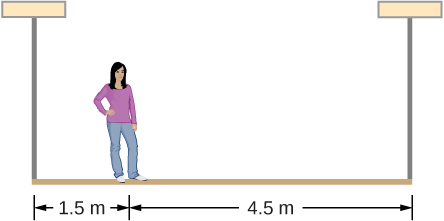
A 50-kg person stands 1.5 m away from one end of a uniform 6.0-m-long scaffold of mass 70.0 kg. Find the tensions in the two vertical ropes supporting the scaffold.
Answer
Check Your Understanding 12.8 §12.2 source ↗
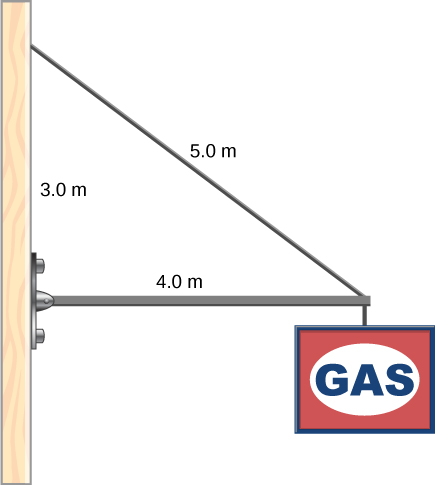
A 400.0-N sign hangs from the end of a uniform strut. The strut is 4.0 m long and weighs 600.0 N. The strut is supported by a hinge at the wall and by a cable whose other end is tied to the wall at a point 3.0 m above the left end of the strut. Find the tension in the supporting cable and the force of the hinge on the strut.
Answer
Check Your Understanding 12.9 §12.3 source ↗
Answer
Check Your Understanding 12.10 §12.3 source ↗
Answer
Check Your Understanding 12.11 §12.3 source ↗
Answer
Check Your Understanding 12.12 §12.3 source ↗
Answer
12-1 §12.1 source ↗
Answer
12-3 §12.1 source ↗
Answer
12-5 §12.1 source ↗
For the next four problems, evaluate the statement as either true or false and explain your answer.
If there is only one external force (or torque) acting on an object, it cannot be in equilibrium.
Answer
12-7 §12.1 source ↗
For the next four problems, evaluate the statement as either true or false and explain your answer.
If an odd number of forces act on an object, the object cannot be in equilibrium.
Answer
12-9 §12.1 source ↗
For the next four problems, evaluate the statement as either true or false and explain your answer.
What purpose is served by a long and flexible pole carried by wire-walkers?
Answer
12-11 §12.2 source ↗
Answer
12-13 §12.3 source ↗
Note: Unless stated otherwise, the weights of the wires, rods, and other elements are assumed to be negligible. Elastic moduli of selected materials are given in Table 12.1.
Why can a squirrel jump from a tree branch to the ground and run away undamaged, while a human could break a bone in such a fall?
| Material | Young’s modulus | Bulk modulus | Shear modulus |
|---|---|---|---|
| Aluminum | 7.0 | 7.5 | 2.5 |
| Bone (tension) | 1.6 | 0.8 | 8.0 |
| Bone (compression) | 0.9 | ||
| Brass | 9.0 | 6.0 | 3.5 |
| Brick | 1.5 | ||
| Concrete | 2.0 | ||
| Copper | 11.0 | 14.0 | 4.4 |
| Crown glass | 6.0 | 5.0 | 2.5 |
| Granite | 4.5 | 4.5 | 2.0 |
| Hair (human) | 1.0 | ||
| Hardwood | 1.5 | 1.0 | |
| Iron | 21.0 | 16.0 | 7.7 |
| Lead | 1.6 | 4.1 | 0.6 |
| Marble | 6.0 | 7.0 | 2.0 |
| Nickel | 21.0 | 17.0 | 7.8 |
| Polystyrene | 3.0 | ||
| Silk | 6.0 | ||
| Spider thread | 3.0 | ||
| Steel | 20.0 | 16.0 | 7.5 |
| Acetone | 0.07 | ||
| Ethanol | 0.09 | ||
| Glycerin | 0.45 | ||
| Mercury | 2.5 | ||
| Water | 0.22 |
Answer
12-15 §12.3 source ↗
Note: Unless stated otherwise, the weights of the wires, rods, and other elements are assumed to be negligible. Elastic moduli of selected materials are given in Table 12.1.
A thin wire strung between two nails in the wall is used to support a large picture. Is the wire likely to snap if it is strung tightly or if it is strung so that it sags considerably?
| Material | Young’s modulus | Bulk modulus | Shear modulus |
|---|---|---|---|
| Aluminum | 7.0 | 7.5 | 2.5 |
| Bone (tension) | 1.6 | 0.8 | 8.0 |
| Bone (compression) | 0.9 | ||
| Brass | 9.0 | 6.0 | 3.5 |
| Brick | 1.5 | ||
| Concrete | 2.0 | ||
| Copper | 11.0 | 14.0 | 4.4 |
| Crown glass | 6.0 | 5.0 | 2.5 |
| Granite | 4.5 | 4.5 | 2.0 |
| Hair (human) | 1.0 | ||
| Hardwood | 1.5 | 1.0 | |
| Iron | 21.0 | 16.0 | 7.7 |
| Lead | 1.6 | 4.1 | 0.6 |
| Marble | 6.0 | 7.0 | 2.0 |
| Nickel | 21.0 | 17.0 | 7.8 |
| Polystyrene | 3.0 | ||
| Silk | 6.0 | ||
| Spider thread | 3.0 | ||
| Steel | 20.0 | 16.0 | 7.5 |
| Acetone | 0.07 | ||
| Ethanol | 0.09 | ||
| Glycerin | 0.45 | ||
| Mercury | 2.5 | ||
| Water | 0.22 |
Answer
12-17 §12.3 source ↗
Note: Unless stated otherwise, the weights of the wires, rods, and other elements are assumed to be negligible. Elastic moduli of selected materials are given in Table 12.1.
What type of stress are you applying when you press on the ends of a wooden rod? When you pull on its ends?
| Material | Young’s modulus | Bulk modulus | Shear modulus |
|---|---|---|---|
| Aluminum | 7.0 | 7.5 | 2.5 |
| Bone (tension) | 1.6 | 0.8 | 8.0 |
| Bone (compression) | 0.9 | ||
| Brass | 9.0 | 6.0 | 3.5 |
| Brick | 1.5 | ||
| Concrete | 2.0 | ||
| Copper | 11.0 | 14.0 | 4.4 |
| Crown glass | 6.0 | 5.0 | 2.5 |
| Granite | 4.5 | 4.5 | 2.0 |
| Hair (human) | 1.0 | ||
| Hardwood | 1.5 | 1.0 | |
| Iron | 21.0 | 16.0 | 7.7 |
| Lead | 1.6 | 4.1 | 0.6 |
| Marble | 6.0 | 7.0 | 2.0 |
| Nickel | 21.0 | 17.0 | 7.8 |
| Polystyrene | 3.0 | ||
| Silk | 6.0 | ||
| Spider thread | 3.0 | ||
| Steel | 20.0 | 16.0 | 7.5 |
| Acetone | 0.07 | ||
| Ethanol | 0.09 | ||
| Glycerin | 0.45 | ||
| Mercury | 2.5 | ||
| Water | 0.22 |
Answer
12-19 §12.3 source ↗
Note: Unless stated otherwise, the weights of the wires, rods, and other elements are assumed to be negligible. Elastic moduli of selected materials are given in Table 12.1.
Can Young’s modulus have a negative value? What about the bulk modulus?
| Material | Young’s modulus | Bulk modulus | Shear modulus |
|---|---|---|---|
| Aluminum | 7.0 | 7.5 | 2.5 |
| Bone (tension) | 1.6 | 0.8 | 8.0 |
| Bone (compression) | 0.9 | ||
| Brass | 9.0 | 6.0 | 3.5 |
| Brick | 1.5 | ||
| Concrete | 2.0 | ||
| Copper | 11.0 | 14.0 | 4.4 |
| Crown glass | 6.0 | 5.0 | 2.5 |
| Granite | 4.5 | 4.5 | 2.0 |
| Hair (human) | 1.0 | ||
| Hardwood | 1.5 | 1.0 | |
| Iron | 21.0 | 16.0 | 7.7 |
| Lead | 1.6 | 4.1 | 0.6 |
| Marble | 6.0 | 7.0 | 2.0 |
| Nickel | 21.0 | 17.0 | 7.8 |
| Polystyrene | 3.0 | ||
| Silk | 6.0 | ||
| Spider thread | 3.0 | ||
| Steel | 20.0 | 16.0 | 7.5 |
| Acetone | 0.07 | ||
| Ethanol | 0.09 | ||
| Glycerin | 0.45 | ||
| Mercury | 2.5 | ||
| Water | 0.22 |
Answer
12-23 §12.4 source ↗
Note: Unless stated otherwise, the weights of the wires, rods, and other elements are assumed to be negligible. Elastic moduli of selected materials are given in Table 12.1.
Steel rods are commonly placed in concrete before it sets. What is the purpose of these rods?
| Material | Young’s modulus | Bulk modulus | Shear modulus |
|---|---|---|---|
| Aluminum | 7.0 | 7.5 | 2.5 |
| Bone (tension) | 1.6 | 0.8 | 8.0 |
| Bone (compression) | 0.9 | ||
| Brass | 9.0 | 6.0 | 3.5 |
| Brick | 1.5 | ||
| Concrete | 2.0 | ||
| Copper | 11.0 | 14.0 | 4.4 |
| Crown glass | 6.0 | 5.0 | 2.5 |
| Granite | 4.5 | 4.5 | 2.0 |
| Hair (human) | 1.0 | ||
| Hardwood | 1.5 | 1.0 | |
| Iron | 21.0 | 16.0 | 7.7 |
| Lead | 1.6 | 4.1 | 0.6 |
| Marble | 6.0 | 7.0 | 2.0 |
| Nickel | 21.0 | 17.0 | 7.8 |
| Polystyrene | 3.0 | ||
| Silk | 6.0 | ||
| Spider thread | 3.0 | ||
| Steel | 20.0 | 16.0 | 7.5 |
| Acetone | 0.07 | ||
| Ethanol | 0.09 | ||
| Glycerin | 0.45 | ||
| Mercury | 2.5 | ||
| Water | 0.22 |
Answer
12-25 §12.1 source ↗
Answer
12-27 §12.1 source ↗
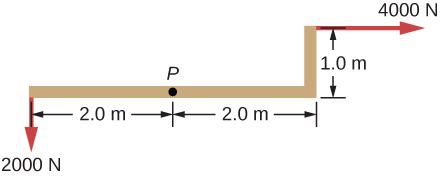
What force must be applied at point P to keep the structure shown in equilibrium? The weight of the structure is negligible.
Answer
12-29 §12.1 source ↗
Answer
12-31 §12.1 source ↗
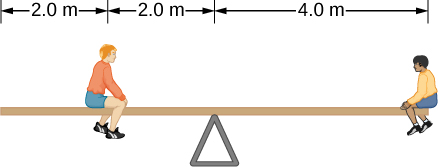
The uniform seesaw is balanced at its center of mass, as seen below. The smaller boy on the right has a mass of 40.0 kg. What is the mass of his friend?
Answer
12-33 §12.2 source ↗
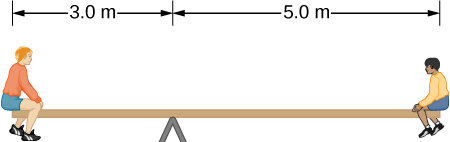
The uniform seesaw shown below is balanced on a fulcrum located 3.0 m from the left end. The smaller boy on the right has a mass of 40 kg and the bigger boy on the left has a mass 80 kg. What is the mass of the board?
Answer
12-35 §12.2 source ↗
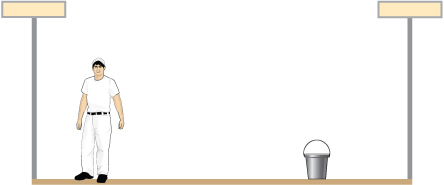
A uniform 40.0-kg scaffold of length 6.0 m is supported by two light cables, as shown below. An 80.0-kg painter stands 1.0 m from the left end of the scaffold, and his painting equipment is 1.5 m from the right end. If the tension in the left cable is twice that in the right cable, find the tensions in the cables and the mass of the equipment.
Answer
12-37 §12.2 source ↗
Answer
12-39 §12.2 source ↗
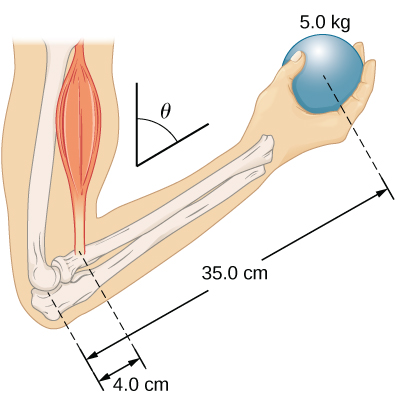
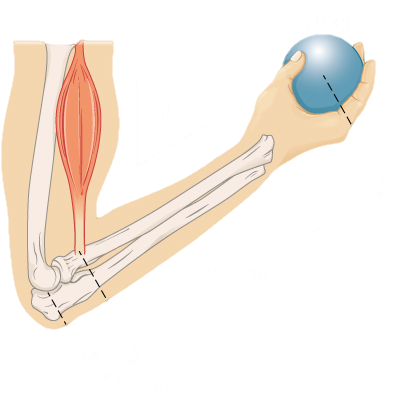
The forearm shown below is positioned at an angle with respect to the upper arm, and a 5.0-kg mass is held in the hand. The total mass of the forearm and hand is 3.0 kg, and their center of mass is 15.0 cm from the elbow. (a) What is the magnitude of the force that the biceps muscle exerts on the forearm for (b) What is the magnitude of the force on the elbow joint for the same angle? (c) How do these forces depend on the angle
Answer
12-41 §12.2 source ↗
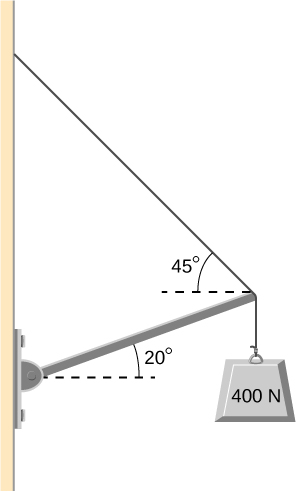
The uniform boom shown below weighs 700 N, and the object hanging from its right end weighs 400 N. The boom is supported by a light cable and by a hinge at the wall. Calculate the tension in the cable and the force on the hinge on the boom. Does the force on the hinge act along the boom?
Answer
12-43 §12.2 source ↗
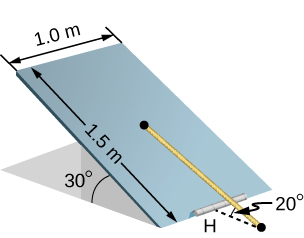
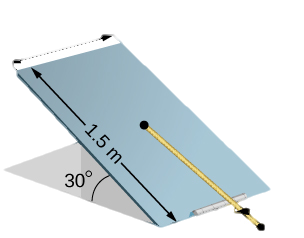
A uniform trapdoor shown below is 1.0 m by 1.5 m and weighs 300 N. It is supported by a single hinge (H), and by a light rope tied between the middle of the door and the floor. The door is held at the position shown, where its slab makes a angle with the horizontal floor and the rope makes a angle with the floor. Find the tension in the rope and the force at the hinge.
Answer
12-45 §12.3 source ↗
Answer
12-47 §12.3 source ↗
Answer
12-49 §12.3 source ↗
Answer
12-51 §12.3 source ↗
Answer
12-53 §12.3 source ↗
Answer
12-55 §12.3 source ↗
Answer
12-57 §12.3 source ↗
Answer
12-59 §12.3 source ↗
Answer
12-61 §12.3 source ↗
Answer
12-63 §12.3 source ↗
Answer
12-65 §12.3 source ↗
Answer
12-69 §12.AP source ↗
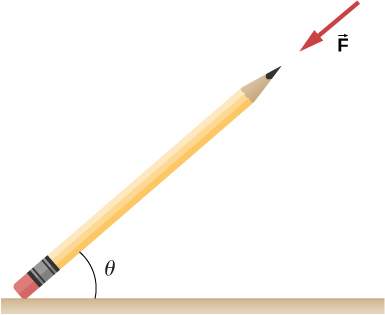
The coefficient of static friction between the rubber eraser of the pencil and the tabletop is If the force is applied along the axis of the pencil, as shown below, what is the minimum angle at which the pencil can stand without slipping? Ignore the weight of the pencil.
Answer
12-71 §12.AP source ↗
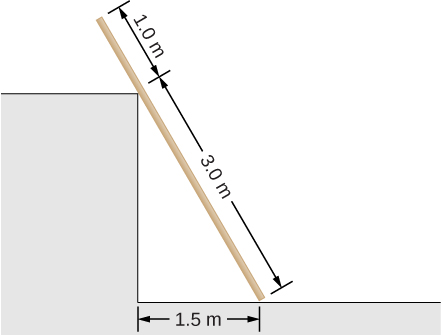
A uniform 4.0-m plank weighing 200.0 N rests against the corner of a wall, as shown below. There is no friction at the point where the plank meets the corner. (a) Find the forces that the corner and the floor exert on the plank. (b) What is the minimum coefficient of static friction between the floor and the plank to prevent the plank from slipping?
Answer
12-73 §12.AP source ↗
Answer
12-75 §12.CP source ↗
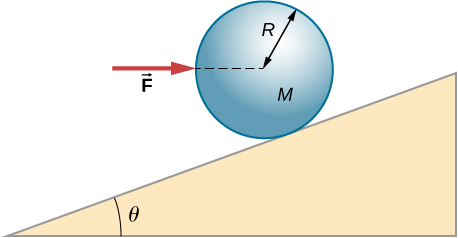
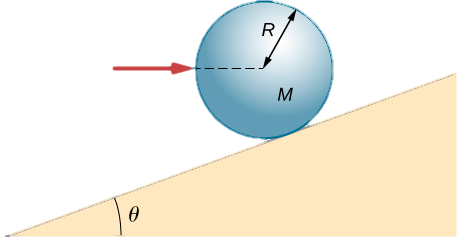
A horizontal force is applied to a uniform sphere in direction exact toward the center of the sphere, as shown below. Find the magnitude of this force so that the sphere remains in static equilibrium. What is the frictional force of the incline on the sphere?
Answer
12-77 §12.CP source ↗
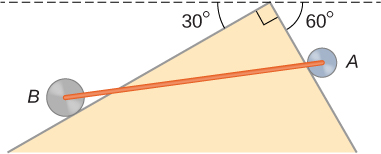
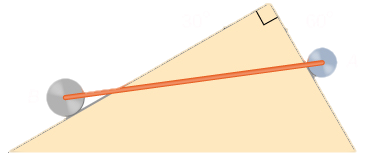
Two wheels A and B with weights w and 2w, respectively, are connected by a uniform rod with weight w/2, as shown below. The wheels are free to roll on the sloped surfaces. Determine the angle that the rod forms with the horizontal when the system is in equilibrium. Hint: There are five forces acting on the rod, which is two weights of the wheels, two normal reaction forces at points where the wheels make contacts with the wedge, and the weight of the rod.
Answer
12-79 §12.CP source ↗
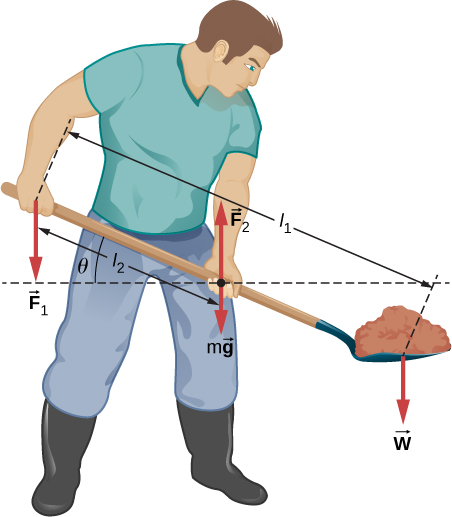
In order to lift a shovelful of dirt, a gardener pushes downward on the end of the shovel and pulls upward at distance from the end, as shown below. The weight of the shovel is and acts at the point of application of Calculate the magnitudes of the forces and as functions of mg, and the weight W of the load. Why do your answers not depend on the angle that the shovel makes with the horizontal?
Answer
12-81 §12.CP source ↗
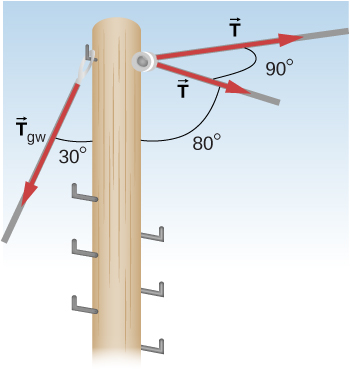
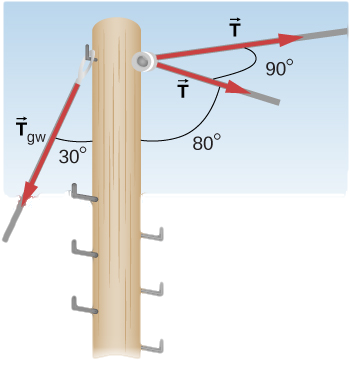
The pole shown below is at a bend in a power line and is therefore subjected to more shear force than poles in straight parts of the line. The tension in each line is at the angles shown. The pole is 15.0 m tall, has an 18.0 cm diameter, and can be considered to have half the strength of hardwood. (a) Calculate the compression of the pole. (b) Find how much it bends and in what direction. (c) Find the tension in a guy wire used to keep the pole straight if it is attached to the top of the pole at an angle of with the vertical. The guy wire is in the opposite direction of the bend.
Answer
Loading chapter 13…
Problems and answers are adapted from University Physics Volume 1 by Samuel J. Ling, Jeff Sanny and William Moebs, OpenStax, and are used under the CC BY-NC-SA 4.0 licence. Access for free at https://openstax.org/books/university-physics-volume-1/pages/1-introduction. Illustrations: Copyright Rice University, OpenStax, under CC BY-NC-SA 4.0 license. This adaptation is released under the same licence, is non-commercial, and is neither affiliated with nor endorsed by OpenStax or Rice University.