Every problem in the chapter beside the book’s answer, a chapter at a time as you scroll.
Chapter 18: Representative Metals, Metalloids, and Nonmetals
58 problems · 27 figures18-1 §18.1 source ↗
Answer
18-3 §18.1 source ↗
Predict the formulas for the nine compounds that may form when each species in column 1 of the table reacts with each species in column 2.
| 1 | 2 |
|---|---|
| Na | I |
| Sr | Se |
| Al | O |
Answer
18-5 §18.1 source ↗
Answer
18-7 §18.1 source ↗
Write a balanced equation for the reaction of elemental strontium with each of the following:
(a) oxygen
(b) hydrogen bromide
(c) hydrogen
(d) phosphorus
(e) water
Answer
18-9 §18.1 source ↗
Answer
18-11 §18.1 source ↗
Answer
18-13 §18.1 source ↗
Answer
18-15 §18.2 source ↗
Answer
18-17 §18.2 source ↗
Answer
18-19 §18.2 source ↗
Answer
18-21 §18.2 source ↗
Answer
18-23 §18.2 source ↗
Answer
Recover:
Sinter:
Dissolve in Na3AlF6(l) and electrolyze:
18-25 §18.2 source ↗
Answer
18-27 §18.2 source ↗
Answer
18-29 §18.3 source ↗
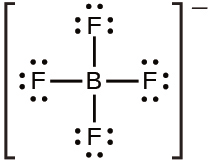
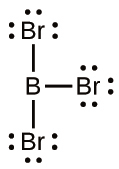
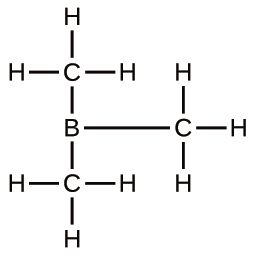
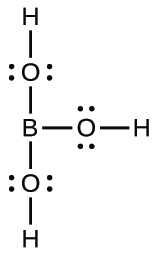
Write a Lewis structure for each of the following molecules or ions. You may wish to review the chapter on chemical bonding.
(a) H3BPH3
(b)
(c) BBr3
(d) B(CH3)3
(e) B(OH)3
Answer
(a) H3BPH3:
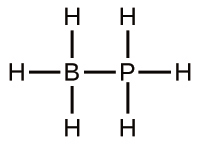
(b)
(c) BBr3:
(d) B(CH3)3:
(e) B(OH)3:
18-31 §18.3 source ↗
Answer
18-33 §18.3 source ↗
Describe the hybridization of silicon and the molecular structure of the following molecules and ions:
(a) (CH3)3SiH
(b)
(c) Si2H6
(d) Si(OH)4
(e)
Answer
18-35 §18.3 source ↗
Classify each of the following molecules as polar or nonpolar. You may wish to review the chapter on chemical bonding.
(a) SiH4
(b) Si2H6
(c) SiCl3H
(d) SiF4
(e) SiCl2F2
Answer
18-37 §18.3 source ↗
Name each of the following compounds:
(a) TeO2
(b) Sb2S3
(c) GeF4
(d) SiH4
(e) GeH4
Answer
18-39 §18.3 source ↗
Answer
18-41 §18.3 source ↗
From the data given in Appendix G, determine the standard enthalpy change and the standard free energy change for each of the following reactions:
(a)
(b)
(c)
Answer
18-43 §18.3 source ↗
Answer
18-45 §18.4 source ↗
Answer
18-47 §18.4 source ↗
Determine the oxidation number of each element in each of the following compounds:
(a) HCN
(b) OF2
(c) AsCl3
Answer
18-49 §18.4 source ↗
Answer
18-51 §18.5 source ↗
Answer
18-53 §18.5 source ↗
Answer
18-55 §18.5 source ↗
Answer
18-57 §18.6 source ↗
Complete and balance the following chemical equations:
(a) hardening of plaster containing slaked lime
(b) removal of sulfur dioxide from the flue gas of power plants
(c) the reaction of baking powder that produces carbon dioxide gas and causes bread to rise
Answer
(c)
18-59 §18.7 source ↗
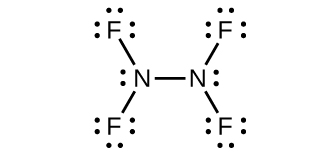
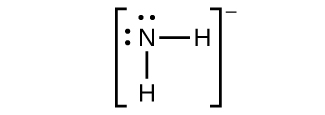
Write the Lewis structures for each of the following:
(a) NH2−
(b) N2F4
(c)
(d) NF3
(e)
Answer
(a) NH2−:

(b) N2F4:
(c)
(d) NF3:

(e)

18-61 §18.7 source ↗
Answer
Brønsted base:
Lewis base:
18-63 §18.7 source ↗
For each of the following, draw the Lewis structure, predict the ONO bond angle, and give the hybridization of the nitrogen. You may wish to review the chapters on chemical bonding and advanced theories of covalent bonding for relevant examples.
(a) NO2
(b)
(c)
Answer
(a) NO2:

Nitrogen is sp2 hybridized. The molecule has a bent geometry with an ONO bond angle of approximately 120°.
(b)

Nitrogen is sp2 hybridized. The molecule has a bent geometry with an ONO bond angle slightly less than 120°.
(c)
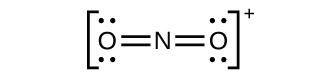
Nitrogen is sp hybridized. The molecule has a linear geometry with an ONO bond angle of 180°.
18-65 §18.7 source ↗
Answer
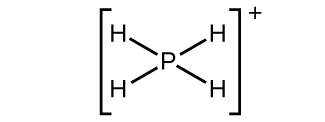
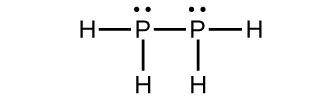
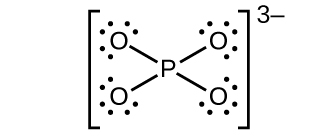
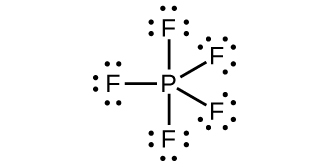
18-67 §18.8 source ↗
Write the Lewis structure for each of the following. You may wish to review the chapter on chemical bonding and molecular geometry.
(a) PH3
(b)
(c) P2H4
(d)
(e) PF5
Answer
(a)

(b)
(c)
(d)
(e)
18-69 §18.8 source ↗
Complete and balance each of the following chemical equations. (In some cases, there may be more than one correct answer.)
(a)
(b)
(c)
(d)
(e)
(f)
Answer
18-71 §18.8 source ↗
Answer
18-73 §18.8 source ↗
Answer
18-75 §18.8 source ↗
Draw the Lewis structures and describe the geometry for the following:
(a)
(b) PF5
(c)
(d) POF3
Answer
(a)
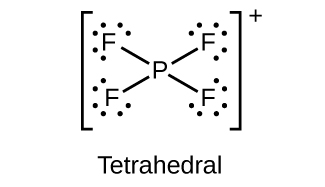
(b)
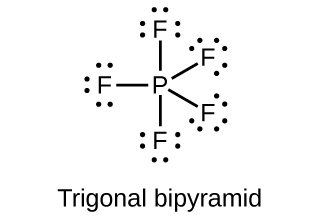
(c)
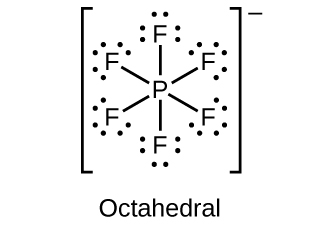
(d)
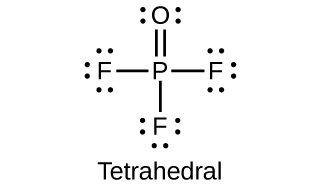
18-77 §18.8 source ↗
Assign an oxidation state to phosphorus in each of the following:
(a) NaH2PO3
(b) PF5
(c) P4O6
(d) K3PO4
(e) Na3P
(f) Na4P2O7
Answer
18-79 §18.9 source ↗
Answer
18-81 §18.9 source ↗
Write balanced chemical equations for the following reactions:
(a) zinc metal heated in a stream of oxygen gas
(b) zinc carbonate heated until loss of mass stops
(c) zinc carbonate added to a solution of acetic acid, CH3CO2H
(d) zinc added to a solution of hydrobromic acid
Answer
18-83 §18.9 source ↗
Answer
18-85 §18.9 source ↗
Write balanced chemical equations for the following reactions:
(a) sodium oxide added to water
(b) cesium carbonate added to an excess of an aqueous solution of HF
(c) aluminum oxide added to an aqueous solution of HClO4
(d) a solution of sodium carbonate added to solution of barium nitrate
(e) titanium metal produced from the reaction of titanium tetrachloride with elemental sodium
Answer
18-87 §18.9 source ↗
Answer
18-89 §18.9 source ↗
Answer
18-91 §18.10 source ↗
Answer
18-93 §18.10 source ↗
Answer
18-95 §18.10 source ↗
Answer
18-97 §18.10 source ↗
Answer
18-99 §18.10 source ↗
Answer
18-101 §18.11 source ↗
Answer
18-103 §18.11 source ↗
Answer
18-105 §18.11 source ↗
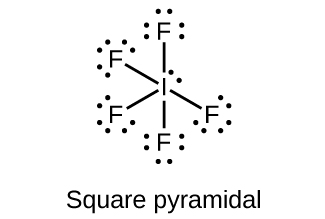
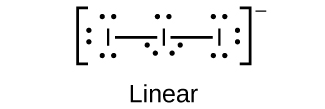
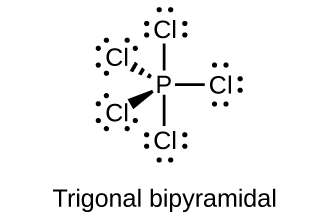
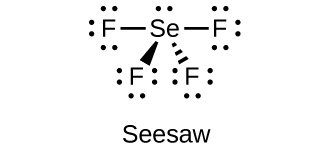
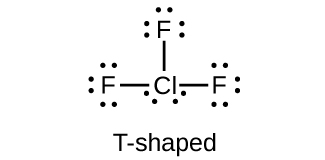
Predict the molecular geometries and draw Lewis structures for each of the following. You may wish to review the chapter on chemical bonding and molecular geometry.
(a) IF5
(b)
(c) PCl5
(d) SeF4
(e) ClF3
Answer
(a)
(b)
(c)
(d)
(e)
18-107 §18.11 source ↗
Name each of the following compounds:
(a) BrF3
(b) NaBrO3
(c) PBr5
(d) NaClO4
(e) KClO
Answer
18-109 §18.11 source ↗
What is the oxidation state of the halogen in each of the following?
(a) H5IO6
(b)
(c) ClO2
(d) ICl3
(e) F2
Answer
18-111 §18.12 source ↗
Give the hybridization of xenon in each of the following. You may wish to review the chapter on the advanced theories of covalent bonding.
(a) XeF2
(b) XeF4
(c) XeO3
(d) XeO4
(e) XeOF4
Answer
18-113 §18.12 source ↗
Indicate whether each of the following molecules is polar or nonpolar. You may wish to review the chapter on chemical bonding and molecular geometry.
(a) XeF2
(b) XeF4
(c) XeO3
(d) XeO4
(e) XeOF4
Answer
18-115 §18.12 source ↗
Answer
Loading chapter 19…
Problems and answers are adapted from Chemistry: Atoms First 2e by Paul Flowers, Edward J. Neth, William R. Robinson, Klaus Theopold and Richard Langley, OpenStax, and are used under the CC BY-NC-SA 4.0 licence. Access for free at https://openstax.org/books/chemistry-atoms-first-2e/pages/1-introduction. Illustrations: Copyright Rice University, OpenStax, under CC BY-NC-SA 4.0 license. This adaptation is released under the same licence, is non-commercial, and is neither affiliated with nor endorsed by OpenStax or Rice University.