Every problem in the chapter beside the book’s answer, a chapter at a time as you scroll.
Chapter 4: Chemical Bonding and Molecular Geometry
72 problems · 68 figuresExample 4.1 §4.1 source ↗
Answer
Example 4.2 §4.1 source ↗
Answer
Example 4.3 §4.2 source ↗
Answer
| Bond | Electronegativity Difference | Polarity |
|---|---|---|
| C–C | 0.0 | nonpolar |
| C–H | 0.4 | |
| Si–C | 0.7 | |
| Si–O | 1.7 |
Example 4.4 §4.3 source ↗
(a) chromium(III) phosphide
(b) mercury(II) sulfide
(c) manganese(II) phosphate
(d) copper(I) oxide
(e) iron(III) chloride dihydrate
Answer
Example 4.5 §4.3 source ↗
(a) phosphorus pentachloride
(b) dinitrogen monoxide
(c) iodine heptafluoride
(d) carbon tetrachloride
Answer
Example 4.6 §4.4 source ↗
Answer

Example 4.7 §4.4 source ↗
Answer
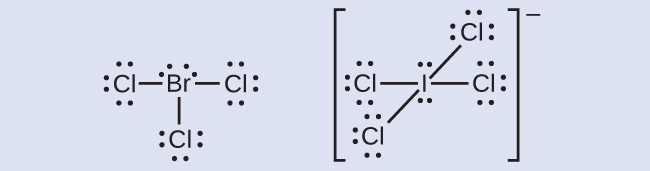
Example 4.8 §4.5 source ↗
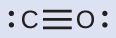
Answer
Example 4.9 §4.5 source ↗
Answer
N: 0; all three Cl atoms: 0
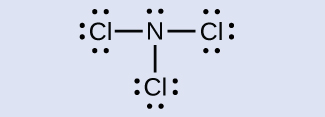
Example 4.10 §4.5 source ↗

Answer
Example 4.11 §4.6 source ↗
Answer
Example 4.12 §4.6 source ↗
Answer
Example 4.13 §4.6 source ↗
Answer
Example 4.14 §4.6 source ↗
Answer
Example 4.15 §4.6 source ↗
Answer
Example 4.16 §4.6 source ↗
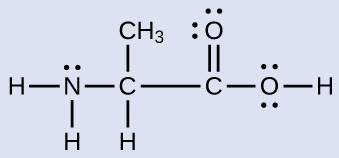
Answer
Example 4.17 §4.6 source ↗
Answer
Example 4.18 §4.6 source ↗
Answer
4-1 §4.1 source ↗
Answer
4-3 §4.1 source ↗
Answer
4-5 §4.1 source ↗
Predict the charge on the monatomic ions formed from the following atoms in binary ionic compounds:
(a) P
(b) Mg
(c) Al
(d) O
(e) Cl
(f) Cs
Answer
4-7 §4.1 source ↗
Write the electron configuration for each of the following ions:
(a) As3–
(b) I–
(c) Be2+
(d) Cd2+
(e) O2–
(f) Ga3+
(g) Li+
(h) N3–
(i) Sn2+
(j) Co2+
(k) Fe2+
(l) As3+
Answer
4-9 §4.1 source ↗
Write out the full electron configuration for each of the following atoms and for the monatomic ion found in binary ionic compounds containing the element:
(a) Al
(b) Br
(c) Sr
(d) Li
(e) As
(f) S
Answer
4-11 §4.2 source ↗
Answer
4-13 §4.2 source ↗
Predict which of the following compounds are ionic and which are covalent, based on the location of their constituent atoms in the periodic table:
(a) Cl2CO
(b) MnO
(c) NCl3
(d) CoBr2
(e) K2S
(f) CO
(g) CaF2
(h) HI
(i) CaO
(j) IBr
(k) CO2
Answer
4-15 §4.2 source ↗
From its position in the periodic table, determine which atom in each pair is more electronegative:
(a) Br or Cl
(b) N or O
(c) S or O
(d) P or S
(e) Si or N
(f) Ba or P
(g) N or K
Answer
4-17 §4.2 source ↗
From their positions in the periodic table, arrange the atoms in each of the following series in order of increasing electronegativity:
(a) C, F, H, N, O
(b) Br, Cl, F, H, I
(c) F, H, O, P, S
(d) Al, H, Na, O, P
(e) Ba, H, N, O, As
Answer
4-19 §4.2 source ↗
Answer
4-21 §4.2 source ↗
Identify the more polar bond in each of the following pairs of bonds:
(a) HF or HCl
(b) NO or CO
(c) SH or OH
(d) PCl or SCl
(e) CH or NH
(f) SO or PO
(g) CN or NN
Answer
4-23 §4.3 source ↗
Name the following compounds:
(a) CsCl
(b) BaO
(c) K2S
(d) BeCl2
(e) HBr
(f) AlF3
Answer
4-25 §4.3 source ↗
Write the formulas of the following compounds:
(a) rubidium bromide
(b) magnesium selenide
(c) sodium oxide
(d) calcium chloride
(e) hydrogen fluoride
(f) gallium phosphide
(g) aluminum bromide
(h) ammonium sulfate
Answer
4-27 §4.3 source ↗
Write the formulas of the following compounds:
(a) chlorine dioxide
(b) dinitrogen tetraoxide
(c) potassium phosphide
(d) silver sulfide
(e) aluminum fluoride trihydrate
(f) silicon dioxide
Answer
4-29 §4.3 source ↗
Each of the following compounds contains a metal that can exhibit more than one ionic charge. Name these compounds:
(a) Cr2O3
(b) FeCl2
(c) CrO3
(d) TiCl4
(e) CoCl2∙6H2O
(f) MoS2
Answer
4-31 §4.3 source ↗
The following ionic compounds are found in common household products. Write the formulas for each compound:
(a) potassium phosphate
(b) copper(II) sulfate
(c) calcium chloride
(d) titanium(IV) oxide
(e) ammonium nitrate
(f) sodium bisulfate (the common name for sodium hydrogen sulfate)
Answer
4-33 §4.3 source ↗
What are the IUPAC names of the following compounds?
(a) manganese dioxide
(b) mercurous chloride (Hg2Cl2)
(c) ferric nitrate [Fe(NO3)3]
(d) titanium tetrachloride
(e) cupric bromide (CuBr2)
Answer
4-34 §4.4 source ↗
Write the Lewis symbols for each of the following ions:
(a) As3–
(b) I–
(c) Be2+
(d) O2–
(e) Ga3+
(f) Li+
(g) N3–
Answer
(a) eight electrons:

(b) eight electrons:

(c) no electrons Be2+
(d) eight electrons:

(e) no electrons Ga3+
(f) no electrons Li+
(g) eight electrons:

4-36 §4.4 source ↗
Write the Lewis symbols of the ions in each of the following ionic compounds and the Lewis symbols of the atom from which they are formed:
(a) MgS
(b) Al2O3
(c) GaCl3
(d) K2O
(e) Li3N
(f) KF
Answer
(a)

(b)

(c)

(d)

(e)

(f)

4-38 §4.4 source ↗
Answer

4-40 §4.4 source ↗
Write Lewis structures for the following:
(a) O2
(b) H2CO
(c) AsF3
(d) ClNO
(e) SiCl4
(f) H3O+
(g)
(h)
(i) HCCH
(j) ClCN
(k)
Answer
(a)
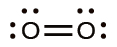
In this case, the Lewis structure is inadequate to depict the fact that experimental studies have shown two unpaired electrons in each oxygen molecule.
(b)
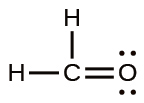
(c)
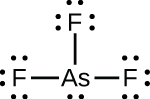
(d)

(e)
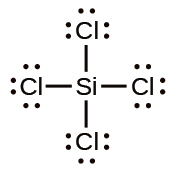
(f)
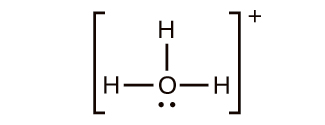
(g)
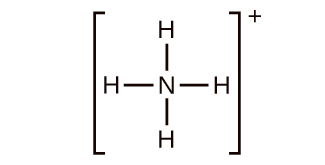
(h)
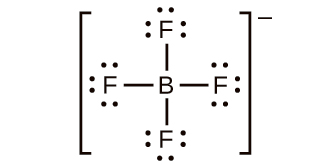
(i)

(j)
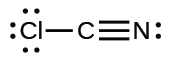
(k)
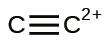
4-42 §4.4 source ↗
Write Lewis structures for the following:
(a) SeF6
(b) XeF4
(c)
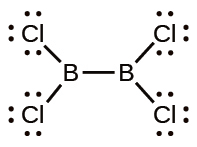
(d) Cl2BBCl2 (contains a B–B bond)
Answer
(a) SeF6:
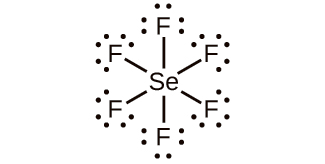
(b) XeF4:
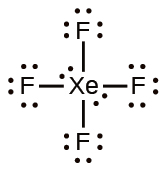
(c)
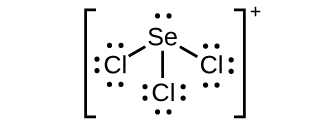
(d) Cl2BBCl2:
4-44 §4.4 source ↗
Answer
4-46 §4.4 source ↗
Answer
4-48 §4.4 source ↗
Answer
4-50 §4.4 source ↗
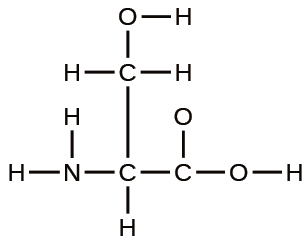
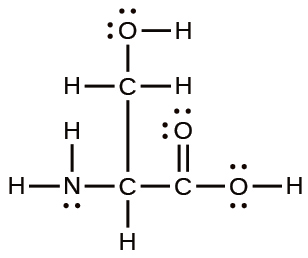
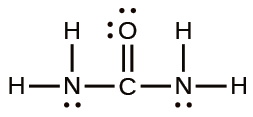
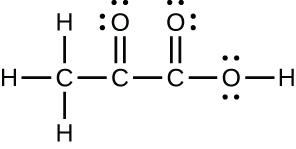
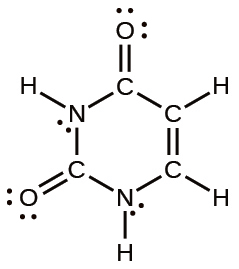
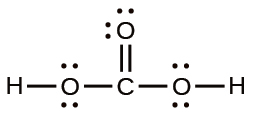
The arrangement of atoms in several biologically important molecules is given here. Complete the Lewis structures of these molecules by adding multiple bonds and lone pairs. Do not add any more atoms.
(a) the amino acid serine:
(b) urea:
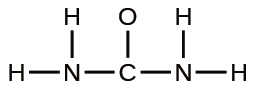
(c) pyruvic acid:
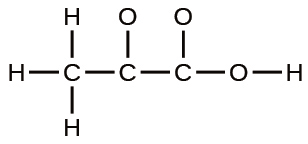
(d) uracil:
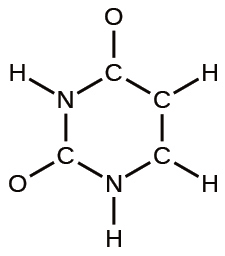
(e) carbonic acid:
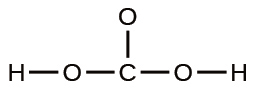
Answer
(a)
(b)
(c)
(d)
(e)
4-52 §4.4 source ↗
Answer
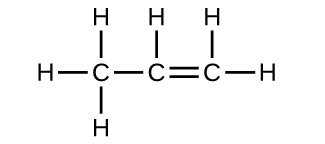
4-54 §4.4 source ↗
Answer
4-56 §4.5 source ↗
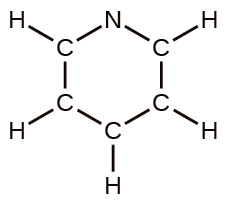
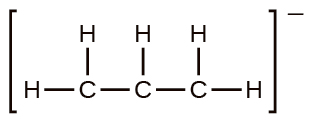
Write resonance forms that describe the distribution of electrons in each of these molecules or ions.
(a) sulfur dioxide, SO2
(b) carbonate ion,
(c) hydrogen carbonate ion, (C is bonded to an OH group and two O atoms)
(d) pyridine:
(e) the allyl ion:
Answer
(a)

(b)

(c)
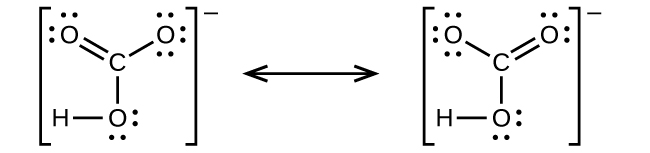
(d)
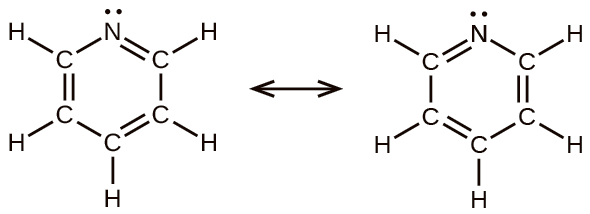
(e)

4-58 §4.5 source ↗
Answer

4-60 §4.5 source ↗
Write the Lewis structures for the following, and include resonance structures where appropriate. Indicate which has the strongest carbon-oxygen bond.
(a) CO2
(b) CO
Answer
(a)

(b)

CO has the strongest carbon-oxygen bond because there is a triple bond joining C and O. CO2 has double bonds.
4-62 §4.5 source ↗
Determine the formal charge of each element in the following:
(a) HCl
(b) CF4
(c) PCl3
(d) PF5
Answer
4-64 §4.5 source ↗
Answer
4-66 §4.5 source ↗
Draw all possible resonance structures for each of these compounds. Determine the formal charge on each atom in each of the resonance structures:
(a) O3
(b) SO2
(c)
(d)
Answer
(a)

(b)

(c)

(d)
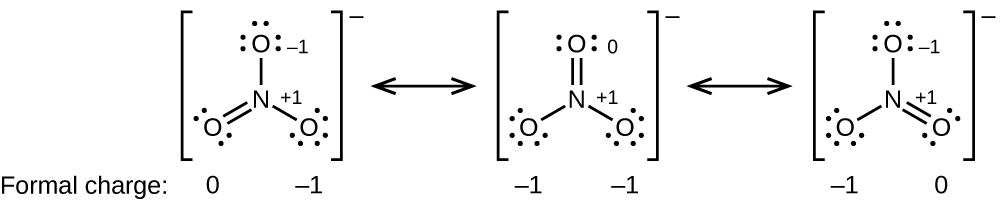
4-68 §4.5 source ↗
Answer
4-70 §4.5 source ↗
Answer
The structure that gives zero formal charges is consistent with the actual structure:
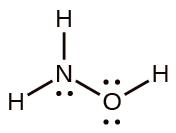
4-72 §4.5 source ↗
Answer
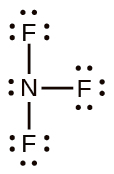
NF3;
4-74 §4.5 source ↗
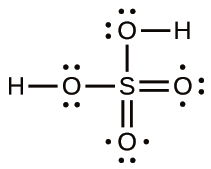
Answer
4-75 §4.6 source ↗
Answer
4-77 §4.6 source ↗
Answer
4-79 §4.6 source ↗
Answer
4-81 §4.6 source ↗
Predict the electron pair geometry and the molecular structure of each of the following molecules or ions:
(a) SF6
(b) PCl5
(c) BeH2
(d)
Answer
4-83 §4.6 source ↗
What are the electron-pair geometry and the molecular structure of each of the following molecules or ions?
(a) ClF5
(b)
(c)
(d) PCl3
(e) SeF4
(f)
Answer
4-85 §4.6 source ↗
Identify the electron pair geometry and the molecular structure of each of the following molecules:
(a) ClNO (N is the central atom)
(b) CS2
(c) Cl2CO (C is the central atom)
(d) Cl2SO (S is the central atom)
(e) SO2F2 (S is the central atom)
(f) XeO2F2 (Xe is the central atom)
(g) (Cl is the central atom)
Answer
4-87 §4.6 source ↗
Which of the following molecules and ions contain polar bonds? Which of these molecules and ions have dipole moments?
(a) ClF5
(b)
(c)
(d) PCl3
(e) SeF4
(f)
(g) XeF2
Answer
4-89 §4.6 source ↗
Which of the following molecules have dipole moments?
(a) CS2
(b) SeS2
(c) CCl2F2
(d) PCl3 (P is the central atom)
(e) ClNO (N is the central atom)
Answer
4-91 §4.6 source ↗
Answer
4-93 §4.6 source ↗
Answer
4-95 §4.6 source ↗
Describe the molecular structure around the indicated atom or atoms:
(a) the sulfur atom in sulfuric acid, H2SO4 [(HO)2SO2]
(b) the chlorine atom in chloric acid, HClO3 [HOClO2]
(c) the oxygen atom in hydrogen peroxide, HOOH
(d) the nitrogen atom in nitric acid, HNO3 [HONO2]
(e) the oxygen atom in the OH group in nitric acid, HNO3 [HONO2]
(f) the central oxygen atom in the ozone molecule, O3
(g) each of the carbon atoms in propyne, CH3CCH
(h) the carbon atom in Freon, CCl2F2
(i) each of the carbon atoms in allene, H2CCCH2
Answer
4-97 §4.6 source ↗
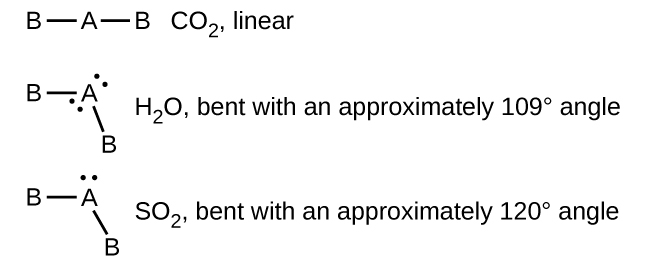
Answer
4-99 §4.6 source ↗
Draw the Lewis electron dot structures for these molecules, including resonance structures where appropriate:
(a)
(b) CS2
(c) CS
(d) predict the molecular shapes for and CS2 and explain how you arrived at your predictions
Answer
(a)

(b)

(c)

(d) includes three regions of electron density (all are bonds with no lone pairs); the shape is trigonal planar; CS2 has only two regions of electron density (all bonds with no lone pairs); the shape is linear
4-101 §4.6 source ↗
Answer
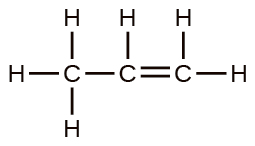
The Lewis structure is made from three units, but the atoms must be rearranged:
4-103 §4.6 source ↗
Use the simulation to perform the following exercises for a real molecule. You may need to rotate the molecules in three dimensions to see certain dipoles.
(a) Sketch the bond dipoles and molecular dipole (if any) for O3. Explain your observations.
(b) Look at the bond dipoles for NH3. Use these dipoles to predict whether N or H is more electronegative.
(c) Predict whether there should be a molecular dipole for NH3 and, if so, in which direction it will point. Check the molecular dipole box to test your hypothesis.
Answer
4-105 §4.6 source ↗
Answer
Loading chapter 5…
Problems and answers are adapted from Chemistry: Atoms First 2e by Paul Flowers, Edward J. Neth, William R. Robinson, Klaus Theopold and Richard Langley, OpenStax, and are used under the CC BY-NC-SA 4.0 licence. Access for free at https://openstax.org/books/chemistry-atoms-first-2e/pages/1-introduction. Illustrations: Copyright Rice University, OpenStax, under CC BY-NC-SA 4.0 license. This adaptation is released under the same licence, is non-commercial, and is neither affiliated with nor endorsed by OpenStax or Rice University.